














Gold Country Deep Dive
What the Community Thinks About Gold Country
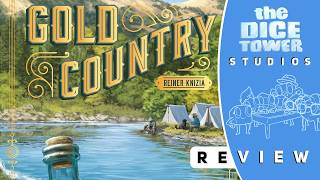
Since its arrival on the crowdfunding scene, Gold Country has captured the attention of the board game community with remarkable speed. Designed by Reiner Knizia and published by Bitewing Games, this California Gold Rush stock-manipulation game has rapidly become a standout design that resonates with both experienced players and those new to the economic genre. Its combination of accessible mechanics paired with strategic depth has made it a topic of genuine enthusiasm across the review community. The game demonstrates that modern board game design can achieve elegance without sacrificing meaningful player interaction and economic tension.
Core Mechanics That Define Gold Country
Stock Manipulation and Market Engineering
At its heart, Gold Country is a stock speculation game where players buy and sell shares in four competing mining companies. Designer Reiner Knizia and publisher Bitewing Games present a system where the market constantly shifts based on player actions. Players purchase shares at low values and attempt to sell them at peaks they have engineered through strategic placement. Each transaction moves the market, making every decision about when to enter and exit positions crucial to final victory. The elegance lies in how simple the transaction system is, since you may buy or sell up to two shares per turn, yet the consequences ripple across the entire game state as opponents react to changing valuations.
Claim Token Placement and Tile Manipulation
The mechanical anchor of each turn is placing claim tokens to expand mining territories across a variable board. When players place tokens, they cover tiles that directly alter mine values. Gold tiles add value, fool's gold reduces it, and gold veins provide substantial boosts while introducing chaos through bandit tokens. As one reviewer noted, the depth emerges from how the consequences of your choice will have major snowballing effects, with each placement either setting yourself up for future opportunities or blocking opponents from lucrative developments. Nugget tiles distribute payouts to all shareholders based on their holdings, creating moments where an opponent's share purchase becomes financially beneficial to you.
The Gold Country Experience
Reading the Room and Influencing Others
Gold Country excels at creating player interaction despite no one having a dedicated player color, since everyone operates in a shared sandbox. The game's most distinctive feature is that while you keep one secret mine card hidden, all other share holdings are public knowledge. This asymmetric information structure transforms every turn into a puzzle of influence and anticipation. Watching opponents buy specific shares tells you their likely strategies, allowing skilled players to manipulate board development to punish certain positions while rewarding their own. The two-player experience leans more zero-sum and tactical, while higher player counts enable coalition dynamics and strategic punishments.
Elegant Design That Rewards Mastery
The game rewards players who approach it with different strategies across plays. Its production features lush illustrations that reinforce the California Gold Rush theme, while the straightforward turn structure (place claim tokens, optionally trade shares, optionally activate an action card) ensures turns never bog down. What elevates the experience is the gradient of discovery players encounter. Early playthroughs reveal the basic tile interactions, but continued play unlocks understanding of when to use expensive action cards, how to read positional advantages, and when bandit tokens become tactical weapons rather than frustrating randomness. The game includes two distinct maps, with a river variant adding additional complexity for those seeking more crunch.
What Makes Gold Country Stand Out
A Bridge Between Genres
Gold Country successfully merges stock market gameplay with tile-laying mechanics in a way that feels fresh despite both mechanics being established. Designers rarely achieve this synthesis cleanly, with most games emphasizing one system over the other. Here, the claim placement directly fuels market manipulation, and share transactions provide the financial engine to afford valuable tile placements. This tight coupling means every action type informs the others. The game appeals both to players seeking economic simulation and those who primarily enjoy spatial puzzle-solving, making it unusually broad in its appeal for a game with genuine depth.
Rapid Ascent and Critical Consensus
Gold Country has risen to prominence faster than most releases. One reviewer ranked it among the very best Reiner Knizia games of all time after only a couple of months of play, an extraordinary achievement given Knizia's expansive catalog. Multiple reviewers have placed it at or near the top of their personal Knizia rankings. This is not hype divorced from gameplay; the consensus centers on how the design achieves its stated goals without excess mechanical overhead, delivering what one reviewer called impeccable simplicity to play but cavernous depths to replay, discover, and master. The game has demonstrated it belongs in conversations about essential modern economic games.
Potential Drawbacks
Two-Player Dynamics and Take-That Moments
At two players, Gold Country becomes more combative and zero-sum than at higher player counts. The cave-in mechanic, where placing a negative tile forces opponents to pay gold for their shareholdings, can feel particularly punishing in two-player games where your opponent has fewer holdings to absorb the damage. Some players may find that optimal play in two-player configurations involves deliberate market tanking to prevent opponents from profiting, which can create tense or unfun moments depending on table expectations. The experience noticeably shifts when moving from two to three or four players, where coalition opportunities and more distributed targets create different strategic textures.
Kingmaking and Catch-Up Concerns
Because share holdings are public and all players see each transaction, table talk can coalesce against a player who appears to be winning. While this is thematic to market dynamics, it introduces a kingmaking element where the leader can become a target. Additionally, the secret mine card provides a small catch-up mechanism, but players who fall behind on cash flow may struggle to recover if the board state does not offer profitable entry points. A small gold safety net prevents complete elimination, but it does not guarantee exciting gameplay for players who made poor early transactions.
If You Enjoy Gold Country
Players who love Gold Country should explore Bitewing Games' earlier title Spectaculum, another Knizia design that uses similar tile-laying and value-shifting foundations. The game also appeals to fans of stock and economic games like Acquire, whose buy-and-sell tension and majority payouts share clear DNA with Gold Country, and Power Grid for its market-driven resource pricing. Those drawn to the spatial puzzle of claim placement would enjoy classic tile-layers like Carcassonne and Kingdomino, while players who relish heavier economic engines should try Brass: Birmingham.
What Reviewers Are Saying
"With each placement, you're potentially setting your future self up, blocking an opponent from something good, opening up an opportunity for them, or baiting them. The complexity, as is usual for Knizia, is really in the depth of the choice you're making, because the consequences of your choice will have major snowballing effects."
— Board Game Animal
"It's a California gold rush strategy game for two to four prospectors and profiteers, built around speculation and influence, with simple rules and surprising depth."
— Watch It Played
"You're trying to manipulate the values of these different companies, because you can buy and sell shares, and where you place your claim tokens raises or crashes what those mines are worth."
— Before You Play