










Cards Against Humanity Deep Dive
What the Community Thinks About Cards Against Humanity
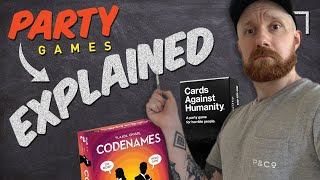
Cards Against Humanity remains one of the board gaming world's most divisive party games. Some reviewers embrace it as a casual crowd-pleaser that delivers quick laughs at gatherings, while others argue it's fundamentally lightweight entertainment that outsources humor to pre-written text rather than player creativity. The game generates strong personal reactions: channels like Shelf Side acknowledge nostalgia-driven affection alongside honest critiques about its shelf life and group dependency. Even fans admit the game works best in specific contexts, particularly when played casually with non-hobbyists, yet those same reviewers often find it loses its appeal after repeated plays.
Core Mechanics That Define Cards Against Humanity
The Judge's Card Selection
Each round, one player takes the role of judge and reads aloud a black card containing a prompt or question. The other players then select a white card from their hand to answer that prompt. After all answers are submitted face-down, the judge reveals each white card and picks the one they find funniest or most fitting. That card wins the round, and play rotates to the next judge. Reviewers note this mechanic is straightforward to teach and accessible to newcomers, requiring no complex rules overhead. The rotating judge role means everyone gets a turn shaping what counts as the winning answer, and because comedic taste is subjective, players quickly learn to tailor their submissions to whoever holds the judging seat.
The White Card as Punchline
The game's humor engine relies entirely on the text printed on white cards. Players don't craft answers or respond creatively to prompts; instead, they match pre-written phrases to black card questions in hopes of landing the judge's laugh. One reviewer described this as selecting from a pre-written joke bank rather than gameplay, pointing out that the deck does all the writing. This design choice means players aren't building anything new each round; the same cards will eventually align with the same questions across multiple playthroughs, making repeat performances less surprising over time.
The Cards Against Humanity Experience
The Initial Shock and Short-Term Hilarity
Cards Against Humanity delivers immediate laughter through deliberately offensive, crude, and absurd card combinations. Reviewers confirm that the first few plays generate genuine laughs because the shock value and unexpected pairings feel fresh. One reviewer noted that playing it with mixed groups, including non-hobbyists, at parties creates a light, low-commitment atmosphere where people quickly understand the game and don't feel intimidated. The game's accessibility means it can be pulled out casually and started within minutes.
The Fading Novelty and Long-Term Emptiness
The game's strength becomes a liability on repeated plays. One reviewer found that after a couple of sessions, the shock factor just died and the table was left holding a pile of edgy phrases with no mechanical progression or varied experiences to sustain engagement. Unlike games where player decisions create emergent humor, Cards Against Humanity's outcomes depend on card luck and judge preference. The repeated shock-value humor eventually exhausts itself, and players discover there's no underlying game beneath the offensive punchlines.
What Makes Cards Against Humanity Stand Out
Effortless Social Accessibility
Cards Against Humanity excels as a social lubricant for groups that rarely play board games. The game's crude humor appeals to adult audiences, requires almost no learning curve, and doesn't demand strategic thinking or creative effort from players. One Shelf Side reviewer called it a go-to intro for non-hobbyists and praised its ability to get people comfortable with the hobby before introducing them to games requiring more engagement. Compared to abstract or rules-heavy euros, it's immediately fun at casual gatherings.
Quick Runtime and Low Cognitive Load
At 30 minutes to an hour, Cards Against Humanity respects table time and doesn't overstay its welcome. Players aren't grinding through a lengthy rulebook or wrestling with engine optimization; they're simply picking cards and laughing. This low-friction experience makes it suitable for parties where people drift in and out, drink, or chat between rounds without derailing the game.
Potential Drawbacks
Humor That Evaporates After Repeated Plays
The core weakness is that Cards Against Humanity offers no mechanical replayability or tactical depth. Once players have seen the card combinations a few times, novelty collapses. Reviewers found that unlike games where player decisions generate emergent humor, the pre-written nature of every punchline means the game's humor is fixed. The shock value expires because the same offensive phrases will pair with the same prompts, and the game offers no escalation or evolution across plays.
Group and Context Dependency
The game's success depends entirely on the table composition. It works best with casual players at parties where alcohol is flowing and social energy is high. With the same dedicated gaming group over multiple sessions, players reported the game feeling like dead weight. Shelf Side reviewers noted the game struggles when played by people seeking strategy or when the crowd isn't in the headspace for crude humor. Unlike games with flexible difficulty or variant rules, Cards Against Humanity can't adapt to different group moods or provide a satisfying experience for repeated plays with the same friends.
If You Enjoy Cards Against Humanity
If you're drawn to party games where laughter flows freely and setup is minimal, consider these alternatives that invite creativity and engagement rather than outsourcing humor to pre-written text. Wavelength replaces shock value with collaborative interpretation: one player describes a hidden concept while teammates try to guess where it falls on a spectrum. The humor emerges from your explanations and arguments, not the cards. Just One challenges players to write unique clues for a hidden word, rewarding clever wordplay and penalizing obvious guesses. Both games create emergent humor through player creativity and don't rely on a deck's shock value to land laughs. Telestrations offers drawing-based humor that evolves and surprises across rounds as messages transform. Watch Ya' Mouth delivers physical comedy through the gameplay itself rather than relying on offensive text. For those seeking a party experience with more tactical decisions, Codenames delivers team-based strategy within a social framework. If you specifically want Cards Against Humanity as an icebreaker at large gatherings with casual players, it still fills that niche; just don't expect it to sustain engagement across repeated plays with the same group.
What Reviewers Are Saying
"Cards Against Humanity in our plays barely felt like a game. One person reads a prompt, everyone throws in the most shocking or gross punchline they've got, and the judge picks something. That's not play, that's selecting from a pre-written joke bank. And because the deck is doing all the writing, you don't build anything. After a couple of sessions, the shock factor just died, and we were left with a pile of edgy phrases."
— Watch Review
"I do have a lot of really good memories of playing this game in college and at parties. I got to play with people who aren't the most deep into the hobby, and Cards Against Humanity works great for that. But also, there's actually a lot of really cool house rule variants you can find out there that add more tangible objectives to the game."
— Shelf Side
"In Wavelength and Just One, the humor came from us, not from pre-written shock value. After that, Cards Against Humanity felt like dead weight. If you want a game that encourages creativity and still gets people laughing hard, those games just crush it at the table."
— Watch Review