











Donut Shop Deep Dive
What the Community Thinks About Donut Shop
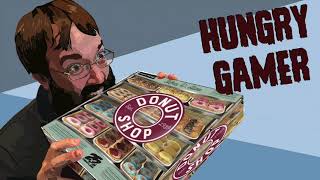
Donut Shop has earned overwhelming praise from reviewers as a charming, accessible tile-laying game that manages to feel both relaxing and strategically engaging. The consensus is remarkably consistent: this is a delightfully simple game wrapped in an exceptionally thematic presentation. Reviewers from Watch It Played to Meeple Mountain describe it as a "cute, sweet, whimsical" experience that works equally well for newcomers and experienced gamers alike. Where There's A Wilz There's a Play calls it a "pretty light game, pretty chill relaxing game" perfect for an evening at the table, while The Hunger Gamer praises it as "a very pleasant game" with almost no genuine drawbacks. The only points of friction are minor: some feel the endgame can drag slightly at two players, and the final round occasionally feels anticlimactic when players are simply placing tiles without boxing donuts. But these criticisms barely dent the game's appeal.
Core Mechanics That Define Donut Shop
Tile Placement with Scoring Groups
At its heart, Donut Shop is a tile-placement game where players build patterns of matching donuts on a shared board. Each turn, you place a donut tile and then score money based on how many donuts of the same type connect orthogonally to what you just placed. The beauty of this mechanic, as Meeple Mountain notes, is that "strategy is dependent on what tiles are out and where they are at." You can place tiles however you wish, but you earn more money by building larger groups of matching colors. This creates a constant tension: do you place a tile to maximize your immediate income, or do you position it to set up future opportunities or block what another player is building?
Boxing Donuts to Fulfill Orders
The second pillar of gameplay is the boxing mechanic. After placing your tile, you can optionally use order cards from your hand to fulfill customer orders by placing a box over a group of donuts on the board. You collect the money shown on the box, which ranges from small boxes worth minimal points to a dozen-donut box worth significantly more. Ryan and Bethany describe this layered system perfectly: you're "drafting these donut cards, drafting these donut tiles, laying them out in the tableau and then trying to lay them out in such a way that you can box them up for points." The catch, as multiple reviewers note, is that once you box the donuts, they're covered up and stop generating scoring opportunities for everyone else. This creates delicious moments of strategic tension where you must decide whether to cash in now or risk letting an opponent snatch your setup.
The Donut Shop Experience
Charming and Inviting Atmosphere
One of the reasons Donut Shop resonates so strongly is its commitment to thematic immersion. The game comes with thematic component holders: a napkin dispenser for order cards, a donut display rack for tiles, and even card holders designed to look like napkin dispensers. Ryan and Bethany highlight this attention to detail: "You could just have tiles and flip them over. No, way. For this game, you're going to have an actual donut display and you're gonna have this little stack that you put them on and it's going to be adorable." The Hunger Gamer captures the warmth perfectly: the game "fills you with the kind of nostalgia that makes you feel warm inside, much like actual donuts." The box art by James Churchill is so appealing that Meeple Mountain notes families get excited just opening the box. This isn't a game that hides its theme; it celebrates it at every turn.
Relaxing Yet Satisfying Strategy
Despite its simple rules, Donut Shop manages to deliver genuine strategic satisfaction without overwhelming players. The Hunger Gamer describes it as "such a relaxing little game, it's so low stress because you're not being filled with tons of choices, you're not being hit with tons of options, you just literally have one tile and a card." Yet the decisions feel meaningful. Players are constantly balancing whether to score from placement or prepare for boxing, and always aware of what opponents might do to their developing groups. When someone boxes up the donuts you were building toward, it stings in a satisfying way. When your careful setup pays off, the reward feels earned. It's engaging without being demanding, strategic without being stress-inducing.
What Makes Donut Shop Stand Out
A Shared Board That Forces Real Player Interaction
Unlike many tile-laying games where players often work in relative isolation, Donut Shop thrives on direct player interaction through its shared board. Every placement and every box affects everyone else's options and scoring. Ryan and Bethany capture this beautifully, describing moments where "you're sharing everybody and so you may be planning ahead but your opponent may also be planning ahead in the exact same spot" and what ends up happening is someone boxes up donuts right where another player intended to, upending their plan entirely, yet somehow still making for an enjoyable moment. This creates a lighter version of the tension found in heavier area-control games, but it's accessible enough to engage casual players who might find those heavier games intimidating.
Thoughtful Production Design That Reinforces Theme
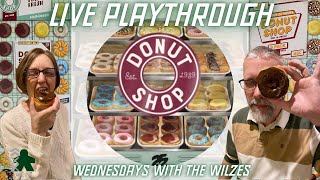
Donut Shop's component quality and presentation go beyond mere aesthetics; they actively enhance the experience. The board serves multiple visual purposes, from the napkin dispenser holder that makes card selection feel authentic to the way the donut display rack showcases the tiles. These aren't gimmicks; they're part of what makes setup feel like an event rather than a chore. Where There's A Wilz There's a Play spends considerable time appreciating the cute little display, noting how the backs of the cards look like napkins and how the tile holder actually resembles a donut display. This level of thematic coherence makes learning the game more intuitive and makes every game session feel special, even on casual weeknight nights.
Potential Drawbacks
Slightly Uneven Pacing in the Final Rounds
The Hunger Gamer raises a fair criticism, noting the game can run slightly longer than it wants to, especially at two players. It can feel like it drags as tiles dwindle and the board becomes increasingly full. Additionally, the endgame can feel anticlimactic: when players reach the final turn and simply have to place a donut tile without a chance to box anything up, the ending lacks the satisfying crescendo the rest of the game builds toward. This is a minor rhythm issue that doesn't undermine the core experience but does mean pacing can sag if the game isn't moving briskly enough.
Initial Connection Rules Can Require Clarification
While the rulebook is straightforward, the tile-placement rules can confuse new players during their first game. Tiles must connect fully edge-to-edge with existing tiles, and players can't split existing groups. This needs clear explanation before play begins. However, once the rule clicks, play flows smoothly, and this is a minor hurdle that experienced players will find insignificant. The game's speed and simplicity help overcome this initial teaching moment.
If You Enjoy Donut Shop
Players who appreciate Donut Shop's blend of light strategy and thematic charm should explore related games that share its sensibilities. Garden Bow offers a similar stacking and placement mechanic with an elegant natural theme. Castle Panic provides cooperative tile placement with engaging spatial puzzle elements. Players drawn to Donut Shop's shared-board tension, where your setup might benefit or hinder your opponents in unexpected ways, will find that satisfaction echoed in other light-to-medium tile-layers that reward careful reading of the table over heavy planning.
What Reviewers Are Saying
"It's a very pleasant game, it's a very enjoyable little game and really I have a hard time saying anything negative about it because it's just a cute sweet whimsical little tile laying game and I enjoyed it."
— The Hunger Gamer
"This is mouth-wateringly good. As we were playing this game, both of us mentioned separately, yes, go grab a donut, and the game is just a really fun experience with this wonderful presentation coupled with the gameplay of this game."
— Ryan and Bethany Board Game Reviews
"Donut Shop is simple fun and fills you with the kind of nostalgia that makes you feel warm inside, much like actual donuts did. It's a fun tile placement game of making patterns of similar donuts, the bigger the pattern of your type that you make, the more money that you cash in."
— Watch It Played