


















Hercules and the 12 Labors Deep Dive
What the Community Thinks About Hercules and the 12 Labors
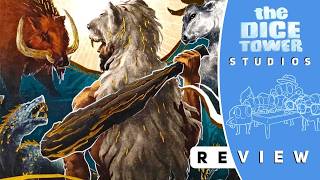
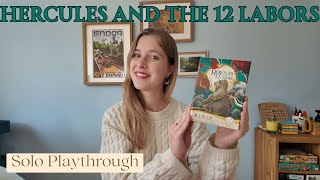
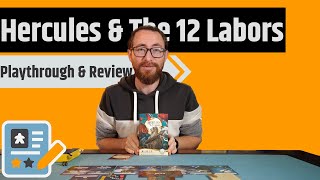
Hercules and the 12 Labors has earned a divided yet respectful reception across board game review channels. Dungeon Dive's Daniel praised the game's beautiful design and engaging snowballing mechanics, though he admitted never coming close to winning despite multiple attempts. Dice Tower's Tom Vassel and Mike Delisio found themselves caught between appreciation for the system design and frustration with the game's swinginess, landing on scores of 6.0 and 5.5 respectively. Grant from Grant's GameRex ranked it number eight on his top ten small-box games of 2025, noting he'd played it "a bunch of times" and enjoyed the puzzle and challenge despite the difficulty. Multiple solo playthrough reviewers expressed genuine enthusiasm for the mythology-rich experience, with one content creator calling the game "really, really well done in game design."
Core Mechanics That Define Hercules and the 12 Labors
Dice Manipulation and Placement
The heart of Hercules and the 12 Labors is a clean dice placement system where you roll Hercules dice and assign them to a labor to deal damage. What elevates this beyond simple dice rolling is the constant ability to manipulate pips using power cards unlocked as you defeat enemies. As Daniel from Dungeon Dive explained, "the ways you can manipulate dice, those grow over the course of the game." You might spend health to change a die from a three to a four, convert a six into a one (since pips wrap around), or use special abilities to reroll entire dice pools. This manipulation keeps randomness manageable without eliminating it entirely. Envy Born Games designed the system so that your options expand dramatically as you progress, turning early-game fumbling into late-game tactical chess.
Engine Building Through Defeated Enemies
Each labor you defeat flips over to reveal a reward card that stays in play permanently. These cards grant new dice manipulation abilities (blue squares) and shield mechanics (gold squares), creating a cascading engine where your power grows with each victory. Tom Vassel from Dice Tower called this "the part that I like about it the most," noting that defeated labors become ways you can manipulate and do things with your dice so that you get more powerful as you move on to the tougher enemies. Daniel observed the "pretty interesting snowballing effect where at the beginning of the game, things seem rather simple, kind of mundane, kind of rote. You don't have a lot of choice, but as you progress through the labors, you will be earning more things to do and more interesting things start to happen." This progression feels earned and thematic, rewarding you for survival rather than punishing you for it.
The Hercules and the 12 Labors Experience
A Solo Puzzle That Demands Presence
Reviewers consistently described Hercules and the 12 Labors as a punishing but rewarding solo puzzle. The game forces you to make meaningful decisions each round: which dice to lock, which powers to use, whether to spend precious health to manipulate a roll. Grant noted that even if you didn't beat the whole game, it still feels good when you beat your previous personal record. The challenge is real and consistent, with reviewers acknowledging that winning is genuinely difficult across all difficulty modes. One reviewer remarked that god mode (starting with only three dice) is "not recommended" and frankly questioned whether winning it was even feasible. Yet the difficulty never feels arbitrary because your choices matter at every step.
Thematic Immersion Through Mythology
The mythology woven throughout the game creates an emotional anchor that pure mechanics cannot provide. Each labor card opens with a richly written lore passage grounding the challenge in Greek mythology. One reviewer spent considerable time reading the stories of Hercules' trials, expressing genuine fascination with the narrative and design integration, saying "I love the lore elements in between. I love how thematic it is." The bow-wielding progression, the Hydra's regrowth mechanic, and the Stables labor all map directly to classical myth. This narrative context transforms the game from abstract puzzle into mythic journey, encouraging players to engage with the story even if the dice betray them.
What Makes Hercules and the 12 Labors Stand Out
Exceptional Production Value in a Small Box
Every reviewer noted the exceptional visual presentation. Gold foil stamping catches light on each labor card, and the artwork commands attention. Daniel from Dungeon Dive praised the graphic design for being visually striking, with "great art and great pretty easy to read icons." Tom Vassel observed that even in the overview, the game was "just like kind of popping." The marbled dice are beautiful. The card layout is panoramic and theatrical. For a game that ships in a small box, Hercules and the 12 Labors punches far above its weight class in production quality, making each labor feel like an event rather than a turn.
Solo-Only Design That Treats Solo Seriously
Unlike many games that bolt on a solo mode, Hercules and the 12 Labors is designed exclusively for a single player from the ground up. Grant highlighted this distinction, noting it was the only solo-specific game on any of his top ten lists this year, and that while other games on his lists have solo modes, this one is specifically for a single player. This focus shows in every system: the mood deck creates dynamic scaling, the divinity track introduces a secondary win condition that prevents purely mechanical grinding, and the escalating labor difficulty requires constant adaptation. The game respects your time and intelligence by never patronizing or over-explaining itself once you understand the core loop.
Potential Drawbacks
High Randomness From Mood Cards Compounded by Dice Rolling
Dice Tower's Tom and Mike identified a significant concern: the combination of dice rolling randomness and mood card randomness creates swinginess that can feel overwhelming. Mike noted that the game sits "way far on the continuum" for his tastes, where if you just happen to not roll fives or sixes, you may lose six health. More problematic, mood cards can be drawn repeatedly or skipped entirely in unlucky stretches. "You could have a never draw a bad card or never draw a good card," Tom said. "That is something that could very easily happen." They proposed a simple fix, suggesting drawn mood cards should be removed from the deck rather than reshuffled, which would guarantee more even distribution. While the manipulation tools help mitigate bad rolls, early bad luck can snowball into unwinnable positions before you've gained enough tools to compensate.
Rule Book Clarity Issues and Buried Divinity Track
Dice Tower identified a structural flaw: the rule book does not adequately explain critical systems upfront, particularly the divinity track requirement for winning. "The divinity thing particularly kind of sticks in my crawl a bit because again, it is a game-winning thing," Mike said. "I need to know how many times it's going to show up because that determines how much effort you need to put into it." The issue compounds because divinity-raising abilities don't appear until the third or fourth labor, leaving new players unaware for most of their first attempt that they're required to track a second win condition. Additionally, the rule book lacks a clear example of how to assign multiple dice to different creatures when facing multi-enemy labors, and the blue and gold square distinction with its once-per-roll usage rules requires careful tracking when you have nine cards in front of you, which can become a little cumbersome.
If You Enjoy Hercules and the 12 Labors
If the mythology, dice manipulation, and solo puzzle appeal to you, Hercules and the 12 Labors points toward a distinct niche in solo gaming. The emphasis on escalating solo challenges with engine-building rewards suggests overlap with other narrative-driven solo dice games and puzzle-heavy solitaire experiences. The theme-driven approach means fans of mythologically rich games will find additional resonance. Grant's inclusion of Hercules and the 12 Labors on his small-box games list alongside lightweight puzzle games like Neco Syndicate and Please Don't Burn My Village suggests that players seeking challenge and visual beauty in compact packages will find value here, even if they normally avoid solo games.
What Reviewers Are Saying
"There is quite a bit of luck because you are dealing with your die rolls and there will be times when there is some light resource management where some of the powers do cost you spirit, your health, and so balancing those things together is something that you want to keep in mind."
— Dungeon Dive
"The part that I like about it the most is also the part that can sometimes be a little bit fiddly, which is I love this system of defeated labors becoming now ways you can manipulate and do things with your dice so that you get more powerful as you move on to the tougher enemies."
— Tom Vassel, Dice Tower
"I love the dice rolling and the dice manipulation is very clever. It doesn't feel like I'm just chucking dice. I think it's really, really well done in game design. I'm very excited to see what this game designer is going to do next."
— Watch Review