









Race to Kepler: A Deckbuilding Space Adventure Deep Dive
What the Community Thinks About Race to Kepler
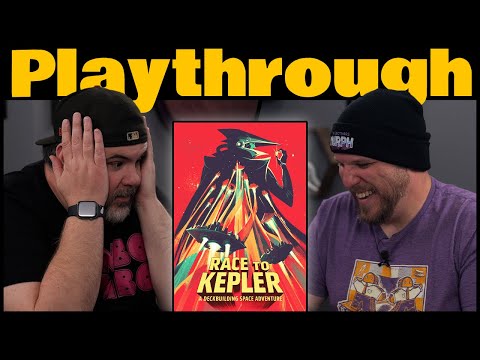
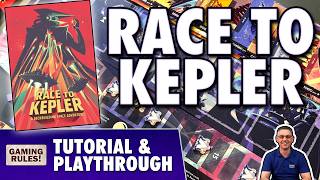
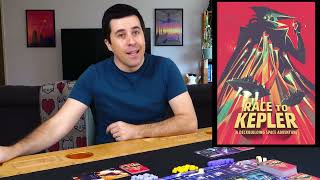
Race to Kepler has captured the attention of board game reviewers across multiple channels with its blend of deckbuilding mechanics and a compelling race to humanity's new home. The game presents a thematic narrative where players command city-ships racing 20 sectors to reach Kepler-452b after Earth's decline, and reviewers consistently praise the way mechanics align with theme. Good Time Society highlights the nice ring to the Kepler-452b destination, while The Brothers Murph bring infectious energy to describing the game as a deckbuilding space adventure that delivers both mechanical depth and table presence. Merchants of Play offers a detailed tutorial playthrough, emphasizing how the game's complexity scales with city selection, making it accessible to new players while offering strategic nuance for veterans.
Core Mechanics That Define Race to Kepler
Deck Building and Engine Creation
At its heart, Race to Kepler is a deck building game where players start with identical 10-card decks containing seven iron cards, two gold cards, and one mafia card, then construct increasingly powerful engines by acquiring crew cards from the market. The Merchants of Play playthrough explains: "You play cards, they generate money, you spend that money on crew. That crew is what's going to generate energy, and you then use that energy to power your ship." The crew cards come in four departments (scientists, engineers, miners, and smugglers), each providing distinct synergies. Scientists excel at ejecting cards for benefits; engineers gain bonuses when cards are discarded; miners generate extra money during market actions; and smugglers manipulate the crew supply and airlock. The game shifts from a launch phase, where new cards go to your discard pile, to a race phase after your first Titan encounter, where acquired cards go directly to your hand, dramatically accelerating the pace and power turns. Conduit Games designs each city card with unique abilities and operations that customize how players interact with the engine-building progression.
The Racing Track and Movement via Energy
The other defining mechanic is the 20-space track representing the journey to Kepler. Players do not move directly with cards; instead, they generate energy through crew effects and convert that energy via their city's operations into sector jumps. Each city has different operation costs and jump values. Bangkok City requires spending nine energy to jump one space for every card played beyond the sixth, while Tokyo gains an energy whenever you eject a card and can spend energy to jump. The Brothers Murph highlight how this works, noting the first one to reach space 20 wins, which makes movement the primary scoring mechanism. The Merchants of Play playthrough demonstrates multiple operations per turn at varying energy costs, each usable once per turn, allowing skilled players to chain multiple jumps. This mechanic rewards planning and resource management, since players cannot save energy or money between turns; everything unused is lost.
The Race to Kepler Experience
Titan Encounters and Bidding Warfare
When a player lands on a Titan encounter space, the game pauses for a simultaneous auction. Three Titan cards are revealed, and all players bid using cards from their hand, with the bid value being the total of those cards' printed costs. The highest bidder takes one Titan card directly into their hand and can use it immediately, but crucially, all players who bid lose their cards to the discard pile regardless of outcome. This creates tense decision-making: do you risk cards you might need, hoping to win a powerful Titan that rewards power turns, or conserve for future turns? Merchants of Play captures this perfectly when Paul says, "I could put loads of cards in thinking I might be able to beat him, and then if I don't beat him, I've lost my cards, which means my next turn is going to be really painful. So it's a tricky decision to make." Titans offer game-changing abilities, and the stakes are real: every player who places a bid discards those cards whether or not they won.
Turn Flow and Resource Tension
Each turn moves through an action phase and cleanup phase. In the action phase, you play any number of cards for their effects, acquire one card from the market per market action token, and activate city operations. All card effects are optional, and generated resources, including money tokens, energy tokens, and market tokens, must be spent immediately. Good Time Society explains the stakes: unused money tokens are lost at the end of a player's turn. This creates constant pressure to use everything, especially once purchased cards go directly into hand during the race phase. The cleanup phase forces you to discard all cards in hand and play area, meaning even powerful combinations evaporate and your deck cycles. This timer effect, with no storage between turns, keeps the game moving and prevents dominant positions from calcifying.
What Makes Race to Kepler Stand Out
City Asymmetry and Strategic Customization
Every player selects from three unique cities at game start, each with their own passive trait and four energy-based operations. Tokyo's trait grants energy whenever you eject a card, perfectly pairing with ejection-focused crew synergies. Karachi's trait allows skipping a Titan card win to instead jump three sectors, a bold bet on speed over cards. Bangkok demands high card play to maximize jumps, creating a different puzzle than Tokyo. Merchants of Play notes that Bangkok carries a high-complexity rating, while simpler cities let newcomers ramp in. The Brothers Murph emphasize how different cities create different gameplay arcs, observing that the player who best uses their city's unique abilities and operations will reach Kepler first. This asymmetry means the same market cards play entirely differently across the city decks, driving replayability and personal strategy.
Card Synergy and Crew Departments
The four crew departments create build paths that reward specialization without forcing it. Good Time Society details how the departments provide synergy both within their own type and across others. The Brothers Murph's Mike builds green scientists and experiences a breakout turn when all his green cards come together, yielding explosive energy generation. Merchants of Play's Rick discovers that the ore processor, which ejects iron and converts it to gold while generating energy, unlocks multiple energy sources when combined with his Tokyo trait. Crew cards show two types of effects: black banners trigger when played, while white banners trigger on discard or eject. This split keeps every card relevant across multiple contexts and rewards players who pay attention to timing and card effects.
Potential Drawbacks
Early Game Pacing and Slow Buildup
The launch phase, before the first Titan encounter, moves slowly compared to the explosive race phase. New cards go to the discard pile, not hand, meaning you cannot use them the turn you buy them. Merchants of Play notes this explicitly: like most deck building games, it is off to a slow start, but as soon as players start jumping, the game escalates. For roughly the first three to five turns, players are playing weak resource cards and watching their market options without immediate payoff. Only after someone triggers the first Titan encounter does the rule change kick in and newly acquired cards go straight to hand, allowing combo turns. This design choice, locking the race phase behind a Titan, creates a pacing problem for impatient groups, since the early game feels slow compared to the mid and late game's explosive turns.
City Complexity and Learning Curve Variance
While city asymmetry is a strength, it introduces a complexity trap. Good Time Society advises new players to go with a city carrying a low difficulty rating. But Merchants of Play's Paul plays Bangkok, a high-complexity city with a nuanced energy-to-jump formula, and spends much of the playthrough second-guessing his operations. The Brothers Murph play simpler cities and still experience confusion around operation thresholds and energy tracking. Keeping track of operation costs, available energy, and which operations you have already used requires active memory management, and the asymmetric operations mean no two players have the same reference frame. A table of mixed experience levels can see early players struggling to optimize while experienced players pull ahead simply through better city choice and operation math.
If You Enjoy Race to Kepler
If you love Race to Kepler, seek out Cosmic Dragons, which the Merchants of Play playthrough explicitly compares to the Titan bidding tension, as both reward careful card selection and risk assessment. Other deckbuilders like Dominion and Ascension offer similar engine-building satisfaction, though without the racing track. For the simultaneous bidding element, Modern Art and Ra deliver auction-focused experiences. If you prize crew synergies and turn-to-turn discovery in a science fiction setting, Dune: Imperium blends deckbuilding with tense decision points that fans of Race to Kepler will appreciate.
What Reviewers Are Saying
"In this deck building space adventure, two to four players pilot massive city ships. Yeah, city ships. They're leaving Earth because we ruined it, obviously, and racing for the nearest habitable planet, Kepler 452b."
— Good Time Society
"You play cards, they generate money, you spend that money on crew. That crew is what's going to generate energy, and you then use that energy to power your ship. That's essentially how the game plays."
— Merchants of Play
"The player who most definitely uses their city's unique abilities and operations will reach Kepler first and be declared the winner."
— The Brothers Murph