



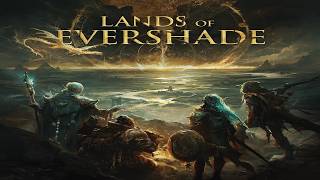



















Lands of Evershade Deep Dive
What the Community Thinks About Lands of Evershade
Lands of Evershade has captivated reviewers across the board gaming community with its ambitious scope and meticulous execution. Reviewers at Meet Me at the Table praised its approachability despite its scale, calling it "highly approachable" and "easy to get to the table" despite the sheer volume of content. Board Games Unlocked described a wave of genuine excitement returning to campaign games, noting that the unboxing alone demonstrates Awaken Realms' commitment to quality across every component. Multiple playthrough channels have invested significant time exploring the game's depth, running through entire campaigns and discovering how the narrative branches and adapts based on character decisions.
Core Mechanics That Define Lands of Evershade
The D12 Resolution System and Fate Tokens
At the heart of Lands of Evershade lies an elegant dice system centered on D12s, the core resolution mechanic for everything from combat to skill checks. Characters roll dice based on relevant attributes, comparing successes against a target number. What makes this system shine is the fate mechanic: rolling the fate symbol on a die doesn't feel like failure. Instead, it grants you a fate token, a reroll resource that can be spent during crucial moments or banked for later. Reviewers highlighted how this transforms traditionally frustrating rolls into meaningful narrative moments. One player noted getting "a lot of successes" felt good, while even failing a roll carries the silver lining of gaining fate. This inverts the traditional tension found in most TTRPGs, making every die roll matter regardless of the outcome.
The Time Track and Initiative System
Awaken Realms managed to streamline one of the most cumbersome aspects of dungeon crawlers: initiative. Rather than tracking individual turn order, players and enemies draw tokens from a bag each round. White tokens represent players, black tokens represent enemies, and mixed tokens determine which side acts next based on activation count. This system keeps combat flowing and eliminates the stop-start rhythm of traditional initiative. Alongside combat, time tracks add narrative pressure to exploration. Players advance markers as they explore, knowing certain events trigger when time runs out, creating genuine urgency without feeling arbitrary. Reviewers appreciated how time didn't feel like a penalty but as a story mechanic that forces meaningful choices about how to spend your limited window.
The Lands of Evershade Experience
A High Fantasy Story Without a Gamemaster
The most striking aspect of Lands of Evershade is how it delivers a rich narrative without requiring a dungeon master. The story book reads passages, presents choices, and adapts based on which keywords your character possesses. When reviewers encountered passages with keywords like "large" or "cityborn," the story acknowledged their character's nature without forcing a single path. One playthrough showed how a character's race completely changed an NPC interaction, with an embassy noticing their dwarf party member. This level of integration made the world feel responsive rather than on rails. The narrative balances description with action, never allowing the story to become purely expository. Reviewers described the writing as engaging, with a good sense of humor that prevents the dark fantasy setting from becoming oppressively grim.
The Deep Sense of Character Agency and Progression
Character creation felt like half the game itself. With eight races, seven classes, and branching skill trees, the combinations are genuinely staggering. But what reviewers loved most wasn't just the quantity of options but their meaning within the story. A character's race, profession, and origin all influence which passages they encounter, which choices unlock for them, and how NPCs treat them. Progression through the skill tree feels rewarding, with advancement tokens earned through play flowing into meaningful upgrades that unlock new abilities. The camp phase, where characters rest and recover, became a highlight for many players, offering healing, character development, and companion recruitment without feeling like wasted downtime.
What Makes Lands of Evershade Stand Out
Component Quality and Production Value
From the moment reviewers unboxed Lands of Evershade, the craftsmanship became apparent. The miniatures, painted with Awaken Realms' signature sundrop technique, looked phenomenal with no broken pieces reported even after shipping. The cardboard components slot cleanly into player boards, creating an intuitive interface that doesn't require constant reference to rules. Punch boards containing hundreds of tokens, items, and cards are organized by rarity and type, making setup and teardown surprisingly efficient for a game this size. One reviewer marveled at the insert system, noting that everything has a home, preventing the chaos that often accompanies campaign games. The player boards themselves are exceptionally well-designed, with a save system that keeps everything protected between sessions and clear iconography that guides players toward correct item placement and ability slotting.
Meaningful Moral Choices That Shape the Campaign
Unlike many story games where narrative branches feel illusory, Lands of Evershade makes it clear that choices matter. Reviewers discovered how saving an NPC in chapter one had consequences chapters later. When faced with moral dilemmas like whether to help a desperate stranger or pursue vengeance, the choices placed story markers that were later referenced. Some reviewers intentionally pursued evil actions, stealing items that quest-givers wanted, killing characters who begged for mercy. Rather than punishment, the game granted them "achievements" like "killer of the week" that changed how subsequent chapters played out. The story remains coherent even when players go dramatically off the rails because each adventure exists semi-independently, allowing characters to change the world without breaking the campaign arc.
Potential Drawbacks
The Learning Curve and Rule Density
The rulebook clocks in at 40 pages, and despite being well-organized and illustrated, the sheer number of systems can feel overwhelming initially. The tutorial chapter guides players through the first adventure step by step, which reviewers appreciated, but getting five players up to speed requires patience. Keyword interactions, action card mechanics, and the various token types all demand careful attention, especially in the first session. One reviewer mentioned that some early rules mistakes slipped through even with experienced players reading ahead, requiring mid-game lookups. The game rewards learning it properly, but that learning curve is genuinely steep.
Component Wear and Campaign Length Commitment
Lands of Evershade is designed for long campaigns, with adventures totaling well over fifty hours of play. The cardboard pouches that hold character items will inevitably wear over dozens of hours of play. While reviewers noted the game packs up efficiently and the insert is thoughtfully designed, the sheer physical volume of components means storage becomes a consideration. For groups with limited time to gather, committing to completing even a single ten to fifteen hour adventure can be challenging. Some reviewers expressed ambivalence about replaying adventures despite the apparent replayability, suggesting the commitment required may limit most groups to a single campaign through.
If You Enjoy Lands of Evershade
Lands of Evershade occupies a unique space between traditional TTRPGs and campaign board games. If its blend resonates with you, several related titles deserve consideration. Tainted Grail: Fall of Avalon and Tainted Grail: Kings of Ruin share Awaken Realms' dark fantasy aesthetic and choice-driven narratives, though with more puzzle-solving elements. Gloomhaven and Frosthaven deliver tactical combat depth and campaign progression, though with less narrative branching. For those drawn to the dungeon-crawling aspects, Dragon Eclipse combines stunning miniatures with story beats. If you want a lighter, faster alternative that still emphasizes narrative choice, Oathsworn: Into the Deepwood delivers adventure in a more compact package. For a solo experience with atmospheric storytelling, Etherfields and Darkest Dungeon both provide haunting narratives alongside tactical gameplay. Nemesis offers similarly nail-biting tension through emergent story rather than written narrative, while Kingdom Death: Monster provides an even grittier high-stakes campaign experience for those seeking maximum difficulty and consequence.
What Reviewers Are Saying
"You're going to have tense tactical combat that you're going to have to use your skills and positioning in order to take out the enemies and complete your objective. There's a rich character creation which you can take a race and a class and be able to build that character up using different skill trees. There's secrets and surprises. You could be doing rooftop chases. You could have a puzzle that you have to solve inside of the game."
— Meet Me at the Table
"The way they did success and re-rolling with the dice is handled really well. If you traditionally didn't like dice rolling because it felt too random to you, hear me out. The way they did the system might actually be perfect for you while still maintaining that TTRPG dice rolling core. The fate symbol means that if you finalize your roll with this, you get fate, and fate is just a reroll."
— Watch Review
"The writing in these story books is good and certainly at times great. There's a nice balance of words and action, as in there's three paragraphs, then it asks your team to make a decision in regards to those words or check something in your party or actually do a dice check. The world still feels big and believable, and the mechanics of the world are quite cool."
— Watch Review