














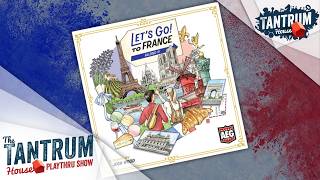












Let's Go! To France Deep Dive
What the Community Thinks About Let's Go! To France
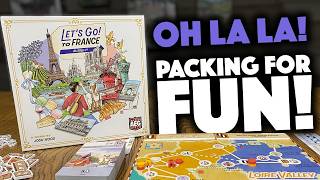
Let's Go! To France has impressed reviewers as a worthy successor to the acclaimed Let's Go to Japan, though with a distinctly different character. Channels like BoardGameCo highlight its blend of puzzle-solving, combo-building, and accessible gameplay. Reactions have ranged from those who appreciate the puzzle challenge to those who love the more flexible, combo-friendly design of the France version, with the consensus landing on a relaxing yet thoughtful trip-planning experience that improves on the formula it inherited.
Core Mechanics That Define Let's Go! To France
Itinerary Building Through Card Placement
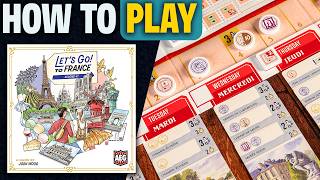
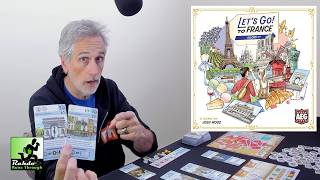
At its heart, Let's Go! To France splits into two distinct phases. In the planning phase, players play cards into a tableau representing their trip across France, building an itinerary day by day. Unlike its predecessor, the France version offers significantly more flexibility in card placement. Players can construct asymmetrical days, stacking several activities on one day and just one on another, without the rigid restrictions that defined Japan's design. The second phase involves resolving those days, where the bottom card in each column, the highlight of the day, triggers special scoring rewards based on what you have stacked above it.
Symbol Matching and Track Advancement
The mechanical depth comes from symbol interactions. Playing cards advances personal tracker icons and triggers bonuses that feed into end-game scoring. Travel symbols unlock movement on a separate travel board, granting bonuses at specific locations. Meanwhile, each day demands careful time and energy management, as overcommitting causes exhaustion and point loss, rewarding players who balance their itineraries across the week. The card-passing structure, where players draw, play, and pass differing quantities each round, keeps the puzzle dynamic and the hand management tense.
The Let's Go! To France Experience
Puzzle Meets Combo Payoff
The game offers a compelling tension between planning and execution. During the planning rounds, players engage in a card-passing mechanism that structures the entire pre-game puzzle. Once all cards are placed, the satisfaction arrives during the resolution phase, where the combos and synergies you have built trigger in sequence. Players consistently report the feel-good moments when a day resolves exactly as planned and multiple symbols align to unlock points, giving the game a rewarding rhythm of setup and payoff.
Accessibility Through Flexible Strategy
France's design philosophy embraces player agency over strict optimization. The reduced restrictions and increased bonus opportunities create more avenues to victory, allowing players to pursue multiple strategic paths. Whether you are building around flower collections, nature icons, architecture attractions, or journal mechanics, the game rewards commitment to a chosen path. This openness makes it approachable for casual players while still offering enough interlocking systems to engage experienced gamers experimenting with novel card combinations.
What Makes Let's Go! To France Stand Out
A More Forgiving Sequel That Broadens Appeal
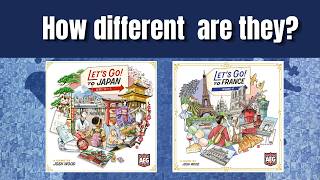
While Japan focused on tight puzzle-solving with strict placement restrictions, France deliberately loosened those constraints to reward creative combo-building. The addition of more bonuses, more track options, and the ability to shape asymmetrical days means fewer dead ends and more moments where a clever plan actually comes together. This design choice makes France more accessible without sacrificing depth, appealing to players who found Japan's strictness frustrating while still respecting the original's design legacy.
Rich Iconography and Location-Based Flavor
The game's location cards bring authentic French geography and culture into the tableau. Players interact with real places, and each card type (nature, food, architecture, shopping, culture) grounds the abstract point economy in thematic resonance. The travel board and location bonuses reinforce the trip-planning fantasy, making victory feel like the culmination of a well-planned vacation rather than just a high score. Published by Alderac Entertainment Group, the production leans into that breezy, aspirational travel mood.
Potential Drawbacks
Variance From Card Availability and Passing Order
The card-passing mechanism creates significant variance. Players who receive favorable cards from neighbors gain meaningful advantages, while those passed less relevant cards must pivot strategies or spend resources fishing for new options. The specific distribution of card types in players' hands can make some strategies hard to execute in a given game, even if the player understood the combo on the table. This means two plays can feel substantially different based on the luck of the draw and neighbor generosity.
Complexity in the Mid-Game Decision Space
While the core loop is intuitive, the mid-game creates an explosion of simultaneous options, symbol tracking, and bonus interactions. Players frequently find themselves uncertain about optimal card placement given the dozens of micro-decisions about which track to advance, which bonus to chase, and whether to save actions for later opportunities. Newcomers can experience a touch of analysis paralysis before the scoring relationships become second nature, which can slow the otherwise relaxed pace.
If You Enjoy Let's Go! To France
If Let's Go! To France resonates with you, consider Let's Go to Japan, its predecessor, which offers a tighter puzzle-solving experience with more restrictive placement rules for those seeking greater challenge. For players who love the card-passing and tableau-building elements, Sushi Go! delivers similar drafting in a faster, lighter package, while 7 Wonders scales that drafting tension up to a civilization-building scope. If the relaxing itinerary-planning theme appeals, Calico offers another cozy tableau puzzle with satisfying spatial scoring.
What Reviewers Are Saying
"If you're familiar with Let's Go to Japan, you are not limited to specifically three cards per column, you can mix and match. You can do a five activities on Monday and only two on Tuesday. You have a lot more flexibility over how you play your cards here."
— Board Game Co.
"When we're done planning our trip, we're going to go day by day resolving the trip, and each of the cards is going to have a variety of symbols. The bottom most card in each column has something called the highlight of the day, which usually is a scoring thing that's going to reward you for the things you've done so far."
— Board Game Co.
"If you're someone that likes combos and feel good moments, then France is probably the one for you. Regardless, I think both of these games are great and you can't really go wrong with either."
— Watch Review