








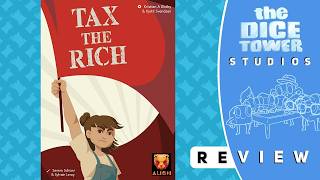
Tax the Rich Deep Dive
What the Community Thinks About Tax the Rich
The board gaming community views Tax the Rich as a clever and thematic trick-taking game that successfully integrates political and class-based mechanics into its core systems. Reviewers consistently praise how the game uses its inflammatory title and subject matter not as mere provocation, but as genuine design choices that shape gameplay. While some find the learning curve steep and the rule interactions confusing during early plays, those who embrace the game's systems generally rate it highly as a solid, engaging alternative to traditional trick-taking games. The game has appeared on multiple 2025 year-end top 10 lists, indicating strong recognition within the review community.
Core Mechanics That Define Tax the Rich
Trick-Taking with a Revolution Mechanic
At its heart, Tax the Rich is a trick-taking game, but one built on a foundation of clever wrinkles. The core mechanic follows standard trick-taking patterns: each round, players lead cards and must follow suit when possible. However, the game introduces a critical twist through the revolution mechanism. When a player holds only cards flagged with the revolution symbol, they can declare a revolution, flipping the hierarchy entirely. From that point forward in the hand, the lowest card wins tricks instead of the highest. This mechanic creates dramatic moments of tension and gives players with weak cards a path to victory, subverting the typical power dynamics of traditional trick-taking games. Reviewers note that this wrinkle feels fresh while remaining relatively simple to learn and execute.
Dynamic Bidding for Trump and Partnership Selection
The bidding phase serves a dual purpose that reviewers find particularly elegant. Players bid not just to determine the trump suit and establish how many tricks they need to win, but also to signal partnerships. The highest bidder becomes the party leader and calls out a specific card by color and number. Whoever holds that card becomes their ally, regardless of whether that was the intended target or not. This creates an interesting dynamic where bidders must estimate both the strength of their hand and their odds of correctly predicting partnership. The trump suit changes with each round as bids are placed, keeping the game dynamic and forcing constant reevaluation of strategy.
The Tax the Rich Experience
Thematic Alignment Creating Narrative Tension
Reviewers highlight that Tax the Rich uses its political theme not as window dressing but as a functional narrative layer that helps players understand why the rules exist. The president card (12) cannot be led because the president is an incompetent leader. The 1 card represents the poor, and when you win a trick with the 1, you get to steal a trick from whoever currently has the most. When you have only low cards, you can declare a revolution, and suddenly the oppressed become powerful. These mechanical-thematic alignments create what reviewers describe as a satisfying integration where the theme and systems reinforce one another, making otherwise abstract rules feel intuitive and memorable.
Social Dynamics Through Negotiation and Uncertainty
The bidding and partnership system creates rich social moments at the table. Because partnership selection can feel somewhat random or based on imperfect information, players must constantly read and react to one another's signals. The game encourages table talk and discussion as players debate strategy, second-guess partnerships, and react to unexpected alliances. This social layer transforms Tax the Rich from a mechanical puzzle into a social experience where player interaction and negotiation feel central to the fun.
What Makes Tax the Rich Stand Out
A Provocative Title Matched by Elegant Design
The game's title and political theming could easily come across as gimmickry, but reviewers universally note that the design backs up the messaging. The mechanics genuinely reflect the theme of class struggle and wealth redistribution. Rather than being surface-level satire, the game's rules embody its satirical intent. Designer Alion Games (mentioned by some reviewers as an innovative Euro designer) has created a game where the provocative title feels justified by thoughtful mechanical design that rewards both strong players and those dealt weak hands, reflecting real-world dynamics of systemic power and resistance.
Quick, Accessible Play with Strategic Depth
Tax the Rich delivers as a light to medium-weight trick-taking game that plays in roughly 30 minutes with three to six players. Despite some rules complexity, reviewers praise how quickly new players can grasp the core loop and begin engaging with strategic choices. The game supports an advanced variant with special rule cards that modify gameplay each round, adding layers of complexity for groups seeking deeper play. This scalability means the game works both as a quick social experience and as something with more meat for dedicated players.
Potential Drawbacks
Steep Learning Curve and Rule Opacity
Several reviewers note that while the thematic framework helps, Tax the Rich still presents a significant teaching burden. The interaction between the revolution mechanic, the bidding system, partnership selection, and the various rule variations creates a rulebook that can feel dense. New players often need hands-on teaching during their first game, and some rule interactions may remain unclear even after play begins. The learning curve is steep enough that some groups may need multiple plays before everyone feels comfortable with the flow of the game.
Partnership Selection Can Feel Arbitrary
The bidding system's dual purpose creates an interesting dynamic, but reviewers acknowledge that partnership selection can sometimes feel random. A player might bid confidently on a color they feel strong in, but the ally call goes to the wrong person due to incomplete information or unfortunate card distribution. This can create situations where partnerships feel opaque or unsatisfying, particularly for players who prefer more direct control over their team composition. Some consider this a feature that rewards reading the table, while others view it as a drawback to the otherwise elegant systems.
If You Enjoy Tax the Rich
Players who enjoy Tax the Rich's thematic trick-taking and bidding mechanics will find similar satisfaction in Bridge, which shares the game's complex bidding language and partnership dynamics, though without the class struggle theme. Those drawn to the game's political satire and class-based mechanics might explore other games that use social hierarchy as a core element. The comparison to Norse Wind appears in community discussion, likely because it shares a publisher in Alion Games. Reviewers also compare the bidding and trump-determination systems to the negotiation and dynamic variety found in numerous trick-taking games across the hobby's history, suggesting that players already invested in trick-taking will find Tax the Rich offers a refreshing take on familiar foundations.
What Reviewers Are Saying
"I find it to be a fascinating thing, and I like that it doesn't add too much to the game. I think that that right there is a solid trick-taking game with a few wrinkles."
— The Dice Tower
"This is a very thematic trick-taking game with a class division socialism theme and that's been incorporated I think really well. You can't lead with the highest value card because that's the president who's an incompetent leader. And if you only have low value cards left in your hand, then you can declare a revolution and it's the lowest value card that wins."
— Allies or Enemies
"There's also a couple of other unique mechanics in there as well. And so that's a nice, unique way of looking at trick-taking with a little bit of political satire in there for you."
— Board Gaymes James