




Ham Helsing Deep Dive
What the Community Thinks About Ham Helsing
Ham Helsing has proven to be a delightfully divisive cooperative adventure from Fireside Games. Reviewers universally praised the game's whimsical charm drawn directly from Rich Moyer's graphic novel series, while opinions split sharply on its mechanical complexity and difficulty curve. The game resonated most strongly with players who embrace card crafting as a core gameplay experience and significantly less with those seeking a lighter, more forgiving cooperative adventure. One reviewer ranked it as their number one cooperative game of 2025, while others expressed deep frustration with its punishing difficulty and volatility.
Core Mechanics That Define Ham Helsing
Card Crafting with Transparent Overlay Cards
Ham Helsing's most distinctive feature is its transparent card-sleeving system. Each player begins with exactly 10 identical cards and never adds more to their deck. Instead, they purchase transparent overlay cards from a shared market that physically slide into existing cards, enhancing them with new icons and abilities. This creates a deeply satisfying progression where a modest starting card transforms into something powerful. Because players cycle through their small deck repeatedly over five rounds, purchased cards take effect immediately on the next turn, rewarding thoughtful planning. Reviewers consistently highlighted this mechanic as genuinely fun, with multiple reviewers noting it was the first card crafting system they truly connected with compared to similar games like Mystic Vale.
Asymmetric Cooperative Movement and Minion Spawning
The game unfolds across an irregularly shaped board where players move between connected regions, fighting minions and building resources toward a final boss battle. Each character brings a unique special ability, and clever positioning matters significantly. During combat, players spend colored attack icons to defeat enemies, many of which counterattack when defeated. A location system forces tactical decisions about where to end your turn: minion tokens drawn at round's end spawn in connected areas, and if any location accumulates too many minions, it breaks permanently and becomes inaccessible. This creates genuine cooperative puzzle-solving where players constantly discuss optimal positioning and strategies.
The Ham Helsing Experience
Escalating Empowerment Through Five Rounds
Ham Helsing's structure creates a satisfying power fantasy arc. The first round typically focuses on fighting minions and building your deck, while the final rounds concentrate your firepower against the boss. By round five, players who've crafted well may wield cards delivering 18 or more damage where they started with two. This escalation from vulnerability to potency creates genuine excitement. Reviewers noted that a successful final round feels genuinely epic compared to early-game fumbling, delivering the crescendo most cooperative games aspire toward. The game's five-round timer adds pressure without becoming oppressive.
Tense, Swingy Climactic Moments
The boss battle introduces a volatile element: each round, the villain rolls dice to determine which colored attacks it blocks. This mechanic created wildly divergent reactions from reviewers. Some found the resulting tension thrilling, describing games decided by the final card draw or roll. Others found it deeply frustrating, describing moments where players built up powerful colored attacks only to see them completely negated by an unlucky boss roll. That volatility, combined with a five-round time limit, creates genuine climactic stakes where victory never feels assured until the final round resolves.
What Makes Ham Helsing Stand Out
Playable Solo with Meaningful Asymmetry
The game accommodates solo play cleanly by awarding the solo player an extra card draw, creating a different puzzle than multiplayer. Each of the four selectable characters brings a genuinely different toolkit. The game includes multiple bosses with escalating difficulty levels, starting with an easy starter boss and escalating to genuinely punishing endgame challenges. This flexibility means new players can try easier difficulties while experienced groups tackle harder obstacles. The combination of selectable difficulty, character asymmetry, and varied boss mechanics gives the game genuine replayability.
Rich Art and Thematic Commitment
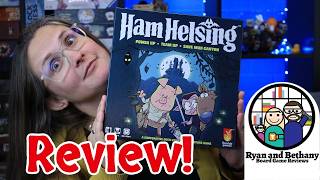
The game's graphic novel heritage shows throughout its production. The artwork is consistently praised as both whimsical and high-quality, with beautiful acrylic standees complete with character backs, a detail reviewers found charmingly unnecessary. The transparent upgrade cards are clever from a production standpoint, solving the physical problem of enhancing cards without traditional deck-building bulk. The overall presentation leans into silly puns and absurdist humor, making the game welcoming to families while delivering real strategic depth beneath the lighthearted surface.
Potential Drawbacks
Extreme Difficulty Even on Easier Settings
Multiple reviewers independently reported that Ham Helsing plays much harder than it appears. Even on the easiest difficulty with the starter boss, groups reported barely achieving victory. One experienced reviewer brought the game to multiple conventions and consistently heard from players that it ranked among the hardest cooperative games they'd encountered. The game ships with optional difficulty modifiers (reducing boss health, removing minion effects), but as presented in the box, it skews punishing. Reviewers expressed concern that families drawn to the charming art might feel demoralized by repeated defeats and suggested this could be particularly problematic when teaching the game to children.
Rules Density Obscured by Light Presentation
While Ham Helsing appears lightweight from its production and box size, several reviewers struggled with its actual rules complexity during learning. There are surprisingly many moving parts: location spawn mechanics, minion movement rules, Knuckles the AI helper's specific behavior, nested abilities, and villain-specific interactions. One reviewer noted they had to reread the rulebook multiple times before truly understanding play, and that the disconnect between the game's light aesthetic and its actual mechanical density tripped them up. For casual players lured in by the cute art, the learning curve may frustrate, and the game doesn't feel intuitive despite its straightforward premise.
If You Enjoy Ham Helsing
Reviewers who loved Ham Helsing frequently praised its kinship with Pandemic for its cooperative crisis-management feeling and tense escalation. The transparent card-crafting system earned direct comparisons to Mystic Vale, though with meaningfully different execution that multiple reviewers found superior. If you're drawn to card crafting, cooperative puzzle-solving with real communication, and games where late-game power feels genuinely different from early-game vulnerability, Ham Helsing delivers. If you prefer lighter cooperatives, guaranteed win conditions, or games where planning eliminates volatility, the game's punishing difficulty and boss roll volatility will likely frustrate.
What Reviewers Are Saying
"At the beginning of the game I'm only doing two damage on my turn, but at the end of the game I have a card that allows me to do 18 damage. If you can craft well and get cards that combo well together and synergize well together, it's really fun."
— Grant Lyon
"The card crafting is really, really fun. What makes it so good is you are upgrading your current hand because you've already drawn your cards and then you get to spend your coin and upgrade what is already in your hand. So you're looking at the board and saying, 'Okay, this is what I need to do. How can I upgrade my cards to do that specific thing?' Wonderful. Just wonderful."
— Hungry Gamer
"Where you end your turn is really important. What card upgrades you buy is important. What color spiders you decide to clear out of your area is important. At what point do you turn from working on the board to attacking the big bad guy. All those little things matter and the timing of them is very important as well."
— Ryan and Bethany Board Game Reviews