











Candy Land Deep Dive
What the Community Thinks About Candy Land
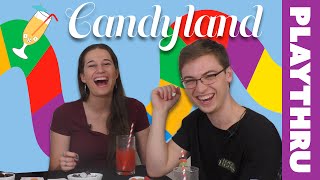
Candy Land occupies a unique place in the board gaming landscape. With tens of millions of copies sold since 1949, it remains an American institution and countless players' first board game experience. Yet the community's assessment is paradoxically honest: the game carries a very low rating on BoardGameGeek and ranks far outside the top games, despite its cultural dominance. Reviewers celebrate its nostalgic appeal and intoxicating candy-colored aesthetic with genuine affection, while candidly acknowledging that it is, by modern standards, a game with virtually no meaningful player decisions. One reviewer notes that Candy Land was likely their very first board game experience, one that left a memorable impression through its sugary art direction and dopamine-inducing theme. Yet the same community concedes that without player agency, the game becomes a vehicle for theme and childhood memory rather than strategic engagement.
Core Mechanics That Define Candy Land
The Draw-and-Move Race to Candy Castle
Candy Land's fundamental loop is deceptively simple: players draw a color card and move their token to the next matching color space along the path to Candy Castle. Designed in 1948 by Eleanor Abbott as a game to entertain children recovering from polio, the mechanic was intentionally stripped of complexity. You have no hand of cards, no deck management, and no choices beyond the physical act of moving. The first player to reach the castle wins instantly. Reviewers note that going first carries a significant advantage, something the game does nothing to mitigate. There are no resource systems, no special actions, and no asymmetrical powers. As one reviewer observes, the game is so devoid of decision-making that a tabletop-simulator mod can have the game play itself and end immediately. Hasbro, the current publisher, has preserved this radical simplicity across decades of editions.
Penalty Spaces and the Licorice Trap
The only friction mechanic in Candy Land is the licorice space: if you draw a card that lands you on a licorice space, you lose your next turn. This represents the game's sole moment of suspense. As you draw near a known licorice space, there is a brief hold-your-breath moment as the card is revealed, hoping the color will not strand you. Even this simple penalty comes with no player agency; it is pure luck whether you land on it or avoid it. The stakes are low, the mechanic is binary, and it is the closest Candy Land comes to creating friction, yet it remains entirely chance-driven.
The Candy Land Experience
A Gateway Into Gaming Through Pure Imagination
Candy Land succeeds not as a game of strategy but as a vehicle for childhood wonder. The intoxicating art and fantastical locations (Peppermint Pass, Gumdrop Mountain, Candy Cane Forest) create an immersive sugary world that captures young imaginations. The game plays in under 30 minutes and requires no reading, no math, and no understanding of strategic concepts. For a three-year-old, this is perfect. A reviewer recalls that the cavity-inducing fantasy land is one they would happily revisit despite its lack of depth. The experience is less about winning and more about the journey through a whimsical landscape with family.
Nostalgic Anchor for Generations
For many adults, Candy Land is their earliest memory of sitting at a table with a game. It marked a rite of passage into board gaming, even if modern play reveals its mechanical emptiness. The game has transcended its original design into cultural mythology. Its prevalence in toy stores and its ubiquity in family homes for nearly eight decades mean that many players have emotional attachments to it independent of gameplay quality. Reviewers acknowledge this nostalgic pull with genuine warmth, even as they dissect why the game itself offers nothing to experienced gamers.
What Makes Candy Land Stand Out
The Role of First Game for Toddlers
Candy Land was explicitly designed to entertain children during recovery from serious illness, and that care shows in its accessibility. It requires no literacy, no numerical skill, and no understanding of complex rules. A four-year-old can play and understand the win condition immediately. There are no hidden information states, no memory requirements, and no way to make a bad move. In the ecosystem of children's games, this radical simplicity is a feature, not a bug. It is a first rung on a ladder into gaming that many will climb throughout their lives.
A Historically Significant Design Artifact
Candy Land's 1948 creation by Eleanor Abbott represents an important moment in game design: the recognition that a game for children does not need to teach strategy, only to create joy. The game has sold tens of millions of copies, a testament to its design mission. Its influence on the children's game category is immeasurable, and it remains the baseline reference point for the simplest game possible. Modern designers still hold it up as the lower bound of complexity, and reviewers reference it when discussing BoardGameGeek's complexity weight system, noting that Candy Land's rating makes it one of the most basic games in the database.
Potential Drawbacks
Zero Meaningful Player Choices
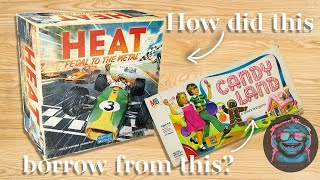
The defining limitation of Candy Land is that there is nothing for an adult or experienced player to do. You draw a card, you move. There is no decision on how to move, where to prioritize resources, or how to adapt to an opponent's strategy. The game literally plays itself, and this is not a flaw in the eyes of its target audience, but it must be stated plainly. Reviewers comparing Candy Land to the modern racing game Heat note that Heat borrowed Candy Land's race-to-the-finish structure but grafted onto it a card management system, gear-shift mechanics, and push-your-luck elements that create constant decision points. The result is that Heat improves on nearly every mechanical aspect of Candy Land while keeping the same simple goal of reaching the finish first.
No Replay Value for Experienced Gamers
Once an adult has played Candy Land, there is nothing left to learn or try. The path is always the same, the rules never change, and success is entirely determined by luck and turn order. Reviewers and designers point out a striking gap between the game's enormous sales and its low community rating. This gap reflects a simple truth: the people who buy it, parents of toddlers, do not rate it on hobby sites, while the people who rate it, experienced gamers, do not enjoy playing it. A single play is sufficient for any adult. There is no strategy to master, no hidden path to victory, and no reason to return to the board once you have seen it.
If You Enjoy Candy Land
If you are drawn to Candy Land for its charm and simplicity, consider these alternatives that preserve its gateway appeal while offering something more for engaged players. Telestrations is a drawing and guessing game that still plays in 30 minutes and requires no prior knowledge, but it does demand actual creativity and creates hilarity through player interpretation. Twister is another classic that strips away decision-making entirely and trades it for physical play and laughter, ideal for the same young audience. For a child's first step toward light strategy, Ticket to Ride: First Journey keeps simple rules while introducing route planning and gentle choices. And adults curious about how modern designers build on Candy Land's race premise should try Heat: Pedal to the Metal, which delivers genuine strategic depth around the same dash to the finish line.
What Reviewers Are Saying
"Candyland is an American institution. This game has been delighting folks since 1949, and with so many millions of copies sold, it's probably one of the best games of all time, right? Wrong. Definitely not according to BGG. It has a 3.2 rating."
— Watch Review
"This diabetic-inducing race to Candy Castle might be my very first experience with a board game. It's at least the first that left a memorable impression, whether it's its intoxicating art or dopamine-inducing jaunts down Peppermint Pass."
— Watch Review
"I didn't realize this growing up, but the game literally plays itself. There's a mod to have the game just end immediately. How is this lighter than a game like Telestrations, a drawing game where you have to draw and guess what other people drew? That's some brain power."
— Watch Review