









Carnival of Sins Deep Dive
What the Community Thinks About Carnival of Sins
Carnival of Sins provokes genuine disagreement among reviewers. For some, it delivers exactly what it promises: a fast, deceptive party game that surprises with how well its simple mechanics work together. Others find it ultimately hollow, a beautiful package that relies too heavily on chance. This divergence is not a flaw in the design but rather a reflection of what the game is: a lightweight bluffing game built for immediate social chaos, not depth.
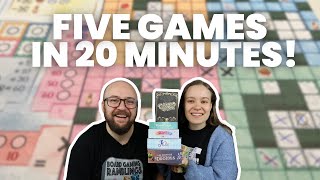
The most striking response comes from reviewers who entered with zero expectations. Board Gaming Ramblings' Johannes and Synnova explicitly stated they had "zero hope" for the game before playing. Yet after one round, they found themselves genuinely enjoying it. They rated it 7 out of 10 and included it on their list of top small box games from 2025. This reversal speaks to how Carnival of Sins catches players off guard by actually working at what it attempts.
Core Mechanics That Define Carnival of Sins
Dice Drafting
Each round, one player rolls all the dice and places them on the table. Those dice stay where they land. Players then take turns selecting individual dice from that shared pool, with each die's number converting directly into victory points. The spatial element matters: rolling dice across the table adds a physical dimension that most card games lack. As reviewers noted, this mechanism forces real decision-making within constraints. You cannot simply take the highest die if someone else has already claimed it. Instead, you must predict what your opponents will do and adapt your card choice accordingly. The dice do not move once placed, so there is precision involved in reading the table and calculating your angles.
Take That
The seven sin cards in your hand each let you interact with dice in different ways, and several of those interactions directly target other players. Gluttony lets you take the highest die. Wrath lets you grab any die and re-roll it, potentially changing its value. Lust lets you claim one odd and one even die, and you can steal from other players' locked dice. Envy lets you score the same points as the devil player. This is confrontational gameplay, but reviewers consistently noted it feels "cutthroat, but not like mean." Because the game is fifteen minutes and everyone knows what each card does, the take-that moments land as moments of social theatre rather than genuine harm. You laugh when someone steals your die or forces a bad roll. The brevity of play cycles keeps interactions light.
The Carnival of Sins Experience
Deceptive Social Play
Carnival of Sins is fundamentally about outwitting your opponents through prediction and bluffing. Every turn, you face the same core question: given the current dice pool and the order of play, what card will your opponents expect you to play, and what card will actually serve you? Board Gaming Ramblings described this as trying to outmaneuver an opponent by reading the dice pool and guessing which card they expect you to play, even while knowing which card they have already committed to. This cognitive layer transforms what could be a purely random game into something tactical. You are constantly playing mind games, trying to second-guess whether opponents will compete for the same die or whether they will pivot to a different strategy. The game's reliance on simultaneous card reveal amplifies this deception: no one sees your choice until the moment you reveal, creating genuine tension in seven simple rounds.
Quick Party Fun
Carnival of Sins delivers the experience of a party game: fast, social, and designed to create moments of laughter and trash talk. Reviewers repeatedly described wanting to play again immediately, appreciating that the game "is something you could just like play with your friends, roll the die, and like talk smack and flip a card down." At fifteen minutes per game, it is filler-weight entertainment. You are not building economies or solving puzzles. You are rolling dice, playing cards, stealing from each other, and laughing at sudden reversals. The art and mask theming reinforce the playfulness: masked sin cards in gold and black create visual appeal without demanding engagement with deep lore or narrative. The game knows it is light and commits fully to that identity.
What Makes Carnival of Sins Stand Out
Physical Dice Placement and Spatial Strategy
Most dice games remove the physical elements that make rolling interesting. Carnival of Sins does the opposite. The dice land where they land, and that matters. You can use Wrath to re-roll a die, potentially knocking others off the table (which costs you negative points). This physical layer adds tactile decision-making: which die is close enough to reach, and which die can be knocked off with a re-roll? This grounds the game in the table itself rather than in abstract cardboard symbols. It is a small touch, but it elevates the experience from "push tokens around" to "actually engaging with the space your opponents share."
The Devil Card Pass and Dynamic Power Roles
One player each round holds the devil card and rolls the dice. Whoever scores the lowest points can claim the devil card for the next round, or a Pride card played by another player can steal it. This pass creates dynamic leadership: the devil gets first pick each turn, which sounds powerful until you realize every other player has already predicted what you might do. The devil position cycles through players, ensuring no one dominates. This small rule prevents kingmaking and keeps the game feeling fair even when one player gets lucky dice.
Potential Drawbacks
Heavy Reliance on Dice Luck
Not every reviewer was convinced. The Dice Tower's Tom Vasel found that "at the end the game just kind of feels random." This critique holds weight: the dice rolls determine the available options every round. You cannot create the opportunities you want; you can only optimize within what chance provides. If the dice pool is misaligned with the cards in your hand, you score zero points that round. After one play, Vasel felt the game offered no reason to return: "I'll never play it again." This randomness is intentional and serves the party-game goal, but it does mean the game has a ceiling for players seeking meaningful strategic depth.
Shallow Replayability for Extended Play
Because every player has the identical seven cards and the dice determine strategy, patterns emerge quickly. You learn which cards synergize and which dice configurations favor specific strategies. After multiple plays, the novelty of outwitting opponents can wear thin. Reviewers praised it as a filler and a one-off experience, not as something for repeated campaign play. The game is designed for this: it excels in the context of game night between heavier titles, not as your main event. Expecting Carnival of Sins to anchor an evening will disappoint.
If You Enjoy Carnival of Sins
Seek out other bluffing games like The Crew if you want cooperative elements to mix with hidden information. Carnival of Sins scratches a specific itch: light, social, and fast. If you loved this game, you likely value moments of laughter over turns of analysis, prefer games that wrap in fifteen minutes, and appreciate art-forward design. You probably also enjoy games where "take that" mechanics create fun rather than frustration because the stakes are low and the session is brief. Carnival of Sins pairs well with any gaming group that treats the game as an excuse to talk smack and enjoy each other's company, not as a serious test of strategic mastery.
What Reviewers Are Saying
"This is something you could just like play with your friends, roll the die, and like talk smack and flip a card down. It's cutthroat, but not like mean."
— Watch Review
"Because it's like when you need like a game that everyone can play like and that is just like fun and it is a bit of you will laugh, you will be like, 'No, you took the die I wanted or the one I already took. You stole it from me.'"
— Board Gaming Ramblings
"I wanted to like this more than I did. It's fine for maybe one gameplay, but after that it's just lucky rolling dice. Beautiful cards, but not a great game."
— The Dice Tower