
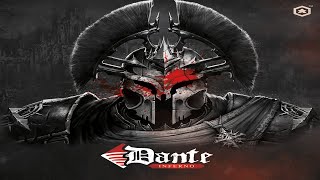
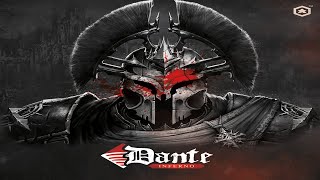
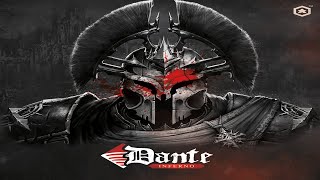
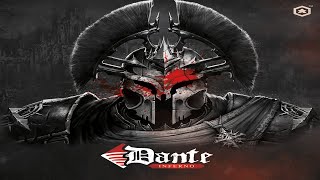
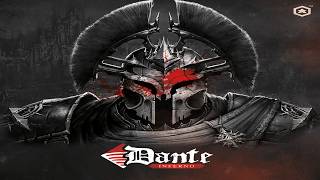


DANTE: Inferno

Game ID: GID0452243
Game Info
Year
2025
Players
1-4
Age
14+
Playtime
105 min
Complexity
3/5
Collection
Rating
Mechanic profile
Not enough video data yet
Vibe profile
Not enough video data yet
Description

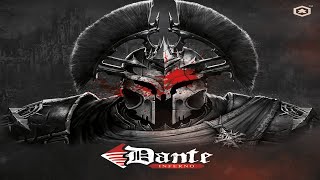
Cooperative campaign game based on Dante's Divine Comedy where players descend through nine circles of hell with 36 unique boss battles

Description

Cooperative campaign game based on Dante's Divine Comedy where players descend through nine circles of hell with 36 unique boss battles

Ask a Rules Question
All mentions
Browse transcript mentions, sentiments, pros/cons, mechanics, topics, quotes, and references.
Total mentions: 7
This page: 7
Sentiment: pos 1 · mix 3 · neu 0 · neg 2
Mentions per page
Showing 1–7 of 7
Video iVi-yJ9T7aw Playthrough at 0:16 sentiment: mixed
video_pk 67184 · mention_pk 163161
DANTE: Inferno video thumbnail
Click to watch at 0:16 · YouTube ↗
Overall sentiment (raw)
mixed
Pros
  • Thematic integration of narrative and mechanics.
  • Complex and challenging combat encounters.
  • Engaging environmental interactions.
  • Unique enemy mechanics and multi-deck system for Achilles.
  • Ability to strategize and copy opponent's maneuvers.
  • Finding 'finding' cards that provide useful effects like healing.
Cons
  • Complex and sometimes unclear ruleset leading to frequent rulebook checks and debates.
  • Difficulty in winning certain encounters, with a high reliance on specific card draws and strategies.
  • Mechanics that feel punishing or overly restrictive, such as the 'wound' system and the enemy's action economy.
  • Potentially broken or unbalanced mechanics, particularly around 'fortify' tokens and enemy counterattacks.
  • Rulebook clarity issues, with some sections feeling incomplete or poorly explained.
  • The feeling that some encounters are designed to be difficult to the point of being frustrating, rather than just challenging.
Thematic elements
  • The circles of hell and their associated sins
  • Inferno
  • In-game narrative text presented during gameplay
Comparison games
  • Mythic Battles
Mechanics (from transcript analysis)
  • Area movement — Players move their miniatures around a board, interacting with environmental elements like 'whirlwinds' and 'stairs'.
  • Card Play — Players use cards from their hand to perform actions, buffs, attacks, and special abilities.
  • Combat — The game features direct combat against a powerful enemy, Achilles, involving dice rolls, action cards, and strategic targeting of different 'decks' representing his health and weapons.
  • Conditional Effects — Many actions and abilities have specific conditions that must be met, such as attacking from the back, being in a certain area, or having specific tokens.
  • Deck Building/Management — Players manage action decks for their characters, and the enemy also has multiple decks (core, heal, weapon) that can be targeted.
  • Environmental interaction — Players can interact with objects on the board, such as 'whirlwinds' and 'buildings', to gain advantages or trigger effects.
  • Resource management — Players manage 'vigor' points to perform actions and play cards.
  • Sin Cards — Players can draw 'sin' cards, which have various effects and can either be detrimental or offer unique advantages depending on other cards played.
  • traps — Players can deploy traps on the board to damage enemies when they enter specific areas.
  • Unique Enemy Mechanics — Achilles has multiple action decks (core, heal, weapon), special attacks like 'shield bash' and 'provoke', and mechanics related to 'enrage' and 'fortify' tokens.
Video topics + discussion points
No key topics recorded for this video.
Quotes (from this video)
  • The tension is palpable. You could cut the atmosphere with a knife.
  • This is dogshit I just read what we get for it. It's basically you.
  • We weren't supposed to lose. You were supposed to lose.
  • I'm so glad I paid 15 bucks for this.
  • The battle was intense. Everyone was erect, sweaty, and gaped.
References (from this video)
No references stored for this video.
Video TFkr4lcYVgE Rules Teach at 0:16 sentiment: mixed
video_pk 67189 · mention_pk 163166
DANTE: Inferno video thumbnail
Click to watch at 0:16 · YouTube ↗
Overall sentiment (raw)
mixed
Pros
  • Thematic integration of mechanics and components.
  • High player interaction with character abilities and card combos.
  • Challenging boss encounter with complex mechanics.
  • Dynamic board state with destructible/manipulatable elements like pillars.
  • Variety of character abilities and synergistic play potential.
Cons
  • The rulebook is described as confusing, poorly written, and lacking clear explanations for certain mechanics.
  • Mechanics can be overly complex and difficult to parse.
  • Dice rolls can be punishing, leading to frustrating outcomes.
  • The 'hold' mechanic can lead to a player being incapacitated and taking significant damage.
  • The game can feel 'intuitive' in a negative way, suggesting rules were made up on the fly.
  • Encountering 'sin cards' can clog up hand slots and have negative consequences.
Thematic elements
  • The game appears to be themed around Dante's Inferno, with characters and scenarios drawn from the epic poem.
  • The game presents narrative through character dialogue, descriptive text on cards, and a rulebook that incorporates thematic elements into mechanics.
Comparison games
  • Elden Ring
  • Game of Thrones
Mechanics (from transcript analysis)
  • Area movement — Players discuss moving their characters between areas, using abilities like 'climb', 'leap', and 'backflip' to change levels and positioning, often involving pillars and thrones.
  • Asset Interaction — Players interact with various board elements like 'pillars' (climbing, destroying, using for cover) and 'arcs' (drawing findings cards).
  • boss battle — The primary focus of the latter half of the transcript is the fight against the boss 'Minos', detailing his attacks, strengths, and weaknesses.
  • Card Play (Combos) — Players can play cards on top of other maneuver cards to trigger 'combo' effects, often at the cost of additional 'vigor points'.
  • character abilities — Each player character has unique abilities and keywords (e.g., 'violent appreciation', 'go for the throat', 'backstab', 'improvisation', 'deviants', 'Kane Bloodborne') that modify attacks, grant buffs, or enable special reactions.
  • Combat (Dice Rolling) — Attacks are resolved by rolling dice, with bonuses from weapons, cards, and character abilities. The outcome depends on successes, fumbles, and counterattacks.
  • hand management — Players manage a hand of maneuver cards, deciding which to play for actions, combos, or special effects, and dealing with 'sin cards' that take up hand slots.
  • Keyword Abilities — Many mechanics are tied to keywords like 'hold', 'release', 'backflip', 'combo', 'stance', 'insire', 'empower', and 'fatigue', which are explained throughout the discussion.
  • Stance — Some characters have 'stance' effects that are active as long as the card is applied to a maneuver slot.
  • Status Effects (Stun, Fatigue, Inspire, Empower) — Characters can inflict or suffer various status effects like 'stun', 'fatigue', 'inspire', and 'empower', which modify gameplay.
  • Thematic Components (Throne of Limbo, Pillars, Arcs) — The game uses specific thematic components that have unique rules and interactions, such as the 'Throne of Limbo' which acts as furniture and a malifactor, and 'pillars' that create verticality and tactical options.
  • Trap setting — Some characters can set traps on the board that trigger when a malifactor enters the area, inflicting damage.
Video topics + discussion points
No key topics recorded for this video.
Quotes (from this video)
  • The rule book makes me miss the Kingdom Flororn rule book.
  • This almost feels like they forgot to write the rule book and this was like in their notes section.
  • So, basically, he is going to move with uh to the furthest area with a pillar at any range with no champions on it.
  • Who knows? All right, that ends the confrontation phase and this video.
References (from this video)
No references stored for this video.
Video gBWAn2pF104 Review at 0:17 sentiment: mixed
video_pk 67185 · mention_pk 163162
DANTE: Inferno video thumbnail
Click to watch at 0:17 · YouTube ↗
Overall sentiment (raw)
mixed
Pros
  • Unique theme and mechanics compared to other campaign games.
  • Structured phases (chronicle and confrontation) are good for recording.
  • Dramatic and humorous narration when the app works.
  • Branching story paths offer replayability.
  • Fluid combat order where players can act in any order.
  • Well-organized components with individual boxes for chapters.
  • Campy and entertaining story that doesn't take itself too seriously.
  • Maneuver cards become more unique and powerful as characters level up.
  • The arcana system offers an intriguing twist with risk/reward.
  • The wording in the enemy action descriptions reads well.
  • The chapter structure is manageable (9 chapters).
Cons
  • The Foreteller app has bugs and doesn't always work.
  • The rulebook is described as the worst ever written, jumbled, and disorganized.
  • Combat can feel restrictive initially due to cooldowns and sin cards.
  • The game is heavily reliant on RNG with little mitigation.
  • Movement and area mechanics can be convoluted.
  • The vigor system feels restrictive, with one resource for many actions.
  • The counterattack system can feel unpredictable and unavoidable.
  • The mercenary was focused on and took a lot of damage.
  • The game has a lot of missteps despite doing some things right.
Thematic elements
  • Christian themes
  • Poetic, dramaticized
Comparison games
  • Kingdoms 4
  • Oathsworn
  • Attu
  • Dark Age
  • Seventh Continent
  • Tainted Grail
  • Stars of Aarios
  • Seventh Citadel
  • Primal
  • Massive Darkness 2
  • Grim Coven
  • Townspoke Tussle
  • Kingdoms Four
  • Twilight Imperium
  • Divinity
Mechanics (from transcript analysis)
  • Area movement — Movement includes areas, squares, and spacesh, adding a three-dimensional aspect.
  • Boss Battlers — The game features boss battles as a core component.
  • Branching Narrative — The story branches, offering different paths and choices.
  • card drafting — Maneuver cards are attributed to characters and become more unique as they level up.
  • Chronicle phase — A phase that involves reading story elements and making choices, leading to a confrontation phase.
  • Confrontation phase — A boss fight phase that concludes each chapter.
  • Counterattack System — Enemies can counterattack when wounded, with different counterattacks for different actions.
  • Deck building — Sin cards clog up the hand and maneuver board until removed.
  • Dice rolling — The game heavily relies on dice rolls, with little mitigation.
  • hand management — Managing hand size and sin cards is crucial for playing maneuver cards efficiently.
  • Leveling system — Characters level up after each fight, upgrading maneuver cards.
  • Ordeals — A five-step ordeal system that can buff the boss or offer rewards, often involving dice rolls.
  • Push Your Luck — Similar to Oathsworn, there are thresholds and the amount of counterattacks, with bigger swings being more likely.
  • Save system — Boxes are provided to store character items for future use.
  • Vigor System — A resource used for actions like healing, moving, and basic attacks.
Video topics + discussion points
No key topics recorded for this video.
Quotes (from this video)
  • This is the worst rule book.
  • It doesn't fall into a lot of the similar tropes of like these like tons of these campaign games, but I don't know if that's something that that's good for it, if it's something we're not just used to.
  • The sin cards sound like they're really bad, but they're actually like your get out of jail free cards.
  • When it is working, I think the narration is awesome there. It's like it's it feels way more dramaticized like because of the poet angle.
  • There is no mitigation in this game, it's you see what you get or if you do have a mitigation, it's at a cost.
  • The fact that we can do it in any order makes a big difference, right?
  • It's not an overwhelming game. It's not like has several different sections. It has enough systems that feel at odds
  • I'm at like a seven, like a flat seven.
  • It's not preaching to us.
  • It doesn't take itself too seriously.
References (from this video)
No references stored for this video.
Video zQqGaQMLJZA Rules Teach at 40:24 sentiment: positive
video_pk 67190 · mention_pk 163167
DANTE: Inferno video thumbnail
Click to watch at 40:24 · YouTube ↗
Overall sentiment (raw)
positive
Pros
  • Engaging narrative and character backstories
  • Interesting thematic elements
  • Decent audio narration
  • Useful treasure cards like the Obali treasure card and clockwork wings
Cons
  • Confusing rulebook
  • Mechanics for vigor and wounds can be unclear
Thematic elements
  • A journey through hell with Dante Alighieri as a guide, facing personal demons and external threats.
  • Medieval and Renaissance Italy, Inferno
  • Character-driven narrative where players embody individuals with specific backstories and internal conflicts, guided by the narrative of Dante's Inferno.
Comparison games
  • Kingdoms 4
  • Hades
  • Warhammer
Mechanics (from transcript analysis)
  • Card Play (Treasure, Discovery, Path) — Players utilize various types of cards to gain advantages, uncover secrets, and navigate the game's path.
  • Character Role-Playing — Players embody specific characters with unique backstories and attributes, influencing their actions and decisions within the game.
  • Dice rolling — Dice are used to resolve challenges and determine the success or failure of actions, often modified by character attributes or spent resources.
  • Narrative Decision Making — The game progresses through choices presented to the players, affecting the narrative and the characters' journey.
  • Ordeals/Challenges — The game presents specific challenges ('ordeals') based on character attributes (aggression, prowess, willpower) that players must overcome by rolling dice.
  • Resource Management (Vigor) — Players must manage their 'vigor' to perform actions, and this resource has a maximum limit that can be increased through certain game effects.
  • Wound System — When a character's vigor reaches zero, they receive a wound, and their vigor is reset to a base amount (typically six), with potential for increase via items.
Video topics + discussion points
No key topics recorded for this video.
Quotes (from this video)
  • I'm so locked into Kingdoms 4.
  • I just buy boxes.
  • This game sucks.
  • The destiny of creation hangs by a thread.
  • We're here to save Satan.
  • This is making me uncomfortable. As a very devout Christian, I don't like this. Pro Satan pro Satan campaign.
  • The rule book is is atrocious.
References (from this video)
No references stored for this video.
Video GF2cUMAn1QA Review at 0:16 sentiment: negative
video_pk 67086 · mention_pk 163074
DANTE: Inferno video thumbnail
Click to watch at 0:16 · YouTube ↗
Overall sentiment (raw)
negative
Pros
  • Interesting narrative elements and thematic integration.
Cons
  • Extremely punishing and seemingly unfair difficulty.
  • Mechanics feel designed for player defeat.
  • Frustrating experience due to overwhelming challenges.
  • Potential for a campaign to be cut short by a single difficult encounter.
Thematic elements
  • Confrontation between heresy and the Supreme Leader, with themes of salvation, divine tasks, and moral ambiguity.
  • The game presents a narrative through spoken text during gameplay and descriptions of events and character motivations.
Comparison games
  • Elden Ring
  • Bloodborne
  • Lies of P
  • Lords of the Fallen
  • Dell Fates of Kingdoms
  • Grim Coven
Mechanics (from transcript analysis)
  • Card Play & Abilities — Players use cards for actions like 'Hateful Strike', 'Cunning Strike', and 'Cut Purse'. Abilities like 'Inspire' tokens and 'Aggressiveness' tokens are utilized.
  • Combat & Damage — Mechanics involve attacking, counterattacking, inflicting wounds, and dealing damage. Sturdiness and attribute tests (Willpower) are relevant.
  • Confrontation phase — The game enters a confrontation phase, specifically against the 'Supreme Leader', with associated phases and objectives.
  • Enemy Stats & Abilities — Details are given for the Supreme Leader's hit points, counterattack threshold, and specific abilities like 'Obstinate', 'Shattering Gaze', and 'Impale'.
  • Minions & Allies — Florentines and Knights of the Order are mentioned as minions, acting through confrontation events. Allies like Gabriel and the poet are part of the narrative.
  • narrative integration — The game incorporates story elements and flavor text directly into gameplay, affecting objectives and character actions.
  • traps — Players can place traps that wound enemies who land on them.
  • Victory/Defeat Conditions — Objectives include defeating the Supreme Leader or being defeated by them. The game is designed such that losing a specific confrontation can end the campaign.
Video topics + discussion points
No key topics recorded for this video.
Quotes (from this video)
  • Viewer discretion is advised.
  • This can only mean one thing. One of us is lying.
  • We are meant to lose.
  • Like a Soulslike, just don't listen to the community.
  • It's like, 'Mom, can we play Osworn? We have Osworn at home.'
  • This is absolutely insane.
  • We lost.
  • I hate it.
References (from this video)
No references stored for this video.
Video MBXYXBRBQ7Q Review at 0:17 sentiment: negative
video_pk 67085 · mention_pk 163073
DANTE: Inferno video thumbnail
Click to watch at 0:17 · YouTube ↗
Overall sentiment (raw)
negative
Pros
  • Easy to set up and tear down.
  • Voice acting was great when the app worked.
  • Players can do any action in any order on any hero.
  • The combat system has some elements that are similar to other games (e.g., OSSR)
  • The game is not the worst game ever made, and has some playable systems.
Cons
  • Story is mediocre and the app is unreliable.
  • Game feels half-baked with too many moving parts.
  • Rulebook is out of order, incomplete, unclear, and poorly written.
  • Boss fights are statistically impossible to win and feel stacked against the player.
  • Combat mechanics are random, uninteresting, and not well-designed.
  • The game lacks depth and originality, borrowing heavily from other games without improvement.
  • Items and progression are boring and don't feel impactful.
  • The chronicle phase is bare bones and doesn't offer meaningful choices.
  • App is expensive ($20) and often doesn't work.
  • The $400 price point is not justified by the game's quality.
  • Terrain and tokens are poorly implemented or referenced.
  • Keywords are not well-explained.
  • The design feels restrictive for the sake of being restrictive.
  • Aggravated damage and wound system are punishing and lead to quick losses.
  • Lack of innate healing mechanics.
  • Player elimination is a harsh consequence of failure.
  • Lack of meaningful cooperation or strategy in combat.
  • The game feels like a scam and a money laundering scheme.
  • The game does not follow its source material (Dante's Inferno) closely or effectively.
  • Bosses are not thematically tied to the levels they represent.
  • Ordeals are dumb and often involve buffing the monster.
  • The characters might not be distinct enough from each other.
Thematic elements
  • Based on Dante's Inferno, but loosely followed.
Comparison games
  • Kingdoms 4
  • Osworn
  • Primal the Awakening
  • Monster Hunter
  • Kingdoms Warlord
  • Grim Coven
  • Towns Tussle
  • ATL
  • Stars of Aarios
  • Hegemony
  • Kingdoms Flororn
  • Battle Forge Berserker
  • Isoparian Guard
Mechanics (from transcript analysis)
  • Action economy — The action economy was heavily criticized for being restrictive and poorly designed, with penalties for taking damage or 'sin'.
  • app integration — The game uses an app for narrative and gameplay elements, but it was criticized for not working correctly and its $20 cost.
  • boss battler — The game is a campaign-focused boss battler, but it was found to be significantly weaker than other games in the genre.
  • Deck building/Hand management — Players manage a hand of cards, but the system was criticized for being too swingy and not offering meaningful strategic choices.
  • Keyword heavy — The game uses many keywords, some of which are not clearly defined in the rulebook or are hidden on player reference cards.
  • Terrain/Elevation — The game attempts to use terrain elements, but they were described as half-ass used.
Video topics + discussion points
No key topics recorded for this video.
Quotes (from this video)
  • Viewer discretion is advised.
  • This is not a positive review. Not from me in any way.
  • I'm struggling to think of redeeming qualities for this this game.
  • The rule book is dog [shit].
  • If you're excited to skip a boss fight, that's probably a bad sign.
  • I hate this game.
  • This would be at the at the bottom by landslide.
  • No offense to the developers, but it's a terrible game and it's a scam.
  • It's definitely the weakest of the boss battlers that we've encountered.
References (from this video)
No references stored for this video.
Video 0kNO4TzeUnU Video Essay at 29:39
video_pk 66077 · mention_pk 160602
DANTE: Inferno video thumbnail
Click to watch at 29:39 · YouTube ↗
Pros
none
Cons
none
Thematic elements
  • boss battler in a rich dark fantasy theme
Comparison games
  • Elden Ring the board game
Mechanics (from transcript analysis)
  • miniatures-based boss battler — board game box is large with minis; miniatures-based combat
Video topics + discussion points
No key topics recorded for this video.
Quotes (from this video)
  • Miniatures are cheap to produce and they sell extremely well because they are seen as a premium item and can be priced accordingly.
  • What I can do, however, is dispel the idea of the value of miniatures. They are not as expensive as the price of board games with miniatures would lead you to believe.
  • It's like you're speaking different languages. In other words, when you play a video game, you can connect with something emotionally, but you don't get to own it physically.
  • The onus should not be on the consumer. It should be on the industry itself.
  • I am a big fan of bonnets, and also bees, but not together. I couldn't help but notice that when I purchased the Iron Fist Alexander miniature, it looked really cool.
References (from this video)
No references stored for this video.
Transcript Navigation
Top
Showing 1–7 of 7
View on BoardGameGeek