










Glass Garden Deep Dive
What the Community Thinks About Glass Garden
Glass Garden inspires strong appreciation for its design, theme, and artistic presentation. Most reviewers celebrate it as a charming, accessible solo experience that delivers on its promises. The game's terrarium aesthetic and succulent-growing premise resonate with players seeking a cozy, low-stakes puzzle. Tabletop Tokki praises the collaboration between designer Rashni Patel, publisher Button Shy Games, and artist Quan Moria, calling the visual presentation a particular strength. Board Game Sanctuary describes the game as a delightful, thematic card-shifting strategy game that rewards careful planning. The Dice Tower's take stands apart: while the reviewer loves the theming, they find the gameplay itself underwhelming for their taste, citing excessive luck and rule complexity as drawbacks. For newcomers to Button Shy's wallet-sized games, the consensus leans positive: Glass Garden is easy to learn, quick to play, and satisfying in its puzzle-like mechanical depth.
Core Mechanics That Define Glass Garden
Spatial Manipulation and Grid Optimization
At its heart, Glass Garden is a puzzle about arranging cards on a nine-by-three grid. Each turn, players take two actions: they can move a plant card up or down one row, or shift a card horizontally in the direction dictated by the current critter's movement arrow. Shifting compresses the grid, forcing other cards to fill the gaps. This constraint is the engine of the puzzle. Players must navigate around the advancing critter, which creates a wall that cards cannot cross. The spatial reasoning required to position cards correctly feels Rubik's Cube-like, as Tabletop Tokki observed: some opening layouts set players up for success, while others demand careful manipulation. The scoring incentive (two points per succulent in the top row, one point elsewhere) adds urgency to placement decisions.
Pattern Matching and Fertile Zones
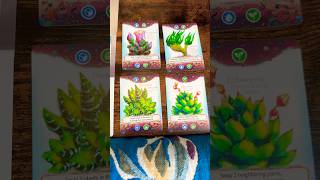
To grow succulents, players must create what the game calls "fertile zones": three matching icons in a horizontal line, occupying the fertile area between two rows. Each plant card requires a specific trio of symbols (lightning bolts, water droplets, boxes, or mountains on the nutrient side; leaves or sprout variants on the resource side). When three adjacent symbols align correctly, players flip the corresponding succulent card to reveal new icons and a special ability. If that succulent sits next to a glass jar card, the jar flips to its sunlight side, unlocking a bonus action at game's end. This cascading reward structure means good early choices amplify late-game options, rewarding planning and pattern recognition over luck.
The Glass Garden Experience
Meditative Puzzle Solving
Glass Garden invites players into a flow state. The 15-minute playtime and turn-by-turn pacing allow for genuine contemplation. Each turn feels consequential yet forgiving enough to encourage experimentation. Reviewers emphasize the "easy to learn" barrier to entry and the clarity of the core loop, making the game accessible to ages 10 and up. Once players grasp the rules, turns proceed quickly, and the spatial puzzle becomes the main cognitive draw. The compact card format and minimal setup time mean the game fits into pockets, lunch breaks, or quiet moments without demand for lengthy commitment.
Thematic Immersion in Miniature
The game's presentation creates a sense of cultivating something fragile and beautiful. The glass jar cards frame the play area, evoking the look of a terrarium on a shelf. Succulent illustrations are detailed and colorful, rewarding players with visual satisfaction when cards flip. Board Game Sanctuary notes that Glass Garden works as "a card-shifting and swapping strategy game for one" while maintaining thematic coherence. The act of avoiding bugs (the critters) and nurturing growth aligns mechanical actions with emotional investment, creating a cohesive experience that reviewers consistently describe as charming and lovely.
What Makes Glass Garden Stand Out
Elegant Theme-to-Mechanic Integration
Few 18-card games marry theme and system as tightly as Glass Garden does. The critter advancing down the play area functions as both timer and obstacle, creating natural tension without arbitrary time limits. The grid constraint prevents cards from crossing the critter's path, mirroring the literal barrier a bug would pose in a garden. Special abilities on flipped succulents (swapping edge plants, shifting cards to new rows, gaining free actions at game's end) feel organic to their plant identities rather than abstract number adjustments. This thematic tightness, combined with the beautiful visual design, makes each playthrough feel like you are genuinely tending a tiny ecosystem rather than manipulating cardboard.
Scalable Difficulty Through Critter Selection
Glass Garden ships with four critters of increasing difficulty. The fly deals no damage, making it ideal for learning the rules. The snail targets plants on one side of its path. The ant attacks both sides simultaneously. The worm threatens three adjacent columns. Reviewers appreciate this difficulty ladder, which allows players to grow comfortable with the core loop before facing higher pressure. Tabletop Tokki notes that varying critters create different puzzle patterns; some setups favor certain strategies, and players who replay the game begin to recognize these patterns and optimize accordingly. This structure respects both casual players seeking relaxation and puzzle enthusiasts chasing mastery.
Potential Drawbacks
Heavy Reliance on Starting Setup
Several reviewers note that Glass Garden's puzzle nature means starting card positions significantly impact final scores. Tabletop Tokki observes that some layouts align naturally with success paths, while others require far more maneuvering to achieve comparable results. This can reduce replayability for players who feel locked into optimal lines once they recognize the patterns. For players seeking high-variance or narrative-driven experiences, the deterministic puzzle quality may feel samey across plays, especially against the same critter.
Complex Rule Interactions and Luck Elements
The Dice Tower reviewer finds Glass Garden "a little too lucky" and notes "a little too many rules" for its compact format. While the core loop is simple, special abilities on succulents introduce interactions that can feel fiddly when chaining multiple growths in a single turn. The order in which triggered abilities resolve matters, and mistakes require resetting the sequence. Additionally, luck in the starting card shuffle, combined with the fixed grid size, means some opening hands may offer fewer viable paths to high scores, introducing a luck element at odds with the game's puzzle identity.
If You Enjoy Glass Garden
Players drawn to Glass Garden's blend of thematic charm and spatial puzzle will find similar satisfaction in Sprawlopolis and Ant, both compact Button Shy titles that pair quick playtime with genuine decision-making. Those who love the solo card-manipulation puzzle aspect should explore Fly and Worm, which share the compact format and escalating difficulty philosophy. For players seeking deeper puzzle depth with terrarium or gardening themes, Cascadia offers tile-placement variety that rewards pattern recognition across multiple sessions.
What Reviewers Are Saying
"I love the idea of a micro game creating a micro ecosystem in this little glass bottle. We've been seeing an uptick in a lot of games about nature and plants and animals so I love the spin on that where this is just a little terrarium and instead of a wide variety of like forest creatures you have your little bugs is just really endearing and presents nature in kind of a whole new way."
— Tabletop Tokki
"Glass Garden is a solo game where you'll be manipulating the soil sides of different succulent cards in order to align the different icons up in order to grow the succulents in the terrariums. By increasing their fertility, you'll be able to gain points at the end of the game. The game consists of nine turns and the play area has nine different columns where a chosen critter will move from left to right."
— Board Game Sanctuary
"If you want more of a challenge you can play against harder critters like this ant they attack cards that are on either side of them or you can play against this worm that attacks three plants to one side and then the other and for less of a challenge you can play against the fly which doesn't do any damage at all."
— Totally Tabled