









Puerto Rico 1897 Deep Dive
What the Community Thinks About Puerto Rico 1897
Puerto Rico 1897 has captured the excitement of the board game community as a thoughtfully reimagined version of a modern classic. Reviewers praise its component upgrades and refined production by Ravensburger and Alea, while championing the elegance of its core design. The 1897 edition respects the original's proven mechanics while wrapping them in updated historical aesthetics. Players appreciate both the accessibility for newcomers and the depth that keeps veterans engaged. The consensus is clear: this is a game worth revisiting, whether you are discovering Puerto Rico for the first time or rediscovering why it once held the BoardGameGeek number one ranking.
Core Mechanics That Define Puerto Rico 1897
Action Following and Role Selection
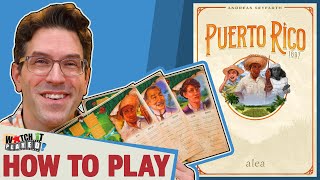
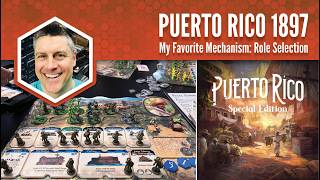
The heart of Puerto Rico 1897 is its ingenious role selection system, where one player chooses a role and all players benefit from that action, but the chooser gains an additional advantage. As explained in the Watch It Played tutorial, each round the first player picks one of the available role tiles, such as Planter, Builder, Craftsman, Trader, or Captain, and performs the action while claiming the role's bonus. Then, going clockwise, every other player performs the same action but without the advantage. This elegant design keeps every player invested on nearly every turn, even when it is not their moment to choose. The mechanism creates meaningful decisions: players can select an action knowing another player might not benefit as much, or they can pursue a role they have been eyeing. The Stonemire Games reviewer highlighted this as their favorite mechanism, emphasizing that every player is involved on almost every turn and that unchosen roles accumulate coins over rounds, making them increasingly attractive. Ravensburger's implementation preserves this timeless design while the 1897 edition presents it with updated visuals and refined components.
Worker Placement and Production Chain
The production engine in Puerto Rico 1897 revolves around placing workers on estates and buildings to activate them. When the Recruiter role is resolved, players claim workers from a common register and place them on their personal board. A tile only provides benefits once a worker occupies one of its worker slots; an inactive estate yields nothing, while an active estate produces goods or reduces building costs. The Craftsman action allows active estates to produce goods: each active corn field yields one barrel of corn, while production buildings limit output based on the number of workers on them. For example, you might have three active fruit fields but only two workers on fruit warehouses, capping your production at two barrels. This interlocking system rewards careful worker placement and strategic building choices, creating a satisfying loop of investment and payoff. The Watch It Played demonstration shows how active quarries reduce building costs by up to three coins, depending on the board row, giving players concrete incentives to develop their operations methodically.
The Puerto Rico 1897 Experience
Flow and Pacing
Puerto Rico 1897 plays out over a series of tight, interconnected rounds that feel different from heavier euro-games. Players described it as enjoyable to revisit after years away, with the mechanisms clicking into place naturally. Each round progresses smoothly: the governor chooses a role, everyone resolves its action in turn order, then the next player picks from the remaining roles. Unused roles accumulate coins, adding a subtle push-your-luck element. The game scales elegantly across player counts (2 to 5 players in 90 minutes), though the experience shifts with each count, since three-player games follow a different rhythm than five-player ones. The Captain role, where players ship goods around the table in multiple passes, creates a longer phase that breaks the standard turn structure but adds variety. The overall pacing keeps momentum steady without feeling rushed, giving players time to plan while maintaining engagement.
Aesthetic and Production Quality
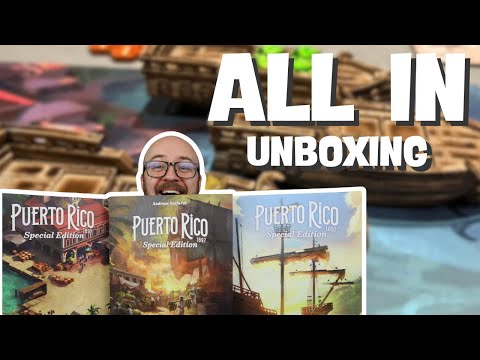
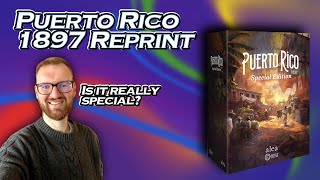
The 1897 edition represents a significant visual and tactile upgrade from earlier printings. James from Board Games with James marveled at the much bigger and much clearer resource tokens compared to the tiny wooden pieces of older editions, noting that the larger components make gameplay more accessible. The Stonemire Games reviewer was blown away by how beautiful the tokens were, describing 3D-printed and painted farm tiles as stunning. The dual-layer player boards (in the special edition) prevent components from sliding around during play, a quality-of-life improvement that the production delivered well. Building tiles are now larger with printed descriptions on their faces, reducing the need to flip through the rulebook. The metal coins (in the deluxe tier), 3D miniatures of ships, and custom slots for every component create a cohesive, tactile experience. The historical artwork reflects the late-nineteenth-century setting, grounding the theme while looking attractive on the table.
What Makes Puerto Rico 1897 Stand Out
Timeless Mechanical Design
Puerto Rico 1897 does not reinvent the role-selection wheel, but it does not need to. The Stonemire Games reviewer noted that the role selection mechanism is not particularly revolutionary compared to the original, but emphasized that the core design is a really solid action selection mechanism. This is Puerto Rico's enduring strength: the system has influenced modern games like San Juan, Race for the Galaxy, Roll for the Galaxy, and Raising Robots, all of which iterate on the same core idea of choosing a role that benefits everyone. Puerto Rico remains a gold standard because it balances player agency with mutual benefit. Every choice creates tension: taking a role helps your opponents, but giving up the opportunity costs you something. Coins are scarce, making every decision about resource scarcity meaningful. After years away, players found the game still engaging and fun, a testament to design that does not age.
Modular Expansions and Replayability
The 1897 edition ships with four expansions integrated into the box: New Buildings, Citizens, Smugglers, and Festival. The New Buildings expansion adds fresh construction options with novel abilities. Citizens are special workers that function like regular workers but score points at game end, adding another strategic layer. Smugglers introduces a new role with multiple action choices, allowing the player who takes it to pick their benefit, a departure from the standard role system. Festival creates custom player goals that reward specific achievements during play. These modules are not required for a satisfying game but offer the option to tune complexity and variety. The campaign review noted that the expansions provide more variety in the buildings and abilities and more combinations, allowing groups to customize their experience without overwhelming newcomers with the full ruleset.
Potential Drawbacks
Take-That Elements and Sudden Endings
One reviewer noted that there is a little take-that in Puerto Rico that you might not love, acknowledging that the role selection system can sometimes force players into suboptimal positions. When a player chooses a role, other players must follow suit on most actions. The Captain role, where you ship goods around multiple passes, can lead to situations where a player benefits disproportionately while others are locked out. Additionally, the game can end abruptly if workers run out during Recruiter resolution, if all city spaces fill after a Builder phase, or if the victory point supply exhausts during shipping. This can leave some players feeling short-changed if they built toward a specific end-game strategy that gets cut short. For groups sensitive to player control or sudden endings, these elements may create friction.
Component Overhead and Setup Complexity
While the production is beautiful, the sheer number of components (buildings, estates, goods tokens, workers, ships, coins, and role tiles) requires organized setup and teardown. The Board Games with James reviewer noted that the special edition comes with dual-layer boards, plastic inserts, and multiple expansions, making the box substantial. Countryside tiles must be shuffled and dealt each round, which some players may find tedious. The campaign review mentioned concerns about component organization, suggesting that you are sorting through a box throughout play, which could slow things down. While the deluxe components (3D ships, metal coins, miniature workers) are gorgeous, they are not essential to gameplay and add storage challenges for collectors with limited shelf space. The standard edition streamlines this by keeping components simpler, but the special edition's beauty comes with logistical complexity.
If You Enjoy Puerto Rico 1897
Reviewers identified Puerto Rico 1897 as a gateway to a broader family of role-selection games. If you love the elegant simplicity of choosing roles that benefit the table, explore San Juan, the card-based sibling that applies the same mechanism to building a city from a hand of cards. For a faster, dice-driven variant, Race for the Galaxy and Roll for the Galaxy use similar role selection with a science fiction setting and tighter turns. Raising Robots borrows the core idea and applies it to a robot-building economy. For those who prefer heavier economic games with a similar quality of presentation, The Castles of Burgundy offers comparable depth with a different mechanical focus.
What Reviewers Are Saying
"The core gameplay of the game is still my favorite mechanism of the game and that is this idea that the current player is choosing one of these roles and all players gain the benefit of that role, and the player who chose the role also gets an additional benefit. Every player is involved on almost every turn."
— Stonemire Games
"They've redone the art style, love it, it's so pretty. We've gone from these small tiny components for the resources into these much bigger ones that you can actually put the farmer on to, much clearer."
— Board Games with James
"It was the type of game that I could see someone truly treasuring. I was kind of blown away by how beautiful these tokens were. Even on your player mat, the farm tiles are these beautiful 3D printed and painted miniatures that are stunning."
— Stonemire Games