
Game Info
Year
2024
Players
1-5
Age
10+
Playtime
30 min
Collection
Ratings
Creator Score
Mechanic profile
Not enough video data yet
Vibe profile
Not enough video data yet
Description
Map-drawing game where players place features on their fantasy map based on dice rolls completing quests for bonus points
Featured Videos


Ask a Rules Question
Images
GID0452288.jpg

GID0452288_thumb.jpg
All mentions
Browse transcript mentions, sentiments, pros/cons, mechanics, topics, quotes, and references.
Total mentions: 6
This page: 6
Sentiment:
pos 5 ·
mix 1 ·
neu 0 ·
neg 0
Showing 1–6 of 6
Video 9gzS9Qp6-k8
Sir Thecos Review at 0:18 sentiment: positive
video_pk 83121 · mention_pk 208884
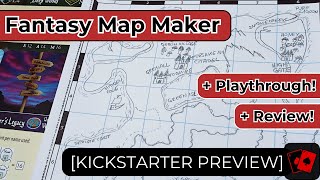
Click to watch at 0:18 · YouTube ↗
Overall sentiment (raw)
positive
Pros
- Creates beautiful, personal, and unique fantasy maps.
- Minimal components but surprisingly deep gameplay.
- Innovative drawing mechanics that go beyond simple in-space drawing.
- High replayability due to varied scoring card combinations.
- Satisfying end result where you have a map, not just a score.
- Tense decision-making regarding when to stop drawing.
- Easy to set up.
- Offers depth and replayability.
- Smooth gameplay flow once understood.
- Charming and rewarding.
Cons
- Scoring can be more 'thinky' compared to Cartographers.
- Requires some upfront effort to understand the different landmarks and rules.
Thematic elements
- drawing a fantasy map
Comparison games
- Cartographers
Mechanics (from transcript analysis)
- area enclosure — Players can create lakes by drawing coastlines that enclose a section of land.
- Map drawing — The core of the game involves drawing various features like coastlines, forests, houses, and landmarks onto a map.
- Push Your Luck — The decision of when to stop drawing creates tension, as players weigh the risk of drawing more for potential points versus avoiding mistakes.
- Roll and Write — Players roll dice which determine actions and features to draw on their personal map sheets.
- route/network building — Players draw features like roads and rivers that connect different parts of the map.
- Set Collection — Collecting points is based on achieving specific configurations and quantities of features on the map, such as forests on corners or houses in towns.
Video topics + discussion points
No key topics recorded for this video.
Quotes (from this video)
- And that map has personality. It feels like your little world, and I really love it.
- It's easy to set up, uses very few components, and still offers a lot of depth and replayability through its different scoring combinations.
- This is one that I really enjoyed playing.
References (from this video)
No references stored for this video.
Video Gi-8JpfUCB4
Unknown Channel Playthrough at 0:22 sentiment: positive
video_pk 66123 · mention_pk 160733
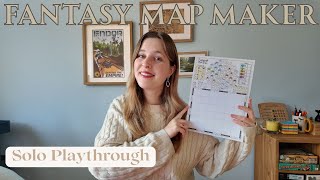
Click to watch at 0:22 · YouTube ↗
Overall sentiment (raw)
positive
Pros
- High replayability due to card-driven variability and multiple scoring paths
- Cozy, approachable vibe that lowers entry barriers for casual players
- Strong thematic integration with fantasy world-building and narrative naming
- Flexible strategy through landmarks, goals, and adaptive dice outcomes
- Visually appealing and evocative aesthetics that enhance immersion
Cons
- Some actions (e.g., drawing roads) can feel pointless without a direct scoring incentive, leading to potential dead-end turns
- Prototype nature means balance, balance of components, and clarity of some rules may evolve before final release
- Early-game restrictions (center placement, limited explored space) can slow early momentum for new players
Thematic elements
- Creativity, exploration, and world-building within a cozy, narrative-driven map-building framework.
- Fantasy world-building on a modular, grid-based map where players sketch terrain, landmarks, and routes to create a cohesive fantasy realm.
- Let's Play / casual demonstration with light humor and self-deprecating commentary about drawing skills.
Comparison games
none
Mechanics (from transcript analysis)
- Card-driven variability — Goal cards and event cards change scoring rules and gameplay dynamics, increasing replayability and forcing strategic adaptation.
- Exploration & Connectivity — Drawing expands explored space; players must connect features across adjacent spaces, with intersections and map edges affecting placement.
- Flip/Roll and Write — Players roll two six-sided dice to determine starting position and subsequent actions, then write or draw corresponding features on a map.
- Landmark Naming and Thematic Elements — Players can name regions or features (e.g., forest, castle), enhancing flavor and personal attachment to the map while influencing scoring via wedges.
- Landmarks with Abilities — Landmarks provide one-time abilities or continuous effects; the castle and ship offer ongoing benefits, while others provide single-use actions.
- Once-Per-Game Abilities — Landmarks provide one-time abilities or continuous effects; the castle and ship offer ongoing benefits, while others provide single-use actions.
- Roads, Coastlines, and Terrain Interactions — Terrain drawing (forests, lakes, mountains, roads, coastlines) interacts with existing features to unlock scoring paths and aesthetic choices.
- Roll and Write — Players roll two six-sided dice to determine starting position and subsequent actions, then write or draw corresponding features on a map.
- Scoring via Goals, Houses, and Wedges — Points are earned for specific spatial combinations (e.g., forest+lake, forests with rivers, houses, coastlines, and the number of filled wedges).
- Starting Landmark & Center Placement — Dice determine where to place the initial landmark in the center, influencing the map's subsequent development and scoring possibilities.
Video topics + discussion points
No key topics recorded for this video.
Quotes (from this video)
- This is a roll and write and we're going to make our own fantasy map.
- It's a prototype copy of the game.
- There are lots of different cards that will change the way you play, change the way you score points.
- I love how diverse this game is. You can really change up a lot, which makes the replayability pretty good.
- cozy vibes
- 64 points is what we got.
- you could obviously adjust more with more landmarks, give you the opportunity to change up dice, which makes it a bit more strategic.
- I hope you guys enjoyed and I'll see you guys soon with a new video.
References (from this video)
No references stored for this video.
Video MA_A4h_UByk
Sir Thecos Review at 4:40 sentiment: positive
video_pk 38051 · mention_pk 114348
Click to watch at 4:40 · YouTube ↗
Overall sentiment (raw)
positive
Pros
- highly engaging, as printed play is available
- expands on concept of map-making like Cographers
Cons
none
Thematic elements
Comparison games
none
Mechanics (from transcript analysis)
Mechanics unknown.
Video topics + discussion points
No key topics recorded for this video.
Quotes (from this video)
- This is a really, really good game.
- The rule book is very rough, but once you understand the game, it's very, very easy to play.
- I absolutely love Wingspan.
References (from this video)
No references stored for this video.
Video cKxweY-c164
Bower's Game Corner Review at 0:00 sentiment: mixed
video_pk 34443 · mention_pk 102571
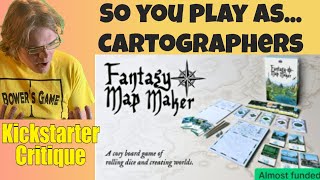
Click to watch at 0:00 · YouTube ↗
Overall sentiment (raw)
mixed
Pros
- Innovative map-drawing and quest-based scoring system
- Supports solo play and multiple player configurations
- Continent expansion offers epic-map potential
- Responsive updates and customer service
Cons
- Marketing image and upfront presentation could be stronger
- Stretch goals poorly organized and buried
- Deluxe vs base content is not clearly delineated
- Some confusion around cards, variants, and digital options
Thematic elements
- Cartography, exploration, and world-building through map drawing
- Fantasy world map creation; quests across continents
- Procedural, goal-driven with map-building narrative
Comparison games
- Castles of Burgundy
- Cryptographers
Mechanics (from transcript analysis)
- Compound Scoring — Choose five quests at the start; scoring depends on quest performance.
- Continent expansion — Optional four-session epic-map via the continent expansion.
- Events — Events modify goals and add decision points; doubles/triggers can shape play.
- Events and goal restrictions — Events modify goals and add decision points; doubles/triggers can shape play.
- multiple play modes — Supports competitive, cooperative, and casual play.
- Quest-based scoring — Choose five quests at the start; scoring depends on quest performance.
- roll-and-draw — Roll dice to determine features and landmarks, then draw on the map.
- solo play options — Dedicated solo mode and playthroughs.
Video topics + discussion points
No key topics recorded for this video.
Quotes (from this video)
- Fantasy Map Maker is a map drawing board game in which you will create your own unique fantasy world.
- This looks like castles of Burgundy had a baby with cgraphers and I'm all for it.
- I love the concept of making a map and taking the time to do it.
- Deluxification is fumbled on this one.
- The price feels fine. 58 bucks for the expansion.
References (from this video)
No references stored for this video.
Video J_VjCMq31WI
Good Time Society Discussion at 10:05 sentiment: positive
video_pk 32085 · mention_pk 94725

Click to watch at 10:05 · YouTube ↗
Overall sentiment (raw)
positive
Pros
- Clear theme alignment with RPG play
- Portable and wallet-friendly components (Card-based, aspirational for travel play)
- Inclusion of diverse terrain and event options
Cons
- Thematic depth depends on player creativity; may feel sparse without added content
- Some players may want more structured scenarios or built-in adventures
Thematic elements
- creative map-making for tabletop role-playing
- fantasy world-building toolbox; map creation for RPGs
- semi-structured, theme-driven map-building
Comparison games
- Machi KoRo (as a vibe reference for some structural feel)
Mechanics (from transcript analysis)
- Draw/roll-and-draw map construction — Players roll or draw elements to shape terrains and landscapes for RPG use.
- OC/role-play ready integration — The map can be used directly for RPG sessions or adventures.
- Terrain placement and events — Terrain tiles or cards are placed to form a playable map; events may trigger narrative hooks.
Video topics + discussion points
No key topics recorded for this video.
Quotes (from this video)
- I love this logic and lore.
- This is a board game based on the book. So, it's going to be a narrative style game.
- Love, you know, choose your own adventure or these like D and D style RPG style books. And to see it in the board game form, I think that they are cool.
- Small talk the [laughter] game.
- Zen Quest month started.
- standwithMinnesota.com — there’s charities involved. Anything over that stretch goal is going to Minnesota.
References (from this video)
No references stored for this video.
Video 8jhalstElVg
Unknown Channel Playthrough at 0:09 sentiment: positive
video_pk 30149 · mention_pk 88601
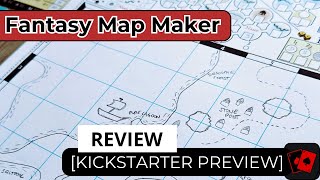
Click to watch at 0:09 · YouTube ↗
Overall sentiment (raw)
positive
Pros
- Minimal components with surprisingly deep gameplay
- Innovative landmark drawing that crosses borders for organic, realistic maps
- End result maps feel personal and satisfying
- High replayability via multiple scoring cards and interactions
- Low learning curve with upfront effort; one full game clicks into place
- Expansion offering longer multi-map variant
Cons
- Thinky scoring can be challenging toward the end; decisions may become complex
- Some players may find the puzzle fiddly or demanding initially
- Limited thematic narrative beyond drawing and map-building
Thematic elements
- creative drawing and world-building
- A fantasy world map created by players during play
- emergent, personal world-building through drawing landmarks
Comparison games
- Cartographers
Mechanics (from transcript analysis)
- expansion-driven length — An expansion offers a longer game with four maps played in four quadrants.
- exploration of spaces — Players explore map spaces, learning what they can do and deciding how to place landmarks.
- landmark placement — Player places landmarks on a map grid, with rules about borders and corners to create cohesive landscape.
- minimal components — Only a map sheet, two dice, and a pencil with eraser are needed; surprisingly deep gameplay emerges from this simplicity.
- Push Your Luck — Deciding how far to draw to maximize points without compromising future scoring.
- push-your-luck tension — Deciding how far to draw to maximize points without compromising future scoring.
- replayability via scoring-card interactions — Different combinations of scoring cards yield different puzzles on each play.
- scoring card system — A set of scoring cards interact with each other, shaping the puzzle rather than providing isolated points.
Video topics + discussion points
No key topics recorded for this video.
Quotes (from this video)
- this is a preview copy, so things like components, artwork, and even rules may still be subject to change.
- the final maps can get quite intricate, and seeing them come together is incredibly satisfying.
- The most charming part of this game is the end result.
- When you finish a session, you just don't have you don't just have a score. You actually have a map you explored and created during the game.
- the maps you explored and created during the game. And that map has personality.
- How far do you go? Can you squeeze out a few more points if you get a little lucky, or do you play it safe?
- the learning curve is also in a good place.
- In terms of gameplay, the core idea works really well.
- What I probably like most about this game is how innovative it is when it comes to actually drawing your landmarks.
- All in all, Fantasy Map Maker is a charming and rewarding drawing game that offers quite a deep and involved puzzle.
- If you enjoy drawing games or mapmaking, this definitely is one to keep an eye on.
- You should definitely then check out the Kickstarter that starts on February 1st.
- I will definitely follow the campaign, and I'm thinking about seeing if I will actually back that as well, although I already own the game.
- Thank you so much for watching.
References (from this video)
No references stored for this video.
Transcript Navigation
Showing 1–6 of 6