





Hollow Pact Deep Dive
What the Community Thinks About Hollow Pact
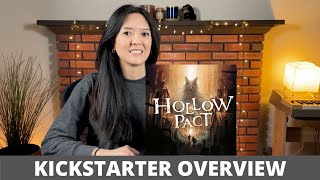
Reviewers across multiple channels consistently praise Hollow Pact as an ambitious and refreshingly unique take on asymmetric, social-heavy board gaming. The game has captured attention among players who enjoy games that blend mechanical depth with meaningful player interaction. Meepling University, Cardboard Herald, Before You Play, Tantrum House Studio, and Board Stupid all found merit in Studio Midhall's design, particularly noting how the game creates genuine moments of suspicion and tension. Reviewers emphasize that Hollow Pact succeeds at what it attempts, though they acknowledge it requires table commitment and player maturity to reach its full potential. The consensus centers on a game that is bold in concept and backed by excellent production value, even in its prototype stage.
Core Mechanics That Define Hollow Pact
Semi-Cooperative Play with Hidden Objectives
At its heart, Hollow Pact operates on one of the most precarious game design foundations: the semi-cooperative structure where all players theoretically work together to avoid mutual loss, yet each pursues individual victory conditions that may directly conflict with their allies' goals. The two scoundrels must cooperate to overcome the beast's threats and unlock gates to escape, yet only one of them carries the real cargo, and each has secret hidden agenda cards that may require them to sabotage the other. This creates what one reviewer called the "Prisoner's Dilemma" tension that defines the entire game. Studio Midhall has engineered this through multiple interconnected systems: the mysterious cargo that can be exchanged blindly, dark pacts that reward betrayal, and hidden agendas that sometimes benefit cooperation while other times demand direct interference. The result is a game where trust is currency, but suspicion is rational.
Asymmetric Teams and One-Versus-Many Conflict
The one beast against two scoundrels framework creates an inherently unbalanced but thematically rich power dynamic. The beast player controls a single character with aggressive, defensive, and corrupting capabilities, while the scoundrel players must divide their efforts between escaping, achieving personal goals, and managing the threat posed by an increasingly dangerous predator. The beast can attack directly, deal wounds that bring scoundrels closer to death, and curse them with dark pacts that flip the victory conditions entirely. This asymmetry extends beyond mechanics into the information players possess: the scoundrels do not know which of them holds the real cargo even after picking it up; the beast must deduce and hunt based on incomplete information. Multiple reviewers noted that this design echoes Beast, Studio Midhall's prior hidden-movement game, but Hollow Pact inverts the power dynamic, making the singular player the aggressor rather than the hunted, which fundamentally changes the social and strategic texture of play.
The Hollow Pact Experience
Suspicion and Betrayal Tension
Reviewers repeatedly described the emotional core of Hollow Pact as revolving around suspicion. The cargo mystery ensures that scoundrels can never fully trust what they or their allies are carrying, and the possibility of a dark pact creates a compelling new betrayal vector. One scoundrel may suddenly shift from ally to rival if the beast succeeds in cursing them with a pact that rewards cooperation with the very enemy they were just fighting together. Cardboard Herald noted that the game's victory conditions introduce "squishiness," a layer of uncertainty that players must muddle through, and this ambiguity is precisely where the magic happens. The social negotiation happens not through explicit deals but through suspicion and bluffing: which scoundrel is signaling that they have the real cargo, and is it genuine or a trap? The tension ratchets up because players cannot hurt the beast directly; scoundrels cannot negotiate or bargain except through the actions they take, and the beast reads every move as a clue.
Dark Dread and Otherworldly Atmosphere
Multiple reviewers commented on the distinct aesthetic and thematic atmosphere Hollow Pact creates. Tantrum House described it as "a cat and mouse game with unique gameplay and a creepy otherworldly feel." Cardboard Herald emphasized that the setting "oozes with dark folklore and murky gray occult," providing the thematic scaffolding for the moral ambiguity built into the rules. This is not a bright, cartoony game; Hollow Pact trades in dread, doubt, and darkness. The map itself reinforces this through mechanics like stress tokens drawn from a cloth bag as scoundrels move through mist and encounter unknown horrors. When a scoundrel becomes insane, flipping their player board, their powers grow more potent but their grip on sanity slips. The beast's curse cards add menace and a sense of supernatural corruption. Reviewers noted that the production quality, even in the prototype stage, enhances this atmosphere through gorgeous illustrations and thematic component design that makes the horror feel tangible and earned rather than grafted on.
What Makes Hollow Pact Stand Out
Elegant Cargo Mystery and Its Ramifications
The central conceit of Hollow Pact is deceptively simple but mechanically generative: one cargo is real, one is fake, and nobody knows which is which, including the scoundrels themselves. This uncertainty cascades into every system of the game. Actions that reveal cargo create pivotal moments where information suddenly shifts the board state. Actions that allow blind exchanges between scoundrels guarantee that player knowledge becomes stale seconds after it was gathered. The cargo mystery transforms what could be a straightforward hunter-versus-hunted game into a negotiation of trust and inference. When the game ends, one scoundrel will walk away with the real cargo and a legendary victory, another with a fake cargo and mere bitter survival, and the third player (the beast) either victorious or defeated. This asymmetry of outcomes ensures that no two players want the same ending, despite the surface-level cooperation required to reach the exit. Reviewers praised this system for creating organic moments of tension and betrayal without relying on explicit kingmaking.
The Stress and Insanity Flip Mechanic
Hollow Pact's stress and insanity system mirrors the escalating dread of its horror theme. As scoundrels move through dangerous terrain and face the beast's pressure, they accumulate stress tokens drawn randomly from a bag. When stress exceeds their sanity threshold, they flip their player board to the insane side, gaining access to more powerful abilities but moving closer to a stress-related death. This is not a punishment; some scoundrels actively pursue insanity because their hidden agenda requires it, or because the tunnel escape route demands an insane character. The mechanic echoes games like Cthulhu That May Die but integrates uniquely into Hollow Pact's structure: insanity represents both vulnerability (the beast's curses affect insane scoundrels more severely) and capability (access to upgraded powers). Multiple reviewers highlighted how this creates genuine strategic tension around managing mental health as a resource rather than simply avoiding it. The system forces scoundrels to make terrifying decisions about whether to break themselves psychologically to power up and outrun the beast, knowing the beast can exploit that instability.
Potential Drawbacks
Semi-Cooperative Victory Conditions Can Feel Anticlimactic
Cardboard Herald voiced a substantive critique: the multiple tiers of victory for both scoundrels and the beast can lead to anticlimactic endings, particularly around the semi-cooperative nature of scoundrel play. Because scoundrels technically want to work together to overcome gates and avoid total loss, but also want to betray each other for personal victory, the moment-to-moment incentives often push toward cooperation denial. One scoundrel might have no shot at a true victory but can still achieve bitter survival, weakening the shared goal of stopping the beast. This creates what Herald called a "ganging up" dynamic where an uncursed scoundrel has little incentive to help beyond spite toward the beast, a powerful but unenforced incentive. Some tables may experience endings that feel muddy or resigned rather than climactic, especially if the cargo mystery was solved early or one scoundrel was eliminated.
Player Elimination and Pacing Gaps
Multiple reviewers noted that Hollow Pact, like its predecessor Beast, handles player elimination matter-of-factly: damage is straightforward and potent, and there are limited defenses. If the beast kills one scoundrel early and claims the wrong cargo, the remaining scoundrel could face extended play time waiting for the game to resolve, especially if they are trying to achieve their hidden agenda rather than simply escape. Herald noted that Studio Midhall is developing an alternating action system to address this, acknowledging that a particularly nasty beast turn can leave the scoundrels in a lopsided position. During play, this can create dead time and reduces agency for the eliminated player. The game's 90-minute to 2-hour playtime can feel stretched if momentum breaks due to elimination and one player is left running down the clock.
If You Enjoy Hollow Pact
Players drawn to Hollow Pact's blend of hidden information, asymmetric conflict, and social deduction should explore Beast, Studio Midhall's earlier one-versus-many game. Where Hollow Pact forces the solo player into an aggressive, cursing predator, Beast makes the one player a fugitive hiding from the many. The mechanical contrast illuminates what makes each unique, and fans of one design often appreciate the other's perspective on the asymmetric formula. Additionally, Knives in the Dark, the name of Hollow Pact's core scenario, appears in multiple reviews as a thematic anchor; games that trade in secret identities, hidden movement, or clandestine objectives (such as Coup, Secret Hitler, or Resistance: Avalon) share similar social tension foundations. For those who enjoy Hollow Pact's horror atmosphere combined with resource management, games like Cthulhu That May Die offer similar stress and sanity systems within a survival-horror frame. The mechanical DNA of deduction games, push-your-luck card games with offers and negotiation, and one-versus-all design all feed into Hollow Pact; players comfortable with any of these will find familiar footing.
What Reviewers Are Saying
"It oozes with dark folklore and murky gray occult. And that setting sets it up for those sorts of shifting alliances and moral ambiguity. But this is definitely the type of game where players are going to want to know the ins and outs before going in."
— Cardboard Herald
"Really interesting clever card play which I really enjoyed. You're trying to utilize cards and your stamina in the right way to be the most efficient. And then when you're playing the beast, you have lots of options to try and hinder the two scoundrels."
— Board Stupid
"Hollow Pact is a cat and mouse game with unique gameplay and a creepy otherworldly feel. This game is for one monster player and two scoundrels, and it creates an interesting balance between meeting objectives, running for your life, and backstabbing anyone who gets in your way."
— Tantrum House Studio