





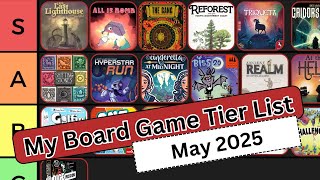






Hyperstar Run Deep Dive
What the Community Thinks About Hyperstar Run
Hyperstar Run has generated remarkably consistent enthusiasm from reviewers. The Button Shy solo title is celebrated as a clever platformer-themed card game that captures the essence of 16-bit side-scrolling action while remaining tactile and approachable. Reviewers from Totally Tabled to Tabletop Tokki to Banter and Boards all describe a "pleasantly surprising" experience, praising how well the game translates video-game challenge into card-based puzzle solving. The consensus centers on strong execution: the theme resonates, the mechanics reward planning, and the difficulty modes offer genuine scaling. Some reviewers wish for more mechanical variety, with one noting a preference for dodging spikes and traps over fighting enemies, yet none diminish the game's core appeal.
Core Mechanics That Define Hyperstar Run
Hand and Button Management
Hyperstar Run simplifies the platformer fantasy into symbol matching. Each level card displays one or two enemies that require specific button inputs (represented by colored icons: targets, shields, arrows, and wilds). Players defeat enemies by playing cards from their hand that match these symbols, or by spending previously passed level cards to "press" their accumulated buttons. The tactile satisfaction of matching symbols and discarding cards creates a physical rhythm that players describe as "clear and tactile." Over four runs, your hand grows, but so does the distance you must cover, a resource escalation that forces meaningful decisions about which symbols to preserve and when to expend them.
Combo Line System
Connected cards feature colored lines that create combo chains. When you defeat the matching enemy on one card, the colored line carries to the next, allowing you to clear that following card for just one symbol instead of the full cost. This mechanic transforms the puzzle: rather than solving each level in isolation, reviewers describe the experience as "trying to get these things to match up" across the tableau. Activating long combos provides satisfying moments of flow, and the system offers multiple valid strategies: build toward existing combos, manipulate card positions with abilities, or brute-force through with raw resources.
The Hyperstar Run Experience
Rapid Progression and Escalating Challenge
Hyperstar Run operates on a loop: fail, learn, retry with more resources and foresight. Reviewers emphasize how each failed run genuinely improves your position. "You get more foresight. You get to see the challenges that you're going to face and you get an additional card so that you have more cards to play to beat those monsters," one player observed. This mirrors the structure of retro arcade games where lives represent runs and progression is measured in how far you advance before exhaustion. The game rewards pattern recognition and planning: you plan three moves ahead, fail, and return wiser. Difficulty modes (easy through expert) scale this by expanding the level lineup, ensuring both newcomers and veterans find their sweet spot.
Tense Puzzle Solving with Time Pressure
Though not real-time, Hyperstar Run carries arcade-like urgency. You have four runs to beat the game. Run four arrives with tension: have you gathered enough cards to finish? Can you execute your planned combos, or will bad luck with ability triggers force improvisation? Reviewers highlight the "decision space" as narrow but sharp, you don't have dozens of options, but each choice matters. When it works, the satisfaction feels earned. When it doesn't, you recognize exactly which card or ability activation would have changed the outcome, pulling you back for another run.
What Makes Hyperstar Run Stand Out
Arcade Authenticity in a Card Format
The platformer theme doesn't feel pasted on. Reviewers consistently note that the theme "shines through" and "works really well" with the mechanics. The button symbols evoke video-game controllers; the four-run structure mirrors extra lives; even the win-rate ceiling (reviewers report 60-70% win rates on hard difficulty) mirrors the challenge curve of actual 16-bit platformers. One reviewer put it bluntly: "the theme works with what you're doing here." This authenticity elevates Hyperstar Run from "game with a theme" to a genuine thematic experience.
Surprising Strategic Depth in 18 Cards
Button Shy games compress mechanics into 18-card decks; Hyperstar Run's genius is that the tightness forces interesting trade-offs. Abilities like "swap any card in the level" or "flip the leftmost face-down card and swap it with your current card" don't just provide utility, they unlock previously hidden options and permit combo rescues. Reviewers note that abilities are so crucial that "without the abilities, I would have not won the game." Yet ability activation costs (flipping or discarding a card) create genuine opportunity-cost decisions. The result: high card efficiency and mechanical interlock make each play session feel dense with moment-to-moment choices despite the compact footprint.
Potential Drawbacks
Luck Dependency in Level Layout and Card Draw
Reviewers acknowledge that the game "can be a little luck-driven" because the sequence of level cards and which abilities appear on which cards significantly influence outcome probability. You can face a level requiring shields when you've drawn only arrows; you can see a powerful ability buried behind a fiddly mandatory cost. While difficulty modes and extended play mitigate this, a bad shuffle on run one or two can dictate a loss before you've learned the optimal path. One reviewer noted that abilities are "crucial for winning, highlighting the luck dependency without them," a ceiling that some players may find constraining.
Limited Mechanical Novelty After Repeated Plays
The core loop (flip card, match symbols, activate abilities, progress or loop back) becomes familiar quickly. With only 15 level cards shuffled into different configurations, the puzzle space remains bounded. Reviewers who praised the game also noted potential staleness: the decision space, while sharp, is "not huge." Without expansions or significant house rules, veteran players may find themselves mastering the optimal strategy and chasing high-win-rate records rather than seeking new strategic terrain. One reviewer was candid: this works well as a solo game for pickup play, but repeated intensive play may exhaust the design before deeper strategy games would.
If You Enjoy Hyperstar Run
Players who appreciate Hyperstar Run's arcade-themed puzzle-solving will find similar satisfaction in The Last Lighthouse, another Button Shy title that features demanding solo play and layered card interaction. For those drawn to the rapid-progression loop and foresight rewards, Cascadia offers a different (more serene) expression of the same "retry with better information" structure. The retro-platformer theming itself remains niche; Hyperstar Run stands somewhat alone in wedding classic arcade aesthetics to solo card mechanics, though players who love the theme alongside the puzzle may be interested in exploring other Button Shy titles to see how the line treats other video-game genres.
What Reviewers Are Saying
"Very very enjoyable game. The theme does shine through here, because you do have these buttons that you can press, right? And you're just trying to progress the level with that. I wouldn't say the game is like overly thematic, but the theme works with what you're doing here."
— Attack
"I really love the aesthetic and the gameplay. I do enjoy how well this emulates that kind of video game feel where you're coming back and trying to increase your skills each time and basically you have a little bit more knowledge and a little bit more skill and I think that really works well in this one because you're able to gather more cards."
— Tabletop Tokki
"Wow, what another great solo game. I'm really surprised. When I looked at the title and I saw some of the photos for it, I didn't really expect much out of it, but there's some bite to this one. I can see there being a lot more replay-ability with this one because I just did the standard mode, you can make it hard or even expert mode by adding more cards to the level to give you that extra challenge."
— Banter and Boards