









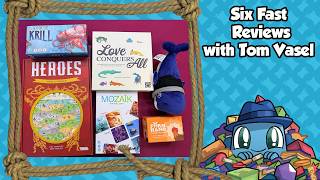
License to Krill Deep Dive
What the Community Thinks About License to Krill
License to Krill divides its audience, though nearly everyone agrees on one thing: the whale component is unforgettable. Reviewers across platforms consistently praise the whimsical stuffed whale with its zippered mouth that serves as both storage and game mechanic. Beyond the novelty, opinions diverge. Some reviewers find the game a clever drafting experience with memorable moments, while others feel the randomness and take-that elements undermine the strategic depth. Families, in particular, have embraced the game, with parents noting that children return to it repeatedly, whether drawn by the tactile whale component or the engaging card effects.
Core Mechanics That Define License to Krill
Card Drafting
Players draft cards from a central market, selecting from available options based on their location. This forms the backbone of License to Krill's decision-making. Each turn, a player chooses a card to add to their collection. The drafting system creates moments of tension as players balance immediate points against long-term set collection. Some cards are worth more in combinations, while others stand alone, forcing players to weigh whether to pursue a specific strategy or adapt to what remains available. The drafting flow keeps the game moving quickly, fitting its 30-minute playtime.
Whale-Driven Action Resolution
When players select cards with a shark symbol, they trigger an action, and then a whale card is revealed. The whale moves around the table based on card instructions, targeting different players and forcing them to discard cards or perform other effects. This mechanic creates unpredictable consequences that ripple through the game. The whale sometimes benefits its target, sometimes punishes them, adding layers of both opportunity and frustration. Whether this randomness feels like dynamic gameplay or frustrating chaos depends largely on player preference and tolerance for luck-based outcomes.
The License to Krill Experience
Playful Chaos
License to Krill delivers a chaotic, lighthearted experience that encourages laughter over optimization. The whale's movement, the card interactions, and the quick pace create moments of surprise. Players find themselves responding to unexpected whale targets and card effects that shift fortunes mid-game. For groups seeking a game that doesn't demand intense focus, this unpredictability becomes part of the appeal rather than a drawback.
Accessible Strategy with Family Warmth
The game presents simple rules that are easy to teach, yet card combinations offer enough variety to engage players across experience levels. Reviewers note that the theme and component design make it inviting to new players, while the card effects provide enough tactical decision-making to hold experienced gamers' attention for its brief duration. The whale's storage feature doubles as conversation piece, making setup and teardown part of the fun rather than a chore.
What Makes License to Krill Stand Out
The Whale Component as Centerpiece
Few games commit to a component as fully as License to Krill. The stuffed whale wearing a tie serves multiple functions: it stores the game, holds discarded cards during play, and anchors the theme. Reviewers consistently highlight that this component does more than look cute; it functionally defines the experience. The whale's presence on the table invites interaction and makes the game instantly recognizable. MaKa Games designed this so the game literally lives inside its most memorable feature.
Replayability Through Card Variety
The game includes multiple cards with overlapping effects and scoring conditions, creating different strategic scenarios across plays. Set collection elements reward players for pursuing specific combinations of cards, and the random whale events ensure no two games unfold identically. This combination encourages players to return to the game and experiment with different approaches to card collection.
Potential Drawbacks
Randomness Can Overwhelm Strategy
The whale card deck and which cards end up in which positions can heavily influence outcomes. Players who dislike games where luck plays a significant role will find frustration here. The whale's targeting mechanic, while thematic, sometimes feels arbitrary rather than earning consequences. Some reviewers noted that the game can feel "kind of random," making it difficult to execute a coherent plan when the whale's movements constantly disrupt player positions and force discards.
Take-That Mechanics May Frustrate Competitive Players
Moving the whale to target opponents and forcing card discards creates a take-that dynamic that not all groups enjoy. Players can end up on the receiving end of consecutive whale attacks, leading to moments of frustration rather than strategic tension. For groups that prefer cooperative or purely competitive mechanics where outcomes follow from player skill rather than positional chance, this aspect can feel punishing rather than engaging.
If You Enjoy License to Krill
Players drawn to License to Krill's blend of drafting and whimsy might explore Sushi Go!, which shares the card-drafting mechanic but with less randomness. For those who appreciate the take-that elements and chaos, Mille Bornes offers vehicular themed competition with unexpected reversals. If the accessible theme and family-friendly tone appeal to you, Ticket to Ride delivers a route-building experience with similar approachability. And for groups who love the whale component's role in defining the experience, any game with standout physical components like Cosmic Wimpout or PitchCar will scratch that tactile, table-presence itch.
What Reviewers Are Saying
"Who's going to argue against a stuffed whale wearing a tie? Um, and the concept of drafting a card to get points and then moving the whale around sounds interesting, but at the end of the day, this one here is just a five out of 10 for me."
— The Dice Tower
"It's a cute card game about whales eating Krill and my kids have kept wanting to play this game over and over again I don't know if it's because the stuffy or the game itself but they've loved it."
— Litz Table It
"Everything stores in the whale, which is also great because it's cute. It serves a purpose and it stores your game. So easy to take with you."
— Jamie, Tabletoptiktok