




Word Traveler Deep Dive
What the Community Thinks About Word Traveler
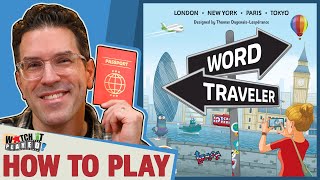
Word Traveler has made a strong first impression within the board game community as a cooperative word association experience that feels refreshingly accessible. Watch It Played's Rodney Smith provided an in-depth tutorial that showcases the game's cooperative nature, while The Board Game Garden's Jenna Beasley ranked it among Jenna's top games of July, praising how everyone Jenna played with enjoyed the experience. The Cardboard Herald hosts Eric and Jack noted that Word Traveler functions well as a family-friendly title, even though they see it as Office Dog's stepping stone to more ambitious designs like River of Gold and their Fellowship of the Ring adaptation. There is broad consensus that Word Traveler succeeds at what it sets out to do: create a low-pressure, cooperative experience built on word association and mutual understanding.
Core Mechanics That Define Word Traveler
Word Association as Navigation
The heart of Word Traveler rests on a deceptively simple premise: players must guide each other through a city using limited vocabulary. Each player holds a secret map showing their personal destinations on a 7x7 grid of locations. Rather than giving direct verbal instructions, players use word cards as clues to indicate where they want their companions to move. A destination that is "noisy and not lonely" might represent a subway platform, while "fun and refreshing" could describe a fire hydrant. This system creates genuine puzzle-solving during the planning phase, forcing players to think strategically about which words will best describe their intended targets while considering what their teammates might actually understand from those clues. The mechanic transforms the game into a collaborative act of interpretation, where success depends not on game knowledge but on shared understanding.
Action Timer and Real-Time Planning
A 4-minute sand timer drives the planning phase of each round, creating urgency without eliminating thoughtfulness. During this window, all players simultaneously examine their personal maps and select destinations, then arrange directional arrows (showing north, east, south, or west) with word cards underneath each arrow. Players can use up to three arrows on Day One and five on Day Two, essentially plotting a path through the city. The timer creates pressure but never removes players from the table: it simply means that not everyone will finish their full planned route, and that's acceptable. This pressure is what transforms Word Traveler from a casual vocabulary exercise into a game that requires real-time decision-making, pushing players to commit to their best guesses about which words will communicate most clearly.
The Word Traveler Experience
Moments of Surprising Connection
Reviewers consistently remarked on the joy of discovering that their word choices resonated with other players. When locals correctly interpret the traveler's clues and move the token to exactly the intended destination, there is a shared sense of accomplishment that comes not from beating an opponent but from successfully reading another person's mind. Jenna Beasley emphasized that "everyone that we've played it with thus far has enjoyed it," suggesting the game creates the kind of comfortable, low-stakes atmosphere where people can engage with word play without fear of being wrong or embarrassed.
The Puzzle of Choosing the Right Words
Players face a genuine creative challenge in selecting words that uniquely identify their destinations. The game's word cards present paired opposites (Majestic or not Majestic; Lonely or not Lonely), forcing players to be precise about their descriptions. This creates what Jenna called "this very cool just like puzzle of trying to figure out the best words to place to describe those different things." The puzzle is not complex in a heavy-game sense, but it demands attention and creativity. Each round presents a fresh set of decisions about which words will guide your teammates most effectively, and the changing map destinations across two rounds mean that no two games play quite the same way.
What Makes Word Traveler Stand Out
Accessible Design With Family Appeal
The Cardboard Herald's Eric observed that Word Traveler "feels like it would fit really well in like a mass Market context, you know like bring home to the family type of thing." The game requires no game-specific knowledge and welcomes players of any age or background. Its aesthetic, with artwork that Rodney Smith and Jack both noted draws from childhood trivia card aesthetics, like long tarot-like cards, reinforces this approachable tone. Jenna mentioned thinking "my mom would really enjoy that," confirming the game's cross-generational appeal. Word Traveler succeeds not by outsmarting players but by inviting them into a shared creative space.
Full Cooperation and Low Pressure
Unlike many cooperative games that build tension through timers and failure states, Word Traveler is described as "fully Cooperative low pressure" by The Cardboard Herald. There are no traitors, no hidden agendas, and no surprise rule breaks. Players are all trying to help each other succeed, and the scoring reflects that mutual goal. The game gives players credit even when they don't land on exactly the right destination, provided they land on any destination marked on the traveler's personal map. This generosity of spirit keeps the game accessible to players who might struggle with precision communication or anxiety about performance.
Potential Drawbacks
Limited Depth for Experienced Word-Game Enthusiasts
The Cardboard Herald acknowledged that Word Traveler "is office dogs first game does not does not hold up to where I think they go with uh River of gold." While the game's accessibility is a strength, players seeking deeper strategy or vocabulary challenges may find the word association puzzle resolves fairly quickly across multiple plays. The pool of word cards and the nature of the locations create patterns that experienced players might solve efficiently, potentially reducing replayability once the map destinations and word combinations become familiar.
Language Dependence and Cultural Specificity
Because the entire game rests on players sharing similar word associations and cultural understanding of what words mean, language barriers or cultural differences could make the clue-giving phase feel less intuitive. A word like "noisy" might conjure different mental images for players from different backgrounds or regions. Players whose first language is not English might find the card-based clues less accessible than visual or kinesthetic play. This is not a flaw in the design but an inherent challenge in any word-association game.
If You Enjoy Word Traveler
The Cardboard Herald mentioned Decrypto as a comparison, another word-association game that challenges players to give clues within strict constraints. If you appreciate Word Traveler's focus on mutual understanding and creative communication, Decrypto offers more competitive depth. The Wayfinders, also designed by Thomas Dagnier, shares Word Traveler's navigation theme and team-based problem-solving without the word-association mechanism. For reviewers seeking a similar low-pressure, family-friendly cooperative experience, River of Gold from the same publisher presents Office Dog's more refined design sensibilities in a dice-driven economic game. Fellowship of the Ring, their trick-taking adaptation, shows how the studio has grown in ambition and scope.
What Reviewers Are Saying
"It's basically a word association game where people are trying, each player is going to try to get all of the other players to go in a specific path on the board of the places that they want to go. So each player is going to have a secret map of different spots on this board, it's going to have a bunch of different icons everywhere, and they're going to have specific spots that they want the other players to go to with their piece, in order to gain victory points. It's fairly simple and I really really enjoyed it, and everyone that we've played it with thus far has enjoyed it as well."
— Jenna, The Board Game Garden
"It's an interesting one because it's something that feels like it would fit really well in like a mass market context, you know like bring home to the family type of thing. It's fully cooperative, low pressure. It kind of, I don't know if you remember, from childhood those like quiz games or trivia cards that were like long tarot card looking things on a single loop, it has that aesthetic."
— Eric, The Cardboard Herald
"You have this little puzzle in the center of the different directions and arrows that you're going to put down, and then you're going to put some words with these cards down, kind of trying to explain which one in that direction you want the players to go. So this very cool puzzle of trying to figure out the best words to place to describe those different things."
— Jenna, The Board Game Garden