









Pack & Paddle Deep Dive
What the Community Thinks About Pack & Paddle
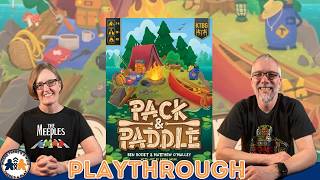
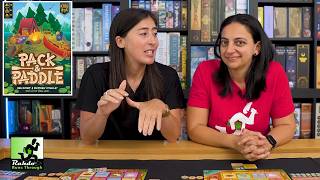
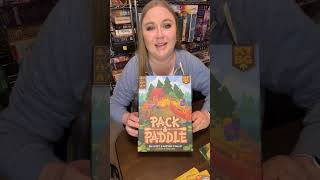
Pack & Paddle lands as a rare family-weight game that rewards strategic foresight without overwhelming its audience. Tabletoptiktok call it really clever and a lot of fun, RadoRusto dig into the tense bidding decisions across a full playthrough, and Before You Play frame it as a tidy tile-drafting and set-collection game that asks players to score in several different ways. Published by Kids Table Board Gaming, its appeal sits in an elegant tension: do you chase the tiles you want, or position yourself for better turn order and scoring? That tension permeates every round, making each of the game's days feel consequential.
Core Mechanics That Define Pack & Paddle
Simultaneous Bidding for Turn Order
Pack & Paddle hinges on simultaneous card selection. Each round, players secretly choose one of their numbered cards and reveal together, with the highest number picking first from the drafting market, at the cost of exposing the rest of their hand. This creates genuine mind games, since knowing an opponent just played their highest card means they cannot lead again that round. Tabletoptiktok highlight exactly this, describing the fun of figuring out what number to play and predicting what others will play to control the turn order. The choice also triggers a bonus effect tied to the card, so timing a high card carries weight beyond simply going first.
Multiple Scoring Dimensions
Pack & Paddle refuses to let a single strategy dominate. Before You Play lay out the five scoring areas: drafting supply tiles, observing animals, contributing to personal and community campfires, claiming outing bonuses, and competing in the daily canoe race. This multifaceted scoring keeps players balancing competing priorities, and the game rewards those who read which avenue best suits the tiles they draw. With so many paths to points, no two games push players toward the same plan, and every tile choice resonates across several scoring tracks at once.
The Pack & Paddle Experience
Weather Shapes Your Options Each Day
Each day begins with drawn weather that eliminates certain activities, so a windy or snowy day takes some options off the table. This smartly creates asymmetry without heavy rules, as some tiles and outings become more or less valuable depending on conditions, and long-term planning grows risky because you cannot guarantee access to a preferred activity. Reviewers appreciate how thematic this is, since weather genuinely affecting a canoe trip rewards or punishes your strategy while keeping the system mechanically clean.
Tile Placement and Cascading Bonuses
Drafted tiles slot into a tableau in a set order, so placement becomes a spatial puzzle. Some tiles score based on their neighbors, some require collecting a full set of components, and some animals only pay off once you hold specific outing tokens. RadoRusto capture the central tension neatly, describing the agony of holding a high card that guarantees first pick while also being worth points, so you want both the points and the priority. The interplay between private campfire goals and shared community campfires adds another layer, forcing players to adapt when someone beats them to a scoring condition they were counting on.
What Makes Pack & Paddle Stand Out
Elegant Simplicity Hiding Depth
The ruleset is refreshingly lean for the decision density it delivers. Each card's bonus is printed on it, the weather system is a simple flip-and-adjust, and scoring follows a predictable end-of-day rhythm. Yet beneath that calm surface, every card play carries opportunity cost. Because the bidding is simultaneous, you cannot pin an opponent into a choice; you must predict what they want and risk your hand accordingly, which is what makes the central decision of when to play a high card return with fresh weight every round.
Outing Tokens That Reward Planning
The outing types each unlock specific bonuses, from reaching mountain animals to drawing campfire tokens or gathering extra resources. Reviewers highlight that these one-time-use tokens reward planning without punishing players who miss them: you can still win without a particular outing, and holding one until the right moment to unlock a high-value tile feels like earned mastery rather than a gate. The synergy is pervasive but optional, letting families engage at the surface while rewarding deeper planners.
Potential Drawbacks
The Canoe Race Can Feel Swingy
Reviewers note that the daily canoe race, worth a meaningful chunk of points, can occasionally dominate the endgame when luck breaks one way. RadoRusto recount falling behind early on the canoe track and struggling to catch up, which can turn a close game into a runaway. The race is intentionally valuable to create daily stakes, but in tighter games a player locking down early canoe dominance can demoralize opponents who fixate on the visible leader rather than pursuing viable tile-synergy strategies.
Downtime at Higher Counts
With more players, each round sees several simultaneous reveals followed by a sequence of turns, and the game can slow if players debate optimal play. Reviewers playing at two praise the brisk pacing and short decision windows, but note the potential for analysis paralysis at a full table, especially on the final day when endgame scoring becomes visible and every tile choice locks in points or denies them to opponents.
If You Enjoy Pack & Paddle
Reviewers suggest fans explore Cascadia for its relaxed outdoor theme and satisfying tile-placement scoring. Calico offers a similar spatial puzzle where adjacency and matching drive points, and Splendor shares the simultaneous-feeling race for turn order and resources. The common thread is games where strategic choices compound across turns, where incomplete information creates tension, and where resource management feels thematic rather than abstract.
What Reviewers Are Saying
"This game is really clever. It's a lot of fun. I love figuring out what number should I play, what number do I think other people are going to play, when do I want to try and get myself to the top of the turn order."
— Tabletoptiktok
"It's creating a bit of that tension there. If I play my five, I'm almost guaranteeing, as long as I'm also first on the tiebreaker track, that I'm going to get to pick my tile first. So having that in your hand in the last round is like, well, I want the points, but I also want to go first."
— RadoRusto
"This is a family-weight tile-drafting and set-collection game that plays in about 45 minutes, in which players will need to score points in five different areas. You'll need to draft supply tiles, you'll need to observe animals, and you'll also need to contribute to your own personal as well as the community campfires."
— Before You Play