















8 Dragons Deep Dive
What the Community Thinks About 8 Dragons
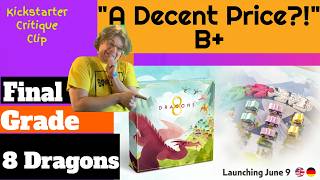
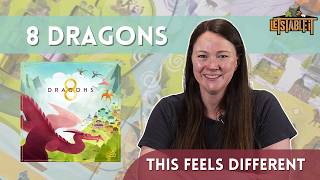
8 Dragons strikes reviewers as something genuinely fresh in board gaming. Sarah from Let's Table It captures the most telling reaction: the game feels hard to categorize because nothing else quite plays like it. The consensus centers on a single insight: the movement system is the star. Players praise how the game stands out mechanically while also delivering a cohesive, engaging experience from start to finish. What's remarkable is that reviewers across different channels arrive at the same conclusion without overstating it. Grant Lyon appreciates the little-seen worker-movement approach. The Cardboard Couple (Ilya and Tyler) loved it enough to rank it in their April top 5, particularly after playing it at Canada Plays. Alex from Board Game Co calls it a very unique movement game from Wonder Bow, the same publisher behind Kelp, confirming that innovative movement is their design signature.
Core Mechanics That Define 8 Dragons
Set Collection
Set Collection is the scaffolding for 8 Dragons' scoring. Players pursue artifacts, treasures, and mission cards that reward specific combinations. Sarah describes the moment-to-moment challenge: deciding whether to push for a strong location action that also benefits an opponent, or remove dragons from your swarm to change outcomes. The merchant tiles (purchased with gold) contain missions that form the bulk of end-game points. These missions aren't just decoration; they shape every location visit and every tile placement. Players balance collecting generic treasures against committed artifact hunts tied to specific missions, creating layered scoring decisions throughout the game.
Worker Movement and Action Selection
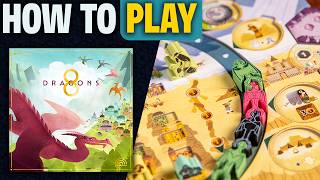
This is where 8 Dragons separates itself. Designed by Son Schmidt and published by Wonder Bow Games (also behind Kelp), the game uses a deceptively simple movement rule that explodes into complex activation sequences. Grant Lyon captures the core: you send your lead dragon (the worker) around the board, but each time you pass through the Valley of the Winds, you pick up a wormling (baby dragon) and attach it to your dragon, forming a growing swarm. Where most games end movement there, 8 Dragons makes this the engine: every piece in your swarm activates the location where it stops, giving bonuses to every player who owns a piece in that swarm. Nowhere on the board is passive. Your movement creates action opportunities for opponents, which creates the central decision: which location do you move to that maximizes your benefit while minimizing theirs? This isn't mutual aid. It's mutual engagement.
The 8 Dragons Experience
Tension Built Into Movement
Sarah identifies what makes the shared-activation system work: helping yourself strengthens your opponents, which creates interesting tension. This isn't a flaw to tolerate. It's the game's emotional core. Every turn, players face the same question with different stakes: take the powerful location that sets up an opponent's combo, or settle for something weaker but safer? Grant Lyon notes that players are always invested, even during opponents' turns, because your wormlings in their swarms mean you get benefits too. This transforms turns that would otherwise be downtime into active decision-making moments. Downtime collapses because the board state keeps shifting in ways that matter to everyone.
Satisfying Escalation
Tyler and Ilya describe 8 Dragons as a slow-burn that starts basic and escalates beautifully. Early turns are small: move, activate one or two actions, place a tile. But as villages grow (more villagers = stronger actions) and swarms lengthen, turns become dense with possibilities. Players build engines through lair tiles, unlock synergies through missions, and suddenly the choices become rich. This isn't complexity bloat. It's emergence through play. The game teaches itself by getting more rewarding as stakes rise.
What Makes 8 Dragons Stand Out
A Movement Mechanic No One Else Uses
Grant Lyon says what several reviewers imply: "I've never played a game like this before where you send workers around a track and then pick up more workers as you do it." The swarm system is mechanically elegant. A dragon stays on the board as a persistent worker, accumulating travel companions that activate locations together. This solves a design problem most worker-placement games ignore: what happens during other players' turns? Here, other players' turns activate your pieces, which means you're never watching. Sarah's praise for production supports this: the screen-printed dragon meeples click together physically, reinforcing the swarm metaphor. It's a small detail that makes the system feel real.
Upward Scaling That Rewards Engagement
Sarah notes that the game scales upward over time, growing from "fairly small" early actions to "much more impactful" turns as villages strengthen and swarms expand. Tyler and Ilya experienced this in real play: actions that felt narrow become vectors for powerful combos. This scaling happens naturally through the rule set, not through added rounds or phases. Players feel their engines building because the board state is genuinely shifting under their control. Investments in missions, treasures, and lair tiles compound over the game's arc, which rewards player attention and teaches strategy through play rather than rulebook complexity.
Potential Drawbacks
Component Size and Readability
Sarah raises a production concern: components are on the smaller side, and the merchant tiles, while shiny and visually striking, can be difficult to read. She notes this may be a personal sensitivity rather than universal, but it's worth flagging. The visual appeal is real. Tyler mentions the tiles are "shiny and pretty, almost too shiny," which suggests that aesthetic premium may come at a cost to legibility. For players with vision considerations or for gaming under less-than-ideal lighting, this could create friction.
Limited Location Variety in the Base Board
Alex notes his biggest criticism of the base game: the central board's location actions felt repetitive after a few plays. The base game includes mix-and-match location tiles for variability, but Alex wanted more fundamentally different action types to explore. The expansion "Wondrous Places" addresses this with five new modular locations (dragon wings, kobolds, wars of harmony, dragon fest, fountain of fortune), adding asymmetry and fresh decisions. For players seeking deeper replayability out of the box, the base board's location set may feel modest after the first few plays.
If You Enjoy 8 Dragons
8 Dragons shares its DNA with Kelp, Wonder Bow's previous title. Both games center on unique movement systems that drive everything else. If you've enjoyed Kelp's fresh take on movement and spatial decision-making, 8 Dragons' dragon-swarm mechanic will feel like a natural evolution. The shared activation system in 8 Dragons creates similar moments of tension where your choices ripple across the table, pulling everyone into the action. Both games reward spatial planning and reward players who think several moves ahead about how the board state will flow.
What Reviewers Are Saying
"The idea that helping yourself can also strengthen your opponents creates really interesting tension. I honestly can't think of another game that uses movement and shared activation in quite this way. The combination of unique movement, shared activations, and a strong production makes this one worth watching."
— Let's Table It
"I've never played a game like this before where you send workers around a track and then pick up more workers as you do it. There's also really little downtime in the game. You're always invested even in someone else's turn because if you have a wormling attached to their dragon mama, you're going to get a benefit, too."
— Grant Lyon
"It's this slow burn game that starts off really basic where you're only taking one action and then maybe activating another action for somebody else or yourself. It's a lot of fun. It's this cool little action selection tile placement game where you're collecting different sets trying to score the most points, but the puzzle of activating and the fun engagement that everybody has during all of the play is a lot of fun."
— Cardboard Couple