

















Pirates of the High Teas Deep Dive
What the Community Thinks About Pirates of the High Teas
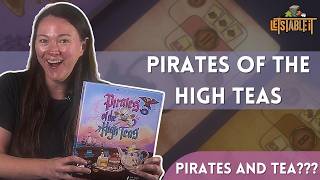
The board game community has embraced Pirates of the High Teas with enthusiasm and genuine delight. What reviewers consistently celebrate is how well the game executes a wonderfully absurd premise: rough-and-tumble pirates taking afternoon tea service with utmost seriousness. Carly, a dedicated game reviewer with a growing channel, declared the pun itself to be "chef's kiss" worthy, and her enthusiasm extends to the whole package. Her eight-year-old daughter loved the game, which Carly attributes to how accessible and streamlined the experience feels. Tom Vassal from Dice Tower calls it a solid seven out of ten, praising how the entire production comes together in a cohesive way that appeals to casual players and families alike. Sarah from Let's Table It came away from playing Pirates of the High Teas far more charmed than expected, which speaks to how the game exceeds first impressions. Grant Lyon, reviewing new retail releases, recognized it as an excellent introduction to worker placement for players transitioning from lighter family games. The consensus across these voices is that Pirates of the High Teas succeeds not by being a heavy strategy game, but by being confidently, unapologetically approachable.
Core Mechanics That Define Pirates of the High Teas
Set Collection Through Ingredient Gathering
At its heart, Pirates of the High Teas is a set collection game where players hunt for specific combinations of dishes and teas to serve their captain. The brilliance lies in how the tea cards themselves guide collection strategy. Each tea card displays two different scoring conditions: a flavor requirement (fruit, chocolate, or salty) and a suit requirement (color flags). Meeting one condition with three served dishes earns a base bounty; meeting both unlocks a significantly higher combo bonus. This creates a push-your-luck tension between taking partial sets quickly or holding out for the perfect collection. Carly highlighted how much she enjoys this open drafting aspect because it never feels limiting; there's always a viable path forward even when circumstances aren't ideal.
Light Worker Placement and the Smashing Mechanic
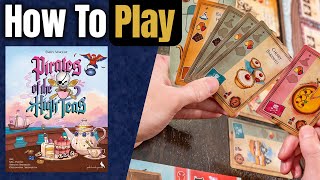
Players place pirate meeples on a ship board to access three main action zones: the Smuggler's Hold for tea cards and gear tokens, the Galley for dishes, and the Captain's Quarters where players actually serve and score. What makes this worker placement feel refreshingly un-intimidating is that placing a worker doesn't lock others out of spaces with long-term consequences. The real innovation sits in the dish smashing system. When serving, players combine three dishes with one tea, but can overlap dish cards to blend their properties together. If one dish has the flavor needed but lacks the color suit, it can be stacked behind another card that has the suit needed; the point value of the stacked card is lost, but the flavor profile is gained. Sarah from Let's Table It described this as keeping players from ever feeling stuck; there's always a creative way to make progress with the cards drawn. The mechanism also earned genuine laughs at the table as players orchestrated increasingly ridiculous flavor combinations.
The Pirates of the High Teas Experience
Delightful Theme and Whimsical Contrast
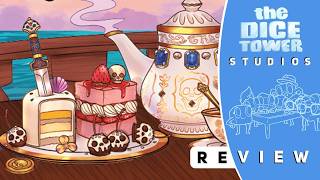
The contrast between the pirate aesthetic and formal afternoon tea is the core of Pirates of the High Teas' personality. Pirates are supposed to be rough and wild; fancy tea is supposed to be refined and proper. The game commits fully to this contrast at every level. The artwork showcases genuinely appetizing illustrations of eclairs, pastries, and delicate finger foods alongside pirate-themed flourishes. Tom Vassal noted that many of these dishes are so fancy he doesn't even recognize them, but they look delicious nonetheless. Jeff from Foster the Meeple joked that the only way to improve the theme would be if the pirates were cats. Carly emphasized how much the theme resonated with her, not just mechanically but in the table experience; players found themselves debating whether they'd actually want to eat the specific combinations they were serving. Grant Lyon tied the experience directly to the thematic hook, describing it as feeling like sipping fancy tea at a tea house, but on a pirate ship. The pirate setting provides flavor and personality without becoming a complex overlay that slows down play.
Relaxing, Cozy Gameplay
Sarah from Let's Table It made a striking observation: Pirates of the High Teas is relaxing in a way that not many worker placement games are. The turn structure is streamlined. A player places a meeple, the action resolves, and play moves forward without heavy analysis paralysis. Bonus tiles provide just enough variability to keep rounds feeling fresh while maintaining predictability. Nobody is staring at the board for five minutes wrestling with optimization. Carly's family found the game to be incredibly approachable because there's not a ton of overhead; the rules are light, the actions are few, and the game runs in well under the box's claimed 45 minutes. The combination of beautiful artwork, simple decision-making, and manageable playtime creates what multiple reviewers called a cozy experience, the kind of game to happily pull off the shelf after work when there isn't energy for something more demanding.
What Makes Pirates of the High Teas Stand Out
The Smashing Mechanic as Creative Problem-Solving
While other games have included set collection and worker placement, the smashing system gives Pirates of the High Teas a distinctive identity that reviewers consistently highlighted. Players aren't restricted by rigid card requirements; there's agency in how cards combine to meet objectives. This mechanic serves two purposes: mechanically, it prevents dead cards in hand, and thematically, it's delightful to imagine pirates literally smashing dishes together in the galley. Carly called out how much she enjoyed this specific system because it meant never feeling that frustration of drawing a card that didn't help at all. The act of smashing also generated conversation and laughter around the table, making it a memorable point of interaction. Sarah's group kept laughing when they used the mechanic, suggesting it taps into something genuinely fun about the tactile and imaginative act of combining things.
Beautiful Artwork and Streamlined Presentation
Every reviewer who mentioned aesthetics praised the game's visual design without exception. Tom Vassal emphasized that the artwork was a primary draw; it's the kind of beautifully illustrated package that catches eyes at retail locations. The dishes themselves are rendered with detail and appeal, making the set collection feel rewarding visually as well as mechanically. Pirates of the High Teas, designer Emily Vincent's release with Pink Hawk Games, demonstrates strong production values. The game is intentionally designed to welcome players who might be intimidated by heavier strategy games. The streamlined ruleset, quick playtime, and inviting theme combine to make it feel accessible to families and casual gamers without sacrificing meaningful decisions or engaging mechanics.
Potential Drawbacks
Limited Strategic Depth for Experienced Gamers
Tom Vassal noted that while he enjoyed Pirates of the High Teas, seasoned strategy game enthusiasts may find it too simple. The game doesn't offer the kind of deep optimization or emergent complexity that heavier Euro games provide. Grant Lyon categorized it as an introduction to worker placement specifically because it doesn't try to layer multiple systems on top of each other. Players looking for significant player interaction, resource scarcity that forces tough choices, or branching decision trees won't find that here. The approachability that makes the game welcoming to families is the same quality that limits its ceiling for experienced hobbyists.
Theme Doesn't Deliver on Pirate Fantasy
Tom Vassal pointed out that despite the title, Pirates of the High Teas isn't really about pirate action at all. Players work for a pirate captain, but the game is fundamentally about food service and tea preparation. The pirate setting is more of a playful wrapper than a thematic engine driving the gameplay. Players expecting swashbuckling adventure or genuine pirate mechanics should recalibrate expectations. The game succeeds precisely because it leans into the absurdity of this contrast, but that means anyone looking for a game that delivers on pirate themes in a traditional sense will be disappointed.
If You Enjoy Pirates of the High Teas
Jeff from Foster the Meeple mentioned that designer Emily Vincent also created Knitting Circle, which exists in the Calico family of games; players who liked Pirates of the High Teas and want more from this designer would find that a natural next step. Grant Lyon's preview also referenced the "And a Bottle of Rum" expansion, which adds rum tokens and captain cards that create additional strategic opportunities for players who've mastered the base game and want additional layers without fundamentally changing the experience. Beyond designer connections, players who appreciate light worker placement games with beautiful production and approachable mechanics would find similar satisfaction in titles that emphasize accessibility alongside genuine decision-making.
What Reviewers Are Saying
"I came away from Pirates of the High Teas far more charmed than I expected. The gameplay is approachable, the theme is delightful, and that dish smashing mechanism kept making us laugh."
— Sarah, Let's Table It
"Pirates of the high teas instead of pirates of the high seas, it's just chef's kiss. Everything about it just kind of clicked, especially for families with younger kids because there's not a ton of actions and there's not a ton of overhead."
— Carly
"It's a gorgeous looking, easy to grab some cards, turn them in, play it, have a fun pirate type theme and move on. It's a seven out of ten for me. The whole thing I think comes together in a really cool fashion."
— Tom Vassal, Dice Tower