





Garage Rock Deep Dive
What the Community Thinks About Garage Rock
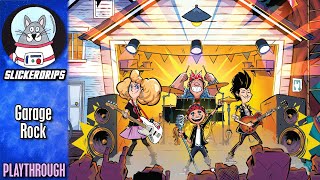
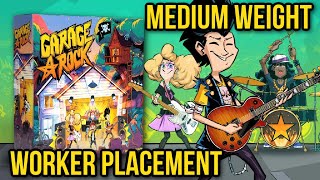
Garage Rock has struck a chord with reviewers who grew up chasing the teenage garage band fantasy. The game captures an authentic 1980s rock band experience where players manage aspiring musicians competing for neighborhood fame through gigs, radio play, and relentless self-promotion. Community response emphasizes how thoroughly the theme permeates every decision: writing songs, upgrading equipment and looks, spreading flyers, recording demos, and ultimately headlining the Battle of the Bands showcase. Reviewers consistently praise the production design, with the iconic VIP lanyard first-player token and the treehouse pirate radio dice tower standing out as thematically perfect components. The artwork draws comparisons to the neighborhood aesthetic of The Sims video game, creating an immediately nostalgic visual experience that amplifies the game's appeal to anyone who remembers the era.
Core Mechanics That Define Garage Rock
Worker Placement
At its heart, Garage Rock is a worker placement game where each player controls a four-piece band and takes turns sending band members to different neighborhood locations. The twist is that each location offers two actions, and choosing which one to take shapes your strategy. Placing workers feels clean and accessible, but reviewers note the system has surprising strategic depth. You must carefully sequence your actions because all actions you want to perform need to happen before you run out of workers and are forced to play a gig.
Gig Performance and Band Progression
When you can no longer place workers or choose to play a gig, you advance the calendar and perform at one of four available venues. Each gig has specific requirements: certain songs in your set list, minimum skill levels, and potential bonus rewards for meeting additional conditions. The tension comes from choosing whether to headline for maximum rewards or open for a slightly easier path, knowing that gigs disappear after just one additional player performs there. This elegant system ties your band building directly to scoring opportunities. What makes this especially satisfying is how visibly your band members improve over the course of the game. When you visit the instrument shop, your band members physically upgrade their gear. When you buy new clothes, players flip character tiles to show their evolving style. When you take music lessons, they earn talent ribbons. This progression toward becoming a rockstar creates powerful thematic resonance that reviewers consistently highlighted.
The Garage Rock Experience
The Nostalgic 1980s Fantasy
Reviewers who grew up playing in bands or dreaming of rock stardom found the experience deeply personal. The game transports players to summer in the 1980s, filled with references to that era: the cartoony punk rock aesthetic, the pirate radio broadcasting from a treehouse, the neighborhood venues ranging from dive bars to prestigious venues like the Silver Screen. One reviewer noted the game feels like a time capsule of their youth, capturing exactly the vibe of that era. The seasonal progression through sixteen weeks of summer adds authenticity to the narrative arc toward the climactic Battle of the Bands.
Satisfying Band Member Development
Beyond the mechanics, what reviewers found most compelling was the tangible sense of building something. Your player board shows your band's evolution across three skill tracks: image, sound, and talent. As you improve these stats, you unlock new capabilities. One reviewer described the special satisfaction of seeing this buildup happen physically, from humble beginnings in a garage to eventually becoming rockstars with special abilities that carry forward to the final performance. The game makes progression visible and rewarding at every step.
What Makes Garage Rock Stand Out
Iconic Production and Thematic Polish
The VIP all-access lanyard first-player token became an instant favorite among reviewers, who called it the best first-player marker they have encountered. The treehouse pirate radio station serves dual purpose as both a stunning centerpiece and a functional dice tower for the radio broadcast mechanic, adding elegance to the design. Every element supports the theme: money looks like era-appropriate currency, character upgrades are represented by acrylic overlays on miniatures, and the neighborhoods have distinct visual personalities. The artwork, which draws aesthetic inspiration from The Sims, creates an inviting, lived-in world that immediately communicates the game's tone without feeling heavy or overly thematic.
Meaningful Recall Mechanic
Most worker placement games have a recall action that feels purely mechanical. Garage Rock makes the recall into the thematic heart of the game: playing a gig. This transforms the moment when you run out of workers from a mechanical necessity into an exciting performance opportunity. The choice to headline or open, combined with time-limited gig availability and specific song requirements, creates genuine strategic tension. Reviewers appreciated how this system prevents the game from becoming purely puzzle-like and instead creates a pacing rhythm that mirrors the experience of a band building toward a big show.
Potential Drawbacks
Rules Complexity and Reference Overhead
Despite the game's moderate complexity rating (2.20/5), reviewers found the rulebook needed frequent consultation during play. The game has numerous interlocking systems: motivation spending, flyer promotion, merchandise sales, song recording sequences, and radio broadcast mechanics. Each of these works independently but interacts with others in ways that require careful tracking. One reviewer played a full game and still felt they needed the rulebook at hand for edge cases and procedural questions. The game is learnable but demands more mental overhead than its weight suggests, particularly on the first play.
Component Setup and Endgame Randomness
The prototype reviewers played contained numerous small components that need stacking at each location, leading to setup and teardown that felt overwhelming on first impression. While reviewers noted that the final version likely improves this with better storage solutions, the administrative overhead of a four-player game is significant. Additionally, the default endgame Battle of the Bands uses a dice tower drop that introduces randomness into final scoring, which bothered some reviewers who preferred the alternate deterministic scoring method that evaluates endgame conditions instead. Both systems are available, but players should choose which aligns with their group's preference before the final round.
If You Enjoy Garage Rock
Reviewers compared Garage Rock to a few related titles. Rock 'n' Roll 1977 covers similar musical ground but with a different mechanical approach. Draft Right Records focuses on album building within a lighter design. Both games scratch the music industry theme but lack Garage Rock's level of personal band development. The Sims board game shares the neighborhood aesthetic and character progression feeling. For players seeking that combination of worker placement tension, satisfying progression loops, and thematic immersion, Garage Rock stands in its own category.
What Reviewers Are Saying
"This VIP access badge is now my favorite first player token of any game ever. It is iconic and it fits so well with the theme. Everything about this I love."
— Board Game Buzz
"So, you really do feel like you are building up your band. You, you feel like you are getting better. And it's so fun to see, to see the buildup on your personal player board to see kind of where you start and then to slowly you feel like you're becoming like a rockstar band."
— Board Game Buzz
"The production looks absolutely stunning. I, I do love the colors. I do like the, the, the vibe that the game has. This kind of like cartoony punk rock that is just like screams to, to us exactly what we grown up with. Exactly. This reminds me of my youth. It's freaking awesome."
— Board Stupid