

Gingham

Game ID: GID0452345
Game Info
Year
2025
Players
2-4
Age
8+
Playtime
30 min
Complexity
2/5
Collection
Ratings
Creator Score
Mechanic profile
Not enough video data yet
Vibe profile
Not enough video data yet
Description

Deploy ants on a picnic blanket to connect and stockpile sweets in a sharp abstract game inspired by trick-taking

Description

Deploy ants on a picnic blanket to connect and stockpile sweets in a sharp abstract game inspired by trick-taking

Ask a Rules Question
All mentions
Browse transcript mentions, sentiments, pros/cons, mechanics, topics, quotes, and references.
Total mentions: 8
This page: 8
Sentiment: pos 5 · mix 1 · neu 1 · neg 0
Mentions per page
Showing 1–8 of 8
Video vgZ_q39ZAyI Top List at 11:35 sentiment: positive
video_pk 105361 · mention_pk 303612
Gingham video thumbnail
Click to watch at 11:35 · YouTube ↗
Overall sentiment (raw)
positive
Pros
  • Objectively a good game.
  • Scales for two players.
  • Becomes a great two-player head-to-head game.
  • Enjoyable as a 30-minute, chess-like game.
  • Allows for more strategic execution at two players.
  • Feels like it shouldn't have more players.
  • Very sharp and controlled at two players.
  • Dramatic end-game scoring due to hidden points.
  • Terrific game with two players.
Cons
  • Can be frustrating if you lose repeatedly.
  • Becomes more chaotic and less focused with more players.
  • Loses head-to-head ability with more players.
  • More players makes it harder to deploy movements as part of a strategy.
Thematic elements
  • Competing ant colonies vying for food.
  • Picnic blanket
Comparison games
none
Mechanics (from transcript analysis)
  • abstract strategy — A positional abstract game with a focus on placement and chains.
  • Area Majority — Chains are made between sweets to capture them for points.
  • Turn order manipulation — Turn order is determined by proximity to a corner, which players can manipulate.
  • Worker Placement — Ants are sent out to make chains.
Video topics + discussion points
No key topics recorded for this video.
Quotes (from this video)
  • So, this is our long-running series, and in this series what we do is we look at the games we've been playing over the last half year, let's say, and we pick out the best ones for two players but these aren't games specifically for two players. They have higher player counts.
  • The reason we do this is because while it can be very easy to find two player specific games or lists of the best two player specific games, it's a lot harder if you mostly play two player, which a lot of people do, to know if a game that goes up to four, five, six is going to be any good at two players.
  • The core of it is worker placement.
  • So addictive. You get to the end of the game and you just really want to have another go even if it can be a bit frustrating. You didn't make the right move and it's so limited. You just get to the end and think, 'I could have done that differently. I'm going to try that next time.' Just want to go again.
  • So, A Feast for Odin is the kind of classic sprawling work placement game for one to four players, where you basically uh have a little Viking village, I guess you could say, Settlement, and you you kind of tell the story of that settlement and how they interact with the world and what they do to survive and become profitable and eat and all things like that.
  • It's just a big sprawling sandbox of a worker placement game.
  • It becomes like a chess game. So it just sits in this really nice space where if you want like a two player head-to-head game, this is what it becomes at two players.
  • This is one of those games where and there's been a few of them. I think that we discussed before. I can't remember any off the top of my head now, but where some games you play at two and it almost feels like there shouldn't be more players.
  • So, Yonder, a game we fully fully recommend, but now we'll move on to our next game.
  • And to be honest, this is one of those games that you wouldn't expect at all to work at two players.
  • And we were really, really impressed by how much we enjoyed that too.
  • So, it's very interactive because you know, a lot of it is is bidding or is auctions.
  • This is one that's perfect for you if you want something that, you know, if you have friends over, you can get it out or if you're staying in for the night, it's just you two. Uh just you and your housemate or something, then this is the one that will do both and it'll be great in both scenarios.
  • Nippon which is a game we reviewed a little while back. This is another heavy Euro. Uh although I would say more in the medium heavy range for one to four players and this has been I'd say one of the critical darlings of the year.
  • The core and all of the fun in the game comes from this system where you essentially will take a worker from above and action space, and then you're going to put that worker on your player board, and then you can take one of the actions from kind of the the uh column where you took that worker from. But, the trick is all these workers are different colors, and what you really want is almost all the workers that you take to be the same color, because the more different colors of worker, the more you have to pay them for some reason.
  • So, the basic fact is that playing at two then feels like playing at three already and then also if you play at three, it feels like playing at four. So, you're not losing too much in that in that area, essentially.
  • So, we'd really recommend this at two or more if you want to play it at more, but this is a really really top Euro.
References (from this video)
No references stored for this video.
Video lXveR8CEX7A Board Of It Discussion at 7:33 sentiment: positive
video_pk 81117 · mention_pk 199879
Board Of It - Gingham video thumbnail
Click to watch at 7:33 · YouTube ↗
Overall sentiment (raw)
positive
Pros
  • Brilliant game.
  • Very tactical.
  • Can play very offensively.
  • Really good. Captures a rhythm of simple actions with a huge mental board state.
  • Great game, quick playtime (20-30 minutes).
  • Sharp, abstract, tactical with lots of options.
  • Low rules overhead.
  • Designer is becoming a favorite.
Cons
  • Can be frustrating to be honest.
  • Infuriating to have other players' ants moved around.
  • The game ends when someone reaches 40 points, but the score is hidden.
  • Irritating that there's no idea how close players are to 40 points.
  • Hidden information can lead to different decisions if players knew game end proximity.
Thematic elements
  • Competing ant factions at a picnic blanket trying to gain sweets
  • Picnic blanket
Comparison games
none
Mechanics (from transcript analysis)
  • Action Point Allowance — Players exhaust items for actions.
  • Area Control — Completely surrounding a stack of candy to control it.
  • Hidden Movement — The score is hidden on a little score tracker per person.
  • Set Collection — Making chains of ants connecting sweets.
  • Worker Placement — Placing a queen down and then an ant down on that row.
Video topics + discussion points
No key topics recorded for this video.
Quotes (from this video)
  • The partial cutthroat special.
  • Root is the famous at this point cutesy but brutal asymmetrical war game where every player has a completely unique faction that plays in a different way and scores points in a different way but follows some kind of few simple core basic rules.
  • Ants, my arch nemesis game of 2026 for sure, if not beyond.
  • I may have said that I hate this game upwards of 10 times while we were playing it, at least.
  • It is very good. It's a bit chesslike, right?
  • One thing that I really don't like about it, and I'm sure you disagree because you kept winning. Uh, but it's the the game ends when someone reaches 40 points.
  • So, I just find there's really a lot of game state and people win in different ways from going after different strategies.
  • It has this great excitement at the end. Uh, it's kind of quick to go through as well.
  • A Feast for Odin is a kind of worker placement mixed with polyomno game where you're sending out workers essentially fill up these player boards with all different shapes of tiles to cover up negative points.
  • I find the occupation cards here. They're never interesting to me and they're so like they're so difficult.
  • Dune Uprising... It's just so cutthroat and there's so many twists and turns and it's exciting and frustrating.
  • I really hate about AI factions is when they get to do things that real players couldn't do.
References (from this video)
No references stored for this video.
Video 2h57eq5rd64 Board Of It Top List at 8:47 sentiment: positive
video_pk 80520 · mention_pk 196093
Board Of It - Gingham video thumbnail
Click to watch at 8:47 · YouTube ↗
Overall sentiment (raw)
positive
Pros
  • Very sharp, surprisingly thematic abstract game
  • Really quick to play
  • Brutality and interaction are enjoyable
  • Lots of tactical options
  • Theme is quite fun
  • Multiple strategies to win
  • Varied game to game due to scoring elements
Cons
none
Thematic elements
  • Ants capturing treats
  • Picnic
Comparison games
none
Mechanics (from transcript analysis)
  • action selection — Placing a queen ant activates a row or column, and then players place their ants in that activated area.
  • Area Control — Players place ants to surround and capture treats on a picnic blanket board.
  • Diagonal Split Board — A stitch divides the board diagonally, affecting placement order and movement.
  • End game scoring — Multiple strategies for winning exist, with significant points available through endgame scoring.
Video topics + discussion points
No key topics recorded for this video.
Quotes (from this video)
  • I'm going to try my best to keep it to games that came out in 2026, but of course with different regions, different games come out at different times.
  • So, as far as for me, these games came out in my region this year. Although some of you might have been able to access them earlier.
  • And then, some of the other things that I like as well is I like this team talk before you start playing. I think it's fun. It gives everyone a chance to kind of chat and contribute and come up with different strategies and try them out.
  • But Amelean feels like the first one that almost deserves to be there in its own right.
  • It's just very sharp, it's very brutal, it's very interactive.
  • And then we're getting to the heavy Euro section of this list of the year so far is Nippon.
  • And this is, yeah, 1920s, 1930s New York mobsters building speakeasies across Manhattan.
  • But this one might possibly be my favorite Vital Lacerda Vital Lacerda game.
  • So, I always like that element. It's also, going back to what I said about Nippon, I really like navigating the actions.
  • So, with that, those are my top five games of the year so far. Things are going to be really interesting to see what comes out in the second half of the year and if my opinions on these will shift or change or, you know, maybe you won't even see any of them on my list because so many good games come out between now and the end of the year.
References (from this video)
No references stored for this video.
Video QcvzJ0BZ2qE Discussion at 3:16 sentiment: neutral
video_pk 77747 · mention_pk 187921
Gingham video thumbnail
Click to watch at 3:16 · YouTube ↗
Overall sentiment (raw)
neutral
Pros
  • Reviewed recently
  • Been playing recently
Cons
none
Thematic elements
Comparison games
none
Mechanics (from transcript analysis)
Mechanics unknown.
Video topics + discussion points
No key topics recorded for this video.
Quotes (from this video)
  • I'm not a businessman. Uh, I am not jack business Eddie.
  • If you build it, they'll come.
  • The cult of new is so strong that I feel like having a lot of content saying older games are also still really great. Um, yeah, can also counteract that.
  • The entire Carboard Herald experiment, uh, has been about a dialogue, uh, between the people hosting it and an audience about sharing enthusiastic love for tabletop gaming and the people who make it.
References (from this video)
No references stored for this video.
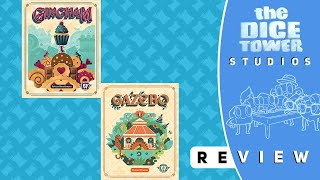
Video unzItOoYVso Analysis at 2:38 sentiment: positive
video_pk 69145 · mention_pk 165513
Gingham video thumbnail
Click to watch at 2:38 · YouTube ↗
Overall sentiment (raw)
positive
Pros
  • Deliciously mean in the best way
  • Genius mechanic for choosing play side
  • Creates strategic opportunity cost
  • Works great for pushing your luck and reckoning with turns left
  • Wonderful thematic catch
Cons
  • Cloth maps are ergonomically challenging
  • Tall stacks are prone to falling
  • Lacks a bit of depth and could become stale with many hours of play
Thematic elements
  • Ants stealing sweets
  • Picnic blanket
Comparison games
none
Mechanics (from transcript analysis)
  • action selection — Each round, players choose which side of the mat (rows with limited spots) everyone must play on.
  • Area Majority — Players place ants on a grid; whoever has the most tile spaces in a connected area takes over.
  • Player Elimination (indirect) — Players can bump enemy ants off the board.
  • Route Building — Ants are trying to connect sweets across a picnic blanket to score points.
  • Set Collection — Connecting sweets allows players to claim treats for points.
  • Variable end condition — The game ends when a player reaches a predetermined amount of points (40 or 32 depending on player count).
Video topics + discussion points
No key topics recorded for this video.
Quotes (from this video)
  • These are great games. Gazebo and Gingham are the first two official entries in Bitewing Games new travel line.
  • They're both simple and elegant and beautiful in a kind of utilitarian way that I find quite pleasing.
  • However you want to pronounce them.
  • But let's take a deeper look at both of them.
  • Don't let this game sweet exterior lead you astray. It is deliciously mean in the best way possible.
  • This this is genius.
  • The truth, though, is that just as you've been building your path, they've been building theirs, and you were probably too busy to notice or interfere.
  • Now, some notes on both games that I feel it's important for you to know.
  • As mentioned earlier, these two games are the first entries in Bitewing Games new travel line. And if these are the first two entries, I am very excited to see what's going to come next.
  • These are the perfect games when I'm thinking of what do I want to bring that's simple and easy to understand, but also offers some strategic choices every round.
  • And they're so rugged that you can just toss them into a hiking bag or a luggage bag or even just strap it to your belt loop.
References (from this video)
No references stored for this video.
Video 6ibljobay0E Board Game Animal Interview at 0:23 sentiment: positive
video_pk 29382 · mention_pk 86311
Board Game Animal - Gingham video thumbnail
Click to watch at 0:23 · YouTube ↗
Overall sentiment (raw)
positive
Pros
  • The theme significantly aids the teaching of an abstract strategy game.
  • Turn order mechanic provides a fresh, smooth flow.
  • Travel-case packaging is portable and appealing, enhancing presentation.
  • Ability powers add meaningful variability and reduce dryness.
Cons
  • Some players may find the gem/empty-spot scoring system initially opaque.
  • As an abstract, it may be less appealing to players seeking strong narrative themes.
Thematic elements
  • Ants gathering resources (sugar cubes) to power abilities while constructing connections between landmarks
  • Ant-themed, picnic/grassland vibe with gingham motif
  • abstract with thematic teaching potential; theme revealed late in development
Comparison games
  • Gazebo
  • Shuffle and Swing
  • BBOP
  • Merchants of Amsterdam (All Play reimagining)
  • Moon Rollers
  • Star Leap
  • Bombastic
Mechanics (from transcript analysis)
  • action selection without a fixed hand — Players pick any action/row to place on their turn, while following the turn-order carryover from lead to followers.
  • bump mechanic — Ants can bump others, causing positional shifts and creating opportunities and threats on the board.
  • flow and production feel — The combination of turn order, placement, and abilities creates a smooth, flowing mechanic that feels cohesive.
  • scoring via empty spots and gems — Scoring opportunities arise on empty spots with random gem draws, adding variability to end-game scoring.
  • sugar cubes as powers — Sugar cubes are spent to activate board abilities, adding a resource-management dimension and strategic timing.
  • Tile Placement — Place tiles at intersections to form connections and routes; tiles are arranged to guide rows/columns by color-suit analogs.
  • tile placement on a grid — Place tiles at intersections to form connections and routes; tiles are arranged to guide rows/columns by color-suit analogs.
  • turn order based on lead/follow — A dynamic turn order where the leader's move influences the next player to act, creating a flowing sequence.
Video topics + discussion points
No key topics recorded for this video.
Quotes (from this video)
  • Honestly, the travel case. I really like the travel case.
  • The real hook of it mechanically is just the flow of it. I think it flows really well.
  • The theme is one of the best themes to teach an abstract strategy game that I've come across.
References (from this video)
No references stored for this video.
Video i1qOiS4UQIk Before You Play Playthrough
video_pk 12840 · mention_pk 166528
Pros
none
Cons
none
Thematic elements
none
Comparison games
none
Mechanics (from transcript analysis)
Mechanics unknown.
Video topics + discussion points
No key topics recorded for this video.
Quotes (from this video)
  • We are playing with a prototype, so some of the pieces are upgraded
  • Points are kept secret
  • Ants are trying to connect like type sweets
References (from this video)
No references stored for this video.
Video NWO4GvviM6A The Dice Tower Review at 14:44 sentiment: mixed
video_pk 9040 · mention_pk 26679
The Dice Tower - Gingham video thumbnail
Click to watch at 14:44 · YouTube ↗
Overall sentiment (raw)
mixed
Pros
  • clever turn-order tension and early-advantage risk
  • solid abstract design with tactile feel and strategic depth
  • two-player pairing shines; multi-player adds chaos but remains interesting
Cons
  • rules can be non-intuitive, especially around stitching and movement after connections
  • scoring can feel opaque and require frequent teaching or memory
  • not as thematic as the surface-level description implies
Thematic elements
  • ants defending a picnic area and constructing pathways; tension from turn order
  • Abstract with a light, whimsical theme around ants and picnics
  • humorous, lightly thematic despite abstract mechanics
Comparison games
  • Hansa Teutonica
  • Acquire
  • Chin
Mechanics (from transcript analysis)
  • absorption and control — nooks can be absorbed to gain control; large nooks affect future moves and scoring
  • endgame and hidden scoring — end triggers occur as you reduce your gazebo supply; some scoring tokens are concealed until the end
  • stitch-based turn order — a central stitch determines which side you act from and influences early vs late placement decisions
  • tile/nook construction and gazebo placement — place color tiles to form connected nooks; place gazebos on nooks; absorption mechanics can shift control
Video topics + discussion points
No key topics recorded for this video.
Quotes (from this video)
  • Gazebo is a game.
  • I like it at two the most.
  • Gazebo is a remake Gazebo of Chin with a Q.
  • This is a game that is about picnics and ants and then completely just gives up on that theme almost immediately.
  • The tile distribution is a huge element and the production is nicer as well.
  • I like this game at two the most.
References (from this video)
No references stored for this video.
Transcript Navigation
Top
Showing 1–8 of 8
Game Deep Dive