
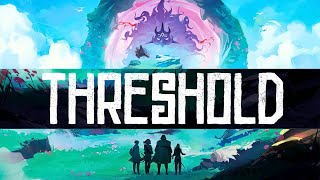
Game Info
Year
2025
Players
1-4
Age
14+
Playtime
90 min
Collection
Mechanic profile
Not enough video data yet
Vibe profile
Not enough video data yet
Description
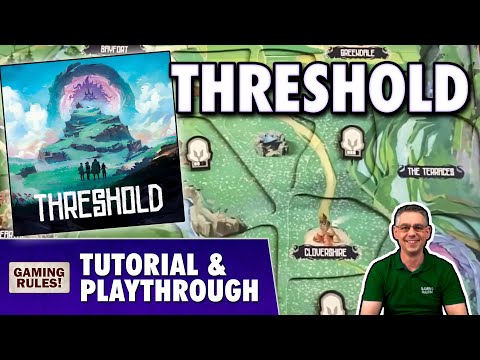
Solo and cooperative game of epic proportions with deep character customization and strategic combat against horrors
Featured Videos
Ask a Rules Question
Images
GID0452360.jpg
GID0452360_thumb.jpg
All mentions
Browse transcript mentions, sentiments, pros/cons, mechanics, topics, quotes, and references.
Total mentions: 4
This page: 4
Sentiment:
pos 2 ·
mix 2 ·
neu 0 ·
neg 0
Showing 1–4 of 4
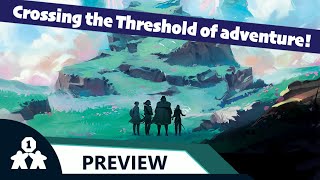
Video 3O-C0DLD8U8
Preview at 0:02 sentiment: positive
video_pk 67810 · mention_pk 164077
Click to watch at 0:02 · YouTube ↗
Overall sentiment (raw)
positive
Pros
- Fast-paced gameplay
- Streamlined and easy to play
- Quick progression and leveling
- Engaging quest lines and branching narratives
- Satisfying combat with card-driven actions
- Good solo experience
- Potential for interesting multiplayer dynamics
- Well-designed component management with planned game trays
Cons
- Early rulebook issues and potential for getting things wrong
- Some components not fitting perfectly in early versions
- Combat can feel too easy in early stages
- Need for clarification on some multiplayer rules
Thematic elements
- Returning monsters from portals threaten a peaceful society.
- A world to which people fled from another world attacked by monsters.
Comparison games
- World of Warcraft
- Elder Scrolls (Chip Theory game)
- Hoplomachus Victorum
- Marvel Champions
- Dice Throne
- Runebound third edition
- Slay the Spire
Mechanics (from transcript analysis)
- Character progression — Characters gain experience, level up, and can improve their stats (like max health) and gain new skills or cards for their deck.
- Combat — Combat takes place on separate boards using cards from the player's deck. Enemies have their own decks and stats, and combat involves managing actions, damage, and defense.
- Crafting/Affix System — Players can combine materials, currency, and specific items to create 'affixes' that can be added to existing gear, providing additional skills or abilities.
- Deck building — Players manage a deck of cards that represents their resources and abilities. The deck levels up over time, allowing for better cards to be added, but can also include negative cards like wounds.
- fatigue system — Reshuffling the deck increases fatigue. Taking damage can lead to wounds, which are added to the deck and can cause defeat if the wound limit is reached.
- Loot System — Defeating enemies yields loot dice, which are rolled during rest to acquire items. Items can be common, uncommon, or rare, and can provide stat bonuses or new abilities.
- questing — The game involves completing various quests, ranging from simple deliveries to combat encounters and skill checks, with some quests leading to further branching narratives.
- Resource management — Players use cards from their hand as resources to move, take actions, and resolve skill checks. Managing the deck and hand is crucial.
- Skill checks — Players resolve certain actions or challenges by flipping cards from their deck and comparing the total value against a target range. Some cards have keywords that can modify the outcome.
Video topics + discussion points
No key topics recorded for this video.
Quotes (from this video)
- The big thing they said they were going for is to make the whole like adventure and combat thing really fast.
- And holy heck, at least for solo, it's fast as anything.
- This is going to be a very like streamlined, quick to play, quick to progress kind of thing.
- Initial impressions are that they have 100% succeeded in what they're going for.
- The combat can feel too easy in early stages, but I think that's kind of the point.
References (from this video)
No references stored for this video.
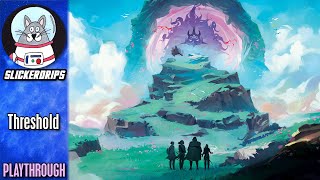
Video XdbOews773w
Rules Teach at 0:01 sentiment: positive
video_pk 67752 · mention_pk 163971
Click to watch at 0:01 · YouTube ↗
Overall sentiment (raw)
positive
Pros
- Fantastic way of learning the game through a guided first game.
- Deck building is central to the character's identity and progression.
- Meaningful character progression through leveling, skill acquisition, and deck customization.
- Engaging combat system that requires tactical card play.
- Potential for high production value with features like dual-layer boards.
Cons
- Prototype components are not fitting well.
- Wound cards in the deck can be a hindrance, forcing random discards.
- Gaining fatigue upon shuffling can lead to being wounded.
- Some aspects of combat and progression could be further explored (mentioned as a desire for future content).
Thematic elements
- A fantasy world threatened by ancient portals reappearing, summoning monsters and forcing humanity to rely on heroes.
- The world of Haven, 200 years after a great war
- Lore is presented through an in-game introduction text and flavor text on cards and locations.
Comparison games
- Mythwind
Mechanics (from transcript analysis)
- action selection — Players choose from various actions like traveling, visiting locations, gathering, mining, or engaging in quests, often costing cards from hand.
- Character progression — Players gain XP, level up, spend class points to add cards to their deck, and acquire skill points to learn new abilities.
- Combat System — Combat involves playing cards for specific effects, dealing damage, blocking attacks, and managing enemy actions. It is influenced by character stats and card keywords.
- Deck building — The player's deck represents their character's skills, spells, and experiences. Good and bad things end up in the deck, and shuffling the deck leads to gaining fatigue.
- Event resolution — The game includes drawing and resolving adventure cards that can present immediate challenges or ongoing mini-quests.
- Fatigue — Gaining fatigue occurs when the deck needs to be shuffled. If health is equal to or less than fatigue, the character becomes wounded.
- looting — After combat or completing quests, players can roll loot dice to gain items or money, with possibilities to upgrade loot tiers.
- questing — Players undertake quests that involve traveling to locations, defeating enemies, and completing objectives for rewards.
- Resource management — Actions cost cards, and players must manage their hand and deck to perform desired actions. Money is used for certain actions like buying potions.
Video topics + discussion points
No key topics recorded for this video.
Quotes (from this video)
- This is a great big open world role- playinging game modeled after MMOs, massively multiplayer online video games, but we're in the cardboard realm.
- Your deck is your whole character in this game. So, it's skills you have, spells you learn, good and bad things that happen to you along your journey will all end up in this deck.
- It would not be an MMO without some gathering or fetching quest to start us off.
- If your health is ever reduced to be equal to or less than your fatigue, you are wounded.
References (from this video)
No references stored for this video.
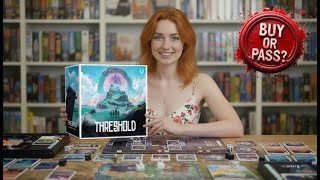
Video yKlkopPK2Gc
Unknown Channel Review at 0:14 sentiment: mixed
video_pk 66188 · mention_pk 160875
Click to watch at 0:14 · YouTube ↗
Overall sentiment (raw)
mixed
Pros
- Genuinely innovative deck-as-hero mechanic with tense power-sustainability tension
- Tactical combat is straightforward yet deep with combo potential
- Overworld questing and MMO-style progression feel satisfying and aspirational
- High customization and build diversity with respec and loot systems
- Combat pacing reduces downtime in co-op play
Cons
- Prototype rulebook is catastrophically inadequate; accessibility concerns
- Rule clarification gaps around phase structure and monster reinforcement
- Rest mechanic exploitation risks (Hearthstead) without guardrails
- Crafting feels underpowered or unbalanced relative to loot progression
- Difficulty scaling and early game can be punishing, with a weak narrative anchor
- Backer promises vs actual production lag; setup time and living world feel underdelivered
Thematic elements
- Deck-based avatar growth, loot-driven progression, and MMO-style freedom in questing and exploration
- MMO-inspired fantasy world with three region boards (Fractured Isles, Sandstone Desert, Red River Valley) and persistent, deck-based hero progression.
- Systems-driven with emergent moments rather than a strongly scripted narrative
Comparison games
- Tainted Grail
Mechanics (from transcript analysis)
- Area movement — Three region boards determine quest availability, with movement costs using cards (roads vs off-road) affecting exploration choices.
- card crafting — Resources like minerals and supplies are spent to craft items; many recipes are expensive and may feel underpowered relative to loot.
- Character progression and respec mechanics — Town visits allow selling loot, crafting, leveling up, and resetting the deck; free respecs enable experimenting with builds.
- Checks and adventure cards — Overworld checks require revealing cards to hit target numbers, with discards whether successful or failed, promoting fatigue and exploration tension.
- crafting system — Resources like minerals and supplies are spent to craft items; many recipes are expensive and may feel underpowered relative to loot.
- Deck-as-hero with fatigue and wound integration — Your entire character is represented by a deck; playing cards or taking actions fatigues you, and when fatigue triggers, you can gain wound cards that clog the deck.
- Drafting and managing hand size — Draw up to five cards each turn; decision whether to exhaust hand for power or preserve cards through hourglass-return mechanics.
- Enemy behavior deck and simultaneous enemy activation — Each combat round uses an enemy behavior deck to determine what enemies do; all enemies act in a combined phase.
- hand management — Draw up to five cards each turn; decision whether to exhaust hand for power or preserve cards through hourglass-return mechanics.
- Hex-grid tactical combat with resource costs — Move on a hex map by discarding cards; combat involves playing abilities from hand with costs; enemies activate after all players have finished.
- hexagon grid — Move on a hex map by discarding cards; combat involves playing abilities from hand with costs; enemies activate after all players have finished.
- Loot progression and item customization (aixle system) — Loot dice, upgrade symbols, and a sliding 'aixle' affix system customize base items into more powerful gear; unlocks skill trees.
- Overworld region boards and movement as resource cost — Three region boards determine quest availability, with movement costs using cards (roads vs off-road) affecting exploration choices.
- Rest and landmark mechanic (Hearthstead) — Resting resets deck, heals, and activates landmark bonuses; potential exploit loops if not limited.
Video topics + discussion points
No key topics recorded for this video.
Quotes (from this video)
- The deck is character, tactical combat, loot progression, and MMO style freedom all function well.
- The rule book is catastrophically inadequate.
- Wait for final production reviews before backing.
- The region boards and movement as resource decisions create meaningful exploration tension.
- Threshold's ambition is clear, but the execution needs polish before it becomes a must-back.
References (from this video)
No references stored for this video.
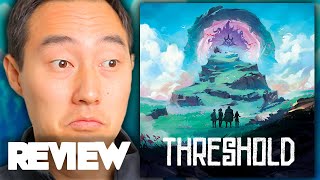
Video 3GoLIZWDAFk
Shopside Review at 0:00 sentiment: mixed
video_pk 66176 · mention_pk 160836
Click to watch at 0:00 · YouTube ↗
Overall sentiment (raw)
mixed
Pros
- Deck system provides mechanical tension and remains intuitive
- Strong integration between overland and combat, with frequent opportunities to explore and loot
- Diverse upgrade paths and free-form character customization
- World-building flavor text and MMO-inspired elements contribute to a rich feel
- Good handling of player downtime in a two-player game, with alternating turns and continuous player engagement
- Health tracking for monsters on the player board reduces fiddly token management
- Flavorful progression and loot rewards that give a sense of payoff after play
- Modular components and player trays aim to streamline setup and organization
Cons
- Prototype rulebook is extremely bare-bones, with many rules unclear and few examples
- Monster behavior and key terms like 'reinforce' are not clearly defined
- Overland checks can consume many cards from your deck, potentially causing fatigue
- Overland crafting feels expensive and underpowered given resource costs
- Resting is highly abusable in its current form and could unbalance pacing
- NPCs and flavor text are not well developed early on, making world feel less immersive
- Component count creates a table hog; organization could be improved with a vertical storage solution
- Two-player mainline difficulty can be steep without grinding, which may frustrate some players
- Early game hook and thematic engagement are weaker than the card mechanics might suggest
Thematic elements
- Array
- Haven world
- MMO-inspired sandbox with flavor text and side quests
Comparison games
- World of Warcraft
- Elder Scrolls: Betrayal of the Second Era
- Tainted Grail: The Fall of Avalon
- Dragon Eclipse Prototype
Mechanics (from transcript analysis)
- Area movement — Movement and actions happen on a world map with hex-based encounters and adventure draws.
- Card-driven combat — Combat is resolved by playing cards from hand, managing blocks, and applying ongoing and timed effects.
- Character Progression & Upgrades — XP and renown drive character progression; upgrades come in class upgrades and skill upgrades via cards.
- Combat: Deck/Hand — Combat is resolved by playing cards from hand, managing blocks, and applying ongoing and timed effects.
- Deck building — Your character is defined by a central deck that you draw from and discard during actions, combat, and overland events.
- Encounter & Loot System — Encounter decks and loot dice produce randomized rewards and prompts to drive exploration and progression.
- Overland exploration — Movement and actions happen on a world map with hex-based encounters and adventure draws.
- Progression Flexibility — Free-form deck customization lets players mix and match upgrades and paths, changing playstyle on the fly.
- Resource/ Crafting System — Overland crafting uses resources (minerals) to craft or remove burdens, integrated with the deck and upgrade path.
- Resting / Home Base — A shared home base allows rest actions that refresh hands and trigger town actions, with strategic costs.
Video topics + discussion points
No key topics recorded for this video.
Quotes (from this video)
- This is Threshold, a next generation campaign game where it tries to blend the video game elements of MMOs and action RPGs into a board game for your table with a lot of deck building.
- the most openw world feeling board game I've ever played.
- Endurance, that when you use it to pay for movement, it shuffles back into the deck.
- The rest action doesn't require any cards to do.
- This is insanely ambitious.
- My personal score for Threshold is going to be a 6 out of 10.
References (from this video)
No references stored for this video.
Transcript Navigation
Showing 1–4 of 4