





















Nippon: Zaibatsu Deep Dive
What the Community Thinks About Nippon: Zaibatsu
Nippon: Zaibatsu is a reworked version of an earlier economic game, published by Crowd Games and updated with refined mechanics, new components, and a deeper engagement with worker placement and area control. The release has stirred genuine enthusiasm among reviewers who appreciate its complex economic systems and competitive depth. One Stop Co-op Shop walked through its worker-displacement engine in a solo play, Getting Games detailed the reworks from the original, and BoardGameGeek framed its Meiji-era industrial setting. This is not a light game, but one that rewards careful planning and strategic pivots across its phases of industrial growth.
Core Mechanics That Define Nippon: Zaibatsu
Worker Displacement and Multi-Action Turns
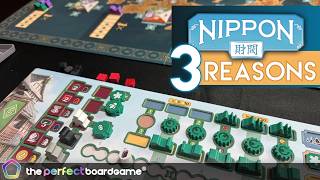
Nippon: Zaibatsu inverts typical worker placement. Rather than placing workers on an action space and removing them at turn's end, players grab colored meeples from a shared pool above action columns. The color of the worker you take matters strategically: each different color in your supply increases the cost of the income round, forcing you to decide whether to focus on one or two worker colors or accept the cash penalty for diversification. Taking workers is a form of displacement where you are constantly pulling from a diminishing supply and triggering refreshes that add pressure to the board state.
Engine Building Through Layered Resource Production
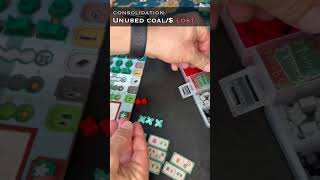
Players construct a zaibatsu, an industrial conglomerate, by building factories, upgrading them, and producing goods. Each factory type produces specific goods, and producing requires coal as fuel. Players can activate multiple factories per turn if they have enough coal and resources, building engine-like combinations where upgraded factories produce more goods with the same investment. Silk serves as a flexible currency that survives the income round, letting players bank resources across turns. The production system feels tight and rewarding: plan well and you have exactly enough coal to fire both factories; miscalculate and you are left short before income.
The Nippon: Zaibatsu Experience
High-Stakes Area Control on the Map of Japan
A secondary layer involves shipping goods to regions across Japan to compete for area majority. Influence tokens, valued differently by good type, are placed on regional boards where players compete against each other and external market forces. Trains and ships amplify influence without requiring tokens present, and the mechanics reward long-term planning: build a train early and its defensive bonus lasts all game. Regional scoring happens after each phase and depends on both token presence and beating competitors, creating delightful moments where a single well-timed deployment blocks opponents or shifts an entire region.
Tension Between Short-Term Tactics and Long-Term Goals
The income round forces constant mental calculus. You will be itching to take a factory action, but the wrong worker color means losing cash, and a production action requires coal you may not have saved. The solo mode sharpens this: players must reach specific research levels and factory counts before the game ends or they lose outright, turning the experience into a race with defined victory conditions. Even in multiplayer, players manage trades between what they want to do now and the structure they will need later, especially as the research track unlocks better factory types.
What Makes Nippon: Zaibatsu Stand Out
Modernized Mechanics from a Proven Design
The new version keeps the core worker-displacement identity intact while reworking factories for variability, introducing ships as a revised resource, and adding a full solo automa mode. Reviewers who knew the original noted the factories could feel samey, and the new edition addresses this. Income turns now provide fresh rewards and decision points, and the new mission rules add flavor to otherwise abstract production. The result leans into theme and variability without abandoning what made the original distinctive.
Elegant Upscaled Production
The art and component upgrades are immediately visible. Better worker tokens, clearer iconography, and a more cohesive visual language make the game easier to parse and more satisfying to play. One reviewer highlighted that the upgrades signal the publisher's confidence that the game deserves a second chance with modern audiences. The industrial Meiji-era Japan theme carries through visually, grounding the economic abstraction in a specific historical moment of rapid growth and emerging conglomerates.
Potential Drawbacks
Economic Abstraction May Overwhelm New Players
This is not a gateway game. The worker-displacement system, income penalties, factory upgrades, and layered resource tracking create real cognitive load. Teaching takes time, and early turns require explaining multiple interlocking systems. Players unfamiliar with heavy Eurogames may find the rules teach lengthy and the first round slow as everyone learns how the income round actually works.
Luck in Solo Mode and Long Play Times
The solo mode uses a bot driven by random tile draws to decide actions, so the game can swing on lucky or unlucky pulls. While this keeps solo play unpredictable, it also means some losses feel down to chance rather than optimization. Multiplayer games scale with player count, and even a solo game on medium difficulty can run longer than expected if round progression is not carefully managed. Group plays may comfortably reach the longer end of the playtime range.
If You Enjoy Nippon: Zaibatsu
Fans will naturally gravitate toward heavy Eurogames with economic engines and area control. Brass: Birmingham and Concordia share the same DNA of interlocking systems and long-term planning. Agricola and Le Havre deliver similar worker placement urgency and resource juggling. If the area-control spine appeals most, El Grande explores majority mechanics without the factory-building layer. Nippon: Zaibatsu sits at the intersection of these traditions, making it a natural next step for players who have mastered lighter economic games and want deeper production engines paired with area majority.
What Reviewers Are Saying
"It's an economic Eurogame with worker displacement where you're pulling workers off a shared board. These are the most important part of the game, because you're performing one of two actions underneath them. You're producing goods and shipping them to different areas of Japan, and if you plan your actions well, you can be a lot more efficient."
— One Stop Co-op Shop
"This features a new resource type, ships are heavily revised with new Wakura mission rules, factories are much more variable. The game now has an automa driven solo mode. The core mechanics of the original remain, but the components, art, and design are upgraded to get the game in line with modern trends."
— Getting Games
"The game is centered in the Japanese Industrial Revolution, where companies and industries are growing very quickly and there's a lot of money to be made and power to grab. You're trying to influence the direction of the future of the country by investing in different companies and industries that are cropping up."
— BoardGameGeek