Game Info
Year
2024
Players
1-4
Age
14+
Playtime
60 min
Collection
Your Tier
Loading…
Mechanic profile
Not enough video data yet
Vibe profile
Not enough video data yet
Description
Command a Ming Dynasty treasure fleet to sail trade explore and battle across the 7 Seas in 1431 AD
Featured Videos


Ask a Rules Question
Images

GID0452373.jpg

GID0452373_thumb.jpg
All mentions
Browse transcript mentions, sentiments, pros/cons, mechanics, topics, quotes, and references.
Total mentions: 4
This page: 4
Sentiment:
pos 2 ·
mix 1 ·
neu 0 ·
neg 0
Showing 1–4 of 4
Video 2kFRmVnHsTQ
Board Game Sanctuary Review at 0:27 sentiment: positive
video_pk 80621 · mention_pk 196746
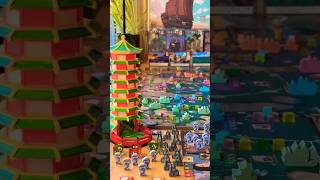
Click to watch at 0:27 · YouTube ↗
Overall sentiment (raw)
positive
Pros
- An absolute delight.
Cons
none
Thematic elements
- Admiral Zheng He's grand expeditions, enforcing the Ming tributary system, elevating the Yongle Emperor's prestige, and crafting a tale of travels.
- 1431 AD, Ming China
Comparison games
none
Mechanics (from transcript analysis)
- Action cards — Each character's five double-sided action cards that they can play.
- building — Build special buildings including depots, kilns, and training camps to increase your military strength.
- Combat — Engaging combat against certain ports.
- Dice — Be influenced by the sun, moon, and star dice.
- diplomacy — You can engage in diplomacy.
- exploration — You can explore to acquire knowledge tokens and use them.
- Sailing and Movement — You can sail into different regions.
- Trading — Trade a variety of goods including religious scrolls, medicine, manuscripts, and exotic animals.
Video topics + discussion points
No key topics recorded for this video.
Quotes (from this video)
- It is 1431 AD, Ming China. You stood by Admiral Zheng He's side during his grand expeditions.
- You enforced the Ming tributary system and elevate the Yongle Emperor's prestige.
- Yet, a near decade silence has hung over the sea since the last nautical endeavor.
- As the opposition surges, you need to grasp and embark on the ultimate quest with the treasure fleet to craft the most captivating tale of your travels.
References (from this video)
No references stored for this video.
Video 1NoZpqflrVk
Meeple University Rules Teach
video_pk 69886 · mention_pk 166775
Pros
none
Cons
none
Thematic elements
none
Comparison games
none
Mechanics (from transcript analysis)
Mechanics unknown.
Video topics + discussion points
No key topics recorded for this video.
Quotes (from this video)
- Let the final quest of the treasure Fleet be the tale that everyone will tell forever the game.
- The strength of an action is determined by where your card is.
- The card play feels a little bit like Arc Nova.
- The most important part of any Voyage is getting home safely.
- Sailing the South and the West Seas to gain Prestige and profits to complete objectives and to have the best story in different regions for area control.
- The greatest Explorer in all the Seas and will be told in stories in many many generations.
References (from this video)
No references stored for this video.
Video 1NoZpqflrVk
Meeple University Rules Teach at 0:05 sentiment: positive
video_pk 69886 · mention_pk 226775
Click to watch at 0:05 · YouTube ↗
Overall sentiment (raw)
positive
Pros
- Diplomacy offers a peaceful option as a strategic choice (positive to players who prefer non-combat solutions).
- Trading and accumulating prestige/profit through region-based objectives provide meaningful progression.
- Epic storytelling framing with the notion that the greatest explorer will be told in stories for generations.
- Card-driven action strength and the arc-like feel of the card play (rightmost card is strongest) create a compelling pacing dynamic.
- Multiple paths to scoring (prestige, profits, objectives, and area control) offer strategic flexibility.
Cons
- Prototype components and artwork are not final in this preview (rules/art not final).
Thematic elements
- exploration, trade, diplomacy, combat, prestige, and storytelling
- South Seas and West Seas; ports and regions; Indian Ocean region
- story-driven voyage with end-of-round card resets; stories told about explorers
Comparison games
- Arc Nova
Mechanics (from transcript analysis)
- action points / action card strength — At the start of a turn you pick a day token and an action card; the action strength is determined by card position, with the rightmost card having strength five and the leftmost being one plus the day token; cards can also grant additional resources to boost strength.
- Combat — Combat uses strength plus a die roll; winning yields benefits, while losing costs prestige; brute strength can be repurposed for production improvements.
- dice rolling with modifiers — Three deity dice modify action strength; dice range from minus 3 to plus 3 depending on rolls.
- diplomacy and affiliation — Diplomacy affects affiliation; changes in affiliation can yield prestige and story points and influence outcomes.
- encounter cards with choices — When moving to a region you draw an encounter card presenting choices to complete objectives or spend resources to gain something.
- end of round card refresh — The rightmost card is the most powerful, but all cards are reset and rearranged at the end of the round rather than one turn at a time.
- endgame conditions — The game ends after nine rounds or when a player achieves predefined milestones on prestige/profit tracks or objectives.
- exploration and knowledge cubes — Exploration gains knowledge cubes; knowledge can be spent to upgrade cards, gain private objectives, or obtain colored actions.
- return home and scoring tower — Returning home safely lets you build layers of a porcelain tower, with each layer granting a victory point, up to nine layers.
- scout action — Scout lets you use excess action strength to look ahead at goods and encounters.
- Trade goods and resources — Trade actions exchange resources to gain trade goods, which confer prestige or profits and region-based benefits.
- wind and season movement — Wind and season determine how many movement points you need to move to a different port or region.
Video topics + discussion points
No key topics recorded for this video.
Quotes (from this video)
- Let the final quest of the treasure Fleet be the tale that everyone will tell forever the game.
- The strength of an action is determined by where your card is.
- The card play feels a little bit like Arc Nova.
- The most important part of any Voyage is getting home safely.
- Sailing the South and the West Seas to gain Prestige and profits to complete objectives and to have the best story in different regions for area control.
- The greatest Explorer in all the Seas and will be told in stories in many many generations.
References (from this video)
No references stored for this video.
Video D1rfY29Ng-A
Unknown Channel Review at 0:00 sentiment: mixed
video_pk 66321 · mention_pk 161345
Click to watch at 0:00 · YouTube ↗
Overall sentiment (raw)
mixed
Pros
- Strong thematic integration with a historical exploration theme
- Engaging card-driven action system with upgrade mechanics
- Rich exploration and trade mechanics across six story tracks
- Effective narrative devices (pagoda/treasures) that reinforce the theme
Cons
- Rulebook is wordy and challenging to digest; learning it took multiple nights
- Negative dice values and absolute value concepts add cognitive load
- Iconography is dense and could be simplified for accessibility
- Two-player experience feels limited due to map space and tile variety
- Knowledge cube upkeep adds bookkeeping overhead
Thematic elements
- exploration, treasure gathering, diplomacy, and trade through Admiral Jenni's treasure fleet
- 15th-century maritime exploration across a map with six regions and a fleet tied to Admiral Jenni's voyage
- historical-thematic with card-driven action pacing and narrative elements tied to exploration and conflict
Comparison games
- Ark Nova
- Sleeping Gods
- Darwin's Journey
Mechanics (from transcript analysis)
- Card upgrading — Upgrade action cards to spread strength across multiple ships and increase strategic options.
- Card-driven action selection — Five actions are laid out; the card in position 5 is the strongest and can be upgraded to spread power across ships.
- City encounters and combat — Sail to cities, roll for influence, draw encounter cards, and fight if a city is hostile.
- dice modifiers — Three dice (sun, star, moon) are rolled each round to modify action strength, including negative values.
- Knowledge cubes economy — Cubes of various colors can be traded to gain actions, upgrade cards, or increase strength.
- Movement and storms — Movement is determined by strength and wind; storms shift across the board affecting available strength.
- Resource and trade management — Trade goods, knowledge cubes, troops, and porcelain fuel actions and progression.
- Resource exchange and port strength — Troops and porcelain can boost strength or be traded for resources to enable actions.
- Resource Management — Trade goods, knowledge cubes, troops, and porcelain fuel actions and progression.
- Scouting and diplomacy — Scout regions to reveal encounters and improve relations with ports to boost prestige.
- Story tracks and regional scoring — Six regional tracks provide story points; top positions yield victory points.
Video topics + discussion points
No key topics recorded for this video.
Quotes (from this video)
- The Voyage is centered around the historical theme; every mechanic expresses how Admiral Jenni managed his fleet.
- I really love the story tracks and being able to compete across six regions.
- The rule book could be reworded and simplified a lot more.
- Upgrade your cards and spread your strength across multiple ships.
- The storm element could be optional for advanced players.
References (from this video)
No references stored for this video.
Transcript Navigation
Showing 1–4 of 4