





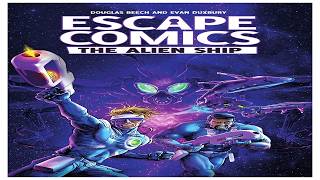
Escape Comics: The Alien Ship Deep Dive
What the Community Thinks About Escape Comics: The Alien Ship
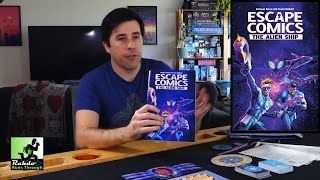
Escape Comics: The Alien Ship has made a compelling entrance into the escape room board game landscape with its unique comic book presentation. Dice Tower praised it as a thematic puzzle experience that fully immerses players in a story-driven adventure, while Roto highlighted how it provides a fresh take on the escape room formula by breaking conventions that many escape games follow. Both reviewers appreciate the game's commitment to blending narrative and puzzle-solving rather than treating story as mere flavor text between brain teasers.
Core Mechanics That Define Escape Comics: The Alien Ship
Comic Book Narrative Meets Hands-On Puzzle Solving
Escape Comics: The Alien Ship by Jumping High Five Games stands apart by intertwining a graphic novel with physical puzzle components. Rather than reading passages and pausing for isolated puzzles, players read comic spreads that advance the narrative, then encounter stop points where they must solve puzzles to progress the story. This structure means that uncovering the narrative becomes inseparable from solving the mission. Players work with tactile components (alien handcuffs, a shrink ray, puzzle discs) that feel integral to the sci-fi theme rather than decorative. The puzzle design embeds clues and Easter eggs within the comic panels themselves, requiring players to spot patterns and connect information across multiple pieces of evidence simultaneously.
Cooperative Deduction Under Point Pressure
The game employs a compound scoring system where teams begin with a pool of leadership points and spend them strategically. Using hint cards costs points, and incorrect submissions cost more. This creates tension between pressing forward confidently and pausing to ensure the team has truly solved each puzzle. Players submit deductions to a computerized system, represented by a physical validation wheel, that confirms whether the team's reasoning is correct before unlocking the next story segment. The structure rewards efficient puzzle-solving without relying on a countdown timer, allowing groups to play through the lengthy campaign across multiple sessions at their own pace, a stark contrast to traditional escape room experiences.
The Escape Comics: The Alien Ship Experience
Immersion Through Blended Media
What makes Escape Comics memorable is the way its dual narrative framework works. The game opens with mission briefing documents that contain vital information disguised as lore. As teams progress through the comic, they discover that seemingly peripheral details become crucial to solving later puzzles. This creates a rewarding moment when a previously overlooked clue suddenly connects to a solution. The experience resembles those spy-thriller movie scenes where teams gather around tables covered with documents, racing to crack the case. Reviewers noted that the game's greatest appeal lies in how narrative and puzzle structure feel tightly woven together, making players feel like they are genuinely uncovering a story rather than interrupting it with mental exercises.
Collaborative Discovery at the Table
The cooperative nature of the experience shines when players share theories, test ideas, and examine clues from different perspectives. One of the most satisfying moments occurs when a teammate suddenly recognizes a pattern and the entire table leans in to verify the breakthrough. The game creates natural moments for this kind of group investigation without forcing artificial collaboration. Some puzzles demand spotting visual patterns, others require connecting information across evidence, and still others require examining familiar components in entirely new ways. This variety keeps the table engaged and ensures that different types of thinkers can contribute meaningfully to progress.
What Makes Escape Comics: The Alien Ship Stand Out
Comic Book Presentation vs. Traditional Escape Rooms
While most escape games rely on text-based clues or isolated components, Escape Comics uses full comic book art to deliver both story and puzzle information simultaneously. The game does not follow the conventions that many escape room games have established. Where Exit and Unlock dominate the market with puzzle-first formats, Escape Comics prioritizes storytelling as an equal mechanical element. The comic's pulpy tone and over-the-top characters make the narrative entertaining to engage with, and reviewers noted that players enjoy doing character voices while reading panels. This presentation choice eliminates the feeling of grinding through disconnected brain teasers and instead creates a cohesive experience where solving the alien ship crisis is the objective and the narrative is the vehicle for that objective.
Full Replayability Through Component Reset
A significant advantage over competitors like Exit, which requires destroying components to solve puzzles, is that Escape Comics' components pack cleanly back into their envelopes once completed. This makes the game genuinely shareable: groups can pass it to friends or family for fresh attempts after completion. The game remains resettable because no components are consumed during play. This design choice extends the value of the experience and creates a secondary enjoyment, namely watching others discover the same puzzles and narrative twists for the first time. For the board game community, this represents a more sustainable model than one-time-play escape games.
Potential Drawbacks
Comic Tone May Skew Lighter
The comic book narrative, while engaging, carries a lighter, pulpier tone that reviewers noted suits a broad audience more than players seeking dark or serious storytelling. The comic itself is straightforward sci-fi adventure with fun but somewhat simple characters. For players expecting a cerebral thriller, this cheerful tone might not align with expectations. The adventure elements, while clever, are presented with a light touch rather than the density some players might anticipate.
Limited Surprise on Replay
Despite the resettable components, the narrative mystery can only be truly experienced fresh once per group. The magic of escape room experiences relies heavily on the element of surprise, the aha moments that emerge from discovering solutions without foreknowledge. After one playthrough, the same players will already know the solutions and story beats. For groups seeking extended campaign depth or re-engagement with the same narrative, the single-story structure means the surprise factor diminishes significantly on a repeat play, even though the game can be passed along to new players.
If You Enjoy Escape Comics: The Alien Ship
Players who appreciate Exit: The Game and the Unlock! series will find this a compelling alternative that emphasizes narrative integration over disposable puzzles. Those drawn to story-driven cooperative games like Chronicles of Crime or other campaign-based escape experiences should prioritize Escape Comics. Fans of deduction-based games who value tactical decisions around resource management will appreciate the scoring system that rewards efficiency. Groups seeking immersive, cinematic game experiences akin to Sherlock Holmes Consulting Detective will connect with the lengthy narrative arc that unfolds across multiple save points.
What Reviewers Are Saying
"Escape Comics feels less like solving isolated puzzles and more like trying to piece together a classified mission under pressure. The narrative and the puzzle structure feel closely connected, so you're uncovering the story by solving the mission rather than just pausing the story for a brain teaser."
— Dice Tower
"What I really like about this game, which in my opinion gives it a bit of an edge over Exit specifically, is that this is replayable. Everything in here can be packed back into these envelopes where you get all of your puzzles and given to another person as a gift once you're done."
— Roto
"In the game, you'll read each spread in the comic book, and if you're like me, you'll do the voices too, until you reach a new challenge. Then you'll take the corresponding envelope from the box where you'll find new and exciting puzzles to solve, clues to decipher, and gear to assemble that'll make you feel like you're right there in the middle of the story."
— Watch Review