












Frenzy Falls Deep Dive
What the Community Thinks About Frenzy Falls
Frenzy Falls has earned consistent praise from board game reviewers as a chaotic yet strategic card game that delivers high-energy gameplay with genuine player interaction. The consensus centers on its appeal as a fast-paced experience where cascading mechanics create unexpected moments that delight and frustrate players in equal measure. However, reviewers are clear about one critical caveat: the game shines brightest with larger groups. At three players, the experience flattens considerably, while four to six players unlock the full potential of the cascading waterfall mechanic. This player-count dependency is the single most important consideration before deciding whether Frenzy Falls deserves shelf space in your collection.
Core Mechanics That Define Frenzy Falls
Hidden Information and Simultaneous Play
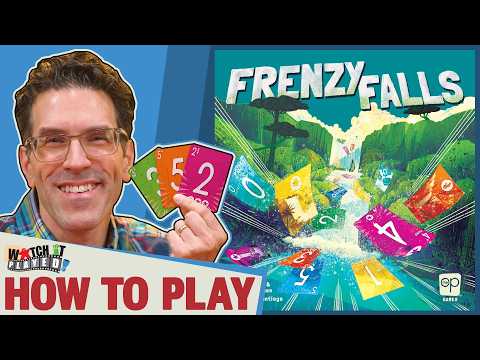
Each round, players play waterfall cards face down into various pools, creating uncertainty about the exact composition of each pool before revelation. Players draw five-card hands at the start of the game and cycle through drawing and discarding throughout play. This simultaneous, hidden placement becomes the foundation for all the game's tension. Reviewers emphasized how the hidden information creates genuine strategic second-guessing: players must decide where to place cards without knowing what others are committing, forcing constant reassessment of priorities and calculated risk-taking.
Spillover and Cascading Effects
The spillover mechanic is the heartbeat of Frenzy Falls. When the total value of cards in any pool reaches 10 or more, that pool is resolved. The player with the most influence icons (small symbols on each card) claims the scoring card and its victory points, while their played cards are discarded. Non-winning players then move one of their cards down to the next pool below, which can immediately trigger another spillover. These cascading effects ripple through multiple pools in a single turn, creating the chaotic "boom, boom, boom" momentum that reviewers repeatedly highlighted. This cascade mechanic is what transforms Frenzy Falls from a simple mathematical exercise into a game of surprising depth and memorable moments where a single card flip can upend everyone's plans.
The Frenzy Falls Experience
Chaotic Energy and Cascading Chaos
Reviewers consistently described Frenzy Falls as chaotic and frantic, but not in a way that undermines strategy. The chaos is purposeful. Players watch in real-time as spillovers create chain reactions, moving cards between pools and fundamentally changing which player controls which scorecards. Reviewers noted that special action cards amp up the chaos: Bump cards (which move adjacent cards down one pool), Pull cards (which retrieve any card from another pool), and Proxy cards (which let you swap a revealed card for one in your hand) all introduce wrinkles that force quick tactical adjustments. One reviewer aptly described the experience as "full of mini mind games causing strategic second guesses among the players." The game becomes a delicate dance of bluffing, planning two steps ahead, and accepting that the waterfall flows in ways you can't fully predict.
Player-Count Tension That Shapes Enjoyment
A consistent theme emerged across reviews: Frenzy Falls is dramatically different depending on how many people are at the table. With four to six players, the cascading effects become spectacular. More pools spawn more opportunities for spillovers to chain into each other, creating those "spicy" moments reviewers celebrated. Three-player games, by contrast, lack the critical mass of cards and pools needed to create consistent cascades. Players noted that three-player Frenzy Falls feels flatter, mechanically sound but less exciting. The game rewards larger tables where chaos blooms naturally and the unpredictability that makes Frenzy Falls memorable truly shines. This isn't a flaw; reviewers simply saw it as the game's optimal zone.
What Makes Frenzy Falls Stand Out
Elegant Simplicity Masking Deeper Strategy
The rules of Frenzy Falls are genuinely easy to teach. You play cards face down, reveal them, check if the pool totals 10 or more, and resolve based on influence. But beneath that straightforward surface lies a clever game about timing and positioning. Reviewers praised how action cards create meaningful tactical decisions without adding overwhelming complexity. You are constantly making small choices with outsized consequences: Should you pull a weak card up to your pool, or leave it down to potentially trigger a cascade that helps an opponent? Should you bump a dangerous card down to the next pool, knowing it might spark a spillover you can't control? The game's elegance lies in how these micro-decisions compound into genuine strategic tension.
Memorable, Unpredictable Moments
Frenzy Falls excels at creating moments reviewers actually want to talk about after the game ends. A single pulled card triggering a three-pool cascade. A tiebreaker decided by who played first. A player's perfectly executed plan crumbling because someone else bumped a card and changed everything. These moments emerge naturally from the cascading mechanic, not from luck alone. Reviewers highlighted how the game creates opportunities for both brilliant plays and amusing disasters. The cascades are fast enough that turns flow quickly, but impactful enough that everyone stays invested. You never truly know whether you have won a pool until all revealed cards are flipped, and that suspense is central to Frenzy Falls' appeal.
Potential Drawbacks
Three-Player Games Feel Underwhelming
If your gaming group is primarily three people, Frenzy Falls will disappoint. Reviewers were direct about this: three-player games lack the density of cards and pools needed to consistently generate exciting cascades. The game becomes more straightforward and less memorable at that player count. It's not that three-player Frenzy Falls is broken; it's simply that the game hasn't yet found its groove. This is a real limitation that deserves weight if you plan to primarily play in smaller groups.
Chaos Can Undermine Strategy for Some Playstyles
While most reviewers embraced the cascading chaos as a feature, some board gamers may find it frustrating. If you are the type of player who enjoys exerting tight control over outcomes and dislikes cards that disrupt your carefully laid plans, Frenzy Falls may feel chaotic in a negative way. The pull and bump mechanics exist specifically to scramble the board state, and while this creates memorable moments, it also means that perfect planning can be undone by opponents' reactions. Players who value predictability and punishment-free strategic depth may find Frenzy Falls more luck-dependent than they prefer.
If You Enjoy Frenzy Falls
Frenzy Falls shares DNA with fast-paced card games that prioritize player interaction and cascading effects. Reviewers most directly compared it to Flip 7, another card game built around simultaneous play and hidden information, though Frenzy Falls layers in additional tension through its cascading spillover mechanic. Fans of Flip 7's push-your-luck card drawing and quick-playing format will find a similarly light, fast-teaching game in Frenzy Falls, with the added wrinkle of cards tumbling between pools and rewriting the board state turn to turn. The sweet spot for Frenzy Falls fans is games that reward both planning and adaptability, where chaos is a feature, not a bug.
What Reviewers Are Saying
"Frenzy Falls is fast, a little bit frantic, and full of mini mind games causing strategic second guesses among the players."
— Game Night Picks - Pair Of Dice Paradise
"The cascades definitely happen. The waterfalls start to flow. There's a lot of spillovers that happen. And it is really interesting to see when cards are flipped and scored that very same round, because that does happen. And when multiple colors are in there, too, you can have people moving like three cards down at once, and then it changes the entire situation. Spicy, spicy, spicy."
— Kovray
"There can be these sort of cascading triggers like boom boom boom. So it's a clever little game of sort of planning and cascading your cards."
— Grant Lyon