

















Got Five! Deep Dive
What the Community Thinks About Got Five!
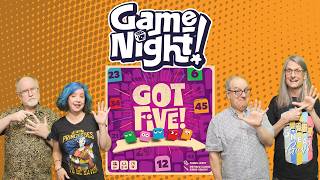
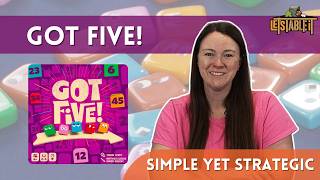
Got Five! has quietly become a standout light deduction game that punches above its weight in the board gaming community. Reviewers like Let's Table It and Face Games consistently praise its elegant design and surprising depth, describing it as a game that looks simple on the surface but rewards careful thinking and clever questioning. The game's quick playtime combined with its accessible rules and engaging deduction puzzle have made it a favorite for both families and seasoned gamers looking for a quality filler that does not skimp on the thinking.
Core Mechanics That Define Got Five!
Deduction Through Hidden Information
Got Five! is fundamentally a deduction puzzle built on an elegant twist: you can see everyone else's numbered tiles but never your own. Players start with five tiles in numerical order on their rack, completely hidden from themselves. The mechanic forces players into a fascinating information asymmetry where you must rely entirely on what others can see and what they tell you about your tiles. On each turn, you flip a tile from the center pool and then ask one of two questions about it: either where that number fits in your sequence, or whether its dot count matches one of your tiles. This creates layers of deductive reasoning as you slowly piece together your hidden numbers through careful questioning and note-taking.
Numbers, Colors, and Dot Patterns
The game's component system adds surprising complexity. Each tile carries a dot pattern, giving players multiple dimensions of information to work with beyond just numbers. The color order on your player sheet does not always line up with your number order, which forces careful double-checking of deductions. This combination of numbers, colors, and dot patterns gives players numerous ways to narrow down possibilities, making the puzzle satisfying to solve regardless of player experience level.
The Got Five! Experience
Fast-Paced Competitive Deduction
Got Five! plays in about 15 minutes, making it an ideal warm-up game or quick filler between heavier titles. The competitive element distinguishes it from cooperative deduction games like Hanabi. Players race to figure out their hidden numbers first, and when you think you have solved it, you call "Got Five!" and announce your numbers in ascending order. Get it right, and you win immediately. A single mistake eliminates you from competition, so timing and confidence are key. This risk-reward dynamic keeps tension high throughout even such a short playtime, and the game works well across different ages and skill levels. Everyone genuinely has a chance to win, creating an engaging experience where the playing field feels level despite varying deduction abilities.
The Communication Puzzle
A crucial component of the experience is that your opponents must give you correct information when you ask questions about their tiles. This introduces an interesting secondary puzzle: verifying the accuracy of the information you receive. Players must be careful, attentive, and precise when answering questions, as a single mistake or miscommunication can send someone down the wrong investigative path. The game rewards careful note-taking and strategic questioning, turning the deduction puzzle into a collaborative exercise in communication accuracy. This shared responsibility for information integrity adds a social element that elevates the game beyond simple solitaire puzzle-solving.
What Makes Got Five! Stand Out
Elegant Simplicity With Hidden Depth
The most striking aspect of Got Five! is how much depth emerges from such a simple premise. What appears to be a straightforward number-matching game reveals surprising tactical layers once you start playing. The combination of mechanics creates multiple avenues for deduction, making the puzzle feel fresh even across repeated plays. The game manages to be both immediately accessible and satisfyingly complex, giving players something new to think about each time they deduce their tiles. This quality of design, where simple rules yield surprisingly thinky gameplay, is what elevates Got Five! from a mere filler to a genuinely engaging deduction experience.
Engaging Production Quality
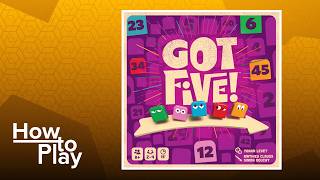
Got Five! ships with appealing components that enhance the play experience. The tiles are bright and chunky, designed to feel nice in hand and easy to read from a distance. The player sheet design cleverly enforces the deduction puzzle through its visual layout, where colors do not match the number sequence, forcing players to truly engage with the puzzle rather than rely on shortcut recognition. The production from Blue Orange Games supports the elegant design without being gratuitous, keeping the physical footprint small while maximizing usability and clarity during play.
Potential Drawbacks
Not for Non-Deduction Enthusiasts
Got Five! is explicitly a deduction game, and that focus comes with inherent limitations. If deduction games are not your preference, the core appeal of Got Five! will not resonate. The game asks players to think carefully, make notes, and solve a logical puzzle, which may not suit players who prefer games with more dynamic elements, storytelling, or tactical combat. The entire experience centers on this deduction mechanic, so there is little deviation or alternative path to victory for those uninterested in the puzzle itself.
Luck and Information Asymmetry
Like all deduction games, Got Five! contains an element of luck that can occasionally overshadow skill. An early lucky clue or a fortuitously revealed tile can give one player a significant advantage that becomes difficult for others to overcome. Additionally, the game's reliance on accurate information from other players means that honest mistakes or communication errors can swing the outcome unfairly. While this does not break the game, it is a factor to consider if perfect information integrity is important to your gaming experience.
If You Enjoy Got Five!
Players who love Got Five! should explore other games in the deduction family that offer similarly engaging logic puzzles. Hanabi provides a cooperative deduction experience if you enjoy working as a team to solve information puzzles, though with a different communication structure. The Resistance offers social deduction on a larger scale, focusing on reading players and deducing hidden roles in a party setting. For those who want more straightforward logical deduction without the social reading component, Mastermind remains a classic, though Got Five! refines the concept with better components and more elegant mechanics. Turing Machine offers deeper deduction puzzles but requires longer playtimes and more complex setup. Got Five! sits in the sweet spot of being accessible enough for families while remaining thoughtfully strategic for experienced gamers.
What Reviewers Are Saying
"Got Five looks like a simple deduction game, but once you start playing, there's a surprising amount of depth packed into those five tiles. What I loved most is how much depth comes from such a simple premise. The combination of numbers, colors, and dot patterns gives you a lot of ways to deduce information."
— Let's Table It
"It's a unique way to do deduction and I like it. It's kind of like Hanabi, but a Hanabi where you see everyone else's cards but you don't see your own. This is not co-op, this is competition, and it plays well at two. It's a fun game, and I wish we could play more."
— Face Games
"This game is definitely much better than Mastermind, so if I were to recommend it to someone, you really need to consider this one. The production is amazing, the little tiles, the little eyes on them, they're so cute. I love deduction games, so I love Got Five."
— Watch Review