


Forgeflame Deep Dive
What the Community Thinks About Forgeflame
Reviewers approach Forgeflame with goodwill toward its publisher. Lord Raccoon Games released The Last Bottle of Rum and Taverns and Dragons before this title, and in a Kickstarter preview, Quackalope says the new game carries the same "heart soul passion and fun" in its artwork and mechanics. That preview is positive but conditional. The reviewer describes the game as interactive and strongest at three or four players, with a lighter, family-friendly tone that still leaves room for deep decisions among players who enjoy strategically beating the rest of the table.
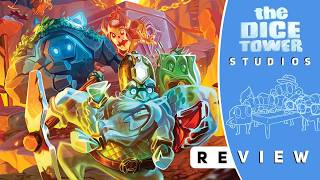
The sharpest critique comes from Tom Vassal on Dice Tower. Vassal calls the game "an amusing, fun, rollicking game" and says it plays well, while also finding it "the slightest bit unpolished." Vassal gives it a seven out of ten and is clearest about the friction: crowded mine spaces that block movement, and totems whose effects are hard to read on the board. Quackalope, in a separate look at upcoming releases, is more enthusiastic about the publisher's track record and describes the gameplay as "perfect for a family game night."
The points of agreement are easy to summarize. Reviewers see a bright, fast game with strong miniatures and a lot of physical interaction. The disagreement centers on player count and polish. Quackalope's preview found that a two-player game left the players weren't bumping into each other quite as much as hoped, while Tom Vassal considers the team and three-player versions fun and describes the two-player game as feeling much the same as the team version.
Core Mechanics That Define Forgeflame
Deck Building
Each explorer is paired with a deck of cards tied to its character, and every player assembles a working hand from that pool. Quackalope's preview describes a marketplace where players draft upgraded cards as the game moves on: two advanced cards sit face up, the rest are face down, and after each round a player takes one into hand. The reviewer notes that "you'll always put out another one," so a player who takes a Goblin card can expect another Goblin card to appear, though the shuffled stack keeps the sequence from repeating in a fixed pattern.
Tom Vassal frames the system in familiar terms: "You are spending cards. It's sort of a deck building game, but you're spending cards to move on the board, collect find the gems, collect the gems, then spend the gems to make artifacts." The distinctive twist is that the deck belongs to a team of characters. Vassal names mixing two or three characters as one of the favorite aspects, because a player may pick an upgrade for its value on a particular explorer and not for its special ability. That blending of characters, Vassal argues, is where much of the game's personality comes from.
Take That
Direct conflict is present throughout, but it is rarely personal. Quackalope's preview describes the interaction as a constant bumping among players, where the question is how purposeful each collision becomes. Players can stun rivals, collapse walls, and cut off a route toward the forge. Tom Vassal's description of the game's aggression is similar: "There's definitely a little bit of take that." Vassal adds that the attacks are aimed at the kobolds and the board, not at the other players, so the game stays rollicking rather than cruel.
That balance has a cost. Quackalope warns that a player can finish the game "before you're ready," and that points can be stolen or cut off when other players are watching the board. For players who want a long, engine-building game with a quiet endgame, that pressure may feel like a flaw. For players who enjoy close races, the same pressure is the point.
The Forgeflame Experience
A Playful, Rollicking Riot
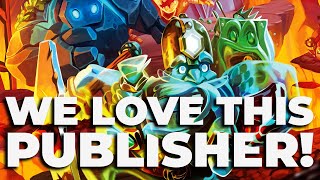
Forgeflame feels loud, cheerful, and a little chaotic. Quackalope's preview says the game is "supposed to be a laugh out loud Riot of a game" where friends, families, and experienced hobbyists can all sit down together. The goblins that steal gems from the bag, the mole that sniffs out ore, and the gelatinous Glibberglob that slides through landslides all contribute to a sense that something unexpected is always happening. Tom Vassal finds the same energy and describes the game as one that "doesn't feel like other stuff out there, even if it uses a lot of the same themes."
Tense Jostling for the Forge
The tension comes from competing for limited space and limited time. Tom Vassal describes an artifact-making loop that stalls when a flame goes out and players have to fight their way back to the surface through spaces already packed with teammates and opponents. Events can cause cave-ins, stun adventurers, or relight the furnace, and each one changes who can reach what. The result is a game where a clever plan can be undone by a single crowded hallway, which some reviewers find frustrating and others find exciting.
What Makes Forgeflame Stand Out
Miniatures That Carry Their Own Loot
The physical presentation is the feature reviewers return to most often. Tom Vassal says, "I love that they hold the gems. That's so fantastic." Each character can hold a limited number of gems in its hands, in its mouth, or in a backpack, so a Golem holds gems in its hand and a chest-shaped creature swallows them. Quackalope calls the artwork wonderful and adds that the miniatures are beautiful, and Vassal agrees that "the miniature work is really well done." Vassal also likes that set-up follows a very specific pattern.
Explorers That Feel Genuinely Different
Each explorer brings its own asymmetric abilities, and reviewers say these differences shape how a team plays. Quackalope describes a mole that can find the richest gems but moves slowly, and a goblin that rides a trolley cart across the board but can carry only two gems. Tom Vassal puts it simply: "The characters all feel very different." Vassal also mentions a dragon expansion that can be added to the roster, and Quackalope sums up the same appeal as "a lot of different ways to explore the same game system."
Potential Drawbacks
Crowded Spaces and Slow Returns
The most common complaint is logistics. Tom Vassal explains that each space holds only a few denizens, and that the forge can fill quickly. Players who want to relight a flame may need to walk back to the surface, but paths can be blocked by other figures. Vassal describes this as "the biggest hangup of the game" and says that players can be stuck waiting for a path instead of making artifacts. Tom Vassal also dislikes mixing gems and kobold tokens in the same bag, though that is called a personal preference.
Thinner Play at Two Players and Unclear Totems
Quackalope's preview says the game is catered toward three or four players, since a two-player match produced less interaction than expected. Tom Vassal says the totems are hard to read, and would prefer larger tokens with clearer effects. Vassal also feels the game could have been polished a little more to be a fun game. Both reviewers see the central idea as sound, but these rough edges affect how smoothly a table moves from setup to the final artifact.
If You Enjoy Forgeflame
Players who enjoy Forgeflame's warm publisher-driven charm and its blend of cheerful art and interaction will find a similar feel in The Last Bottle of Rum, which Quackalope names alongside Forgeflame as one of the publisher's previous successes. Players who want a heavier strategic challenge after a Forgeflame session may look to Terraforming Mars and Agricola, the more complex titles Quackalope names as ones that routinely end in a loss at the family table. For a far more demanding and punishing table experience, Kingdom Death is the title Quackalope mentions as one that is hard to beat, even for experienced players.
What Reviewers Are Saying
"You'll like this game if you're looking for a fun moderately interactive game that gives you some interesting card play and a lot of different ways to explore the same game system."
— Quackalope
"You're trying to make these artifacts, and yet you can't because you're just trying to wait. Someone's in your way. The logistics can be a pain."
— Tom Vassal, Dice Tower
"The take that is not aggressive or cruel but kind of always there, it's like a pinball machine you're going to bump into each other as you play the game no matter what the question is how purposeful do those bumps become."
— Quackalope