Game Info
Year
2025
Players
3-4
Age
8+
Playtime
15 min
Collection
Ratings
Creator Score
Mechanic profile
Not enough video data yet
Vibe profile
Not enough video data yet
Description
Portable card game version of Catan distilling the classic experience into a 15-minute travel-friendly format
Featured Videos


Ask a Rules Question
Images

GID0452424.jpg

GID0452424_thumb.jpg
All mentions
Browse transcript mentions, sentiments, pros/cons, mechanics, topics, quotes, and references.
Total mentions: 11
This page: 11
Sentiment:
pos 7 ·
mix 0 ·
neu 2 ·
neg 1
Showing 1–11 of 11
Video L09X4o3IZ74
BoardGameCo Other at 16:05 sentiment: negative
video_pk 103810 · mention_pk 300019

Click to watch at 16:05 · YouTube ↗
Overall sentiment (raw)
negative
Pros
none
Cons
- Has less agency than Catan already has
- Better travel games exist
Thematic elements
- Catan
Comparison games
- Catan
Mechanics (from transcript analysis)
- Travel game — Play Catan, and if you want a travel version of a game, get 17,000 other travel games that are better.
Video topics + discussion points
No key topics recorded for this video.
Quotes (from this video)
- Wingspan Pocket. This is charming. I like Wingspan Pocket better than I like Wingspan.
- I don't care about the cards. I don't care about the world building. I don't care about the cards. I've said this time and time again.
- All In Productions for me is an absolute miss.
- This is basically Rococo but not as much fun as Rococo. That's kind of the
- It's a good game, not a great game.
- And why would I ever play this over Pirates of Maracaibo?
- I would never ever ever suggest this over Pirates of Maracaibo.
- Rebuilding Seattle, which is great.
- This is the best game I'm getting rid of, in my opinion.
- I think it's phenomenal. I just think Rebuilding Chicago is slightly better.
References (from this video)
No references stored for this video.
Video hYQedsmI7i4
Actualol Top List at 0:30 sentiment: positive
video_pk 98517 · mention_pk 273888

Click to watch at 0:30 · YouTube ↗
Overall sentiment (raw)
positive
Pros
- Faster than original Katan
- Always building, always getting dopamine hits
- Engaging trading and player interaction
- Quicker gameplay than original Katan
- Affordable ($10)
Cons
- Only plays 3 or 4 players
Thematic elements
- Collecting resources to build roads and cities
Comparison games
- Katan
- Katan Zip
Mechanics (from transcript analysis)
- resource collection — Like Katan, you're collecting resources like wood and sheep to build roads and cities.
- Set Collection — You're collecting resources like wood and sheep to build roads and cities.
- Trading — If you don't have the card you need to build something, you can trade with another player. swap your wheat for their sheep if they're up for it.
Video topics + discussion points
No key topics recorded for this video.
Quotes (from this video)
- And Dice Pool Party plays two to eight players and will work for the whole family.
- It's such a silly little game, but it's such a fresh challenge.
- Her favorite is Suspectto, which is a beautifully simple deduction game.
- It feels like it's teaching her things that most other games for toddlers aren't.
- The other game, Troopo, is a great introduction to pushing your luck.
- It's the classic push your luck dilemma, but distilled down to a format that kids can understand, and it works perfectly.
References (from this video)
No references stored for this video.
Video hOShDLcGacE
Our Family Plays Games Discussion at 28:45 sentiment: positive
video_pk 81824 · mention_pk 204552

Click to watch at 28:45 · YouTube ↗
Overall sentiment (raw)
positive
Pros
- fast-paced
- accessible to a wide audience
Cons
- limited detail on mechanics in discussion
Thematic elements
- fast, casual Katon-style card play
- road travel / on-the-road Katon-themed play
- informal hype and discovery
Comparison games
- Catan
Mechanics (from transcript analysis)
- Card game — short, quick-play Katon-style card interactions
Video topics + discussion points
No key topics recorded for this video.
Quotes (from this video)
- Lunch is served with a side of panic.
- Time Bomb is a quick and fun bluffing and deduction game
- Fantasy Flight losing their mind again.
- Descent: Legends of the Dark. They're discontinuing it.
- We are live y'all.
References (from this video)
No references stored for this video.
Video dczcPFU6uD8
The Dice Tower Top List at 15:15 sentiment: positive
video_pk 81538 · mention_pk 203086

Click to watch at 15:15 · YouTube ↗
Overall sentiment (raw)
very positive
Pros
- Glorious card game version of Catan.
- Kids and family liked it very much.
- Can be played with anybody.
- Distills Catan down into 15 minutes.
- Wonderful thing.
Cons
none
Thematic elements
- Catan
Comparison games
- Catan
Mechanics (from transcript analysis)
- Card Drafting — Implied by it being a card game version of Catan.
- Resource Management — Implied by it being a version of Catan.
- Trading — Implied by it being a version of Catan.
Video topics + discussion points
No key topics recorded for this video.
Quotes (from this video)
- Fiction: Banned Books, this is from All Play. I really like the first Fiction, guessing a five-letter word. If you like things like Wordle, um this is a good sort of one versus others game because one person is trying to stop you from guessing the word cuz they lie they have to lie about a letter each time, but you know they lie, so they're picking the right time to lie. But this offer this adds some special powers and things to it, so it's slightly better than the first one, I think, if you care about the stuff. If not, you can still play it normally, so great little game.
- Got 5, a great deduction game for kids, wonderful components. Basically, um you everyone can see your numbers and you're guessing if this is higher or lower than your numbers and where they fit on a grid really works well for kids. There's a lot of good deduction games for kids these days. Another 8.5.
- And Catan on the Road, what a glorious card game version of Catan, one one few games that I am going to get a copy of this for my house because my kids and family liked it so much. We can play this with anybody. It takes Catan, it distills it down into 15 minutes. What a wonderful thing. Like it a lot.
- So, almost 15 minutes for 36 games.
- If you have thoughts on these games, you disagree, agree, whatever it might be, let us know in the comments.
- Like I said, you can find more information about most of these games on the Dice Tower channel or you will hear more about them in the future.
- Hey everybody, thanks for watching another video from the Dice Tower.
- Do you want to learn more about us, communicate with us? We have a Facebook group. We have a Discord channel. Lots of different ways to get involved with the Dice Tower.
- You can find that in our Linktree link below. So, just click that, it will take you and you can communicate with us on Facebook, join our Facebook groups. There's lots of cool things that you can find and become part of the Dice Tower.
References (from this video)
No references stored for this video.
Video W8i0khf2a54
The Board Game Garden Other at 55:21:44 sentiment: positive
video_pk 81299 · mention_pk 201012

Click to watch at 55:21:44 · YouTube ↗
Overall sentiment (raw)
positive
Pros
- Actually quite enjoyable.
- Great game if you're looking for Katan but not Katan.
- Feels like Katan but doesn't take as long.
- Very cool.
Cons
- Host already has a copy and will gift this one.
Thematic elements
Comparison games
- Katan
Mechanics (from transcript analysis)
- Card game — A card game version of Katan that doesn't take as long.
Video topics + discussion points
No key topics recorded for this video.
Quotes (from this video)
- This is basically a board game industry kind of conference thing that is presented and run by Asthma Canada.
- I kind of think of this as the Canadian Gamma, which gamma is kind of like the industry board game industry convention conference that is held every year in the US, but we kind of have a little mini version for us here in Canada where board game publishers as well as retailers and media all come together to just talk new games, better ways to help support the board game industry here in Canada.
- So, we're here. Of course. There he is.
- We've all been the first giants content creators in the wild behind the bushes in their natural habitat. In their natural habitat or oi none of that things batteries.
- Guys, I am obsessed with this card game. It is fantastic.
- This is the final version of nature. I believe this is like the retail edition.
- As someone that loves like potions, witchy things, this is a party game that I could get down with.
- This is a fantastic game if you haven't played it yet. Such a good hand management card game.
- This is a very fun game. If you guys have seen me, I've talked about Ohanami quite a bit, which is a game where you're creating gardens of cards in a line that are either having to be in uh like ascending or descending order. This has that kind of vibe, but plays in a very different way.
- Katan on the Road. I actually just did a how to play of this game and it's actually quite enjoyable.
- Toil and troubles. Toil and troubles. This is a game from grandpa beck.
- I love the like magical kind of uh forest creature kind of vibe to it.
- Dixit kids, which is very cute. I love this.
- One thing, one like big highlight for me was just being able to hang out with friends, either local friends. All of us are very local, but it is really nice to have some specific thing that brings us all together, to be able to hang out and play games.
- Obviously, like I mentioned, I played Denup a ton. That was a huge highlight for me.
- Remember, you are somebody's reason to smile.
References (from this video)
No references stored for this video.
Video f-KV94HuXdQ
kovray Event Coverage at 5:58 sentiment: positive
video_pk 81129 · mention_pk 199984

Click to watch at 5:58 · YouTube ↗
Overall sentiment (raw)
positive
Pros
- Spicy and close game
- Good refresh for Catan fans
Cons
none
Thematic elements
Comparison games
- Catan
Mechanics (from transcript analysis)
- Card game — It is a card game version of Catan.
- Set Collection — Implied by the Catan theme of collecting resources.
Video topics + discussion points
No key topics recorded for this video.
Quotes (from this video)
- It's a gem.
- It's a bop.
- It's just this combo-tastic game where there's a bunch of different actions happening that you'll have to go through.
- It is such a clever game that is still very unnatural because you're trying to create gaps with tiles, and my brain despises that cuz I like when things go together nicely.
- It is the silliest game because what you're trying to do is you have stacks of cards in front of you in different stacks, and you're trying to get each of those stacks to have all of one item.
- This is such a good small card game from Capstone.
- The art on Dixit is just unparalleled.
References (from this video)
No references stored for this video.
Video f-KV94HuXdQ
kovray Event Coverage at 23:53 sentiment: positive
video_pk 81129 · mention_pk 200016
Click to watch at 23:53 · YouTube ↗
Overall sentiment (raw)
positive
Pros
none
Cons
none
Thematic elements
- Settlement building
Comparison games
- Catan
Mechanics (from transcript analysis)
Mechanics unknown.
Video topics + discussion points
No key topics recorded for this video.
Quotes (from this video)
- It's a gem.
- It's a bop.
- It's just this combo-tastic game where there's a bunch of different actions happening that you'll have to go through.
- It is such a clever game that is still very unnatural because you're trying to create gaps with tiles, and my brain despises that cuz I like when things go together nicely.
- It is the silliest game because what you're trying to do is you have stacks of cards in front of you in different stacks, and you're trying to get each of those stacks to have all of one item.
- This is such a good small card game from Capstone.
- The art on Dixit is just unparalleled.
References (from this video)
No references stored for this video.
Video lojdXcssuy0
The Dice Tower Review at 1:40 sentiment: positive
video_pk 80062 · mention_pk 194281

Click to watch at 1:40 · YouTube ↗
Overall sentiment (raw)
positive
Pros
- Short playtime (30 minutes)
- Consistent resource gain
- Encourages trading
Cons
none
Thematic elements
Comparison games
- Catan
Mechanics (from transcript analysis)
Mechanics unknown.
Video topics + discussion points
No key topics recorded for this video.
Quotes (from this video)
- I love having these kind of games because when you're having a game night, people are slowly arriving, you can start playing something, um, but it's it's just really easy to add people. It's really easy to just, you know, stop and start whenever you want to.
- For me, theme is always secondary.
- It amazes me that they're still coming up with new material and new things you can do with trick taking games. So, I just find it to be super clever.
- The powers honestly, like they I feel like they're the key thing that makes the game stand out, and they're really hit or miss.
References (from this video)
No references stored for this video.
Video tTbtARGXyUs
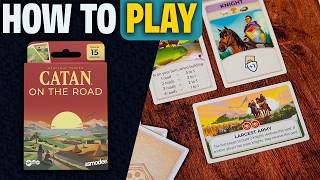
Cave Rules Teach at 0:00
video_pk 67401 · mention_pk 164474
Click to watch at 0:00 · YouTube ↗
Pros
none
Cons
none
Thematic elements
none
Comparison games
none
Mechanics (from transcript analysis)
Mechanics unknown.
Video topics + discussion points
No key topics recorded for this video.
Quotes (from this video)
- Now for our question of the day. You're going on a road trip.
- What game are you bringing? only one.
- Katan on the Road is a three to four player game designed by Benjamin Tuber.
References (from this video)
No references stored for this video.
Video zVVmJ0cVJkc
Board Game Garden Rules Teach at 0:09 sentiment: neutral
video_pk 66246 · mention_pk 161129
Click to watch at 0:09 · YouTube ↗
Overall sentiment (raw)
neutral
Pros
none
Cons
none
Thematic elements
- resource collection and trading to build settlements, roads, and cities
- instructional tutorial
Comparison games
none
Mechanics (from transcript analysis)
- action phase — In the action phase, you perform two things: trading (as described above) and building by spending resources to take cards from the building row or metropolis stack.
- Building and deck management — You may spend resources to take any number of cards from the building row or metropolis stack and place them in front of you. The cost of each building is shown at the top of each card. After you build and resolve events, refill the building row to five. If there are five of the same card in the row, shuffle them back into the deck and deal a new row.
- Cities, settlements, and metropolis — Settlements cost one brick, one wood, one sheep, and one wheat and are worth one victory point; building a settlement draws and resolves one event card. Cities cost two wheat and three stone, are worth two victory points, and must be placed on top of a settlement. Metropolis cards cost three sheep and one stone, are worth three victory points, and come with variable effects depending on their side (A or B) and must be placed on top of a city card.
- End of game — If a player reaches seven victory points at the end of their turn, the game ends immediately and that player wins.
- Event deck — The event deck includes five types of cards (robbers, abundance, charity, solstice, subsidy) which are drawn via settlement actions.
- Events — The event deck includes five types of cards (robbers, abundance, charity, solstice, subsidy) which are drawn via settlement actions.
- Harvest phase — During the harvest phase, each player draws one resource card from the deck starting with the current player and moving clockwise. The active player may draw additional cards depending on the number of city cards and metropolis cards they have.
- Knights — Knights cost one sheep, one wheat, and one stone. They do not give victory points but increase the maximum hand size when the robber is revealed.
- Longest road and largest army — The longest road is worth two victory points and is awarded to the player who has the most road cards. The largest army works similarly for knight cards and is worth two victory points.
- Metropolis sides — Side A allows drawing two additional cards during harvest; Side B allows drawing one additional card; each has a special ability.
- Road cards — Road cards cost one brick and one wood and do not provide victory points. They allow you to exchange resources for other resources at favorable ratios; the effect improves with the number of roads you have.
- Robber and hand size — When the robber is revealed, the base hand limit is seven cards. Each knight increases that limit by one (e.g., two knights allow up to nine cards).
- Trading — Once per turn, you may trade with one other player. Announce which resources you want and which resources you are willing to trade. The other players may accept, make counter offers, or make their own proposals, but you may not trade with more than one player and you may not give away any cards, including trading matching resources.
Video topics + discussion points
No key topics recorded for this video.
Quotes (from this video)
- Asmodee who is sponsoring today's video.
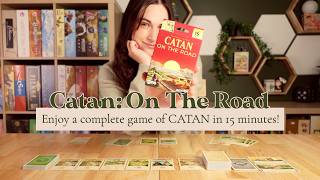
- Catan on the road is a three to four player game, plays in about 15 minutes and is for ages 10 and up.
References (from this video)
No references stored for this video.
Video -_1L44nEdII
The Dice Tower Discussion at 24:41 sentiment: neutral
video_pk 38438 · mention_pk 115738

Click to watch at 24:41 · YouTube ↗
Overall sentiment (raw)
neutral
Pros
none
Cons
none
Thematic elements
Comparison games
- Catan
Mechanics (from transcript analysis)
Mechanics unknown.
Video topics + discussion points
No key topics recorded for this video.
Quotes (from this video)
- That's why I'm not an actor.
- Top 10 reasons Joey's not an actor.
- Language independent.
- Three ninjas have slipped inside.
- You can be tattooed like me. Not really, but there's fake tattoos.
- This is not a drill. Come play test with us.
References (from this video)
No references stored for this video.
Transcript Navigation
Showing 1–11 of 11