
Game Info
Year
2026
Players
1-6
Age
12+
Playtime
45 min
Complexity
2/5
Collection
Ratings
Creator Score
Mechanic profile
Not enough video data yet
Vibe profile
Not enough video data yet
Description
Simultaneous-action drafting game where players summon and seal away their own personal demons in a tableau puzzle
Featured Videos
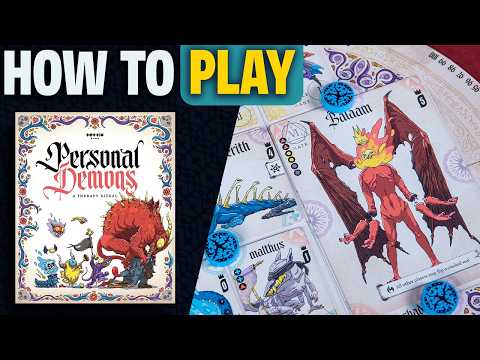

Ask a Rules Question
Images
GID0452508.jpg

GID0452508_thumb.jpg
All mentions
Browse transcript mentions, sentiments, pros/cons, mechanics, topics, quotes, and references.
Total mentions: 7
This page: 7
Sentiment:
pos 7 ·
mix 0 ·
neu 0 ·
neg 0
Showing 1–7 of 7
Video xCwFWRb5hnc
kovray Rules Teach at 0:05 sentiment: positive
video_pk 142941 · mention_pk 406134
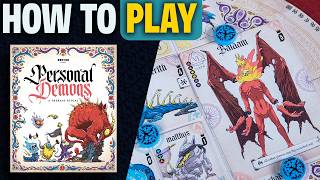
Click to watch at 0:05 · YouTube ↗
Overall sentiment (raw)
positive
Pros
- Courage cards provide unique play or scoring abilities.
- Fragments have sigils to help form new seals.
- Royals have at least three wild sigils.
- Colossal demons have abilities that often benefit all other players.
Cons
- Cannot play a card if its requirement is not met.
- Seals can be broken when new cards are placed over them.
- If a sigil contains more than one non-purple color, nothing is placed.
Thematic elements
- Summoning demons and sealing them away
Comparison games
none
Mechanics (from transcript analysis)
- Action Point Allowance — Each turn has a set number of steps (place, reveal, sin, seal, bonus, pass), and players choose actions within these steps.
- Hand Management — Players draw cards from different decks and must choose which ones to play, keep, or discard.
- Resource Management — Players manage 'sin' as a resource to perform bonus actions.
- Set Collection — Players aim to complete sigils by arranging cards with matching corner symbols.
- Tableau Building — Players build a tableau of cards on their 'summoning circle' to achieve objectives.
- Take That (indirect) — Summoning colossal demons can trigger abilities that benefit other players.
Video topics + discussion points
No key topics recorded for this video.
Quotes (from this video)
- In Personal Demons, you'll play through three rounds, summoning demons into your circle, connecting the sigils to create seals, and of course, sealing the demons away to score points.
- When four corners meet, if they contain only one color along with any amount of purple, you've completed a valid sigil.
- When you summon a colossal demon, you resolve the ability at the bottom of its card, which often benefits all other players.
References (from this video)
No references stored for this video.
Video IDrs-viKykQ
kovray Rules Teach at 0:15 sentiment: positive
video_pk 133790 · mention_pk 379262
Click to watch at 0:15 · YouTube ↗
Overall sentiment (raw)
positive
Pros
- Enjoyable puzzle of fixing seals.
- Interesting goals with hefty and colossal cards.
- Engaging give and take in gameplay.
- Unique and meaningful way to explore the theme of personal demons.
- Light-hearted and cathartic approach to sensitive topics.
Cons
- Struggled with obtaining blue seals.
- The challenge of not being able to play desired cards due to unmet prerequisites.
Thematic elements
- Battling personal demons and sins
Comparison games
none
Mechanics (from transcript analysis)
- bonus actions — Players have the option to take extra actions, often by spending sins or resources.
- Card Drafting — Players choose cards from their hand to play on their board.
- Hand Management — Players select cards from their hand to play, with strategic considerations for future turns.
- Prerequisites — Some cards require specific seals or sin types to be played, adding a layer of strategic planning.
- scoring — Points are awarded based on seals, knights, and specific card effects throughout the game and at the end.
- Sealing Demons — Players create seals on demons, which are important for scoring and meeting card prerequisites.
- Set Collection — Collecting sets of sins (want, glut, hate) and seals to achieve goals and score points.
Video topics + discussion points
No key topics recorded for this video.
Quotes (from this video)
- Holy moly, that's a good royal right there.
- Tyler is really working through his inner demons right now.
- Battling your demons, personal demons, is an ongoing battle and we're going to have to put them out there, face them again.
- Well, now Devils and Nobles, I can rotate and I can help me match my seals better.
- This game discovers this demon in a really unique way.
- The way that seals score is they will get points for everything that they touch.
- So, if you could have maximized that somehow someway then it would have been
- It's an ongoing battle and in all honesty, this game discovers this demon in a really unique way.
- But we do all face personal demons one way or another. Whether it's depression, anxiety or assortment of things.
- So, please, please, please check that out if you do need any sort of support.
References (from this video)
No references stored for this video.
Video mJX4poOOXaU
Board Gaymes James Top List at 7:26 sentiment: positive
video_pk 121334 · mention_pk 348231

Click to watch at 7:26 · YouTube ↗
Overall sentiment (raw)
positive
Pros
- Stunning artwork
- Simple mechanics
- Cool spatial puzzle
- Plays smooth and fast
Cons
none
Thematic elements
Comparison games
- Bo
- deep regrets
- even deeper regrets
- abominations
Mechanics (from transcript analysis)
- pattern matching — You're going to play out a card into this tableau with some pattern matching because if you pattern match the seals, you get to put a seal down.
- Spatial Puzzle — So it's a really cool spatial puzzle for how you place your demons
Video topics + discussion points
No key topics recorded for this video.
Quotes (from this video)
- So my tops and bottoms of last year, games that you can't actually get yet.
- So let's just get into it and talk about them.
- I love that it is cozy, as well as actually a really good thinking game.
- It's very heavy, but very cute as well because of the artwork.
- So the way you score is constantly in flux with your other players manipulating the tableau, either adding cards to it, removing them with some of the cards, or shifting cards around with some of the cards as well.
- So it's a really cool spatial puzzle for how you place your demons and then a pattern matching puzzle for getting the seals for scoring, which is really neat.
- And that is my game so far of the year.
References (from this video)
No references stored for this video.
Video k3IN67A2_NU
Allies or Enemies Preview at 4:18 sentiment: positive
video_pk 81089 · mention_pk 199466

Click to watch at 4:18 · YouTube ↗
Overall sentiment (raw)
positive
Pros
none
Cons
none
Thematic elements
Comparison games
none
Mechanics (from transcript analysis)
Mechanics unknown.
Video topics + discussion points
No key topics recorded for this video.
Quotes (from this video)
- And so I'm really interested in Horrified Ravenloft and I think it's four new monsters and it's still like in a D&D theme and I really like the last D&D Horrified.
- So that was a whirlwind tour of a whole bunch of games we're interested in checking out.
- And there are so many more games that there are so many games at UKGE. We can't possibly know about all of them so please do let us know about the ones you think we missed the ones you think other folks would be interested in.
- So, we will have Shakespeare the card game on sale.
- So, this is a really exciting UKGE for us. So, please do come by.
References (from this video)
No references stored for this video.
Video bGizpRc8oB8
Get into games Other at 24:49 sentiment: positive
video_pk 80709 · mention_pk 197445
Click to watch at 24:49 · YouTube ↗
Overall sentiment (raw)
positive
Pros
- Looks really good
- Artwork is very cool
- Stands out from the table
Cons
none
Thematic elements
- Demons with personality
Comparison games
- Deep Regrets
- Even Deeper Regrets
Mechanics (from transcript analysis)
Mechanics unknown.
Video topics + discussion points
No key topics recorded for this video.
Quotes (from this video)
- We played Return to Dark Tower because we decided to pick another massive game.
- So, Sunday is always the day we take the kids. It's a little bit more chilled.
- I feel like more people took care of their hygiene.
- The artwork is beautiful, especially on those foily ones. Really nice.
- It was a truth or dare game.
- The main problem is the Shop and Drop boxes are small and board game boxes are not small.
- It's like Christmas. It's going to be like this. It's going to be amazing.
- It's clear that UKGE isn't the one for new releases because new releases of Gen Con and Essen.
References (from this video)
No references stored for this video.
Video OWiT5vneMzc
Rules Teach at 0:00 sentiment: positive
video_pk 66484 · mention_pk 162007
Click to watch at 0:00 · YouTube ↗
Overall sentiment (raw)
positive
Pros
- Offers a good idea of the final game from a prototype.
- Engaging theme that ties into mechanics.
- Multiple difficulty levels for replayability.
- Interesting choice between different demons with unique effects.
- Satisfying puzzle-like gameplay with seal completion.
Cons
- The game is a prototype, so final components might differ.
- Risk of getting too few of a required seal color (e.g., limited yellows after removing the fear card).
Thematic elements
- overcoming personal demons through a therapy ritual
- hell
Comparison games
- Deep Regrets
Mechanics (from transcript analysis)
- Card Drafting — In multiplayer, players draw cards, choose one, and pass the rest. In solo, they draw a set number, pick one, and discard the rest.
- grid placement — Cards are placed into a personal grid, and their position impacts seal completion and scoring.
- Pattern Building — The core gameplay involves arranging cards to form specific patterns (seals) in the grid.
- Push Your Luck — Players decide whether to focus on completing seals quickly for immediate points or to set up for larger scores later, risking missed opportunities.
- Resource Management — Players manage 'sins' (like want, hate, glut) which are gained from cards and spent to perform bonus actions.
- Set Collection — Players aim to complete seals of specific colors by placing cards with matching seals in a grid.
- Variable player powers — Players choose starting 'demons' (colossal and hefty) that have specific scoring conditions and abilities.
Video topics + discussion points
No key topics recorded for this video.
Quotes (from this video)
- We've all got our demons of one kind or another, but we are going to partake in a therapy ritual and we are going to overcome those demons, sealing them away for good.
- The game is coming soon to Kickstarter.
- So, it's not necessarily about trying to do the best all the time.
- This is a prototype of the game, but it should give you a fantastic idea of what it's going to be like in the end.
- We need six extra to count your turns. You get six turns each round. There are three rounds in the game.
- So, I think I'm going to make two blue seals and then it's four of any seal.
- So, now we've got some space. Here are six extra candles.
- The balancing part of that is the points available.
- The seals still exist for any purposes that need you to have seals like your big demons.
- So, we are on 68. Too bad. So, not going to be getting the 66.
- That's my personal best at this. 164 was my best before.
- It would be lovely to get this blue seal done. It would score this four points as well as everything else.
- I think it was a risk getting rid of the yellow seals entirely and never getting them back once we got rid of the fear card because you saw how it limited the cards we could take.
References (from this video)
No references stored for this video.
Video ZxJFoVpSqBc
Board Games James Playthrough at 0:34 sentiment: positive
video_pk 66378 · mention_pk 161561
Click to watch at 0:34 · YouTube ↗
Overall sentiment (raw)
positive
Pros
- Stunning, hand-illustrated artwork by Judson Cowan
- Tight solo engine-building that translates well to a compact playtime
- Clear thematic integration of therapy/naming demons with mechanical decisions
Cons
- Prototype components and potential future graphic changes
- Solo balance, especially around Colossals and bonus actions
- Rule density; some interactions can be confusing without reference sheets
Thematic elements
- Therapeutic self-improvement through symbolic demon confrontations; fear and desire management.
- A ritual-inspired demon-confrontation setting where a single player works through six rounds of cards, seals, and candles to manage fears and sins in a meditative, therapy-like framework.
- Abstract pattern-building with ritual imagery and demon naming
Comparison games
- Deep Regrets
Mechanics (from transcript analysis)
- Card Drafting — Players select and place cards each turn to build a scoring engine and trigger bonuses.
- Compound Scoring — Six rounds in solo mode, with candle-based tracking and end-of-round scoring.
- Pattern/Seals scoring — Seals align on cards to form scoring patterns; completed seals maximize points.
- Resource Management — Manage sins, courage, and seals; some actions require spending resources and risk of losing progress.
- Solo scoring rounds — Six rounds in solo mode, with candle-based tracking and end-of-round scoring.
- Top/bottom card placement — Large cards (colossals/hefties) require stacking over existing cards, influencing future scoring and access.
Video topics + discussion points
No key topics recorded for this video.
Quotes (from this video)
- The art is amazing on this game.
- The idea is to name your demons.
- I freaking love this score.
- Judson Cowan did the art for Personal Demons; Deep Regrets shows his style.
References (from this video)
No references stored for this video.
Transcript Navigation
Showing 1–7 of 7