








Last Minute Deep Dive
What the Community Thinks About Last Minute
Last Minute resonates with reviewers as a compact, high-energy experience that punches above its weight. Designed by Romic Galier and Luke Raymond, and published by inPatience, this 10-minute real-time cooperative card game has earned genuine enthusiasm from board game critics. Even experienced reviewers who typically avoid real-time games find themselves drawn to its elegance. The consensus is clear: Last Minute delivers precisely what it promises, a tense burst of collaborative problem-solving that works equally well solo or with friends. While some view it as a limited-shelf-life gimmick, the overwhelming takeaway is that it deserves a spot on gaming tables for those who crave quick, stakes-driven challenges.
Core Mechanics That Define Last Minute
Cooperative Gameplay Under Extreme Time Pressure
Last Minute is built on the foundation of pure cooperation. All players share a single objective: defuse a series of bomb cards before time expires. There is no hidden information, no competitive scoring, no player elimination separate from group failure. You either win together or lose together. This collective stakes structure means every player's actions matter equally, and the game's tension comes entirely from external pressure, not interpersonal conflict. The designer and publisher built this mechanic intentionally to focus the experience on teamwork and collective strategy rather than managing individual player jealousies or negotiation.
Real-Time Sequential Card Play
The core loop of Last Minute demands simultaneous decision-making under a ticking clock. Players must play numbered cards in strictly descending order to match the colored wire requirements of bomb cards. A player cannot place a card of value 50 and then later play 51, even if it solves a requirement. This descending constraint, combined with the real-time timer, creates the game's defining tension. Players can draw cards, discard cards, or play cards, but all of this must occur within 60 to 120 seconds depending on player count. At higher difficulty levels, special tokens add restrictions, such as requiring only odd-numbered cards for certain bombs. This forces rapid mental processing and means fumbles are costly.
The Last Minute Experience
Sustained Adrenaline and Immediate Tension
From the moment the timer starts, Last Minute creates a surge of pressure that builds throughout the round. Reviewers consistently describe the experience as stressful in the best way, producing the kind of heart-pounding focus found in escape rooms or time-attack video games. The short playtime means the tension never dissipates into a plateau; it ramps up immediately and stays high. Most games are close calls, and the pressure is tangible. Players cannot plan their turns in advance. Instead, they scan their hand, scan the board, and make split-second calls that either advance the mission or waste precious seconds. One reviewer noted that they generally dislike real-time games but found Last Minute to be refreshingly different, hitting a particular sweet spot of stress and satisfaction.
Chaos and Teamwork in Multiplayer
When played with multiple players, Last Minute becomes a shared scramble. Players cannot communicate beyond simple gestures or pointing, yet they must coordinate which bomb each person addresses and in what order. Reviewers who played with four or more players described the experience as chaotic, in the sense that the room becomes loud and hectic. This chaos is part of the appeal; it transforms the game from a puzzle into a pressure-filled social event. However, at higher player counts, the experience becomes less about finding the optimal solution and more about simply managing the frenzy.
What Makes Last Minute Stand Out
Flawless Portability and Perfect Packaging
Last Minute ships in a compact box that inPatience designed to be the exact size required for the contents. No wasted space, no oversized insert. The footprint during play is tiny, requiring only a small area of table space. This portability was praised across reviews as a major strength. The game feels equally at home on a kitchen table, in a coffee shop, or in a backpack during travel. For players who value compact solo games, this physical elegance is a genuine selling point. Combined with the 10-minute playtime, Last Minute fits into schedules and spaces where meatier games cannot.
Solo-Friendly Design with Scalable Difficulty
Perhaps more than any other aspect, reviewers appreciated that Last Minute works just as well solo as it does with a group. Solo play includes four training missions that teach the mechanics and then escalating operations that ramp up in difficulty. Many real-time games fall flat when played alone, but Last Minute's design eliminates this problem entirely. Players can experience the full tension of the game even when playing by themselves, and the difficulty curve ensures that both newcomers and veteran players find appropriate challenges. The training missions ease learning without feeling condescending, and the operations provide substantial replayability.
Potential Drawbacks
Gimmick-Based Longevity Concerns
One candid reviewer noted that while Last Minute is their most enjoyable game on the table right now, they do not expect it to maintain that status long-term. The appeal of a real-time card game, particularly one this simple, fades once players have mastered the fundamental challenge. Some reviewers expect to play Last Minute for a few months and then shelve it permanently, the way one might tire of a novelty or a dedicated puzzle game. This is not a criticism of the game's design; rather, it reflects the inherent limitation of gimmick-based games, where the gimmick is the primary appeal. Players seeking a game with long-term replay value through strategic depth or variable player powers may find Last Minute exhausts its novelty sooner than expected.
Rule Book Could Be More Polished
A reviewer who has extensive experience with inPatience's library noted that while the rules of Last Minute are generally functional, they are not as polished as in some of the publisher's other titles. Certain mechanics require players to deduce or assume rather than follow explicit instruction. This is a minor issue in a game this simple; most groups will figure it out quickly. However, for players who dislike any ambiguity in rulebooks, or who plan to teach the game in a noisy environment, the rule clarity could be slightly better. The core mechanics are sound, and the rules are learnable; it is simply that they lack the refinement found in inPatience's best-designed titles.
If You Enjoy Last Minute
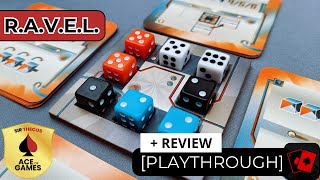
Players drawn to Last Minute often gravitate toward other real-time cooperative experiences. The game Fuse, by Renegade Game Studios, shares Last Minute's core appeal of tense time-pressure card play but with a larger footprint and more complex decision space. For those who love the bomb-diffusing theme specifically, King of Tokyo: Bomb Edition combines competitive play with a similar defusal mechanic, though it sacrifices Last Minute's pure cooperation. The Mind offers a different take on real-time cooperative card play, removing time pressure entirely in favor of silent signaling and intuition. Ravel, another inPatience title, provides a similar portable solo experience but trades time pressure for puzzle-solving. All of these games share Last Minute's commitment to compact play, immediate engagement, and high emotional stakes.
What Reviewers Are Saying
"This game is perfect for that short rush of adrenaline. When you've got a tight timer and short play time, the tension of this game just ramps up immediately. Most games are really close unless you get lucky. You'll definitely feel the pressure here."
— Akas
"This is the most enjoyable game that I have on the table. I think I think so. I think I enjoy this one the most. It's different. It's real time. It's fun. If you see this at a board game cafe at a convention, this is a 100% a game you should give a try."
— BoardGameCo
"I don't think there could ever be enough games that are about diffusing bombs. I just love, love, love real time games about diffusing bombs."
— Tabletop Tokki