
Game Info
Year
2025
Players
1-4
Age
14+
Playtime
45 min
Complexity
2.5/5
Collection
Your Tier
Loading…
Mechanic profile
Not enough video data yet
Vibe profile
Not enough video data yet
Description
Engine-building card game set in the Tang Dynasty where players place cards to produce resources and build city districts
Featured Videos

Ask a Rules Question
Images
GID0452657.jpg

GID0452657_thumb.jpg
All mentions
Browse transcript mentions, sentiments, pros/cons, mechanics, topics, quotes, and references.
Total mentions: 5
This page: 5
Sentiment:
pos 2 ·
mix 3 ·
neu 0 ·
neg 0
Showing 1–5 of 5
Video dczcPFU6uD8
The Dice Tower Top List at 11:21 sentiment: positive
video_pk 81538 · mention_pk 203077

Click to watch at 11:21 · YouTube ↗
Overall sentiment (raw)
Positive
Pros
- I really like this game.
Cons
- Constantly have to look up what things do.
Thematic elements
- Engine Building
Comparison games
none
Mechanics (from transcript analysis)
- Engine Building — It's an engine building game where you're building cards rows and you say score.
Video topics + discussion points
No key topics recorded for this video.
Quotes (from this video)
- Fiction: Banned Books, this is from All Play. I really like the first Fiction, guessing a five-letter word. If you like things like Wordle, um this is a good sort of one versus others game because one person is trying to stop you from guessing the word cuz they lie they have to lie about a letter each time, but you know they lie, so they're picking the right time to lie. But this offer this adds some special powers and things to it, so it's slightly better than the first one, I think, if you care about the stuff. If not, you can still play it normally, so great little game.
- Got 5, a great deduction game for kids, wonderful components. Basically, um you everyone can see your numbers and you're guessing if this is higher or lower than your numbers and where they fit on a grid really works well for kids. There's a lot of good deduction games for kids these days. Another 8.5.
- And Catan on the Road, what a glorious card game version of Catan, one one few games that I am going to get a copy of this for my house because my kids and family liked it so much. We can play this with anybody. It takes Catan, it distills it down into 15 minutes. What a wonderful thing. Like it a lot.
- So, almost 15 minutes for 36 games.
- If you have thoughts on these games, you disagree, agree, whatever it might be, let us know in the comments.
- Like I said, you can find more information about most of these games on the Dice Tower channel or you will hear more about them in the future.
- Hey everybody, thanks for watching another video from the Dice Tower.
- Do you want to learn more about us, communicate with us? We have a Facebook group. We have a Discord channel. Lots of different ways to get involved with the Dice Tower.
- You can find that in our Linktree link below. So, just click that, it will take you and you can communicate with us on Facebook, join our Facebook groups. There's lots of cool things that you can find and become part of the Dice Tower.
References (from this video)
No references stored for this video.
Video 6DH8VECS7xg
Grant Lyon News at 9:49 sentiment: positive
video_pk 81107 · mention_pk 199668

Click to watch at 9:49 · YouTube ↗
Overall sentiment (raw)
positive
Pros
- Revised edition with retail release
- Interesting two-layer gameplay
- Good combo potential
Cons
- Original crowdfunding campaign had fulfillment issues
- Revised edition removed some components
Thematic elements
- Urban renewal
- Tang Dynasty, Ancient China
Comparison games
none
Mechanics (from transcript analysis)
- Card Drafting — Playing cards down into your gates. Those cards will help you get resources. You are then going to use resources to move those cards from your gates down onto your board and build them on your board.
- Engine Building — And then they'll get benefits and points and you know things like that as they get built on your board.
- Resource Management — Those cards will help you get resources. You are then going to use resources to move those cards from your gates down onto your board.
Video topics + discussion points
No key topics recorded for this video.
Quotes (from this video)
- this is a horror comedy game because you are in a world where sheep are mutating at night and turning into horrible things that will attack you.
- it's pretty silly, but also kind of scary at the same time.
- you will get these little shape pieces. They're just these little abstract pieces and they'll stick to your magnetic board which is kind of satisfying, right?
- it is not easy. uh it is it is difficult to indicate what you want to indicate with these little uh with these little wooden pieces.
- Excalibur is full of trash talkinging. It's full of social, memorable moments.
- it is chaotic, but it's fun and memorable.
- now the retail version is much more affordable and it's still the same sort of social gameplay. You just don't have these metal swords that you can clink together and stuff.
- this is a lighter weight card game but a strategy game. This is not a party game. This is a strategy card game.
- there can be these sort of cascading triggers like boom boom boom, you know, sort of thing.
- It's a clever little game of sort of planning and cascading uh your cards.
References (from this video)
No references stored for this video.
Video biTN5UdofJc
The Dice Tower Analysis at 9:13 sentiment: mixed
video_pk 81098 · mention_pk 199559

Click to watch at 9:13 · YouTube ↗
Overall sentiment (raw)
Mixed
Pros
none
Cons
- Player aid sheet is difficult to use.
- Looks old.
Thematic elements
Comparison games
none
Mechanics (from transcript analysis)
- Engine Building — It's an engine building game.
Video topics + discussion points
No key topics recorded for this video.
Quotes (from this video)
- Uh also Chang'an. Uh this is from Arcane Wonders. It's an engine building game. There's some interesting ideas, but it's hard to pass around this player aid sheet to remember what everything does, and it looks old, which keeps you from loving it more than I I would normally. 6 out of 10.
- And Rattlesnake. What a fantastic game. It's two-player back and forth, nice filler style. Really enjoyed it. 8.5.
- And then Druids of Adora, this is a really cool game from Stefan Feld that has a few issues with it which keeps me from loving it. A six out of 10 I gave it. Uh the Again, no player aids at all in this one. And the it's a lot of the iconography is hard to see. And some of the game is too focused on getting supplies to play the rest of the game. But the rest of the game was pretty fun. So there's kind of a mix in there of all that.
- I've come to realize this is not English. I'm going to guess Icelandic.
- There's two categories of board gaming, Ameritrash and Euro crap.
References (from this video)
No references stored for this video.
Video t9wkLjWaZ_8
Review at 0:10 sentiment: mixed
video_pk 79481 · mention_pk 192929
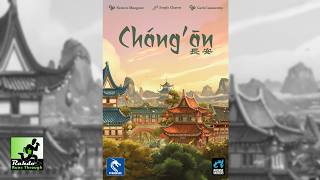
Click to watch at 0:10 · YouTube ↗
Overall sentiment (raw)
mixed
Pros
- Excellent engine building mechanics.
- Satisfying combo potential.
- High variability and replayability due to different card decks.
- Deep and rich gameplay.
- Creates tension and urgency.
Cons
- A specific design decision involving player stealing makes it unenjoyable for the host and their wife.
- The compulsion to steal from opponents is a negative element for the host.
- The game is 'not for me' due to the player interaction element.
Thematic elements
- Building a resource-generating engine
- Tang Dynasty
Comparison games
none
Mechanics (from transcript analysis)
- Card Drafting — Players draft cards from a display to add to their hand or play them to their engines.
- Engine Building — Players draw and play cards to build resource-generating engines that can be reconfigured and upgraded.
- Multi-Use Cards — Cards can be used as resources for engines, to gain special abilities when played in the city, or as characters with active abilities.
- Player Interaction (Stealing) — A core mechanic allows players to spend resources (stone) to steal cards from opponents' engines, creating tension but also causing frustration for some players.
- Resource Management — Players manage resources like money, food, lumber, and stone to perform actions and build cards.
- Set Collection — Players collect cards and place them into their engines or the city for scoring bonuses or passive powers.
Video topics + discussion points
No key topics recorded for this video.
Quotes (from this video)
- And it's, unfortunately, undone by one design decision that I hate in spite of the fact that I love everything else about it.
- So, the game creates this incredible tension that I want to build big strong engines and then run them and then run them again. But if I build a big powerful engine, it's incredibly easy for you to break it apart and steal it from me.
- I don't want to be playing a game where for me, the clearly superior move that I can do on my turn is to steal from you. I don't want to do that.
- And that's why I hate it. That's why this game is not a keeper.
- But it breaks my heart because I think this could be a top 10 of all-time engine builder. The engine building in this game is world-class.
References (from this video)
No references stored for this video.
Video NO7_fCiFB-E
Review at 0:17 sentiment: mixed
video_pk 66720 · mention_pk 162526
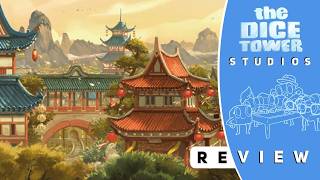
Click to watch at 0:17 · YouTube ↗
Overall sentiment (raw)
mixed
Pros
- Interesting gameplay
- Neat vibe as you're building it up
- Love the idea of playing cards out to get resources
- Getting the resource with the cards is neat and innovative
- Activating the buildings underneath is fun
Cons
- Resources look terrible
- Unacceptable lack of player aids for card symbols
- Waters get muddied with different decks/modules
- Doesn't stand out amongst other games
- Struggle to decide which modules to play
- It never feels like it gels
- The engine's starting to get pretty cool, but the game's over
- Feels like an older game
- Comes in second place in a game design contest
- Messy with extra boards and modules
Thematic elements
- Building a city
- Tang Dynasty
Comparison games
none
Mechanics (from transcript analysis)
- Card Drafting — Players can take face-up cards or the top card from a deck when performing the 'research' action.
- Engine Building — Building an engine to build the city. Taking actions and getting resources, stacking cards, and then building them. Building cards involves paying costs and placing them in rows that score points at the end of the game.
- Hand Management — Players start with a hand of cards and manage them to perform actions and build.
- Modular board/game — The game includes several different decks (trade, politics, production, science, military, Silk Road) that can be mixed and matched, acting as modules.
- Player-driven end game — The game ends when a player has nine or more cards in their area.
- Resource Management — Players collect resources like wheat, coins, stone, and wood. Coins act as a half-wild resource. Resources are used to build cards.
- Set Collection — Collecting sets of cards in a row can provide bonus points. Some cards give victory points based on other cards built in the same district.
Video topics + discussion points
No key topics recorded for this video.
Quotes (from this video)
- All the cards have symbols on them. This is a single sheet that explains what all these cards do in the six different decks including the Silk Road deck.
- You will be passing this around all the time. You will not remember what the symbols are.
- That is unacceptable at this point in time. Come on. How many times do we have to say this as players that we hate this?
- My rating for this game is a six out of 10.
- But for me, it doesn't stand out too much amongst other games, especially in how it looks.
- But I can't really recommend it because it feels like this would be coming in second place in a game design contest.
- So, but man, getting the resource with the cards, that is neat. That's innovative, I think.
- And then activating the buildings underneath, that's fun. And that keeps me from saying it's a bad game, cuz it's not. But it's also not one that I really love.
References (from this video)
No references stored for this video.
Transcript Navigation
Showing 1–5 of 5