




Counterpoint Deep Dive
What the Community Thinks About Counterpoint
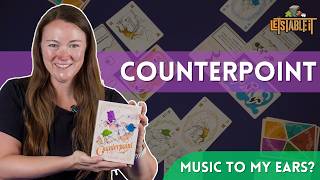
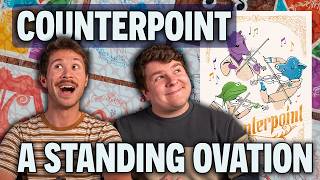
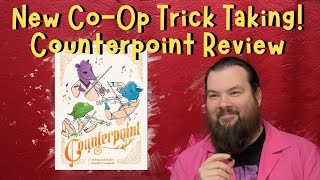
Counterpoint, from Square Cactus Games, enters a crowded field of cooperative trick-taking games led by The Crew and the Lord of the Rings trick-takers, and reviewers think it earns its place. Justin of Board Game Animal says that where The Crew feels like cold, calculated precision and Lord of the Rings brings the adrenaline of adventure and survival, Counterpoint "just delivers a different feeling while playing." Board Game Buzz was really impressed, finding it less constrictive than those games. Sarah of Let's Table It really enjoyed it and says the musical theme elevates an already solid cooperative game, and Cardboard Crew calls it a fantastic cooperative variant. Some of this coverage had publisher support: Cardboard Crew's videos were sponsored by Square Cactus Games, Let's Table It reviewed a prototype copy the publisher provided, and Board Game Animal thanks the publisher for a review copy.
Core Mechanics That Define Counterpoint
Trick-Taking
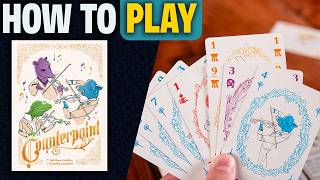
At its foundation, Counterpoint is a must-follow trick-taking game: one suit is revealed as the melody suit and acts as trump, and each player tries to capture cards of their own color. After the deal, Cardboard Crew explains, everyone simultaneously passes one card to the player on their left, a step Cardboard Crew singles out as a really interesting mechanic. Then comes the bid. Players take turns claiming one, two or three note tokens from the center or passing, and each token is a card of their own suit they must collect. Since every note token has to be claimed, the group has to work together to distribute the risk. Each player also has a rest card and a technique card, one-time abilities that Cardboard Crew says let you manipulate tricks and secure important cards.
Scenario and Campaign Structure
Counterpoint's music book lays out performances as scenarios with their own rules, and later ones add challenges through clef tokens and evolving objectives. Board Game Buzz says it has "a ton of different scenarios ranging from easy all the way up to hard," and the three they played all felt very different. Let's Table It describes a campaign of games with increasing difficulty, and Cardboard Crew recommends starting with the first performance in the book. The concert variant takes this further: Cardboard Crew explains that you choose four performances and play them in any order as a mini campaign, with an intermission between the second and third where you reset your rest and technique cards.
The Counterpoint Experience
A Performance, Not a Puzzle
Players are musicians in a chamber ensemble, and reviewers say that framing changes how the game feels. Justin of Board Game Animal finds that it plays less like processing a puzzle, the way cooperative trick-takers often can, and more like putting on a performance, noting "a theme and gameplay cohesion here that you may not otherwise expect." The production supports it: the bidding tokens are music notes, each player has a little sheet music stand, and the scenarios come in a spiral notebook of sheet music. Justin says this gives the game "some whimsy and elegance that helps take the pressure off a little."
Cooperative Tension and Timing
The tension comes from bidding with only your own hand in view. Taking more note tokens, as Cardboard Crew puts it, increases your personal responsibility during the performance, but somebody has to take every token. Then the table has to deliver. Cardboard Crew describes it as coordinating a beautiful performance, playing cards at the right time without sabotaging other players, and says "every performance has that different challenge that gets you thinking in a different way." Technique cards let you break rules or exchange cards once per performance, and the rest card lets you skip playing a card into a trick that another player has already led. Cardboard Crew gives the example of using a rest card to get that last fifth card you need.
What Makes Counterpoint Stand Out
The Musical Theme as Core Design Element
For Sarah of Let's Table It, the theme is what makes Counterpoint stand out. As a music teacher, she finds it far more appealing than a generic space setting, and she calls the musical details genuinely thoughtful, praising the diversity of composers and a music book presented like real repertoire. Board Game Animal's Justin lands in the same place from a different direction: the performance framing is what separates Counterpoint from the other giants in the category, not a coat of paint on familiar rules. Cardboard Crew agrees the theme is very different from other cooperative trick-takers.
Scenario Variety and Progression
Reviewers keep coming back to how different each scenario feels. Board Game Buzz found the scenarios really different from one another and the game different from other trick-takers in the same vein. Cardboard Crew points to clef tokens and evolving objectives in later performances, and says a successful concert makes you feel that much better about the whole run. Let's Table It says rounds take about 15 minutes and calls it medium-light, so it is easy to play several performances in a sitting and work up the difficulty curve.
Potential Drawbacks
Requires Three or More Players
Counterpoint plays three to five and needs at least three. Sarah of Let's Table It is direct about it: if you mostly play at two players, "this won't be the right fit." That is a design choice, not a flaw, but groups that are usually two will get little use from it.
The Trick-Taking Foundation Remains Uncompromised
The theme changes the feel, not the fundamentals. You still follow suit, track trump and plan your plays around a hand you cannot share. Sarah of Let's Table It says that if traditional trick-taking games have never really clicked for you, "the excellent theme probably won't be enough on its own." Players who already bounced off the genre should not expect Counterpoint to convert them.
If You Enjoy Counterpoint
The clearest recommendation runs the other way: Cardboard Crew says that if you liked The Crew, you'll probably really enjoy Counterpoint, and Let's Table It says it scratches the same itch. Board Game Buzz puts it in the same family as The Lord of the Rings: The Fellowship of the Ring Trick-Taking Game, while finding Counterpoint less constrictive than either.
What Reviewers Are Saying
"Playing this game genuinely does feel like you're putting on a performance. The structure of the game for me feels less like you're just trying to process a puzzle like a lot of cooperative games, especially cooperative trick-taking games can be."
— Board Game Animal
"The musical details are genuinely thoughtful. I loved seeing the diversity of composers represented and how the music book is presented like actual repertoire you're working through together."
— Let's Table It
"Coordinating that and making sure that you're having this beautiful performance and you're able to play cards at the right time and not sabotage other players, it's a really interesting balance and I feel like every performance has that different challenge that gets you thinking in a different way."
— Cardboard Crew