








Chemical Overload Deep Dive
What the Community Thinks About Chemical Overload
Chemical Overload has earned widespread acclaim from board game reviewers, with consistent praise for how it refreshes the deck-building genre. Reviewers across multiple channels describe it as one of the strongest deck builders available, even among those with extensive experience. The game's reception is particularly striking because it appeals to both devoted deck-building fans and players who typically avoid the genre. Board Games UnLocked reviewers repeatedly highlight the game's polish and completeness, particularly given that it comes from first-time designer Michael Crandall and Rebirth Games. Let's Table It frames the game as a polished entry into potion-themed gaming with satisfying mechanics. The Hungry Gamer appreciates the game's mechanics while acknowledging that some deck-builder conventions persist. Meeple University emphasizes the rewarding nature of potion creation and the variety in available strategies. Overall, reviewers find Chemical Overload to be both thematically coherent and mechanically sound, presenting what many consider a successful evolution of familiar mechanics.
Core Mechanics That Define Chemical Overload
Deck Building
Chemical Overload centers on deck building, a mechanic where players start with a small basic deck and acquire new cards over time, creating an evolving personal engine. The innovation here is that newly purchased cards go directly to the top of your deck rather than into a discard pile. This design choice means you are guaranteed to draw the cards you buy on your next turn, solving one of the traditional complaints about deck-builders where purchased cards might never arrive when you need them. Reviewers consistently praise this modification because it provides much greater control while maintaining the excitement of deck evolution. The chemicals and potions you add become your tools for future turns, and the cycling nature of the deck means nothing is truly wasted. Dominion and other classic deck-builders shuffle purchased cards into a growing discard pile, making the experience more luck-dependent. By placing purchases on top of the deck, Chemical Overload lets players strategize with confidence about when they will access their acquisitions.
Tableau Building
Beyond deck building, Chemical Overload incorporates tableau building, where certain potion cards sit face-up in front of you on the table rather than cycling through your deck. These tabled potions generate ongoing value and free actions that you can activate during your turns without spending your limited action budget. For example, a Lucky Potion sitting on the table grants you a free coin every turn. This mechanic prevents certain high-value cards from clogging your deck while allowing them to generate consistent benefits. The flask mechanic also creates tableau elements, as flasks placed on your board become ready vessels for future potion creation. Reviewers appreciate that the tableau aspect keeps the game focused on potion-making rather than deck thinning or other classic deck-builder preoccupations. The combination of cards cycling through your deck alongside permanent table effects creates multiple layers of strategy and a more interesting turn structure than pure deck-builders offer.
The Chemical Overload Experience
Strategic Satisfaction and Combo Potential
Reviewers frequently describe the satisfying sensation of chaining potions together and executing multi-step strategies. The game's free actions for playing potions mean that a well-built turn often involves playing several potions and watching a cascade of effects unfold. This creates the sensation of building momentum rather than simply executing static turns. Board Games UnLocked reviewers note that the optional hand retention (you do not have to discard your entire hand at turn's end) adds another layer of control. You can hold onto useful chemicals across turns and strategically draw only the new cards you need, avoiding the frustration of being dealt a bad hand in traditional deck-builders. This optional retention is not a small detail; it meaningfully reduces the randomness that some players find frustrating. Stella from Meeple University emphasizes the thematic satisfaction of actually making potions rather than the abstract mechanical exercise, noting that the game's art and effect descriptions tie directly to potion-making flavor. When you create a potion by combining chemicals and placing it in a flask, the game delivers the thematic payoff that drew you in.
Tension from the Toxin Track and Pacing
The toxin level tracker creates a pacing mechanism and end-game trigger that reviewers find thoughtful. Every time someone creates a potion marked with a green toxin symbol, the toxin level advances. When it reaches the top, the game ends. This creates a ticking clock that accelerates naturally as players buy higher-level potions (which tend to be toxic). Reviewers note that the toxin events that trigger at specific levels provide both rewards and challenges, adding texture without overwhelming players with a massive event deck. The Hungry Gamer appreciates that the toxin track creates meaningful tension while remaining under player control through card selection. At lower player counts, the game can slow slightly if players avoid toxic cards, but the natural incentive to pursue valuable (often toxic) potions usually keeps momentum going. The track rewards whoever moves it up with specific benefits, creating interesting decision points.
What Makes Chemical Overload Stand Out
Striking Artwork and Thematic Integration
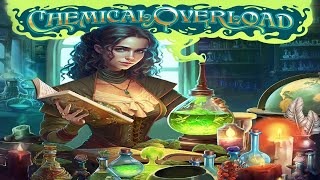
The potion artwork receives nearly universal praise from reviewers, who highlight how the card art serves dual purposes: it looks beautiful and communicates game information instantly. The art on each potion card displays the exact flask size needed to create it, eliminating the need to cross-reference card text. Beyond functionality, reviewers comment on the visual appeal of the potions themselves, from the Lucky Potion with its four-leaf clover cap to the Cleansing Potion with hands emerging from the flask (reflecting its card effect of drawing and destroying). The deluxe edition's metal coins and component quality reinforce the premium feel. Reviewers frequently mention touching the coins or admiring the potion artwork during play, indicating that the physical components succeed in immersing players in the theme. Let's Table It specifically notes that components like the metal coins and point tokens make acquisition satisfying, which is central to a deck-builder where buying is the main action.
Variety and Replayability Through Curated Sets
Chemical Overload includes eight recommended potion sets that players can select before play, each creating a distinct strategic environment. Rather than randomizing every game, this curated approach lets players choose the flavor and difficulty level they prefer. Reviewers emphasize that even within a single potion set, multiple viable strategies exist. Board Games UnLocked describes being able to pursue three or four different winning paths with the same set of potions. Some sets focus on point-generation potions, others on engine-building through free actions, and others on tableau-based strategies. The variation is substantial enough that players feel like they are playing different games across sessions without requiring expansions. The option to randomly mix potions for something completely new also appeals to players seeking more surprise. This flexibility respects both players who want consistency and those who seek variety, a design strength that reviewers consistently praise.
Potential Drawbacks
Deck-Builder Familiarity and Flask Clogging
At its core, Chemical Overload remains a deck-builder, which some reviewers note may feel familiar to veteran board gamers. The Hungry Gamer mentions that you still spend cards to buy cards that let you buy more cards, a classic deck-builder pattern that some players find tedious. Additionally, flasks that cycle through your deck can occasionally create "busted" turns where you draw multiple flasks and limited chemicals, leaving you with few options. These turns feel wasted compared to smoothly-flowing rounds. While the flask mechanic is thematically satisfying (you are using and re-using containers), the occasional clogged hand is a tradeoff reviewers accept but mention as a minor friction point.
Rule Clarity and Timing Windows
Board Games UnLocked reviewers consistently identify timing windows and rule clarifications as areas needing refinement. Questions about whether tabled potions activate once per turn or every turn, when toxin effects resolve, and how temporary effects work from toxin cards create table-talk confusion. The rulebook is described as functional but not exceptionally clear, especially regarding card interactions and the sequence of effects when multiple triggers occur simultaneously. Given that the game is otherwise polished and well-produced, these clarifications represent attainable improvements in a final edition or through errata.
If You Enjoy Chemical Overload
Players drawn to Chemical Overload's mechanics will find similar satisfaction in Dominion, the foundational deck-builder that shares core action-economy mechanics, or Aeon's End, which like Chemical Overload uses cooperative deck-building and card placement to create thematic narrative. For the potion-crafting theme specifically, Quacks of Quedlinburg and Potion Explosion offer potion-related gameplay, though through different mechanisms. Players who appreciate Chemical Overload's variety should explore Elysium, which similarly offers curated card selections to guide deck construction. Those drawn to the flask mechanic and resource management aspects might enjoy Tyrants of the Underdark for its area-control deck-building hybrid approach. Finally, players seeking more tableau-building elements alongside deck mechanics should investigate Alchemist and the newer hybrid designs that balance engine-building engines with tableau presence.
What Reviewers Are Saying
"Components are topnotch with these metal coins and the plastic points that you know really help when you gain stuff in this game everyone wants to you know touch these components."
— Let's Table It
"It seems like that they took like what's great about Dominion and then took the bad parts of Dominion and just modified that it's like well you're it every hand is random in Dominion okay that's true so what if we controlled that."
— Board Games UnLocked
"There's a lot of different potions in the game and it comes with different suggested setups for thematic potion offerings and they really do change the game because all of these potions have some kind of an effect."
— Hungry Gamer