Game Info
Year
2026
Players
2
Age
12+
Playtime
45 min
Complexity
2/5
Collection
Ratings
Creator Score
Mechanic profile
Not enough video data yet
Vibe profile
Not enough video data yet
Description
Two-player co-op heist where partners plan and execute a 1960s Scottish train robbery
Featured Videos

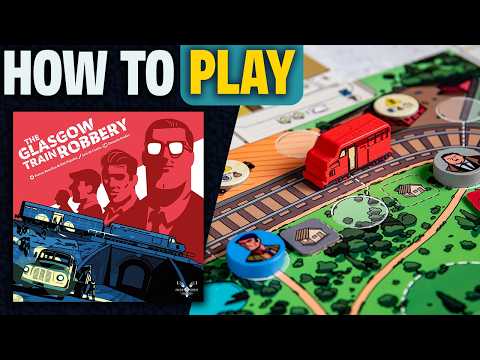
Ask a Rules Question
Images

GID0452768.jpg

GID0452768_thumb.jpg
All mentions
Browse transcript mentions, sentiments, pros/cons, mechanics, topics, quotes, and references.
Total mentions: 10
This page: 10
Sentiment:
pos 5 ·
mix 4 ·
neu 0 ·
neg 0
Showing 1–10 of 10
Video Z4kzHjA07z4
Stonemaier Games Review at 0:04 sentiment: positive
video_pk 108323 · mention_pk 312574
Click to watch at 0:04 · YouTube ↗
Overall sentiment (raw)
positive
Pros
- Favorite mechanism is the timing of when you do things.
- Enjoys cooperative heist-themed games.
- Clever timing mechanism tied to the moving train.
- Starts slow and then becomes 'go go go'.
- Time spent on cards really matters for segments.
- Clever timing element relates to the heist theme.
- Appreciates the light deck-building system and card design (choose ability or trash for powerful ability).
- Likes the limited communication exception built into the actions.
- Clever disparity in information between the Coordinator and Operator.
- Leaned into fun elements of the theme.
- Really enjoyed the first play.
Cons
- The Monopoly token is tied to the theme in a way that isn't exactly what happened historically.
- Getting two fingerprints on the same character is a way to lose the game.
Thematic elements
- Heist
Comparison games
none
Mechanics (from transcript analysis)
- Action Point Allowance — Playing cards or taking 'rest' actions have a time cost that moves the train forward.
- cooperative play — A two-player cooperative game where players work together to achieve a common goal.
- Hand Management — Players use cards from their hand, which have abilities that can be chosen or, if the most powerful ability is used, the card is trashed.
- Light Deck Building — A light deck-building system where players use the cards they have and cycle through them, rather than adding many new cards.
- Limited Communication — A specific game action allows players to communicate only two words to each other.
- Set Collection — Plans require specific tokens or colors of tokens within or next to a segment to be executed.
- Timing Mechanism — Actions and card play have a time cost that advances a train token along a track, segmenting time and triggering events.
- Variable player powers — The two roles, Coordinator and Operator, have different objectives and information.
Video topics + discussion points
No key topics recorded for this video.
Quotes (from this video)
- My favorite mechanism in this game involves the timing of when you do things because this is a moving heist.
- This whole timing element is really, really clever, in my opinion, especially how it relates to the heist theme.
- It's a very limited communication game because the players are physically at least or they at least it as they're represented in the game, they are physically in different areas, and so they can't talk to one another.
- I like that disparity in information.
References (from this video)
No references stored for this video.
Video pFGoZ5Ff7lM
Rob's Gaming Table Top List at 56:20:32 sentiment: mixed
video_pk 106484 · mention_pk 307818

Click to watch at 56:20:32 · YouTube ↗
Overall sentiment (raw)
mixed
Pros
- Cool theme
- Sounds fun
- Reasonably priced
- Good for two players
Cons
- Might not be good, unsure if it will resonate.
Thematic elements
- Cooperative game about robbing a train based on a true story.
- 1960s Scotland
- Cooperative heist with time pressure.
Comparison games
none
Mechanics (from transcript analysis)
- Cooperative — Players work together to achieve a common goal.
- Heist — Players are involved in a train robbery.
Video topics + discussion points
No key topics recorded for this video.
Quotes (from this video)
- This game is funny. This game is awesome. I laughed so hard. I had tears coming out of my eyes. This is like the first game out of all the games we played today that actually made me laugh.
- I had to stop the recording because my mic kept on picking up my laughter.
- I can't wait to play it again. I love this game. Dead Monkey. Bye-bye.
- The coolest part is going there and finding games you had no freaking idea that existed and that you would like and you just see them on the in the exhibit hall floor or in the gaming hall being demoed or just some random people on the floor in the hall of a hotel playing some cool ass game they just got there and you're like what's that? I want that. Where'd you get that?
References (from this video)
No references stored for this video.
Video cC9mF45luOk
Game Night Picks - Pair Of Dice Paradise Review at 11:46 sentiment: positive
video_pk 104874 · mention_pk 302576

Click to watch at 11:46 · YouTube ↗
Overall sentiment (raw)
positive
Pros
- cooperative heist game
- inspired by real history
- high-stakes finale
Cons
none
Thematic elements
- cooperative heist, intercepting and robbing a high-value train
- Scotland, 1960s
Comparison games
none
Mechanics (from transcript analysis)
- cooperative gameplay — Two players work together as thieves.
Video topics + discussion points
No key topics recorded for this video.
Quotes (from this video)
- That's right. It is time for us to throw off the shackles of workaday life and become the greatest board game manufacturer that the world has ever seen.
- The Game Makers is, in many ways, a love letter to the board gaming industry.
- players continue the journey started in Cascadia to create the most diverse Pacific Northwest environment that they can by drafting new double-hexagon habitat tiles and wildlife tokens to expand their landscape outward and also, get ready for it, ready? Here we go. Upward.
- where we find that the local zoo has broken into chaos. All the animals have escaped and now they need us to help them back to their respective homes.
- a single player card and dice game where the legendary hero strives to ascend into godhood.
- where the courageous new owner of a magical inn builds their bewitching B&B to best suit an eccentric host of guests, while also cultivating the ivy that's covering the walls.
- Now, Entropy is a big old rondel-powered universe-building Eurogame where scientists bend creation to their will as they create a brand new solar system, coax stars to life, and fuel new biomes all towards the ultimate goal of seeding planets with life.
References (from this video)
No references stored for this video.
Video zJ6Rl_cD7Ek
Board Gaymes James Top List at 12:38 sentiment: mixed
video_pk 104154 · mention_pk 300525

Click to watch at 12:38 · YouTube ↗
Overall sentiment (raw)
mixed
Pros
- Love trains.
- Art is beautiful.
Cons
- Haven't heard much about it.
- Demo it first.
- Said pass on it.
- Salt & Pepper Games so far have had rule book issues.
- There are so many games, so it was passed on.
Thematic elements
- trains
Comparison games
none
Mechanics (from transcript analysis)
Mechanics unknown.
Video topics + discussion points
No key topics recorded for this video.
Quotes (from this video)
- This is probably my contender for a game of the year kind of thing.
- It is a reprint though which feels like cheating.
- Very very good game. Highly recommend.
- Very light plays real quick.
- Gashapon trick is really cool.
- This is a really cool game where you actually want to leave gaps in your tile lane because when you leave gaps you're going to put in more pieces that are going to give you scores.
- I love Bruno's games.
References (from this video)
No references stored for this video.
Video aXb6VuFspuw
Board Gaming Ramblings Preview at 0:06 sentiment: positive
video_pk 82119 · mention_pk 206242
Click to watch at 0:06 · YouTube ↗
Overall sentiment (raw)
positive
Pros
- Great theme to build a game around
- Thematic ties fit well into the mechanisms
- Interesting dynamic between the two player roles
- Limited communication mechanic is enjoyable
- The thematic integration of the Monopoly board and fingerprints is cool
- Actions taken by one player directly affect the other's plans, creating tension
- Punishes players for playing Monopoly during the heist
- Good solutions to common co-op game issues like long discussions
Cons
- Not hugely into cooperative games generally, but this one stands out
- Fiddly movement of the train marker initially
- Can be a hard game; they haven't beaten it
- Limited communication can be a pitfall if players develop excessive meta-game rules
Thematic elements
- real world heist
Comparison games
- Monopoly
- Pandemic
Mechanics (from transcript analysis)
- action selection — Players play cards to perform actions, which move a train forward on a time track.
- Card Drafting — Six random cards are taken from a deck at the beginning of the game.
- cooperative play — A two-player only cooperative game where players work together to pull off a heist.
- Hand Management — Players have a hand of cards, most of which have a timing cost.
- Hidden Information — One player knows certain plans, while the other has different plans, and some cards are removed from the deck without being seen.
- I split, you choose — Mentioned as a mechanism for resource distribution, where one player divides and the other chooses.
- Limited Communication — Players can only communicate indirectly through their actions or a limited number of keywords on special cards.
- Modular board/components — Different modules can be added to increase difficulty and replayability.
- Push Your Luck — Deciding when to 'rest' to draw resources from a bag has consequences, such as potentially gaining fingerprints.
- Set Collection — Players need to gather specific resources and people (represented by colors) to complete plan cards.
- Variable player powers — Special powers associated with people can become available, and players need to reach safe houses to activate them.
Video topics + discussion points
No key topics recorded for this video.
Quotes (from this video)
- And you are watching Board Gaming Ramblings.
- This is a two-player only cooperative game where you are cooperating to to pull out a heist.
- But they usually make some interesting thing based on real world things.
- Thematic ties fit so well into the mechanisms.
- The timing is interesting because you are always like if I need to do a rest and I see that you have stacked three people in the room with Monopoly.
- All in all I think this is a pretty fun game.
- limited communication co-op games are the ones I enjoy.
- It is a very typical cooperative game. But the thing I enjoy about it is also like you said, we have like the plans, which one person knows, the other doesn't know.
- So I really like it. And also it's one of the few games where you are punished for playing Monopoly inside of the game.
- If you like co-op games and you like two player games. If you don't like those two, this is not going to be for you because that is what it is.
References (from this video)
No references stored for this video.
Video Tt2o9VpFXhQ
Board Gaming Ramblings Top 3 List at 3:10 sentiment: positive
video_pk 81884 · mention_pk 204840

Click to watch at 3:10 · YouTube ↗
Overall sentiment (raw)
positive
Pros
none
Cons
none
Thematic elements
Comparison games
none
Mechanics (from transcript analysis)
Mechanics unknown.
Video topics + discussion points
No key topics recorded for this video.
Quotes (from this video)
- I love Klask.
- it's all about luck in Flip Seven.
- It's a two-player game.
- Goa and it's my number three.
- We got to play Goa. It's not on my list, but no, it is because it's really fun.
- Fields of Arle is a game we played many years ago.
- You're trying to get the peat away.
- My number one is Keyflower.
- Probably it is one of my favorite cooperative games.
References (from this video)
No references stored for this video.
Video sBo4Z4_6vA4
Board Game Buzz Review at 1:40 sentiment: mixed
video_pk 67322 · mention_pk 163288
Click to watch at 1:40 · YouTube ↗
Overall sentiment (raw)
mixed
Pros
- Strong thematic integration of a real-world heist
- Countdown train track adds tension and pacing
- Multi-use cards create timing decisions
- High production quality and artwork
- Encourages strategic planning and endgame tension
Cons
- Asymmetric play can feel disjointed or less collaborative
- Limited communication can hinder coordination
- Pacing can be slow at the start with a rush at the end
- Prototype rulebook can be confusing; potential need for dedicated player aids
- One side feels like doing most of the work
Thematic elements
- historic heist, crime planning, fingerprints leading to capture
- 1963 Glasgow to London train heist
- asymmetric two-player planning with hidden information
Comparison games
none
Mechanics (from transcript analysis)
- Asymmetric Player Powers — one player is the operator and the other is the coordinator, with limited communication
- asymmetric player roles — one player is the operator and the other is the coordinator, with limited communication
- card-driven actions with multi-use options — each card offers multiple actions; some options remove the card from the game
- end conditions based on plan completion or major missteps — end occurs if train leaves, plans fail, or tokens run out
- fingerprint tokens and penalties — having fingerprints on characters can lead to defeat, requiring tokens and careful management
- five sequential plans — five plans must be completed in order for the operator to win
- Limited Communication — participants can communicate only in limited ways, through specific cards
- limited information/communication via speech cards — participants can communicate only in limited ways, through specific cards
- Multi-Use Cards — each card offers multiple actions; some options remove the card from the game
- Resource/tokens management — tokens used to influence bag contents, locations, or actions
- Track Advancement — a train token moves along a track, advancing toward end conditions with every card
- train track progression — a train token moves along a track, advancing toward end conditions with every card
Video topics + discussion points
No key topics recorded for this video.
Quotes (from this video)
- I am such a huge fan of Salt and Pepper games and the way that they implement historic events into board games.
- So, the Glasgow train robbery is actually taking inspiration from a real life heist…
- This is a two-player game where one player is going to be playing as the operator and the other player is playing as the coordinator.
- This is a limited communication game.
- Let's pretend that was there the whole time.
- I love this track which essentially kind of acts as a countdown timer for the game with the train slowly kind of going along and every single card you play is inherently going to kind of push that endgame a little bit.
- I found that aspect fun.
- I would much rather have a game where I am feeling like I am contributing towards something the entire game than just a mad dash at the end.
- This deck here didn't really feel like it was contributing towards that endgame.
- There are five different ways that you can end the game.
- I did kind of struggle with this rule book.
References (from this video)
No references stored for this video.
Video nmVYa8FiljY
kovray Rules Teach at 0:00
video_pk 36202 · mention_pk 164464
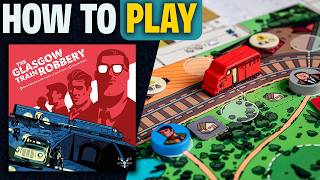
Click to watch at 0:00 · YouTube ↗
Pros
none
Cons
none
Thematic elements
none
Comparison games
none
Mechanics (from transcript analysis)
Mechanics unknown.
Video topics + discussion points
No key topics recorded for this video.
Quotes (from this video)
- In Glasgow Train Robbery, you'll be working together to carry out the heist of a lifetime without being caught.
- Each turn, you'll choose one of the four actions to take.
- That's the Glasgow train robbery.
- This game is coming to crowdfunding.
References (from this video)
No references stored for this video.
Video nmVYa8FiljY
kovray Rules Teach at 0:04 sentiment: positive
video_pk 36202 · mention_pk 108401
Click to watch at 0:04 · YouTube ↗
Overall sentiment (raw)
positive
Pros
- cooperative two-player design with clear role separation
- tight integration of planning, contingencies, and tool management
- thematic setup with strong narrative drive
- modular elements planned to add replayability (modules)
Cons
- rule complexity can be daunting, especially for new players
- prototype status implies potential balance and content tweaks
- heavy setup with many components to manage
Thematic elements
- cooperation under time pressure, planning, and containment of contingencies
- Railway heist on a Glasgow train, two-player cooperative play
- Array
- asymmetric roles (coordinator vs operator) with hidden plans and timed objectives
Comparison games
none
Mechanics (from transcript analysis)
- Action cards — Players draw and play action cards, selecting one action from the card to perform each turn.
- Action Drafting — Players draw and play action cards, selecting one action from the card to perform each turn.
- contingencies — Contingency cards introduce dynamic challenges; they are drawn and resolved under certain conditions.
- fingerprint tokens — Fingerprints act as penalties and influence bag contents; mismanagement can lead to loss conditions.
- Hand Management — Rest actions allow card replenishment and penalties assessment, including token distribution and resource management.
- hideout actions — Operator can execute hideout actions to gain space and tools, altering available options.
- Movement — Character tokens move between spaces on the board; coordination governs who can move which tokens and where.
- plans — Five-part plans must be resolved in order, with requirements about train position, operator presence, and required tools.
- rest and hand management — Rest actions allow card replenishment and penalties assessment, including token distribution and resource management.
Video topics + discussion points
No key topics recorded for this video.
Quotes (from this video)
- In Glasgow Train Robbery, you'll be working together to carry out the heist of a lifetime without being caught.
- Each turn, you'll choose one of the four actions to take.
- That's the Glasgow train robbery.
- This game is coming to crowdfunding.
References (from this video)
No references stored for this video.
Video t12QIQKGFa4
Board Gameco Review at 0:28 sentiment: mixed
video_pk 28183 · mention_pk 82527

Click to watch at 0:28 · YouTube ↗
Overall sentiment (raw)
mixed
Pros
- art and production are top-notch
- thematic integration of a train-heist premise
- hidden communication adds a clever layer of tension
- cooperative two-player structure with clear roles
- modular options allow varied gameplay experiences
Cons
- slow pacing in the initial three quarters, which can feel plotting
- low early-game threat may reduce perceived stakes
- endgame reliance for tension may disappoint players seeking constant pressure
- complex setup and reliance on players reading cues can be challenging
Thematic elements
- cooperative heist with hidden communication and time-pressure elements
- A moving train in a historical setting where thieves execute a five-step heist with limited communication
- realistic historical vibe with strategic planning and tension-building through step-by-step execution
Comparison games
- Burgle Bros.
- Discovery Duo
Mechanics (from transcript analysis)
- Action cards — Each player uses an individualized deck of action cards to influence positioning and gear
- cooperative asymmetrical roles — Two players take on distinct roles (coordinator and operator) working together to execute a plan
- fingerprint mechanism — A Fingerprint/monopoly-token mechanic introduces risk and potential failure if mismanaged
- hidden communication — Players rely on limited cues and action cards to convey information without explicit talk
- Limited Communication — Players rely on limited cues and action cards to convey information without explicit talk
- Modular Board — Up to four modules can be added to customize the game experience (tools, wagon cards, etc.)
- modular difficulty via modules — Up to four modules can be added to customize the game experience (tools, wagon cards, etc.)
- multi-step planning (five steps) — The plan unfolds in five steps, with the first four handled by the coordinator and the final step by the operator
- penalties and contingencies — Unexpected events can disrupt plans, requiring adaptive play and reallocation of resources
- Resource Management — Players manage agents and gear on the board to prepare for the final heist while minimizing fingerprints
- tableau/resource management — Players manage agents and gear on the board to prepare for the final heist while minimizing fingerprints
- timed progression — Track progression across train segments to gate the timing of each plan step
Video topics + discussion points
No key topics recorded for this video.
Quotes (from this video)
- This is a two-player cooperative experience in which two players take on the roles of these various thieves, the operator and the coordinator working together to try to manage the thieves as they rob from the train.
- There is only one way to win, which is carry out all five steps of the plan.
- There are multiple ways to lose.
- It's a hidden communication game.
- The end of the game does have those fun moments.
- the first three quarters feels plotting and slow and methodical
- art and production are top-notch
- the theme behind this, a board game related heist theme, which I really appreciate
- I come in at a three out of five on this one
References (from this video)
No references stored for this video.
Transcript Navigation
Showing 1–10 of 10