





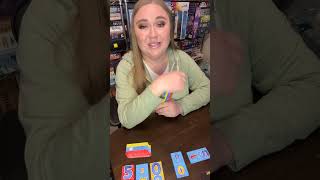

If Then Deep Dive
What the Community Thinks About If Then
If Then has earned consistent praise from board game reviewers as a clever, accessible cooperative deduction game. Published by Arcane Wonders in 2026, designer Scott Brady has created a game that appeals to players who love logic puzzles and group collaboration. Reviewers consistently highlight the game's strength in fostering group discussion, despite some reservations about its presentation and certain optional mechanics.
Core Mechanics That Define If Then
Pattern Recognition Through Play
At its heart, If Then is a pattern-deduction game where one player knows a secret rule and everyone else plays cards to uncover it. The rules take the form of conditional statements: if a card has a certain property, play a card with a specific property; otherwise, do something different. Each turn, players lay cards from their hand, and the all-knowing player simply responds "valid" or "invalid" to guide them. Players learn through feedback, gradually piecing together the logic without needing to fully articulate the rule. The mechanics reward both hypothesis testing and collaborative reasoning.
Tiered Difficulty and Inductive Learning
If Then offers four difficulty levels, from introductory to expert. Reviewers noted that lower levels focus on single card properties (color, size), while higher levels introduce combinations like checking if the sum of the last two cards exceeds a threshold. This progressive complexity teaches inductive reasoning: players test hypotheses and build understanding empirically rather than deductively solving a puzzle upfront. The game's hand management and card-discard system creates tension: if you make too many mistakes, you draw penalty cards, and if the draw deck runs out, the team loses.
The If Then Experience
Collaborative Discussion and Group Energy
Reviewers consistently emphasized the social experience of If Then. The game thrives on group conversation: players debate what the pattern might be, propose theories, and react when a guess lands or fails. One reviewer described the appeal as watching everyone at the table talk through possibilities, offering corrections and refinements to each other's thinking. This back-and-forth creates a puzzle-solving atmosphere where collaboration feels organic and inclusive, keeping all players engaged at every turn rather than leaving them idle while others play.
Logic Puzzle Satisfaction and Accessibility
Despite using "extremely thinky" logic, If Then remains approachable. Players do not need to announce the rule or solve the puzzle completely; they simply need to play valid cards and empty their hands. This dual path to victory (either deduce and guess correctly, or play through the entire deck) removes gatekeeping and makes the game feel satisfying for both logic enthusiasts and casual players. Reviewers highlighted that the game successfully combines intellectual challenge with accessible entry, rewarding deeper analysis without demanding it.
What Makes If Then Stand Out
Inductive Reasoning in a Deduction Genre
Reviewers noted that If Then's use of inductive reasoning, testing what works to uncover patterns, sets it apart from typical deduction games. Rather than being handed clues to solve a logic puzzle, players propose plays and learn from immediate feedback. This empirical, hypothesis-testing approach creates a different cognitive feel and appeals to players who enjoy the process of discovery over pure deduction. The game's willingness to let players succeed without fully understanding the rule celebrates the play experience itself.
Comparison to Zendo and Logic-Game Heritage
Reviewers compared If Then favorably to Zendo, the classic pattern-deduction game, noting that If Then achieves a similar spirit of collaborative rule-figuring but with added accessibility and cooperative focus. Where Zendo can feel adversarial (one player hidden, others guessing), If Then positions everyone as allies working against the game system, fostering a more inclusive group dynamic while maintaining intellectual rigor.
Potential Drawbacks
Generic Visual Presentation and Production Issues
Reviewers were consistent in criticizing If Then's aesthetics. The visual design was described as "very basic looking" and "generic," with colors and symbols that lack visual personality. More significantly, reviewers highlighted a production flaw: the cards for numbers six and nine lack distinguishing dots, making them confusing in hand. Players reported encountering this confusion in every game they played. While players eventually adapt, the oversight in such a logic-focused game felt egregious and unnecessary to multiple reviewers, detracting from the otherwise elegant gameplay.
Unnecessary Randomness and Tacked-On Mechanics
The event deck, which triggers random events each round, was criticized as incongruent with the game's logic focus. Reviewers felt that random events like "everyone draws a card" or "nothing happens" undermine the deterministic, puzzle-solving nature of the core game. Similarly, the optional mastermind betting system: where the all-knowing player wagers whether the group will succeed felt like an afterthought that adds little to the experience. Multiple reviewers expressed a preference for playing without these optional rules, suggesting they muddy rather than enhance the core mechanic.
If You Enjoy If Then
If Then is an excellent choice for groups that love collaborative logic puzzles and pattern recognition. It works particularly well for players who enjoy games like Zendo, Code Name, or other deduction-based titles, but prefer a cooperative, failure-sharing experience. The game's accessibility also makes it suitable for introducing non-gamers to pattern-puzzle mechanics without overwhelming complexity. Groups that value discussion and group problem-solving over competitive mechanics will find the back-and-forth play particularly rewarding. For pattern lovers with 15–20 minutes and 2–6 players, If Then delivers consistent intellectual satisfaction with minimal setup.
What Reviewers Are Saying
"One of my favorite logic games is a game called Zeno, where everyone is trying to figure out a rule. This is very similar to that, but you don't need to figure out the rule, and you're all working together."
— The Dice Tower
"It uses inductive reasoning instead of deductive reasoning where you're trying to kind of figure out the solution of the puzzle without knowing what you're basically having to test things to see what works and then kind of build on it from there."
— Ryan and Bethany Board Game Reviews
"This is a great game if you are good at pattern recognition and you like deduction."
— Watch Review