





Puzzle Dungeon Deep Dive
What the Community Thinks About Puzzle Dungeon
Puzzle Dungeon, Brian Garber's solo card game from 2019, has earned consistent praise from portable board game enthusiasts and travel gamers who value compact, strategic experiences. Reviewers emphasize the game's elegant balance of accessibility and meaningful decision-making. Solo gamers return to it repeatedly, citing both its quick setup and surprising tactical depth. The overwhelming theme across reviews is appreciation for a game that delivers genuine puzzle-like challenges without excessive rules overhead or extended play times.
What resonates most is how reviewers describe the core appeal: a game that makes you think about card sequencing and timing without demanding hours of your time. Players appreciate that Puzzle Dungeon can be learned in minutes but mastered over many sessions. The game's clean design feels immediately accessible while offering enough variety through its hero roster that each playthrough presents fresh strategic problems. Reviewers consistently highlight this rare combination of ease-of-learning paired with satisfying tactical play.
Core Mechanics That Define Puzzle Dungeon
Hand Management and Card Sequencing
Hand management forms the heartbeat of Puzzle Dungeon's decision space. You hold cards in hand and must decide when to play them, in what order, and whether to hold back for future turns. The design brilliantly rewards timing and sequencing, as a card that appears useless this turn might become essential next turn. Reviewers highlight this as the game's greatest strength, noting that the puzzle of optimizing card plays against your available goals creates constant engagement. You are constantly evaluating whether to spend resources now to defeat a immediate threat or preserve them for an approaching challenge. This sequencing decision loop keeps every turn tense and rewarding.
Deck Building Through Monster Collection
As you defeat monsters, each one you collect provides an icon that becomes a permanent resource you can tap in future battles. This creates a subtle but powerful deck-building mechanic where your resource pool strengthens over time. However, the design is elegant because you must choose which monsters to prioritize, since some offer stronger icons than others and some carry special abilities that shuffle cards back into your deck or grant additional draws. Reviewers note that this cycling mechanic creates a satisfying feedback loop where early tactical decisions compound into strategic advantage or disadvantage. Which monsters you defeat first and in what order shapes your path to victory, making each session's sequence of choices feel consequential.
The Puzzle Dungeon Experience
Tactical, Puzzle-First Combat
Puzzle Dungeon distinguishes itself by framing combat as a puzzle rather than a roll-and-resolve encounter. Given your current hand, your available defeated-monster resources, and your win condition, which monster should you target and in what sequence? Reviewers describe profound satisfaction when you successfully chain together plays, exhaust defeated monsters for their icons, and unlock special hero abilities at precisely the right moment. The game incentivizes thinking ahead multiple turns and weighing immediate benefits against strategic preservation. This tactical depth keeps sessions engaging even after dozens of playthroughs, and reviewers consistently note that trying different heroes against the same monster pool reveals completely different puzzles to solve.
Portable, Flexible Play Sessions
One of Puzzle Dungeon's defining qualities is how it compresses a full solo gaming experience into a pocket-sized package. Reviewers highlight that games complete in 15-20 minutes, making it ideal for travel, commutes, or brief breaks between work. The compact footprint fits on a desk, airplane tray table, or in an actual jacket pocket. Crucially, the game pauses cleanly, allowing you to walk away mid-session and return later without resetting. Many reviewers describe fitting Puzzle Dungeon into their daily routines in ways that deeper, meatier solo games cannot accommodate. This combination of portability, quick turnaround, and genuine strategic substance is rare enough that reviewers return to it specifically for situations where they want a satisfying game but limited time.
What Makes Puzzle Dungeon Stand Out
Pixel Art Charm and Direct Creator Access
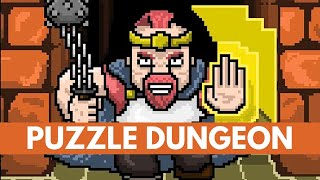
The visual presentation stands out in an era of photorealistic and minimalist board game aesthetics. The pixel art style evokes retro video games while giving the game distinctive charm that reviewers universally appreciate. Each monster illustration is immediately readable and visually appealing, making the game as fun to look at during downtime as it is to play. Equally important is the designer's direct accessibility. Brian Garber offers custom hero cards and expansions through Etsy, a print-and-play option exists for budget-conscious players, and the designer actively engages with the community around their creation. Reviewers value this indie ethos and the sense that they are supporting a designer who cares deeply about the game rather than purchasing from a faceless publisher.
Variety Through Hero Roster and Customization
Puzzle Dungeon derives much of its replayability from its expansive roster of hero characters, each with unique win conditions and special abilities. Swapping heroes completely reshapes the puzzle. A hero that requires defeating specific monster types faces a different strategic puzzle than one with unique resource-generation abilities or hand-cycling mechanics. Many reviewers invested in the full hero roster, exploring how different characters unlock new approaches to the same monster pool. Some reviewers highlight the designer's custom hero service as a way to make the game even more personal. This mechanical variety means returning to Puzzle Dungeon never feels stale, and reviewers describe endlessly discovering new synergies between hero abilities and monster effects.
Potential Drawbacks
Significant Luck in Monster and Card Draw
Reviewers acknowledge that Puzzle Dungeon contains substantial luck through monster draw order and arsenal card availability. Poor draws can scuttle even sound strategy, and some sessions end in defeat despite competent play. Players entering expecting pure strategy sometimes find this variance frustrating. However, most reviewers frame luck not as a flaw but as part of the challenge. The game rewards adaptation to the cards you actually draw rather than execution of a predetermined plan. This philosophy appeals to experienced solo gamers accustomed to negotiating with randomness. That said, players who prefer deterministic strategy games or who become frustrated when bad luck derails runs should know that Puzzle Dungeon will occasionally deliver crushing defeats before you achieve your goal.
The Deck-Out Loss Condition Creates Pressure
Running through your draw deck constitutes an immediate loss condition, creating a hard failure state unlike games that gradually slow as resources deplete. You must plan carefully to avoid exhausting your deck before achieving victory. This creates tense final turns where you count remaining cards and calculate whether you have enough resources to finish. For some reviewers, this tension enhances the experience by making resource management critical throughout the entire session. For others, the pressure of watching your deck shrink is emotionally taxing. The mechanic ensures that poor early-game play can doom you before the final encounter, which reviewers note adds realism but also means recovery from mistakes becomes progressively harder as the game proceeds.
If You Enjoy Puzzle Dungeon
Players drawn to Puzzle Dungeon's combination of portability, hand management, and tactical puzzle-solving might explore similar titles. For quick, pocket-sized solo games with similar charm, Orchard offers 5-10 minute push-your-luck card play. For deeper tactical card combat without the size constraint, Too Many Bones delivers a dice-builder RPG with comparable strategic satisfaction and iconic components. If you love the indie direct-from-designer aesthetic, the Button Shy Games catalog specializes in pocket-sized card games with unique mechanical innovations across multiple genres. For heroes and tableau-building with tableau-building mechanics, Wingspan shares Puzzle Dungeon's theme of building a personal collection through careful acquisition, though it requires more table space. Seasons and Splendor offer hand management depth, though neither is optimized for solo play. Ultimately, Puzzle Dungeon occupies a unique niche: a game small enough to carry anywhere yet strategic enough to reward deep thinking.
What Reviewers Are Saying
"This is a quick playing solo only card game that I think some of you will really enjoy."
— Totally Tabled
"I really find these types of games that are really compact and you could probably just put this in your pocket if you if you really wanted to"
— Watch Review
"the variety is pretty crazy. Just an insane amount of heroes and monsters to try out."
— One Stop Co-op Shop