



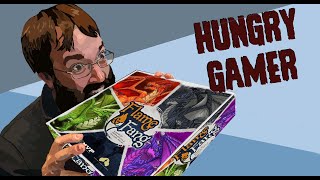
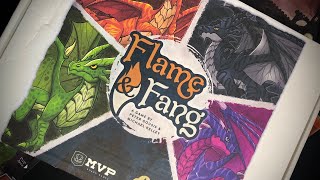



Flame & Fang Deep Dive
What the Community Thinks About Flame & Fang
Flame & Fang has struck a chord with reviewers and players exploring cooperative dragon adventures. The consistent praise centers on a deceptively tight design that balances meaningful decision-making with accessibility. Reviewers who encounter the game for the first time find themselves drawn into the world of young dragons, each playing through chapters of a larger story. The cooperative nature of the game emerges as a defining strength, where players must genuinely work together not out of necessity imposed by the rulebook, but because the mechanics reward collaboration. Unlike many cooperative games that devolve into one player calling all the shots, Flame & Fang creates situations where each dragon brings different strengths to the table, and sometimes the fighter must give way to the gatherer or support player.
Core Mechanics That Define Flame & Fang
Deck Management Through Intentional Cycling
While Flame & Fang uses cards from growing personal decks, it is fundamentally a game of management rather than building. Each turn, you select one of three aspects (fight, flight, or hunt) and play only cards matching that aspect. This constraint creates the puzzle: you cannot simply play the strongest cards if they do not align with your chosen role. The game refreshes your hand each turn by discarding played cards and drawing from your deck, which cycles naturally. What makes this elegant is that you never feel compelled to acquire cards just to fix a broken deck. Instead, you acquire cards to execute better strategies and adapt to the scenarios ahead. Your deck stays at roughly the same size as you cycle through chapters, with new cards replacing old ones, keeping the experience fresh without the analysis paralysis of traditional deckbuilders.
Resource Scarcity and Creative Spending
Throughout each chapter, you gather three types of resources from locations and defeated enemies: coins (which let you change a card's aspect mid-turn), meat (which let you draw additional cards), and crystals (which boost card effects). The clever part is that these resources are finite and shared across the board. You must choose: do you spend your gathered resources now to pull off a crucial move, or hoard them for later contingencies? A coin might unlock a powerful out-of-aspect action you desperately need, or it might be better saved to enable flexibility on your next turn. Meat lets you cycle through your hand faster, drawing into better options, but only if you're willing to burn it. This creates constant small tensions that feel organic rather than punishing.
The Flame & Fang Experience
Cooperative Tension Without Quarterbacking
The cooperative spine of Flame & Fang naturally prevents one alpha player from dominating decisions. Because each dragon must choose a single aspect per turn, your abilities are limited by what cards you happen to draw in that aspect. A player strong in combat might draw only hunt and flight cards one round, forcing them to pass or contribute differently. This limitation pushes the table to discuss strategy while respecting individual autonomy. Reviewers consistently highlight moments where a dragon thought weak in direct damage became the support player that kept the group alive, or where the pure attacker had to trust others to handle objectives while they focus on damage. These roles emerge organically from the draw and the chapter's demands, making each player feel essential.
Narrative Progression as Pacing
Flame & Fang is structured as a campaign of chapters, each revealing the next part of the dragons' story. The story cards guide your setup and hint at what's coming, creating a sense of building narrative tension. Early chapters introduce mechanics gently while later chapters layer in complications like curse cards and boss fights that demand sophisticated play. The pacing feels intentional: you are not grinding through scenarios but progressing through a tale where your choices matter and your dragons visibly grow stronger. This structure prevents the common sandbox problem where players feel aimless. Instead, you are always pushing toward a defined goal, whether removing quest tokens, reaching the fortress, or preparing for a final confrontation.
What Makes Flame & Fang Stand Out
Decision Depth Without Analysis Paralysis
Every action in Flame & Fang presents meaningful choices, but the aspect system prevents overwhelming branching. When you choose flight, you know exactly which cards are available to you. You are not staring at a hand of twelve options wondering if you missed a synergy. Within that constraint, you optimize: which flight cards to play first, whether to boost a card by discarding another card from your hand, how to sequence your actions. The prep area mechanic adds another layer, letting you set aside a card matching this turn's aspect to use later, or discard cards to thin your hand for better draws. Reviewers praise this as genuinely engaging without the mental fatigue that plagues some deckbuilders.
Healing Built Into the Challenge
Dragons have four life cards, each marked with an aspect. When you take damage, you lose a life card to your discard pile. That card eventually shuffles back into your deck, but now it is a "clogged" card taking up hand space. You can clear it out by playing it in its matching aspect and choosing to spend actions on the healing effect, regaining your life. This creates a beautiful tension: do you prioritize removing the life card to free up hand space, or live with the clog to focus on your mission? Early in a chapter, you might let damage sit. Late in a chapter with limited turns left, you must carefully balance healing with achieving your objective. This feels organic rather than arbitrary: dragons literally heal by resting and regaining composure in their chosen role.
Potential Drawbacks
Limited Dragon Personality
Each player chooses a dragon (red, blue, green, black), but mechanically they start identically. Reviewers noted that while dragons acquire different cards as the chapter progresses, the starter decks are interchangeable. Some players wish for small starting bonuses or signature cards that make each dragon feel distinct from turn one. The theme of separate siblings in the story does not yet translate into mechanical differentiation. This is a minor note in an otherwise tight design, but it is worth flagging for those who crave immediate tactical asymmetry.
Randomness in Minion Placement and Events
The story is deterministic; you will see the same events in the same order across playthroughs of a chapter, but where minions spawn and what enemies appear involves randomness. You might face three minions in one location on your turn, or see a favorable event card advance resources. Most reviewers see this as healthy; it provides tension without making failure feel arbitrary. However, some scenarios can string together unfortunate enemy placements that require adaptive play or group coordination to survive. This is less a flaw than a design choice: the game asks you to react and pivot, not execute a predetermined optimal sequence.
If You Enjoy Flame & Fang
Players drawn to Flame & Fang will find kinship with other cooperative deckbuilders that emphasize decision-making over random salvage. Renegade, a game about battling a crime syndicate, shares Flame & Fang's focus on upgrading individual cards and managing limited resources. Both games reward thoughtful hand management and give every player meaningful choices without one person steering the ship. If you enjoyed the refreshing absence of a "money card strategy" in Flame & Fang, Renegade delivers similar satisfaction with its resource economy.
Dominion, the granddaddy of deckbuilders, appeals to players who love the act of refining a deck but want simpler, cleaner turn structures than Flame & Fang's aspect system. It is purely competitive, but the core satisfaction of watching your deck improve is identical. Players seeking a solo option will find it, while those craving the cooperative friction of Flame & Fang should pair it with friends who appreciate games where supporting someone else's victory feels as rewarding as achieving your own.
What Reviewers Are Saying
"It's very smooth, it isn't too complex when you take your turn. I think there's a lot of decision-making to be made on which aspects you play and how you manage your resources and your hand like it's it's tight."
— Danielle
"Mike, you knew I'd like this game because of those little ideas."
— Box of Delights
"I was the crappiest fighter Dragon you've ever seen But up until that point this big last fight I was very useful."
— Hungry Gamer