





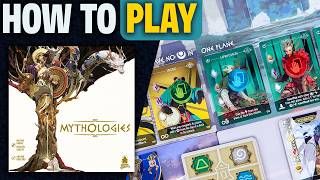






Mythologies Deep Dive
What the Community Thinks About Mythologies
Mythologies has generated considerable enthusiasm across the board game review community, with critics particularly drawn to its novel drafting system and rich tableau-building gameplay. The consensus centers on the game's smartly designed mechanics and variable setup that creates unique experiences with each play. While reviewers universally praise the core systems, some express reservations about the prevalence of player interaction cards that feel punitive rather than enriching. For those who embrace the game's full card pool, Mythologies represents a standout title in the tableau-building category.
Core Mechanics That Define Mythologies
Delayed Card Drafting
The drafting system at the heart of Mythologies sets it apart from traditional card games. Players must select cards from four mythologies available each round based on a randomly revealed destiny card that determines which pantheon they have access to. Rather than simply picking available cards, players can choose to pass, waiting for future rounds in hopes of accessing a mythology that will appear later. This creates a risk-reward calculus where holding out for the perfect card might backfire if another player claims it first, or the mythologies rotate in an unfavorable pattern. The brilliance of this system lies in its unpredictability: players never know in which round they will gain access to the mythologies they covet most, forcing constant reassessment of strategy as destiny cards are revealed. SuperMeeple's design team engineered this mechanic to create tension without overwhelming players, making each drafting round feel consequential.
Tableau Engine Building
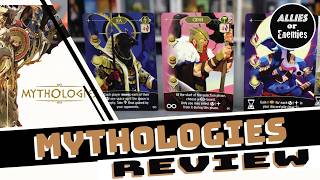
Once drafted, cards are placed into a 3x3 grid representing the player's pantheon divided into three planes: celestial, terrestrial, and abyssal. Placement matters significantly because each card offers different rewards depending on which row it occupies. Players build engines by arranging creatures and deities to trigger synergies, stack effects, and activate ongoing powers. Some cards can be crushed by placing new cards on top of them, creating strategic depth as players decide which effects to preserve and which to sacrifice. The interaction between cards creates cascading effects that compound over four rounds, rewarding forward planning and understanding how the increasingly complex card combinations interact with each other.
The Mythologies Experience
Rich Strategic Puzzle-Solving
Mythologies delivers a crunchy, puzzle-like experience where every card placement demands consideration. Reviewers emphasize the satisfaction of orchestrating card chains and managing limited resources to maximize scoring potential. The game never feels scripted despite only playing eight total cards across four rounds, because the variable pantheons generate different card pools and mechanical focuses each session. Players must constantly weigh immediate rewards against long-term investments, deciding whether to sacrifice a card now to gain gems for summoning expensive deities later, or whether to preserve cards that fuel eventual scoring engines.
Modular Replayability Through Pantheon Selection
The inclusion of eight distinct mythologies that create two randomly-generated trials based on their board placement positions ensures that no two games play identically. Each pantheon brings different flavor: some emphasize movement, others reward harvesting, and several push aggressive player interaction. The rulebook helpfully guides players toward pantheons that match their preferred interaction styles, allowing groups to customize their experience. This modularity transforms what could have been a narrow design into a broadly appealing system with genuine replayability, as players encounter new card combinations and dramatically different strategic focuses across multiple plays.
What Makes Mythologies Stand Out
Artistic Excellence and Thematic Coherence
Reviewers consistently highlight the visual splendor and thematic execution. The artwork beautifully represents the cultural diversity of the pantheons, with each mythology's aesthetic distinct and evocative. Beyond mere presentation, the card design meaningfully connects mechanics to theme: gods require payment and offer powerful abilities, creatures interact believably with each other's mythological properties, and the trials created by pantheon combinations feel culturally appropriate. This harmony between theme and mechanics creates an experience where the setting enhances rather than merely decorates the gameplay.
Elegant Design Despite Mechanical Density
Mythologies accomplishes substantial complexity while maintaining elegant turn structure. The simultaneous selection of cards, the simple placement rules, and the straightforward row-and-column completion system provide scaffolding that prevents the game from becoming overwhelming, despite the density of card text and special abilities. Players can teach the basics in minutes and begin playing immediately, with rules comprehension deepening naturally through play. This accessibility does not come at the cost of depth: experienced players will discover layers of optimization and contingency planning that reward repeated plays.
Potential Drawbacks
Text Density and Initial Learning Curve
The sheer volume of card text presents a barrier during early rounds. With 12 visible cards in the first round and 16 in subsequent rounds, each featuring unique powers and interaction patterns, players must navigate substantial information density at each decision point. Reviewers note that the first play requires patience and communication as the table reads cards aloud and clarifies effects. While this heaviness dissipates with familiarity, groups seeking lighter experiences may find the cognitive load prohibitive.
Interaction Imbalance and Take-That Cards
Some pantheons contain cards that force opponents to sacrifice pieces, rearrange their tableaus, or lose resources without compensation. While these effects contribute to strategic depth, certain pantheons lean heavily into aggressive interaction that not all player groups enjoy. The existence of a card devoted entirely to protecting against negative effects signals that the designers recognize this imbalance, but players uncomfortable with adversarial mechanics may find certain pantheon combinations frustrating. The good news: the rulebook charts each pantheon's interaction level, allowing groups to make informed choices about which four to use.
If You Enjoy Mythologies
Man vs Meeple sets Mythologies alongside Citizens of the Spark, calling Mythologies the heavier, more Euro-style of the two, and says its pantheon-building gives off Veil of Eternity vibes, though Mythologies is the weightier game. Players who enjoy one should find familiar ground in the other.
Board Stupid's comparison cuts the other way. Its hosts expected the explosive chain reactions of Castle Combo, Anunnaki or Space Lab, and found Mythologies much more subtle than those. Anyone who wants that constant "bam bam bam" of triggering combos may be happier with those titles; anyone who prefers slower, more deliberate engine building should look to Mythologies instead.
What Reviewers Are Saying
"This is such a sharp, fast little card combo building game. I really enjoyed it quite a bit. First of all, it's absolutely just stunningly gorgeous."
— Rahdo Runs Through
"The fact that you have this engine builder or these cards that are triggering off each other, but the fact that every time you go into the game, you're using the different sets of mythologies, so you're going to have different sets of combos."
— Man vs Meeple
"So with mythologies, this is a tableau building game where you're going to be drafting various creatures, myths, legends from different mythologies. Depending on where you're putting your creature, the creature will give you this or that bonus. And then there's going to be more interaction between the cards that you got. You can get gods that do like a lot of shenanigans."
— Board Stupid