Description originally from BoardgameNews
In Agricola, you're a farmer in a wooden shack with your spouse and little else. At first, on a turn, your family gets to take only two actions, one for you and one for your spouse, as might be found among all the possibilities on a farm: plowing fields; collecting materials; building fences, and so on. There are numerous choices available, and while the game progresses you'll have more and more, as each round a new action card is flipped over, offering one more possible action. You might think about having kids in order to get more work accomplished but first you'll need to expand your house to make room--and what are you going to feed all the little rug rats?
The game supports many levels of complexity, mainly through the distribution of cards which represent Minor Improvements and Occupations. In the beginner's version (called the Family Variant in the U.S. release) these cards are not used at all. For advanced play, the U.S. release includes three levels of both types of cards; Basic (E-deck), Interactive (I-deck), and Complex (K-deck), and the rulebook encourages players to experiment with the various decks and mixtures thereof. Aftermarket decks such as the Z-Deck and the L-Deck also exist. Each player starts with a hand of 7 Occupation cards (of more than 160 total) and 7 Minor Improvement cards (of more than 140 total) that he/she may use during the game if they fit into his/her strategy.

Agricola is a turn-based game, and the problem to be overcome is that each available action can be taken by only one player each round so it's important to be careful about your choices. There are countless strategies, some of which depend on your hand of cards. Sometimes it's a good choice to stay on course, and sometimes it is better to react to your opponents' actions...
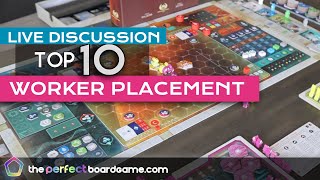
What is Worker placement
after playing Agricola for 30 days straight...
Mechanics (from transcript analysis)
Video topics + discussion points
Quotes (from this video)
- we're approaching 10 000 subscribers on our channel
- merchandise is available
- we are launching our own discord channel
- this is absolutely 100% optional
- thank you so much for all the support that you guys continue to give us
- this is our two year anniversary
- we want to foster more of an aycb community
References (from this video)
Mechanics (from transcript analysis)
Video topics + discussion points
Quotes (from this video)
References (from this video)
Mechanics (from transcript analysis)
Video topics + discussion points
Quotes (from this video)
- it's the meanest game in my top 10, no question
- there's just always something exciting to do on your turn
- it's an absolute hit
- it's the best social deduction experience I've ever had
- the shortest playing time
References (from this video)
- Classic heavy Euro with depth
- resource management, worker placement
- 17th-century rural farming life
- historical, agricultural
Mechanics (from transcript analysis)
- action_selection — earlier turns unlock stronger actions
- Resource management — manage food, wood, etc.
- resource_management — manage food, wood, etc.
- worker placement — assign family members to actions
- worker_placement — assign family members to actions
Video topics + discussion points
Quotes (from this video)
- Zenith is honestly just really addicting.
- Playing Zenith is why I'm feeling so conflicted on it.
- Are you bribing me by having Castles of Burgundy and Feast Froen not only having top shelf billing, but also getting their own cubes just for themselves? Because if so, it's working.
- 10 out of 10. Best collection we've ever received.
- Extra points for a Gricola being one shelf lower than Fused and only showing the spine of the box. Well played.
- a full cube of Dungeons and Dragons stuff.
References (from this video)
- Deep strategic planning with high replayability
- Rich thematic integration and meaningful choices
- Steep learning curve for new players
- Longer setup and playtime on first plays
- worker-placement, resource management
- Medieval farming life
- Feast for Odin
Mechanics (from transcript analysis)
- card drafting — Occupations and improvements influence strategy and scoring paths.
- card drafting / card-driven choices — Occupations and improvements influence strategy and scoring paths.
- Resource management — Careful balancing of food, wood, clay, stone, and other resources to survive and score.
- worker placement — Players allocate family members to actions to gather resources, build structures, and develop their farm.
Video topics + discussion points
Quotes (from this video)
- Mental health is something that is really important to us and ever since then it's kind of been a big proponent of our channel and of our community.
- This allows us more opportunities to do topics like that on the podcast.
- bi-weekly podcast every other Friday.
- Carcasson being my true love in my wife's wedding vows.
- Seven Wonders Duel showed how you don't need to play a three-hour game to be completely enraptured by a board game.
- Gloomhaven opened doors to ongoing legacy and campaign experiences for us.
- There is now an entire audience that might not have found us because they don't consume YouTube or watch video content; podcast opens that door.
References (from this video)
- Deep strategic depth and variety
- Rich farming theme with satisfying growth arc
- Strong replayability due to occupations and improvements
- Steep learning curve and complex rules for new players
- Can feel punishing if not managed carefully
- farming, resource management, family growth
- 17th-century rural Europe, farming life
- procedural/resource-management
- Agricola
Mechanics (from transcript analysis)
- Animal management and crop production — Raising sheep and managing crops contribute to resources and scoring; breeding affects economy.
- Development cards (occupations / minor improvements) — Acquisition of cards provides ongoing bonuses and specialized actions, shaping strategy.
- House building / farm expansion — Grow and customize the farm with buildings and rooms to increase capacity and points.
- Resource management — Players must balance food, wood, stone, and other resources to feed family and develop improvements.
- Turn phases and scoring — Rounds proceed with phased actions and end-game scoring based on farm development and family size.
- Variable Phase Order — Rounds proceed with phased actions and end-game scoring based on farm development and family size.
- worker placement — Players assign workers to action spaces to gather resources, build, and develop their farms.
Video topics + discussion points
Quotes (from this video)
- this game is largely inspired by Uli rosenberg's Agricola however it's a lot less punishing and much simpler to learn
- the water tokens stack on top of each other and then the dike pieces you build across each other and let them stack up as well
- the water pieces are really cool but the dike pieces I think could have been a little bit more thematic
- one of the really cool things about this game is the fluctuating Point mechanic when you let the dike break your sheep are worth less money but your dike points are worth more money
- it's a very delicate balance
- overall low ends you've got beautiful artwork beautiful pieces a great game to play
References (from this video)
- High replayability due to varying combinations of occupations and improvements
- Deep thematic worker-placement with strong strategy
- Solid solo mode and forgiving family variant
- Rich card interactions through occupations and minor improvements
- Steep learning curve and heavy reading load for new cards
- Potentially punishing with more players and longer playtimes
- farming, family, resource management
- medieval farming world, rural Europe
- card-driven, procedural progression
- Caverna
Mechanics (from transcript analysis)
- Drafting occupations and minor improvements — Choose from a deck of cards at game start that grant abilities and scoring opportunities.
- Family growth and feeding pressure — New family members increase workload and food requirements, influencing end-game scoring.
- House building and farm expansion — Upgrade living space and farm to support more workers and capabilities.
- Resource management — Sourcing food and resources to feed your family each round while expanding capabilities.
- Resource management and food economy — Sourcing food and resources to feed your family each round while expanding capabilities.
- worker placement — Assign workers to actions to gather resources, build structures, and advance on the board.
Video topics + discussion points
Quotes (from this video)
- Agricola is a quintessential farming game
- this game has a lot of replayability
- the occupations and minor improvements which are cards you select at the beginning of game are insane
- it's actually pretty darn fun to play solo
- the family mode was more forgiving
References (from this video)
- Tight, punishing design that rewards careful planning
- Iconic wooden components and thematic flavor
- Strong appeal for competitive players with a well-defined engine
- Can be punishing and less accessible to casual players
- Long setup and fiddly components (e.g., many assets to organize)
- Array
- Medieval farming
- Analytical
- Caverna
Mechanics (from transcript analysis)
- Resource management — Manage food, wood, crops, and other resources to feed family and develop farm
- worker placement — Players place workers on action spaces to collect resources and perform actions
Video topics + discussion points
Quotes (from this video)
- Agricola the predecessor to caverna had always been heralded as the tighter yet more punishing game
- there's 48 different options to buy at the beginning
- you start the game and you have 48 different options to buy
- you always have perfect information on everyone's board and resources
- there's so much in the town that there's something for everyone
- ten minutes setting up
- a very bloated game
- enjoyable crew project
References (from this video)
- deep strategic layer that rewards long-term planning and adaptation to changing board state
- strong thematic immersion in medieval farming life and family growth
- excellent social dynamic for couples and friends; rivalries can create memorable stories
- high replayability due to card variety, board layout, and multiple viable strategies
- steep learning curve for new players, with many rules interactions to absorb
- long play sessions can lead to downtime and fatigue during heavier plays
- scoring can be unforgiving in tight games, which may discourage casual players
- component density and setup time can be intimidating for first-timers
- agrarian survival and growth; family expansion; careful resource stewardship and long-term planning
- medieval farm life in rural Europe; a small household tending crops, animals, and improvements over a seasonal cycle
- puzzle-like, eurogame storytelling through persistent resource juggling, board development, and scoring emphasis
Mechanics (from transcript analysis)
- Card-driven actions — Occupation and Minor Improvement cards provide varied actions and bonuses, driving strategic diversity each session.
- engine building — Players construct living spaces and farm buildings to increase capacity and access to new actions.
- House/estate expansion — Players construct living spaces and farm buildings to increase capacity and access to new actions.
- Resource management — Balancing wood, clay, reed, stone, food, and other resources to feed the family and develop structures and improvements.
- Seasonal / scoring planning — Players plan around seasonal phases with scoring opportunities tied to occupancy, farm development, and card synergies.
- worker placement — Players allocate family members to actions to gather resources, build, and advance the farm, shaping turn order and opportunities.
Video topics + discussion points
Quotes (from this video)
- No one cares about who actually wins in board games. Like it's about fun and people.
- It's all about fun. It's about community.
References (from this video)
- Deep strategic potential for players who master it
- Rich thematic flavor for farming life
- Age of the design can feel dated and fiddly
- Multiple closely related variants (OG Agricola, revised, and Caverna) dilute identity
- Agrarian resource management, family growth, farm development
- Medieval rural life and farming in Europe
- Caverna: The Cave Farmers
- Stardew Valley
Mechanics (from transcript analysis)
- card drafting — Utilize occupations and improvements to gain actions and bonuses throughout the game.
- Card drafting/improvement cards — Utilize occupations and improvements to gain actions and bonuses throughout the game.
- Resource management — Plan and balance food, wood, stone, and other resources to support your family and development.
- worker placement — Assign family members to actions to gather resources, build, and improve your farm.
Video topics + discussion points
Quotes (from this video)
- Agricola is dated; it shows its age.
- The Crew I just can't recommend.
- A Feast for Odin after quite a few plays is a pretty decent game.
References (from this video)
- deep strategic depth and long-term planning
- highly replayable with multiple strategies
- heavy and lengthy
- learning curve can be steep for new players
- farm optimization, resource management, family growth
- Agricultural life in a farmstead; from simple huts to thriving homesteads
- heavy euro with realistic production chains
Mechanics (from transcript analysis)
- engine building — developing a sustainable production engine for points.
- engine-building — developing a sustainable production engine for points.
- Resource management — management of food, wood, etc. to feed family and develop the farm.
- worker placement — players assign workers to actions to build farms, plow fields, and raise resources.
Video topics + discussion points
Quotes (from this video)
- my number five is Quacks.
- It’s a fun fun game. I love games where you pull things out of a bags, test your luck, try not to explode.
- Number two is Twilight Struggle. So cold. Probably quite nothing. Do say I’ve never played that.
- I love two-player games. Patchwork is a classic.
- Puerto Rico, which I’ve been just introduced to recently and I think it’s a great great game.
References (from this video)
- farming, resource management, family growth
- 17th-century farm life in rural Europe
- thematic yet robust euro
- Ark Nova
- Age of Innovation
- Arcs
Mechanics (from transcript analysis)
- Resource management — carefully balance food and building resources
- worker placement — allocate workers to actions to feed and develop your farm
Video topics + discussion points
Quotes (from this video)
- I think this game really shines with its thematic integration and the way that its mechanisms work
- it's not perhaps the most replayable but it does or at least the most variable
- the solo mode is very interesting and yeah just a very solid game by Rosenberg
- I love the the depth that this game provides and I still enjoy playing this game over 50 times now
- the player interaction is very awesome I love the simpleness of this game yet it's very reactive and hard to master
- Age of Innovation I feel not as daunting to me for someone who hasn't put in the time
References (from this video)
- strong thematic tie to farming life
- robust engine-building and planning
- can be heavy and time-consuming
- farming / agriculture
- Medieval farming and resource management
- cozy yet challenging, pastoral life
- Feast for Odin
- Caverna
- Viticulture
Mechanics (from transcript analysis)
- worker placement — Players assign workers to actions to grow crops, raise animals, and improve their farm.
Video topics + discussion points
Quotes (from this video)
- I feel like theme really matters to me if I want to put myself in a setting in a board game and have a relatively good understanding of how to play
- the theme that it's set in as well as how well those mechanisms integrate with the theme
- I think it's my number one theme because of how interested I am in games that I'm previewing and looking at further in the Horizon
References (from this video)
- strong thematic integration with farming life
- tight, high-stakes decision space that creates meaningful tension
- excellent replayability through card variety and engine building
- steep learning curve for new players
- pacing can feel punishing due to feeding requirements
- farming, resource management, and clan growth
- medieval farming life; households feeding and expanding a farm
- engine-building with feeding constraints and progressive expansion
- Le Havre
- Ora et Labora
- Fields of A.R.L.
Mechanics (from transcript analysis)
- engine building — must feed your family/workers each round while developing the engine
- feeding mechanism — must feed your family/workers each round while developing the engine
- worker placement — occupy action spaces to derive resources and build the farm
Video topics + discussion points
Quotes (from this video)
- the feeding mechanism exemplified and represented this thought that his games are easy to learn and hard to master basically
- thematic integration is Peak when it comes to U Rosenberg games
- the arc of gameplay is very unique to me and the reasons that I think about this include say Agricola
- the chess-like nature of his games particularly with games such as caverna fields of ARL
- cozy theme such as farming and still and have a session where you come out of it either winning or losing
References (from this video)
- Elegant, focused design; not a point salad; strong thematic tension
- Relies on a learning curve and precise planning; can be unforgiving
- farming, resource management, family survival
- medieval farm life
- crunchy, tight integration of actions and needs
- Feast for Odin
- Agricola (as gateway reference)
Mechanics (from transcript analysis)
- Feeding constraint — At the end of each harvest, you must feed your family, creating tension and planning pressure.
- Resource management — Carefully manage food, resources, and buildings to maximize points.
- worker placement — Assign workers to actions to grow the farm and gather resources.
Video topics + discussion points
Quotes (from this video)
- for once I'd like to tell you about a few games that I'm excited about
- these are all games that have been reprinted so many times that not only can you find them right now but you'll probably be able to find them long into the future
- it's one of the most yoy Euro games that I know
- the thing that I really like about it is that it's not a point salad game
- the game has this tightness to it that I really enjoy
- it's a game that involves a lot of laughter
- the crypto highly recommend it
References (from this video)
- Deep, strategic Euro with high replayability
- Rich thematic integration and historic flavor
- Strong table presence and player interaction
- Steep learning curve for new players
- Relatively long playtime per session
- Subsistence farming, resource management, family growth
- 17th-century farming life
- Historical, strategic, resource-driven
- Just One
Mechanics (from transcript analysis)
- engine building — Developing a productive farm through improvements and strategic planning.
- engine-building — Developing a productive farm through improvements and strategic planning.
- Resource management — Careful upkeep of food, materials, and livestock to sustain and expand the farm.
- worker placement — Players assign family members to actions to gather resources and develop their farm.
Video topics + discussion points
Quotes (from this video)
- Eight copies of just one.
- Top family board game that gives you the warm and fuzzy feelings.
- A Gricola. Yeah, you got to really remember why you're together as a family.
- Isn't that solo only? Yeah, that's cuz you get to play with you and you.
References (from this video)
- Deep long-term planning combined with tight tactical decisions
- High variability due to card deck and expansions
- Strong thematic integration with farming mechanics
- Exciting edge-of-space tension with scarce worker actions
- Excellent replayability through numerous card combos
- Very unforgiving for new players; painful first few plays
- Initial setup and teaching can be lengthy
- Downtime and length can be substantial at higher player counts
- Not ideal for players averse to high-stress, non-sandbox design
- agrarian life, resource management, growth of a farm and family
- 17th-century farm life and family farming
- historical simulation with evolving farm narrative
Mechanics (from transcript analysis)
- build_and_expand — Improve your home and farm layout to unlock new capabilities.
- card_based_power — Occupations and Minor Improvements provide unique abilities and synergies.
- family_growth — Grow your family by spending food to gain more workers, unlocking more actions.
- Resource management — Gather and manage food and resources to feed your family and develop the farm.
- resource_management — Gather and manage food and resources to feed your family and develop the farm.
- round_structure_and_harvest — Multiple rounds with a harvest phase that scores and resets for next cycle.
- worker placement — Players place a limited number of workers to take actions each round, competing for spaces.
- worker_placement — Players place a limited number of workers to take actions each round, competing for spaces.
Video topics + discussion points
Quotes (from this video)
- Agricola is tight and unforgiving.
- the cards offer a lifetime of satisfying repeated play that always feels fresh.
- Few games blend such clear master planning strategy with such rich tactical maneuvering the way that Agricola does.
- it's tense because every worker is critical.
- a Grickola is at the top right now.
- one of our all time favorites.
References (from this video)
- Deep, replayable strategic depth
- Rich balance of resource management and planning
- Can be heavy and lengthy to play and teach
- resource management and worker placement
- medieval farming community
- historical, agrarian life simulation
Mechanics (from transcript analysis)
- Card-based improvements / occupations — players acquire and use occupation and improvement cards
- Seasonal flow / family growth — the farm evolves over a sequence of rounds with varying actions
- worker placement — players place family members to gather resources and take actions
Video topics + discussion points
Quotes (from this video)
- I loved it
- two player absolutely loved it, solo absolutely loved it
- this is truly a three-player game all right
- for $48 a flip and sketch I don't know I'm pretty skeptical of that
- it's a rolling right okay what are we doing flip cards and choose dice
References (from this video)
- deep, strategic engine with strong thematic resonance
- high replayability and robust planning
- heavy teach and long play sessions
- complex scoring can be intimidating for newcomers
- resource management, housing, and family growth
- agrarian farmer life during development of a farm
- grimly functional but evocative of rural life
- Caverna: The Cave Farmers
- Terra Mystica
Mechanics (from transcript analysis)
- card management / action selection — cards influence actions and scoring opportunities
- seasonal progress and scoring — yearly cycles determine resource flow and scoring
- worker placement — place workers to harvest, build, and develop the farm
Video topics + discussion points
Quotes (from this video)
- the hobby is in its nature physical tax and takes place in meat space you can't
- there are no MP3 players that will save you where you can just discard that entire collection
- I envy you cuz I remember what it was like when I got started and every game was exciting
- some of these games have a very unique mechanic or aesthetic
- Collector's Editions Kickstarter exclusives do you have games that you've invested to that serve as a feature in your collection
- I gave away Dominant Species to a high school kid to start a board game club at school
References (from this video)
- Asymmetrical card combos create depth and high replayability through occupations and upgrades
- Tense, restricted worker placement fosters focused, strategic play
- Thematic integration is strong; the farming struggle and resource flow feel authentic
- Strong design for its era with scalable replayability via expansions
- Card interaction drives meaningful decisions and long-term planning
- steep learning curve; two rulebooks plus an appendix can be intimidating
- aesthetics and presentation feel old-fashioned or beige to modern eyes
- early game can be punishing or feel restrictive until players gain familiarity
- complex setup and rule clarification can slow initial plays
- subsistence farming, family growth, and meticulous farm management under constraints
- 17th century European farm life during famine and recovery (circa 1670s AD)
- historically grounded, punishing yet rewarding puzzle-like progression
- The Castles of Burgundy
Mechanics (from transcript analysis)
- card_synergy_and_engine-building — occupations and mine improvements combine to unlock powerful chains and timing strategies.
- end_game_scoring_and_penalties — the game scales via penalties for unmet board requirements if you don't diversify and develop.
- engine building — occupations and mine improvements combine to unlock powerful chains and timing strategies.
- hand management — two types of cards at start (minor improvements and occupations) with deep asymmetry and synergies.
- hand_management — two types of cards at start (minor improvements and occupations) with deep asymmetry and synergies.
- Resource management — manage food, wood, reed, stone, crops, and animals to survive and score.
- resource_management — manage food, wood, reed, stone, crops, and animals to survive and score.
- Simultaneous reveal — spaces appear in stages; pacing and sequence influence planning and competition.
- timing_and_space_reveal — spaces appear in stages; pacing and sequence influence planning and competition.
- upgrading_and_building — upgrade the farm house, build pastures and fields, and manage animal husbandry to optimize points.
- worker placement — restricted, progressively revealed action spaces create tense, strategic decisions and competition.
- worker_placement — restricted, progressively revealed action spaces create tense, strategic decisions and competition.
Video topics + discussion points
Quotes (from this video)
- these hands of cards create this very unique asymmetry in the way you approach the game.
- That card combos are absolutely brilliant and they do add 50% value to this game.
- the tension is always high in this game.
- It's a game about working hard, gritting through the dirt, biting your nails as you're like crawling to the end.
- I was wrong about a Gricola. I'm glad I didn't sell it.
- this is a game that takes a while to appreciate.
- this game has a beautiful flow on chaining effect in the game.
- I definitely recommend maybe getting someone to teach you or watching a couple of videos because this is a game that takes a while to appreciate.
References (from this video)
- Rich depth and thematic immersion
- Tightly designed engine with meaningful choices
- Heavy, with a steep learning curve
- Long play time in larger player counts
- Resource management and worker placement
- Medieval farming life
- Pastoral, but with heavy strategic depth
- Catan
- Puerto Rico
Mechanics (from transcript analysis)
- Card-based actions / tableau building — Cards supplement actions and provide ongoing effects
- Resource management — Feed your family and manage limited resources for development
- worker placement — Assign workers to actions to gain resources or build structures
Video topics + discussion points
Quotes (from this video)
- a game like Katan is because it was the first german-made board game to really hit the international stage with such success
- the act of deliberately taking an action or a resource that you know somebody else wants or really badly needs is what we call hate drafting
- it's what we call a merit trash despite sounding derogatory that is the term that the board game Community sort of adopted to compare americanmade games to European style games
- Twilight Imperium ... it is extremely thematic features sculpted plastic miniatures has a high degree of conflict and role to resolve battles
- in 2004 Ticket to Ride entered the scene ... hate drafting
- Pandemic came out in 2008 and it stood out as an exciting Cooperative game where players could share with one another what cards they were holding and strategically line up a plan
References (from this video)
- Deep, thematic farming experience
- Strong integration of family growth and resource management
- Complex setup and long playtime
- Steeper learning curve for new players
- farming, resource management, and household growth
- medieval farming and family life
- resource-driven, worker-placement flavor
- Caverna
- Indian Summer
Mechanics (from transcript analysis)
- Resource management — balance food, wood, clay, and other resources to feed family and expand
- set collection / action economy tension — choosing actions affects future options and scoring opportunities
- worker placement — players assign family members to actions to develop fields, buildings, and production
Video topics + discussion points
Quotes (from this video)
- these are games from you know 1990 something all the way up to I think the most recent one is 2013
- I really want to try Agricola because Francis and I have played Caverna we absolutely love Caverna
- the fisherman theme that's why we tried News Fjord as well because we loved that theme
- Onirim ... a solo game where you shuffle through your dreams and open doors
- Robinson Crusoe ... you are trying to survive on an island cooperatively
- Hanamikoji is absolutely beautiful and I would love to try it
- CV is one that I would love to try the art is absolutely adorable
References (from this video)
- deep resource management
- tight integration of workers and actions
- can be heavy/complex for new players
- farming/resource management
- medieval farm life
- historical realism
- El Grande
- Carcassonne
Mechanics (from transcript analysis)
- worker placement — you place workers to gather resources and build
Video topics + discussion points
Quotes (from this video)
- I don't know very much about wargames I haven't played many war games
- these games are for adults
- these are the vast majority these are available easily
- abstract strategy games don't really look like that anymore
- these are not children's items they're for adults to have a serious time together
References (from this video)
Mechanics (from transcript analysis)
Video topics + discussion points
Quotes (from this video)
- it's not even a game it's just like a story
- why is it there this is the game about inventions and this is basically telling me to make cutesy patterns with tiles
- the bane of my freaking life this horrible game
- I just want to feel like right I can do this I can do this
- just design one good game one good game one good mode
- why can't I tell you
- they just made them a lot worse
- it's a red flag to the game is going to suck
References (from this video)
- excellent for family play and teachable to kids
- very high replayability with diverse card interactions
- deep strategic satisfaction as you optimize early and late-game moves
- rules density can be intimidating for new players
- some players may find the pace slow at first
- family growth and resource management
- 17th-century European farm life
- strategic, engine-building
Mechanics (from transcript analysis)
- engine building — develop a family growth engine through card interactions and actions
- engine-building — develop a family growth engine through card interactions and actions
- worker placement — place workers to build, harvest, and upgrade your farm
Video topics + discussion points
Quotes (from this video)
- Agricola came out in 2007 there are so many people that have gotten to the Hobby in recent years that like should be considering Agricola as a game you know
- the coolest variable player power ever
- Awaken Realms is going to be deluxeified, replacing our treasured revised editions of Agricola
- it's such an easy one... the rule set moves fast and the game can accommodate a large group
- Arkham Horror the Card Game is campaign-driven and has that fail-forward mechanism
- Quacks of Quedlinburg is such a versatile evergreen in the collection
References (from this video)
- high tension and rewarding problem-solving
- strong thematic cohesion and satisfying progression
- very punishing early game learning curve
- can be harsh with feeding and expansion constraints
- subsistence farming and family growth
- 19th-century farming life
- tight, tense resource management with growth mechanics
- Caverna
- Lorenzo il Magnifico
- Underwater Cities
Mechanics (from transcript analysis)
- engine-building — build facilities and manage resources to feed and grow your family
- worker placement — place workers to gather resources and develop your farm
Video topics + discussion points
Quotes (from this video)
- my number 10 is tachu
- it's fun I mean plant and I mean so you obviously I would say do you like that kind of having to siphon through
- the real MVP comment Micah down below
- Kay's number one game of all time tune in next year geez
References (from this video)
- tight, crunchy worker-placement puzzle
- highly satisfying engine and card interactions
- great two-player experience and scalable with players
- learning curve is steep; can be punishing for new players
- score summary can feel negative for new players
- tight household and farm-building puzzle
- 13th-century farmstead; resource management and family growth
- highly tactical, systems-driven farming progression
- Caverna
- Lords of Waterdeep
Mechanics (from transcript analysis)
- card-driven tableau and buildings — cards represent occupations and improvements that drive scoring
- food management and cycle of seasons — feeding your family and seasonal harvests drive pressure and pacing
- worker placement — workers are allocated to gather resources and construct buildings
Video topics + discussion points
Quotes (from this video)
- Age of Innovation feels like it delivers the pinnacle experience of that kind of whole system.
- Twilight Struggle is a borderline masterpiece.
- The arc of Twilight Struggle is so exciting; tension grows across the board.
- This is Mage Knight Ultimate Edition—changing it to cooperative mode is incredible; I’d never go back.
- Eldritch Horror highs are the top board game experiences I’ve had.
- Agricola is the best board game we have ever played and it has stayed at the top for years.
References (from this video)
- Variety of strategies via cards and occupations
- Engaging early game decisions around feeding
- Complex rules can be intimidating for new players
- Longer playtime
- agrarian resource management, farming, family growth
- 17th-century farming in Europe
- historical/realistic
- Twilight Imperium
- Arkham Horror
Mechanics (from transcript analysis)
- worker_placement — Players assign workers to actions to gather resources and build improvements; feeding constraints drive strategy.
Video topics + discussion points
Quotes (from this video)
- it's so nostalgic that it's like so much of me wants to own it
- I think this quite possibly could be my top game
- the Mind Games I really like the mind games
- the combination of bag building and push your luck is just really nice
- we'll be seeing Twilight Imperium on Caitlyn's no we will not
References (from this video)
- satisfying farm building
- table presence through building
- fantastic game
- complex strategic gameplay
- beautiful with upgraded pieces
- complex game
- farming
- agriculture
- building
Mechanics (from transcript analysis)
- 3D building
- tableau building
- worker placement
Video topics + discussion points
Quotes (from this video)
- these games have amazing table presence by which i mean people are going to glance across the room and go what is that person playing and i want to play all these games
- stacking games have table presence like nothing else
- looks beautiful it looks like a load of sweets on the board
- one of my favorite games of all time
- i don't like that sort of game i find that one of the most frustrating game mechanisms
- the central marble dispenser is your main draw in this game
- absolutely brilliant strategic game quite complex game
- it's actually my favorite of the mask trilogy
- i'm almost scared to say this but i don't really like azul very much
- biggest most overlooked game on this list
References (from this video)
- Excellent original game
- Family Edition available
- Family Edition lacks meaningful streamlining
- Removed text without simplifying rules
- Complex scoring exceptions remain
- Not truly simplified for younger players
- Farming
- Resource management
- Agricola
Mechanics (from transcript analysis)
Video topics + discussion points
Quotes (from this video)
References (from this video)
- tight resource management
- deep mechanical depth
- heavy for new players
- long play time
- household resource management
- European peasant life; agricultural life in the early modern era
- sparse narrative, heavy simulation
- Caverna
- Le Havre
Mechanics (from transcript analysis)
- worker placement — allocate workers to gather resources and build
Video topics + discussion points
Quotes (from this video)
- Eric Lang is the rock star of board-gaming
- artwork and production matters; artwork and production matters; it's not just putting a game out
- Jamie Stegmaier... Kickstarter guru
- it's not just putting a game out, artwork and production matters
References (from this video)
- Tight, tense decisions with meaningful pivots
- Wide variety of hand-card interactions creates dynamic play
- Revised Edition improvements noticeably enhance quality and balance
- Can be very stressful; long game length
- High cognitive load for new players; setup and scoring can be daunting
- Farming, family management, resource optimization
- Medieval farming family; building, growing, and perpetuating a farm
- Intense, tense, highly strategic with a bake-in of family life
- Cascadia
- Yellow and Yangtze
- Hive
Mechanics (from transcript analysis)
- action/personal board optimization — Personal boards constrain and guide resource generation and scoring opportunities.
- hand management — Selecting and using a hand of occupation and improvement cards to craft combos.
- worker placement — Workers are assigned to actions to grow crops, raise animals, build rooms, and feed family.
- worker-placement — Workers are assigned to actions to grow crops, raise animals, build rooms, and feed family.
Video topics + discussion points
Quotes (from this video)
- it's such a great combination of satisfying engine building and tight worker placement
- this is the number one game on Board Game Geek
- it's a hot game right now
- the module variability is great; eight standalone maps
- it's such an interesting combination of mechanisms here
- one of my favorite games to introduce to people
References (from this video)
- Must-have for euro game fans
- Deep strategic gameplay
- Real brain test
- Long play time at full player count
- Agricultural development
- Farm building simulation
- Mechanically-driven
- Concordia
Mechanics (from transcript analysis)
- Euro-style gameplay — Complex mechanics with engines and economies
- worker placement — Send workers to perform actions
Video topics + discussion points
Quotes (from this video)
- Agricola is one of those games that you just got to have in your collection if you like euro style games
- Porta is one of my favorite underrated games
- Broom service I absolutely love food service one of the coolest mechanics in board games 100 percent recommend this game it is a hoot
- Barron Park is my favorite polyomino Tetris in a board game game
- Orleans is a top 5 game for me period just one of my favorite games to play ever
- Power grid this was the game that got me into board gaming y'all
- Seven wonders this is a modern-day classic
- Betrayal at house on the hill every game is different
- King of Tokyo one of those games that you have to have in your collection
- If you like board games one or percent recommend this game
References (from this video)
- deep strategic potential
- great for two players
- high replayability with different family layouts
- very heavy learning curve
- longer setup and play time
- resource management and worker placement
- Medieval farming life
- grim yet rewarding
- Terraforming Mars
- Mech Vs Minions
Mechanics (from transcript analysis)
- Resource management — Harvesting food, wood, and other resources to build and score.
- worker placement — Assign family members to action spaces.
Video topics + discussion points
Quotes (from this video)
- Splendor is a really accessible game to learn.
- Clover hits the balance of humor and puzzle while also being cooperative.
- Cartographers covers more situations than almost any other game I've talked about.
References (from this video)
- deep strategic depth and long-term planning
- strong thematic immersion through farm development
- heavy rules and long setup/turn times
- steep learning curve for new players
- agrarian resource management
- medieval farming life and village development
- solitary worker-placement simulation
- Caverna
- Le Havre
Mechanics (from transcript analysis)
- Resource management — balance food, wood, stone, and other resources to build structures and sustain workers
- worker placement — allocate family members to actions to develop farm, grow crops, and feed your family
Video topics + discussion points
Quotes (from this video)
- this is the a to z board game challenge
- we love to challenge ourselves and each other
- there's no timer this isn't speed round because there's going to be some where it's going to be harder
- you should definitely do this at home it was super fun
- that is not easy that is so much harder than you would think
References (from this video)
- strong farming theme
- solid engine for resource optimization
- family requirement can hinder play
- scoring complexity
- family growth and resource management
- medieval farming
- sandbox-like simulation
- Caverna
Mechanics (from transcript analysis)
- hand-management — manage actions and resources for scoring
- worker placement — place workers to gather resources
Video topics + discussion points
Quotes (from this video)
- Ticket to Ride on the other hand should be the number one on Board Game Geek.
- it's got great Lord of the Rings theming; I wish there was more actual Lord of the Rings music on the app
- I hate the fact that you have to get a full family otherwise you lose.
- it's quick simple; you can get this game done in 30 minutes.
- this is the number one board game on Board Game Geek
- Energy Empire though which is Luke Laurie's baby in this one is definitely the best of the trilogy
References (from this video)
- robust engine-building and long-term planning
- great family-of-players experience
- can be heavy for new players
- production depends on self-management
- resource management and worker placement
- medieval farming
- theme-pastoral
- Agricole-like games
- Caverna
Mechanics (from transcript analysis)
- Resource management — careful tracking of food, wood, ore, and other resources
- worker placement — assign peasants to tasks like farming, building, and breeding
Video topics + discussion points
Quotes (from this video)
- it's a fight and we're fighting
- analysis paralysis is here to stay
- it's a brain burner
- it's not that heavy there's a lot to do
References (from this video)
- deep optimization for two players
- feels rewarding when planning sequences
- can be punishing for mistakes
- heavier on two-player interaction vs. full player counts
- foraging, farming, family growth, resource scarcity
- agricultural life in a proto-European village
- strategic optimization of worker placement to feed a family
- Caverna
- Stratego
Mechanics (from transcript analysis)
- development choices / scoring — progression through occupations and improvements affects scoring
- Resource management — managing food, pasture, wood, and other resources to survive and score
- worker placement — placing workers to take actions like farming, building, and breeding
Video topics + discussion points
Quotes (from this video)
- Calico is cute and it hurts my brain
- the big thing with the coin games is the cascading decisions
- every decision feels like it is most important
- it's like playing Root and being mindful of everything going on around you
- you have to watch where Directorio and Government tracks are moving
- mind management has a lot of dialogue back and forth for sure
References (from this video)
- deep strategic depth and meaningful planning
- strong engine-building potential
- clear sense of progression across rounds
- punishing if you fall behind on food even early in the game
- steep learning curve for new players
- five-player variant can dilute interaction and slow pacing
- building a self-sustaining farm and family provisioning
- historical farming elämä in a pre-industrial Europe
- purchasing and managing resources with a focus on feeding and expanding family and homestead
- Gates of Loyang
- La Havre
Mechanics (from transcript analysis)
- engine_building_through_actions — as players acquire improvements and occupations, their own engine progressively generates better outputs each round.
- feeding_and_penalties — a recurring requirement to feed family members; failure can trigger negative scoring or penalties.
- Resource management — managing food, wood, clay, and other resources to grow the farm while feeding the family.
- resource_management — managing food, wood, clay, and other resources to grow the farm while feeding the family.
- worker placement — players place family members on action spaces to gather resources, build improvements, or prepare for farming tasks.
- worker_placement — players place family members on action spaces to gather resources, build improvements, or prepare for farming tasks.
Video topics + discussion points
Quotes (from this video)
- It's the thing that I like more about La Havre than something like Agricola is that Agricola feels again like you're always trying to avert disaster.
- You have to feed your people or you're going to have to create more food every time, but you never feel like there's a panic.
- It's a constant struggle against time because it gets you have to feed them more and more and more often.
References (from this video)
- Deep, multi-layered strategy
- Rich solo and campaign options
- Rule-heavy, longer play times
- Resource management and worker placement
- Medieval farming life
- gritty, strategic realism
- Caverna
- Le Havre
Mechanics (from transcript analysis)
- Resource management — Balance food, resources, and infrastructure
- worker placement — Grow your family and build a functioning farm
Video topics + discussion points
Quotes (from this video)
- Spirit Island still an absolute Banger
- I love the sense of agency that you have in the game
- Arc Nova absolutely took my heart away
- Kabuto Sumo with 31 plays in a year
- the game that I knew was going to be up here
References (from this video)
- Deep strategic planning
- High replayability
- Complex rule set for new players
- household growth and settlement development
- Medieval farmer's life
- economic resource management
- Caverna
- Le Havre
- Agricola: All Creatures Big and Small
Mechanics (from transcript analysis)
- Resource management — Harvest, feed, and develop to fulfill cards and improve your farm.
- worker placement — Assign family members to actions like farming, building, and resource gathering.
Video topics + discussion points
Quotes (from this video)
References (from this video)
- genius core idea
- deep and rewarding gameplay
- strong table presence and thematic flavor
- very complex and hard for newcomers
- family edition retained complexity
- steep learning curve for new players
- farming, family survival
- medieval farmstead life
- immersive, resource-driven
- Witness
- Dominion
Mechanics (from transcript analysis)
- Resource management — deciding how to convert multiple resources into points
- resource-management — deciding how to convert multiple resources into points
- worker placement — players place family members to gather resources and take actions
- worker-placement — players place family members to gather resources and take actions
Video topics + discussion points
Quotes (from this video)
- if there was a formula for creating a board game that sells it might look a little bit like this in this video
- the two things combined are going to generate a successful product
- idea well essentially we're talking about the core concept of your game, the hook
References (from this video)
- farm management
- agriculture
Mechanics (from transcript analysis)
Video topics + discussion points
Quotes (from this video)
- it's only a game
- you're listening to the broken meeple show a podcast that speaks passionately about board games
- I am very much a cold blooded I'm a cold blooded lizard I need cold
- the top 50 has finally finished finally it's done
- there is nothing apart from it being bright and sunny there is nothing about the summer that really gets me like you know excited or interested because it's just too hot
- I look at these top 50s uh they certainly increase a bit
- there's a lot of good feedback in terms of what's up next hard to say really
- I would give it at least a seven out of 10 right now and say it's good
- the Arkham Horror games are still pretty solid and you know they're fun to play but they are definitely getting to a point where I don't think I can uh like really say that they're practical
- my tastes were new at that point you know I respected terroriser for its thiness
- I have definitely developed to want more theme in my games
References (from this video)
- classic heavyEuro with deep strategy
- expansion-friendly and thematic
- often cited as punishing; can feel restrictive
- the author notes a strong preference for Cavernous over Agricola
- peasant farming and household development
- medieval farm life
- highly strategic, resource-management heavy
- Caverna: The Cave Farmers
- Fields of Ar
Mechanics (from transcript analysis)
- occupation/cards — special abilities to customize your farm path
- worker placement — allocate family members to actions to develop farm
Video topics + discussion points
Quotes (from this video)
- temper your expectations people
- i want board games to be different
- it's the hotness news at the moment
- i definitely want publishers to push the envelope
- i'm not hyped about this at all
References (from this video)
- resource allocation and farm development
- Medieval farming life
- simulation
Mechanics (from transcript analysis)
- Resource management — Manage food, wood, grain, and other resources to feed workers and build improvements
- Seasons/turn structure — Round-based progression with scoring based on achievements and farm development
- worker placement — Assign family members to actions to gather resources and develop the farm
Video topics + discussion points
Quotes (from this video)
- Most expansions are a net negative.
- I'm almost completely over miniatures. I think that any game is perfectly fine with standies and that miniatures are wasting space.
- I love apps and board games. And I think it brings more people in the hobby and it's good.
- Not every game needs a distinct two-player version of that game.
- The more expansions that you've released for your game, the less likely I am to want to play the base game.
- Campaigns bigger, better. I mean, AON Trespass Odyssey is a box this big.
- You should never teach people how to play a game by sitting down and reading the rules to them.
- Give me table space. How much area on the back of the box does the game require to be played at full player count?
- If you read the rulebook carefully, you can understand it. It is not meant to be browsed like a novel.
- Legacy party games could work.
- There should be table space information on the box—how much table space you need for the full player count.
References (from this video)
- deep, satisfying optimization
- high replayability across many expansions
- tepid for casual players
- complex setup and rules interpretation
- resource management and worker placement
- feudal farming farmstead life
- simulation of daily farm life
- Fields of Arle
- Caverna
Mechanics (from transcript analysis)
- Resource management — players balance food, wood, stone, and other resources to survive.
- worker placement — players place workers to harvest, build, and feed families.
Video topics + discussion points
Quotes (from this video)
- welcome to the Going Analog Quiz Show
- you've earned a place on the leaderboard today
- the name is Mallory, but the game is Megaland
- it's War of Mine—the board game, not the video game
- Puzzle Strike's puzzle-strategy vibe is surprisingly satisfying
References (from this video)
- Card deck building support
- Classic worker placement
- Deep strategic gameplay
- Difficult decision making for resource management
- farming
- agricultural_simulation
- family_management
Mechanics (from transcript analysis)
Video topics + discussion points
Quotes (from this video)
References (from this video)
Mechanics (from transcript analysis)
- resource storage and two-part tableau — players manage resources, buildings, and cards that grant actions; storage boards organize resources.
Video topics + discussion points
Quotes (from this video)
- tableau builders feature a wide and diverse range of markets and currencies
- the beauty of this mechanism is the chain reactions that it creates when you take your turn
- it's a really nice feedback loop
- the world feels bigger than your own little player area
- tableau building is a core, solid mechanic that many designers build around
References (from this video)
- deep and rewarding strategy
- great for players who enjoy heavy Euros
- substantial solo and campaign potential via variants
- notoriously punishing for new players
- heavy learning curve for first-time introductions
- agrarian life, resource scarcity, and household management
- medieval farmstead and family development
- abstracted thematic setting driven by resource decisions
- Caverna
- Lords of Water Deep
Mechanics (from transcript analysis)
- occupation and improvement cards — specializations and upgrades provide strategic depth
- scoring by multiple tracks — points come from buildings, fields, and family growth
- worker placement — placing workers to gather resources and perform actions
Video topics + discussion points
Quotes (from this video)
- the fact that people want to listen is mind blowing
- we are not monetizing, we are not turning this into a job
- I bought Frost Haven in the mail and I was excited
- I thought it was gonna be bloated too clunky, but it was pretty streamlined surprisingly
- Harassment I'll try to speak for myself and my co-host a little bit
- the best experience you are going to have with most games is with other players
References (from this video)
- tight thematic feel of rural life
- deep strategic planning with player interaction
- grim rule complexity for new players
- takes time to teach and play through
- family growth, resource management, and gradual expansion
- farmstead life in a rustic milieu
- domestic, worker-placement engine with long-term planning
- Caverna
- Lords of Waterdeep
Mechanics (from transcript analysis)
- development and expansion — Upgrade and expand home and fencing as the game progresses.
- Resource management — Carefully balance food, wood, clay, stone, and reeds.
- worker placement — Seasonal actions via family members to gather resources.
- worker-placement — Seasonal actions via family members to gather resources.
Video topics + discussion points
Quotes (from this video)
- it's gotta be root it has to be root that's my guess
- i didn't want to pick root because i knew that you would probably just assume i'd pick root
- why eat all the flowers
- eight days cat pistachio cheese pizza