The Harvest Trilogy: Agricola, Le Havre & At the Gates of Loyang
Games in This Video
3 games are featured in this video — they unlock as you watch.


Transcript
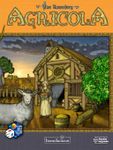
The Harvest Trilogy is a series of economic games by Wii Rosenberg, including Agricola, La Havra, and At the Gates of Lo Yang. In Agricola, players operate a farm and try to gain the most victory points by developing their business in areas such as livestock and agriculture while simultaneously growing and feeding their family. In La Havra, players try to gain the most money through the use of buildings and ships, all the while acquiring resources to build more buildings and ships. At the gates of Lo Yang has players running a produce business. Fields are sewn and harvested to supply customer demand, which is then converted to victory
points. Yeah, a gripple is an interesting game because I don't like it, but I'm always willing to play it, but I never seem to have fun playing it. I just find it very frustrating and very uh challenging. I'm constantly trying to figure out ways of doing things and I never can do what I want to do. Yeah, I don't mind it. I I'll play it, but uh I'll only recommend or request it if I haven't played it in a long time. Yeah. And I did play a fiveplayer game, and I would not recommend that either. The first game I played, in fact, was five player, and that was not good. Whereas Laava that I've heard everything I've read about they say do not play it five player and I've played it five player and it went really nicely. I thought it was really good. They really seem to be opposites as far as uh complexity of the rules. Yeah, got very it's very simple. You can do this can only do three things. Yeah, really what you can do every game changes depending on the cards that come up.
Same as this. But I think the strategies are more complex in La Hav. Yeah, I agree. I enjoy it a lot more. It's one one of my favorites. The thing that I like more about La Hava than something like a Gricola is that an Agricola feels again like you're always trying to avert disaster. You're always trying to get it so you have enough food to feed your family so you don't have to take those begging cards. It's it's like a constant struggle against time because it gets you have to feed them more and more and more often like sooner. Yeah. It winds down. Yeah. The rounds get shorter as you go on. But Lovery is nice and wide open until the last couple rounds and you're counting how many turns you got. And yeah, it gets to where you do have to feed more.
You have to feed your people or you're you have to have create more food every time, but you never feel like there's a panic. A panic. Exactly. Yeah. Good. And then this one seems like it's sort of a I don't know how to describe At the Gates of Leang. It's the least interactive. Yeah. Because you're not always vying for spots. Yeah. You are It's more of a card there's a card drafting mechanism in that which is kind of nice. Yeah. Yeah. Well, agricula you're competing for space and laav you're competing you have all these buildings which you have to use other people's buildings and you pay them for it and using it blocks them from being able to use it as well. Whereas this Yeah. All you can really do is you got your own little space but you can sometimes get cards that allow you to deliver to another person's customer which isn't really that big of a deal negative. Yeah. And they always get a bonus. Yeah. Or usually it's almost like Dominion.
How so? You're just doing your own thing. You're trying to build your own little engine. No, I could see that. Yeah. No, but it's all essentially building. You're trying to create this little engine that generates income and you're just going to churn away. Whereas, actually, the one thing I like about this though is that you can set up a good system, but eventually it's going to run out. Like, you're going to you're going to finish selling to whatever customer you have and then you're going to need somebody. You're going to need to replace it. And if that if the customer you're looking for doesn't come up, then you really need to switch things around quickly and your fields run out of food. But you can see that coming as well. It's really I didn't find Get the Gates of Hoyang confusing at all. Like every card in this essentially, well, not every card, but most the cards will change the rules of the game, which isn't necessarily a bad thing. They don't change the rules, they just change your strategy. Well, they they change the way some things work, though.
They'll actually break the rules in some ways. Not Sorry, I shouldn't say break the rules. They modify the rules so that now when you do something, it doesn't work the same way. It's it's different for you than it is for everybody else. Well, the the helpers the helpers do exactly the same thing as the cards in the grit collab. No, but they don't go away in a grid. They stay there and they change the game for them. I don't know what I'm talking about. But yeah, you use a helper and then you shuffle it back in and it may come back through over and over again. I think in order for a card to give a bonus, it usually has to change the mechanic a little bit. Well, that's still it can give you a bonus, but where it actually lets you do something out of turn or it allows you to do something you were never allowed to do before. And the chances of that card coming up are what? One in 100 in a Gula because there's so many different cards and you only get seven. Well, that's why we do the variant where you have it open. you lay them out. I think that's a really good thing to do. Have an open pool. Instead of giving everybody the cards at the beginning, you have an open because it's easy to go really crappy hand in a you can take anyone can take from the common area.
Yeah. And then gets replenished. Yeah. This one has a weird fourplayer variant, right? The four-player game isn't really a four-player game. It's like a partner. No, it's it's exactly the same as playing a two-player game. Each round the first player gets to pick a partner and then they watch each other do their turn and then they can only use their worker cards on that person. But that that that speeds it up because but that can change the person because the first player picks everyone. Oh, okay. So the first player wants something that the X player has, right? Then he choose that person. Yeah. Yeah. Yeah. Yang sure seems a lot different. I mean, it it doesn't really have that depth of strategies. It's good to have um markets and customers so you can exchange goods.
Like I had a bunch of customers that didn't have any markets and I had trouble filling my customers supply with what I was growing. It's if you have a couple of markets, then you always have that option of trading in stuff you don't need. Yeah. And then there's the carb phase where I found a lot of times nothing will be there that you want. Yeah. Yeah, that happens. It seems like as these came out, this one is completely unforgiving. Yeah. Just just mean where and then la he became a little more forgiving and then you can exchange money for food. Um and then at the gates of Loyang, it really seemed to have loosened it up a little bit more. You pretty well know the second to last round who's going to win, right? Whereas in a gricola, it's a total Yeah. And even in La Mojave, you really don't know who is going to win because the scoring at the end is like a bit of a surprise.
Yeah, you're right. And this because the the scoring is so obvious and so hard to score points. Like there's so few points scored that Yeah, I can see that uh it's pretty obvious who's going to come out ahead. I'd say I like them in that order with this one being a distant third. Definitely a distant. That's the most popular. Yes, I know. I know. I guess I'm just going against the grain there. You're just a rebel. In what order would you place them? Oh, Lee Harvey, Agricola, and Len. You're not going to say Agricola. Agricola? Why? What do you mean? No, nothing.