/pic6107853.jpg)





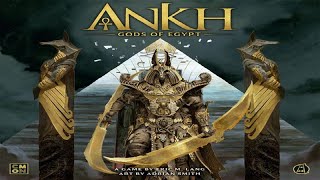
















Ankh: Gods of Egypt Deep Dive
What the Community Thinks About Ankh: Gods of Egypt
Ankh: Gods of Egypt stands as the final installment of Eric M. Lang's area control trilogy, arriving after Blood Rage and Rising Sun. Reviewers consistently praise the game's thinky decision-making and unique card-based combat system, though opinions diverge sharply on the game's controversial merging mechanic. The Egyptian theme resonates strongly with players who appreciate ancient mythology, with one reviewer noting the beauty of controlling individual gods on the board. Overall, Ankh generates passionate engagement from the gaming community, players either embrace its depth and asymmetry or struggle with its balance and pacing demands.
Core Mechanics That Define Ankh: Gods of Egypt
Area Control and Asymmetric God Powers
Players compete for control of regions by establishing presence with their god and followers. Every player begins with a unique god possessing distinct abilities that fundamentally alter how they score and interact with the board. One god gains power when troops die; another prevents units from perishing when adjacent to the god. This asymmetry means no two games play identically. The adjacency system unlocks sophisticated positioning strategies, where terrain features (desert, grassland) and monument placement create layered tactical opportunities. Building monuments requires followers and yields victory points, but doing so during combat nearly guarantees losing that fight, a clever tension that forces meaningful choices about when to prioritize control versus confrontation.
Card-Based Conflict System
Combat resolves through simultaneous card play rather than dice rolls, giving perfect information gameplay where knowing what cards opponents have discarded becomes critical strategy. The deck is identical for all players, containing straightforward power cards alongside unconventional options like Build Monument (sacrificing combat effectiveness to seize control) and Plague of Locusts (a bidding mechanic where players secretly wager followers to survive). This variance creates exciting mind games where players must predict opponent intentions: Are they seriously fighting, building monuments, or conserving cards for the next conflict? The Drought card rewards players for winning fights on specific terrain, while Flood prevents unit losses on grassland. This flexibility means victories can arise from unexpected card combinations rather than simple numerical superiority.
The Ankh: Gods of Egypt Experience
Strategic Depth Escalating Across the Game
The game starts deceptively simple. Early turns involve straightforward monument acquisition and follower management. As players research Ankh powers, permanent technology upgrades, the game reveals hidden complexity. These powers scale gracefully: early tier abilities improve basic actions, middle-tier powers strengthen combat effectiveness, and late-tier upgrades unlock guardian monsters with extraordinary abilities. Guardians like Taweret (which displaces enemies to break adjacency bonuses) and the Sphinx (reducing opponents to zero strength in adjacent fights) dramatically reshape board dynamics. The cascade of escalating power creates genuine excitement as stakes climb with each conflict, making late-game battles feel appropriately epic.
Intellectual Engagement Through Perfect Information
Reviewers highlight the rewarding decision-making space for seasoned players. Because there is no randomness, every action flows logically from player choices. Experienced players can predict opponent strategies and devise counter-plays, creating satisfying moments of outmaneuvering competitors through superior planning. The shared action track connects all players; when anyone acts, they advance a tracker that triggers events benefiting everyone. This interconnectedness means players remain invested in opponents' turns, constantly weighing whether to let an opponent trigger a favorable event or spend actions preventing it. The game rewards attention and mental engagement, not every decision involves personal benefit, but rather managing the shared game state to your relative advantage.
What Makes Ankh: Gods of Egypt Stand Out
The Merging Mechanic and Team Dynamics
Partway through the game, the last two players merge their gods into a single, more powerful entity. This bold design directly addresses snowballing by forcing leaders to team with struggling players, creating potential comeback moments. The merger guarantees some disruption to winning plans, though balance remains contentious. Merged gods gain access to duplicate actions per turn, granting significant control over game progression. The mechanic forces constant awareness of who will merge and when, encouraging players to think ahead about potential alliances. While unconventional and polarizing, merging delivers unique moments absent from traditional area control games.
Monument Control Through Strategic Placement
Monument majorities generate victory points before each conflict begins, rewarding presence in contested regions. But monuments matter beyond simple scoring: they enable placement bonuses through technologies like Temple Attuned (granting strength if adjacent to your temples). Players can steal monuments once all neutral pieces claim ownership, shifting from friendly acquisition to direct competition. Caravans (camels) split regions and create new conflict zones, forcing players to abandon hardened positions and adapt strategies mid-game. This constant flux in board state, monuments shifting hands, regions multiplying, adjacency bonuses activating and dissolving, makes Ankh feel dynamic despite its deterministic rules.
Potential Drawbacks
The Merging Mechanic's Inconsistent Balance
The mandatory merge that triggers at a fixed devotion track point creates significant balance problems. In first games, players unfamiliar with optimal strategies get devastated by the merge when leading players suddenly unite with struggling players who lack the resources to compete effectively. Merged gods often become either overpowered (ending the game quickly with accumulated advantages) or severely constrained (diluting both gods' original strategies). The design provides no option to decline merging; players feel compelled to pursue it rather than choosing it as a strategic decision. A scenario booklet includes a non-merge variant, but it addresses snowballing poorly and isn't well-integrated into standard rules. Turn order creates further imbalances: early-turn players grab monuments before conflicts begin, while later players struggle to secure initial control.
Complexity in Multiplayer and Fiddly Components
At four or five players, the board becomes chaotic with many simultaneous movements across expanding regions. Following adjacency bonuses, monument control, terrain effects, and opponent strategies requires significant mental overhead. The huge god miniatures, while visually striking, block sightlines to monuments and other board elements, players literally cannot see behind the pieces. Monument-tracking becomes fiddly when follower counts balloon into the double digits without 3x or 5x multiplier tokens. Games routinely exceed the advertised 60-minute play time, particularly at higher player counts, stretching to three or four hours. The heavy information density and slow pacing compound, creating brain-burn fatigue in later game phases.
If You Enjoy Ankh: Gods of Egypt
Readers who appreciate Ankh should explore Eric M. Lang's other area control epics: Blood Rage offers Viking-themed card drafting with simpler, more direct combat, while Rising Sun features elaborate bidding systems and seasonal progression. Both games share Ankh's tense regional competition without the merging complication. Fans of asymmetric powers might explore Kemet, which uses the same universal card deck as Ankh but adds negotiation and simpler victory paths. Twilight Imperium appeals to players seeking complex area control with player-unique factions and longer, more involved play experiences. For two-player enthusiasts, 7 Wonders Duel and Ironwood deliver the asymmetry and perfect information that Ankh handles well at reduced player counts without merging complications.
What Reviewers Are Saying
"This action track is built different man; Ankh just stands apart by making every action directly tied to everyone else."
— Shelfside
"The more I play Blood Rage the more I appreciate it and the more fun I have with this game, because ultimately it is hands down one of the best area control games that I've ever played."
— Tim Chuon
"Ankh Gods of Egypt is possibly the most thinky of all three of them, utilizes a really fantastic card-based battling system where knowing what was exactly played means I know I can beat you with this if I'm in here."
— Board Stupid