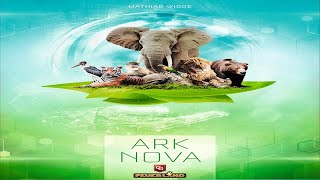
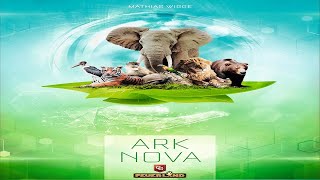
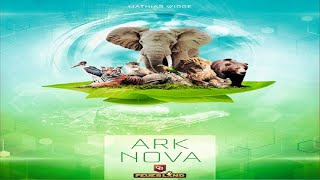
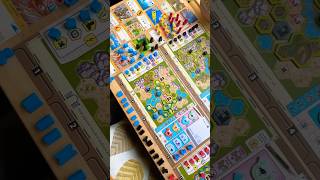
In Ark Nova, you will plan and design a modern, scientifically managed zoo. With the ultimate goal of owning the most successful zoological establishment, you will build enclosures, accommodate animals, and support conservation projects all over the world. Specialists and unique buildings will help you in achieving this goal.
Each player has a set of five action cards to manage their gameplay, and the power of an action is determined by the slot the card currently occupies. The cards in question are:
CARDS: Allows you to gain new zoo cards (animals, sponsors, and conservation project cards).
BUILD: Allows you to build standard or special enclosures, kiosks, and pavilions.
ANIMALS: Allows you to accommodate animals in your zoo.
ASSOCIATION: Allows your association workers to carry out different tasks.
SPONSORS: Allows you to play a sponsor card in your zoo or to raise money.
255 cards featuring animals, specialists, special enclosures, and conservation projects, each with a special ability, are at the heart of Ark Nova. Use them to increase the appeal and scientific reputation of your zoo and collect conservation points.
—description from the publisher
Ark Nova Review
Ark Nova - Playthrough & Review
- Engaging, cohesive theme
- Deep strategic play with satisfying depth
- Strong appeal and regular play in the reviewer’s collection
- Learning curve and rule complexity
- Solo mode described as challenging to master
Mechanics (from transcript analysis)
- Resource management — managing actions and resources to optimize zoo development and scoring
- tile placement — placing enclosures and buildings to attract animals and shape the zoo layout
Video topics + discussion points
Quotes (from this video)
- Ark Nova. Oh man, I love this game.
- I absolutely love this game.
References (from this video)
- No downtime; interactions flow from action sequencing
- Thematic coherence and attractive zoo ecosystem
- Excellent production quality and components
- Longer play sessions at higher player counts
- Steep learning curve for newcomers
- conservation, animals, zoo management
- Zoo on a new world; balancing two victory tracks: Appeal and Conservation
- Array
- Terraforming Mars
- SETI
Mechanics (from transcript analysis)
Video topics + discussion points
Quotes (from this video)
- The complexity emerges from thousands of card interaction permutations.
- The game's end condition creates fascinating tension.
- There's almost no downtime because everyone's always planning ahead.
- The rotation system adds dynamic, strategic depth.
References (from this video)
- Rich, deep Euro with meaningful long-term planning
- Multiple synergies and combinations
- Map balance and luck can overshadow skill without fixes
Mechanics (from transcript analysis)
- Deck building — Players acquire cards to drive actions and scoring.
- deck-building — Players acquire cards to drive actions and scoring.
- engine building — Card synergies power longer-term strategy.
- engine-building — Card synergies power longer-term strategy.
- tile placement — Placed tiles build the zoo layout and provide bonuses.
Video topics + discussion points
Quotes (from this video)
- The bottom line, if you're going to buy these games, implement the house rule on day one. Don't suffer through the official rules.
- We refuse to play without these house rules. We get the games we actually wanted.
References (from this video)
- Large, immersive and highly strategic
- Excellent online learning aids
- Very heavy; setup and tracking can be daunting
- Array
Mechanics (from transcript analysis)
Video topics + discussion points
Quotes (from this video)
- it's a big topic and it probably requires a couple of episodes
- I love the action queue in Ark Nova
- the upkeep of the score for you
- it's chill but surprisingly strategic
- it's the perfect gateway game for many people
- the admin is done and it makes it smoother
- you can play from the same IP address
- the tactile nature of moving the cubes up and down
References (from this video)
- Deep, interconnected systems that reward long-term planning
- Smooth, intuitive gameplay for mid-weight to heavier players
- Beautiful production and compelling animal photography on cards
- Great variability between sessions due to cards and asymmetrical boards
- Effective solo mode with a straightforward timer AI
- Lengthy playtime, especially with four players
- A beige/beige-toned aesthetic and coin components criticized by some
- Take-that mechanics are limited but present and can target leaders
- Some players may find the euro-heavy feel overshadows the theme
- Conservation, biodiversity, sustainability
- Modern day, global conservation-focused zoo development
- Strategic, resource-management simulation with an ecological focus
- Terraforming Mars
- Civilization: A New Dawn
- Cascadia
- Meadow
Mechanics (from transcript analysis)
- Action selection via slots — Players select from five actions each turn; action power scales as you upgrade actions and depends on the slot they occupy on your action board, creating an engine that rewards careful sequencing.
- Association actions — Association tokens/actions can reduce costs, increase hand size, or move trackers, affecting your resource economy.
- Asymmetrical maps — Eight different map boards with unique layouts and abilities give each game a different strategic landscape.
- Card tableau and deck-building — A large deck of animal, sponsor, and conservation project cards shapes each game; cards draft and upgrade to optimize your zoo-building engine.
- Enclosures and animal housing — Building varied enclosures provides bonuses, improves your zoo's appeal, and supports conservation goals.
- Tracking and end-game scoring — Conservation and appeal tracks determine end-game timing and final scoring, with scoring driven by card effects and track progress.
Video topics + discussion points
Quotes (from this video)
- arc nova hits a real sweet spot for us
- the gameplay is so smooth and intuitive that it's pretty easy to recommend this game to just about anyone
- this game gets our highest possible score of one adorable dusky leaf monkey
- there is also a solo mode which is a very simple kind of timer AI that challenges you to cross your markers in six rounds
References (from this video)
Mechanics (from transcript analysis)
Video topics + discussion points
Quotes (from this video)
- the bones of the game are so simple
- I love bag Builders
- the tracks are so continuously rewarding
- you can see so much of kind of the DNA of Clank
- it's so satisfying to slide those workers into that Mech
- this feels like a Dungeon Crawler but with Euro systems
- I love horror movies
References (from this video)
Mechanics (from transcript analysis)
Video topics + discussion points
Quotes (from this video)
- you can be the most unlike unlikable person, but if you can just get one person to agree to play with you.
- you get to play both roles within a session.
- this is one of the most playable games I think on our list here in terms of just you could play this a 100 times and still be seeing situations you haven't seen before.
- not an easy game to learn.
References (from this video)
- High complexity and potential frustration
- Speaker expressed inability to continue playing with friend due to difficulty
- Zoo management and conservation
- Zoo conservation and biodiversity projects around the world
- Eurogame-style, analytical simulation
- Wingspan
Mechanics (from transcript analysis)
- action_selection — Choose actions to grow the zoo and score points efficiently.
- card drafting — Draft cards to build facilities, animals and actions.
- card_drafting — Draft cards to build facilities, animals and actions.
- engine building — Develop a powerful zoo-building engine through actions and cards.
- engine-building — Develop a powerful zoo-building engine through actions and cards.
- Resource management — Funding, card energy and other resources are managed to maximize scoring.
- resource_management — Funding, card energy and other resources are managed to maximize scoring.
- set collection — Score through goal cards and species collections.
- set_collection — Score through goal cards and species collections.
- tile placement — Place enclosures and buildings to expand the zoo.
- tile_placement — Place enclosures and buildings to expand the zoo.
Video topics + discussion points
Quotes (from this video)
- I still don't get Wingspan
- I'm still trying y'all.
- I understand why it's popular, but I personally hate that there's not really any agency in the decisions and I'm just I'm just not a fan of that.
- Um when I when it first came out and people were going crazy about it, my buddy got it and he loved it.
- He played it like 50 times.
- I played it four times with him by the time last time I was like, "Okay, I just can't I can't play this with you. I'm getting too frustrated."
- I don't really like Root.
- Not as fond of On Mars. It's a counterintuitive for me engine builder
- This game is killer. Like people love that as a party game. The idea sounded so fun in my brain and I wanted it to work.
References (from this video)
- Deep, heavy strategy with clear action sequencing
- Strong integration of multiple strategic tracks (conservation, space, zoo)
- Longer play sessions, especially at higher player counts
- Terraforming Mars
Mechanics (from transcript analysis)
Video topics + discussion points
Quotes (from this video)
- This is a cooperative decorating game where you're basically trying to meet the conditions of the house in order to make it work.
- One of the best crunchy feel type of games in the shorts amount of time.
- It's a really tight 4x4 puzzle and very replayable.
References (from this video)
- Strong thematic integration with deep strategic options
- Elegant combination of engine-building with spatial planning
- Can be heavy and time-consuming for new players
- Rule complexity may deter casual players
- Conservation ethics, biodiversity, and species management
- Zoo and wildlife conservation planning in a modern world
- Strategic, resource-driven with thematic flavor
Mechanics (from transcript analysis)
- action selection — A structured set of actions is chosen each turn to advance a personal and shared board state.
- Deck building — Players curate a deck that provides action options and card-driven effects.
- deck-building — Players curate a deck that provides action options and card-driven effects.
- engine building — Players develop a personal engine by acquiring cards and combinations that generate ongoing benefits.
- engine-building — Players develop a personal engine by acquiring cards and combinations that generate ongoing benefits.
- tile placement — Players place facilities and habitats on a central board to unlock scoring and actions.
- Tile-placement / planning — Players place facilities and habitats on a central board to unlock scoring and actions.
Video topics + discussion points
Quotes (from this video)
- "these are my top 10 favorite board games"
- "what was your favorite game in 2024 comment down below"
References (from this video)
- galactic/stellar corporation building
- space-age strategy and development
- highly strategic
- Civilization (board game)
Mechanics (from transcript analysis)
- engine-building and action drafting — strategic engine-building with remembered actions
Video topics + discussion points
Quotes (from this video)
- I think this game really shines with its thematic integration and the way that its mechanisms work
- it's not perhaps the most replayable but it does or at least the most variable
- the solo mode is very interesting and yeah just a very solid game by Rosenberg
- I love the the depth that this game provides and I still enjoy playing this game over 50 times now
- the player interaction is very awesome I love the simpleness of this game yet it's very reactive and hard to master
- Age of Innovation I feel not as daunting to me for someone who hasn't put in the time
References (from this video)
- strong thematic integration with conservation
- rich engine-building and planning opportunities
- heavy to teach, steeper learning curve
- environmental conservation and zoo management
- Conservation-focused zoo and habitat management in a broad, global context
- educational, systems-driven
- Cascadia
- Gaia Project
- Terraforming Mars
Mechanics (from transcript analysis)
- Card-driven action selection — Players select actions via a hand of cards that drives their planning and engine growth.
- engine building — Players optimize actions and resources to build a sustainable zoo and ecosystem.
- engine-building / resource management — Players optimize actions and resources to build a sustainable zoo and ecosystem.
Video topics + discussion points
Quotes (from this video)
- I feel like theme really matters to me if I want to put myself in a setting in a board game and have a relatively good understanding of how to play
- the theme that it's set in as well as how well those mechanisms integrate with the theme
- I think it's my number one theme because of how interested I am in games that I'm previewing and looking at further in the Horizon
References (from this video)
- Engaging solo mode with quick play on BGA
- Smart card-action mechanism creates planning tension
- Fun engine-building around zoo creation
- Setup can be long for larger configurations
- Learning curve for solo variant and engine rules
- Conservation, biodiversity, and expansion of a zoo
- A futuristic zoo-building operation in a near-future world
- Eurogame-style engine-building with thematic scaffolding
Mechanics (from transcript analysis)
- action selection — Players choose one of five action cards and use its action on a position track; higher positions yield stronger actions, but using a card shifts it downward.
- Card cycling / diminishing returns — Actions move down the track after use, creating planning tension and sequencing decisions.
- engine building — Optimize combinations of actions and zoo components to maximize scoring.
- engine-building / set collection — Optimize combinations of actions and zoo components to maximize scoring.
- Resource and card management — Manage resources and cards to build out zoo infrastructure and achieve goals.
- Resource management — Manage resources and cards to build out zoo infrastructure and achieve goals.
- Zoo enclosure placement — Place animals into enclosures to meet conservation objectives and scoring tracks.
Video topics + discussion points
Quotes (from this video)
- Arc Nova solo I really enjoy.
- the solo variant is so easy and so quick.
- Parks was a great fit for July.
- freaking pencil crayons for cartographers.
- the gameplay it is quick and challenging and I really enjoyed it.
References (from this video)
- strong asymptotic action system
- thematic zoo-building is engaging
- solo mode praised but not demonstrated here
- Animal care and enclosure development
- Zoo management
- Strategic
- Ark Nova
Mechanics (from transcript analysis)
- Action belt / conveyor mechanic — Actions power up as you take cards; you move up to stronger actions over time.
- card drafting — Draft and place cards to add animals and enclosures.
- card drafting / placement — Draft and place cards to add animals and enclosures.
Video topics + discussion points
Quotes (from this video)
- it's a cute little puzzle it's very therapeutic
- the art in this is just oh it's insane
- the drafting pool is bigger than usual
- it's a challenge and it's a challenge that I want to keep on trying to go back to and beat it
- Cascadia has quickly become one of my comfort games
- Final Girl is a solo only game
- Hadrian's Wall was released in 2021
- Arc Nova is a fantastic Zoo management game
References (from this video)
- tight engine-building with lots of strategic depth
- great potential for long-term planning and synergy
- strong thematic appeal for a zoo-building setting
- very crunchy and heavy; not always friendly to casual players
- Terra Mystica
- Gaia Project
Mechanics (from transcript analysis)
- Card-driven engine building — players select cards to shape their zoo-building engine and scoring options.
- engine building — players select cards to shape their zoo-building engine and scoring options.
- tile/space optimization — placing and upgrading spaces to improve engine efficiency.
Video topics + discussion points
Quotes (from this video)
- the central mechanic of pulling chips and push your luck is so much fun
- it's a brain burner because everything is connected
- the dice mechanism... it's tight and open information
- the narrative tension of Final Girl keeps delivering memorable moments
- the balance of speed versus efficiency in Great Western Trail is brilliant
- Race for the Galaxy remains a fantastic quick puzzle with a strong core system
References (from this video)
- Clear core loop once you grasp the two-track victory structure (appeal and conservation).
- Cohesive design that creates meaningful, crunchy decisions and strategic tension.
- Upgradeable actions provide consequential choices and sense of progression.
- Thematic integration is strong; animal cards, sponsorships, and projects reinforce the zoo-management feel.
- Deck size is exceptionally large (over 200 cards), which can dilute focus and make it hard to draw the cards you want.
- Hand management and junk-draws can slow the game and frustrate players who want a tighter experience.
- The action-slot mechanism, while clever, can become fiddly and induce analysis paralysis in practice.
- Expansion plans risk adding more cards without addressing the core bottlenecks; may require retooling rather than adding content.
- Zoo management, conservation incentives, sponsorship ecosystems, and research-driven expansion.
- A modern zoo-building project spanning global themes of conservation, animal welfare, and public engagement.
- Commentary-driven design critique with experiential anecdotes and analogies
- Civilization: A New Dawn
- Feast for Odin
- Terraforming Mars
Mechanics (from transcript analysis)
- Action slots and card timing — Cards reside in five slots; performing actions shifts the active power of the card. Cards upgrade and some actions become stronger when moved to later slots; upgrade paths exist but are limited per card.
- Card-slot upgrade dynamic — Action cards can be upgraded to increase power or unlock prerequisites; upgrades are gated and not all cards are upgradeable, forcing selective focus.
- Deck-driven card selection and scale — An expansive deck (well over 200 cards) provides rich variety; players draw and must integrate cards into evolving strategies, with significant variability across plays.
- Dual VP tracks: Appeal and Conservation — Victory points are tracked on two interwoven tracks that run in opposite directions; when they intersect, the endgame is triggered and the player with the largest gap between surpassing markers wins.
- Enclosures and animal placement — To place an animal card, you must have an appropriate enclosure of sufficient size; adjacency to scenic features (rocks, water) provides bonuses and rapprochement options.
- Partnerships, research, and tags — Many cards confer tags (e.g., regional or biome designations), partnerships with organizations, or research tokens that influence future plays and synergy with animals.
- Public conservation projects — Public projects grant conservation points by meeting specific, often thematic, requirements; they provide long-term strategic targets.
- Sponsors and money flow — Sponsor cards generate income when playing herbivore cards; money influences purchase power for animals, enclosures, and upgrades.
Video topics + discussion points
Quotes (from this video)
- Ark Nova is just elephant time.
- Straightforward and thoroughly enjoyable.
- There's just too many cards.
- That's not game design, that's a hostage situation.
- Ark Nova is undeniably a race.
- I think it's very good.
- Ark Nova is great in spite of the size of this deck, not because of it.
- Designing a deck with over 200 cards balanced to feel fun was always going to be impossible.
- It's generous with possibilities yet tight enough to contain it in a shell that feels logical and fair.
- Ark Nova is obviously a pun on Mark Nova, the Romanian DJ who is also the founder of the Funky Nation project.
- Bears are a strategy, but one that I shouldn't focus on unless I find Papa Bear first.
References (from this video)
- Theme-driven clarity that helps players grasp complex systems
- Two viable solo experiences (in-box and fan-made) add depth
- Rich mix of mechanisms that synergize well
- High complexity can be intimidating to new players
- Solo variants add another layer of rules to manage
- Conservation, animal management, and park design
- Zoo-building in a rich, thematic ecosystem with animal enclosures.
- Strategic, thematically grounded engine-building ecosystem
Mechanics (from transcript analysis)
- action river / engine ramp — Actions become more powerful the longer you wait to use them, forming an action river.
- engine building — Chaining actions and optimizations to improve efficiency over the course of the game.
- tile laying and tableau — Placement of enclosures and other tiles builds a tableau of growth and scoring opportunities.
Video topics + discussion points
Quotes (from this video)
- this is the fourth in a series of videos where I'm separating my favorite solo games into five different complexity levels
- it's my favorite as well
- no Universal scale exists so a mediumweight game to you might be a heavy game to me and vice versa
- I particularly like its clever bag building system
- this war of mine is the most profound board game I've ever played
- the solo opponent is super quick and easy to manage
References (from this video)
- Engaging order-of-operations puzzle
- Satisfying planning and multi-continental discount management
- Heavy on rules and setup, longer playtime
- Animal care, exhibits, and biodiversity licensing
- A modern zoo-building and conservation game with global reach.
- Realistic, strategic, economy-focused
Mechanics (from transcript analysis)
- Discounts via partner zoos and sponsor cards — Discounts appear through partnerships and sponsorships across continents.
- Order-of-operations puzzle — Players decide on which actions to take and in what order to optimize discounts and costs.
Video topics + discussion points
Quotes (from this video)
- Skyler: My favorite game featuring ongoing discounts is Flamecraft.
- Dylan: This is my favorite of the West Kingdom trilogy, and managing ongoing discounts is a major key to success in the game.
- Aaron: Space the final frontier. These are the voyages of whatever you name your ship.
- Caitlyn: In Ark Nova, you can claim partner zoos in four of the five continents. And whenever you play an animal into your zoo that matches one of your partner zoos, you get a three credit discount on the animals cost.
- Skyler: This creates a very low conflict environment where everyone helps to improve the town, making it awesome for families.
- Jamie: Lord of the Rings Duel for Middle-earth really got me thinking about the decision space of do I spend money on a card now or wait to get the resource that a card provides so I don't have to pay it in the future.
References (from this video)
- Array
- Array
- Zoo management and conservation
- Array
- Modern-day zoo development focused on conservation and education
- Array
- Array
- Array
- mixed
Mechanics (from transcript analysis)
Video topics + discussion points
Quotes (from this video)
- Oh, what about old school Ark Nova
- And I won with four points.
- You did. Well done. You scored -3
- and you scored -27.
- Beep beep. Uh, hello board gamers rental service.
- Could you please send me four people who want to spend 4 hours playing a game and then finish with 27 points?
- I'm sorry sir, we don't have anyone like that because nobody wants to play for 4 hours and finish with negative 27 points.
- Click call for him.
References (from this video)
- Deep strategy
- Elegant engine design
- Heavy for casual players
- Conservation and zoo planning
- Zoo/megafauna management in a modern setting
- Heavily strategic, card-driven engine
- Viticulture
- Wingspan
Mechanics (from transcript analysis)
- Card-driven actions — Card effects guide actions and species collections.
Video topics + discussion points
Quotes (from this video)
- This is not my house. This is a vacation property here.
- We're here on a little mini retreat to all work together in the same place for a few days.
- I am in Phoenix, Arizona with all seven of my co-workers.
References (from this video)
- High complexity and depth
- Rich theme with real-world conservation ties
- Dense strategy with long-term planning
- Long playtime can be a barrier
- Rule explanations can be intricate for new players
- conservation, biodiversity, facility planning
- modern zoo development with ecological management
- thematic and strategic, with real-world parallels
- Wingspan
- Castles of Burgundy
Mechanics (from transcript analysis)
- action selection / networked actions — Choose actions to develop habitats, research, and amenities.
- deck-building / card drafting — Players build a deck to trigger actions and synergies.
- hand-management / resource optimization — Resource tokens and cards used to meet habitat and project goals.
Video topics + discussion points
Quotes (from this video)
- I just dropped a community insights tab on every single game on Cardboard.
- There's this community insights tab you can go to and it will give you an aggregate of the community's perspective.
- The AI isn't making it up. It's using your words, your perspectives to come up with this.
- Right now, there's only about 80 games. We need at least 10 reviews to do the analysis.
- We want to get as many as possible over 10 so we can analyze them and have this incredible resource that hopefully helps you find your next favorite game and maybe saves you some money and saves you the hassle of buying a game that's just not right for you.
References (from this video)
- unknown
- unknown
- unknown
Mechanics (from transcript analysis)
Video topics + discussion points
Quotes (from this video)
- my wish list is never ending and I get something and then 15 more games get added
- we breakout con this weekend and if i see any of these games in the bring and buy auction, you best believe i'm gonna be purchasing
- the budget does not allow for over a hundred dollar games unfortunately
- the art is gorgeous and the theme is so cute in these games
- I would love to try meadow before possibly getting the expansion
- familiar tales is one that i would love to add to the collection
References (from this video)
- rich thematic integration
- excellent balance and depth
- heavy and long
- steep learning curve
- zoo management and ecology
- modern zoo and conservation
- systems-driven, long-term optimization
- Gloomhaven
Mechanics (from transcript analysis)
- deck-building / hand management — build a personal deck to enable actions and synergies
- engine building — cards enable actions and improvements throughout the game
- engine-building through card play — cards enable actions and improvements throughout the game
- tile/board development — place enclosures and facilities to improve capabilities
Video topics + discussion points
Quotes (from this video)
- Rulebooks are the least favorite part of the job; they can be frustrating and hinder learning.
- Patreon support pays for all of this equipment and production.
- The secret word is whatever animal that is.
- Comments are always important; engagement matters for publishers.
References (from this video)
- Deep engine-building with a highly interactive action system.
- Beautiful components and art that reinforce the zoo theme.
- High replayability due to multiple paths to victory and various animal requirements.
- Satisfying pacing where decisions feel meaningful and consequential.
- Heavy weight may be intimidating for casual players.
- Setup and rule-learning can be lengthy for first-time play.
- zoo management and conservation, with a broad, aspirational scope.
- A modern biodome of a zoo empire where you plan and expand facilities, habitats, and conservation efforts.
- mechanical and thematic integration; actions on cards drive unfoldings rather than a linear campaign.
Mechanics (from transcript analysis)
Video topics + discussion points
Quotes (from this video)
- I love Ark Nova.
- Bees in space best theme ever.
- This game is just always buzzing in my ear.
- The actions are distilled down to such a great system.
References (from this video)
- deep strategic depth and high variability between playthroughs
- strong thematic flavor and tangible components
- rich decision space with long-term planning rewards
- heavy to learn and teach
- long playtime can be a hurdle for some groups
- rulebook complexity may slow initial sessions
- Zoo management and species acquisition
- Zoo development and animal conservation
- engine-driven, card-based action economy with thematic flavor
- Azul
- Ethnos
- Ticket to Ride
- Wingspan
- Everdell
- Root
- Spirit Island
Mechanics (from transcript analysis)
- action_selection — players choose actions from a market/grid and execute them to develop their zoo
- card drafting — collect sponsor and animal cards to unlock future actions and synergies
- card_drafting_and_deck_development — collect sponsor and animal cards to unlock future actions and synergies
- engine building — combining cards and actions to create broader capabilities over the course of the game
- engine_building — combining cards and actions to create broader capabilities over the course of the game
- tile placement — placing enclosures and facilities on a board to manage animals and scoring opportunities
- tile_and_enclosure_placement — placing enclosures and facilities on a board to manage animals and scoring opportunities
Video topics + discussion points
Quotes (from this video)
- I think there are really two ways to think about categorize addictive board games.
- I think of addictive as being something that you want to keep playing over and over again you sit down you play it once and you're like well hold on a sec we let's play it again really quick because I want another go at it.
- the social quality of a game adds to the addictiveness.
References (from this video)
- Deep strategic depth
- High production values and component quality
- Very replayable
- Long playtime
- Complex rules for new players
- conservation, education, and zoological management
- Zoo planning in a modern world
- procedural and strategic
- Wingspan
- Calico
Mechanics (from transcript analysis)
- action_selection — players choose from a set of actions each round
- deck_building — assemble a deck of animal and project cards to develop the zoo
- engine building — cards and actions generate long-term zoo benefits
- engine_building — cards and actions generate long-term zoo benefits
- hand management — manage a hand of valuable cards to trigger powerful combos
- hand_management — manage a hand of valuable cards to trigger powerful combos
- tile placement — place enclosures and facilities on the zoo map
- tile_placement — place enclosures and facilities on the zoo map
Video topics + discussion points
Quotes (from this video)
- play Calico today
- wingspan you wanna go
- how about making your own zoo in Ark Nova
- Nova
References (from this video)
- modern design, strong depth
- not pictured as a tournament certainty
Mechanics (from transcript analysis)
- engine building — develop a space-age colony with actions and tiles
- engine-building / tableau — develop a space-age colony with actions and tiles
Video topics + discussion points
Quotes (from this video)
- Castles of Burgundy oh my goodness I love this game so much
- Cascadia is definitely one of the lighter of the bunch
- I would freaking love in the future to compete in this
References (from this video)
- Excellent, thematic zoo-building experience
- Rich mechanics with impressive depth for a heavy game
- Striking card/art direction (not universally loved, but effective)
- Not a light game; takes time to teach and play
- Art style may be a hurdle for some players
- Zoos, animal care, sponsorships, university partnerships
- Zoo management and development
- Tableau-building with action selection and tile placement
- Meadow (Downstream expansion)
Mechanics (from transcript analysis)
- action selection — Players choose actions to build habitats and obtain sponsorships
- tableau building — Players construct their own zoo by placing enclosures and collecting animal cards
- tableau-building — Players construct their own zoo by placing enclosures and collecting animal cards
- tile placement — Enclosures and terrain tiles are placed to unlock points and bonuses
Video topics + discussion points
Quotes (from this video)
- this is a fantastic puzzle kind of reminds me a little bit of like a Sudoku puzzle
- it is a purely drafting game
- it's brain burny
- a great one to start off the night
- this is a crunchy rolling right
- the art in this game is so amazing
- the downstream expansion adds a stream board
- Arc Nova is such a heavy but fantastic game
- the zoo theme is absolutely amazing
- it's a light, cute, easy end to the night
References (from this video)
- deep strategic choices
- highly thematic and satisfying engine-building
- beautiful production and components
- steep learning curve
- long playtime for heavier sessions
- conservation, zoology, infrastructure planning
- zoo-building and conservation in a future-oriented theme
- sandbox campaign vibe with long-term engine-building
- Dominion
Mechanics (from transcript analysis)
- card drafting — players select and draft cards to implement zoo plans.
- engine-building / tableau — players build a tableau of actions and projects to manage their zoo.
Video topics + discussion points
Quotes (from this video)
- Sleeping Gods.
- Not a game.
- I believe he got nine out of 10.
- Paladins.
References (from this video)
- strong engine-building, multiple viable strategies, replayability
- steep learning curve, analysis paralysis at times
- eco-engineering with theme-driven decisions
- zoo building and conservation in a modern world
- deck-driven engine with thematic engine-building
- Areso: Azul (resource-management flavor)
- Wingspan (thematic, but different)
Mechanics (from transcript analysis)
- Deck building — cards drive actions and upgrades with sequencing interactions
- deck-building — cards drive actions and upgrades with sequencing interactions
- engine building — upgrading actions to unlock better future options
- engine-building — upgrading actions to unlock better future options
- variable scoring tracks — appeal vs conservation tracks create strategic tension
Video topics + discussion points
Quotes (from this video)
- the narrative it does ends up being a fun experience
- it's the story. there's almost I find when I'm playing it and horrible things are happening
- through the ages... a grand historical journey
- epic and full-day experience
- you can draft up to your point level and duke it out to the end
References (from this video)
- highly interactive, many viable strategies, strong expansion potential
- steep learning curve and potential analysis paralysis
- deck-driven engine-building with a thematic focus on animals and habitats
- zoo development with conservation goals
- highly strategic with multiple viable paths
- Gaia Project
- Gaia Plus (thematic overlap)
Mechanics (from transcript analysis)
- Deck building — selecting and upgrading cards to drive actions
- deck-building — selecting and upgrading cards to drive actions
- engine building — cards upgrade and interact to create stronger future turns
- engine-building — cards upgrade and interact to create stronger future turns
- score track tension — appeal vs conservation tracks create balancing decisions
Video topics + discussion points
Quotes (from this video)
- the narrative it does ends up being a fun experience
- it's the story. there's almost I find when I'm playing it and horrible things are happening
- through the ages... a grand historical journey
- epic and full-day experience
- you can draft up to your point level and duke it out to the end
References (from this video)
- deep strategic depth
- thematic immersion
- high replayability
- very heavy rules
- long playtime
- Animal exhibits, research, and conservation planning
- Zoo development and conservation
- strategy-driven, data-backed
- Wingspan
Mechanics (from transcript analysis)
- action selection — Players choose actions from a shared action board each round
- Deck building — Cards provide abilities and objectives; building a synergistic hand
- deck-building — Cards provide abilities and objectives; building a synergistic hand
Video topics + discussion points
Quotes (from this video)
- these are games like wingspan or Ark Nova in general these games are a lot of fun
- the designer's intent is that over the course of the game the luck is going to balance out
- it's up to the player to make calculated risks and mitigate for bad luck
- it's those times where the games can get really frustrating for me
- the remedy for players who like me don't like bad luck due to cards
References (from this video)
- strong solo mode, competitive for two
- tight integration of solo with multiplayer feel
- polarizing to some players due to solo design decisions
- ecosystem and collection of animals
- zoo/creature management
- tableau/engine-building
Mechanics (from transcript analysis)
- competition for actions — cards in the center table influence availability.
- tableau building — crafting a personal engine through card-driven actions.
Video topics + discussion points
Quotes (from this video)
- these are 10 games that I love where I would have a really hard time choosing between just Solo or just multiplayer
- the list actually very hard to make
- I am going to just focus on competitive games competitive games that work well both solo and multiplayer
- this list is really the way I thought about it
- it's such an amazing game
- it's a pure racing game no betting no controlling multiple cars you're one car racing around the track
References (from this video)
- Accessible entry with meaningful depth and strategic texture.
- Strong replayability via variable boards and animal cards.
- Supports longer-term planning with scalable strategy and expansion potential.
- Heavier weight than casual euros; may be intimidating for absolute beginners.
- Complexity grows with expansions (e.g., additional modules).
- Conservation and zoological park operation with evolving strategies.
- A modern zoo planning and management simulation with variable boards.
- Progressive strategy game with an emphasis on planning and adaptation.
Mechanics (from transcript analysis)
- card drafting — Choose action cards to determine available actions each round, guiding your zoo development.
- card drafting / action selection — Choose action cards to determine available actions each round, guiding your zoo development.
- tile placement — Place enclosures and animals on a modular board to score points and create efficient layouts.
- tile placement / habitat building — Place enclosures and animals on a modular board to score points and create efficient layouts.
- variable boards / scenarios — Boards and card draws create different strategic setups across plays.
Video topics + discussion points
Quotes (from this video)
- it's a really refreshing blend
- the quick play of it is really refreshing
- this is gonna go to my city
- Bird strategy is a standout and very satisfying when it comes together
- slip streaming is huge because it doesn't add to your total speed when going around a curve
- this is the type of game I would keep around as a cornerstone
References (from this video)
- deep strategic options
- solo mode very solid
- engaging theme
- heavy for beginners
- complex setup
- building habitats and running a modern zoo
- zoo management and conservation
- epic, strategic
Mechanics (from transcript analysis)
- action-selection / five-action cards — choose a card among five, action power depends on position
- Deck building — massive card deck with projects and animals
- deck-building — massive card deck with projects and animals
- tableau building — play and manage cards to build enclosures
- tableau-building — play and manage cards to build enclosures
Video topics + discussion points
Quotes (from this video)
- one of my absolute favorite cooperative games of all time
- this is another time travel themed game
- it's a ton of fun
- the solo mode is so quick and simple
- it's just a great worker placement Deck Builder
- the theme really works
References (from this video)
- very fast solo mode for a heavier game
- clear, approachable yet deep
- great theme and production
- some players may find the solo mode too light for the weight
- Animal cards, terraforming-esque map growth, and staff management
- Zoo/animal theme with tableau-building and spatial placement
Mechanics (from transcript analysis)
- five-action card system with progressive strength — Actions are represented by five cards beneath numbers 1–5; strength improves as you advance and can be upgraded.
- tableau building — Draw and play animal cards to build a growing tableau.
- tableau building with animal cards — Draw and play animal cards to build a growing tableau.
- tile laying and map development — Place tiles on a map to expand capabilities and scoring opportunities.
Video topics + discussion points
Quotes (from this video)
- my number 10 is Woodcraft
- the zombies are represented by little cubes
- I love the voucher system here where when you take one of the actions you have to pay certain vouchers and then you also receive other ones
- Frostpunk has aspects of War of Mine it has aspects of Robinson Crusoe
References (from this video)
- Noted as a strong contender in the year and missed on anticipated list
- Did not appear on the top list despite high expectations
Mechanics (from transcript analysis)
Video topics + discussion points
Quotes (from this video)
- I still absolutely love this design
- the AI system is so smart
- it's on the totally table Todo list
- Frost Punk is incredible
- I absolutely plan to get to the table this year
- the slide puzzle mechanism I love
- Weather Machine remains one of my favorites
- Sleeping Gods no reason to believe that I won't love this one as well
References (from this video)
- Engaging hook from the action-card system that adds depth and planning
- Rich thematic integration with conservation and public appeal
- Flexible end-game scoring that rewards strategic pacing
- Steep learning curve for new players
- Iconography and color coding can be overwhelming at first
- Can become solitaire if players focus too much on engine-building without interaction
- Conservation, animal welfare, public appeal, and scientific progress
- Global zoo development and conservation in a modern world
- Strategic planning with evolving goals; strong thematic alignment with zoo management
- Pax Pamir
- Ora et Labora
- Gaia Project
Mechanics (from transcript analysis)
- action cards (card-driven action selection) — Five action cards determine what you can do on a turn; players can flip to improve actions and create synergy.
- end-of-game scoring tracks — Conservation and appeal markers move along tracks; end-game triggered by a marker reaching its end.
- Resource management — Managing money, conservation points, and appeal while funding projects.
- set collection / card drafting — Acquiring cards to unlock actions and build your zoo with diverse species and buildings.
- tile placement — Players place enclosures and buildings on their personal zoo board to gain resources and points.
- tile/board placement — Players place enclosures and buildings on their personal zoo board to gain resources and points.
Video topics + discussion points
Quotes (from this video)
- the conservation marker moving clock wisely on the track
- five action cards with which they perform various tasks
- end-game scoring can redefine your strategy in surprising ways
- donations and partnerships help you advance on your own track
- the game's end is triggered and we move to scoring
References (from this video)
- Rich, engine-building depth with many viable strategies
- Tremendous replayability and thematic integration
- Long play time and a steep learning curve
- Some feel the multiple powers on cards can be overwhelming
- conservation, ticket sales, and government grants
- zoo-building on a personal enclosure board
- highly thematic, system-driven
- Raj of the Ganges
- Terra Mystica
Mechanics (from transcript analysis)
- card row action selection with neglect-powering up — actions in a card row become stronger the longer you neglect them
- tile placement — draft and place animal enclosures on your personal board
- tile placement and enclosure building — draft and place animal enclosures on your personal board
- upgradeable actions — actions can be upgraded for greater efficiency and new effects
Video topics + discussion points
Quotes (from this video)
- these are ten really really good games
- this is one of the coolest games in terms of like turn angst and frustration
- it's timeless and very clean design
- this is a co-design but it's definitely got a lot of the dna in it through that tile placement and other little mechanisms
- an absolute blast to play
- Arc Nova is going to stand the test of time
References (from this video)
- interesting pressure mechanics
- point system creates bonuses and mechanical benefits
- wildlife
- conservation
- Terraforming Mars
Mechanics (from transcript analysis)
Video topics + discussion points
Quotes (from this video)
- It is legitimately one of my favorite cooperative games, not just for being a game that uses a standard deck of playing cards, but it's just one of my favorite cooperative games, period.
- For a game that costs $100 is a pretty big let down
- There's an okay game here with a really interesting but unfulfilled promise out of the gimmick
- Board games facilitate a level of safe conflict
- It felt very wide without being deep
References (from this video)
- Multiple scoring paths create variability
- Strong theme-mechanic integration - animal actions match their real behaviors
- Continent system requires proper enclosures for animal placement
- Action card progression mechanic is unique and well-designed
- Must balance action upgrade choices affecting gameplay strategy
- Game-ending condition requires players to keep pace
- Emphasis on final turn strategy with possible big finishes
- Conservation goals feel thematic and satisfying to achieve
- Very replayable - plays different every time
- zoo management
- animal conservation
- animal habitats
- enclosure building
Mechanics (from transcript analysis)
Video topics + discussion points
Quotes (from this video)
- Kim is a little new to gaming... I've been in the business for maybe a couple decades... he's ancient he was around before the first board game was ever created
- The reason for that is if you check forums a lot of people will talk about how they don't like the semi-cooperative nature of the game
- I wish he was wrong but okay in my justification if you're playing a board game it's a physical tactile thing
- I have a lot of friends where English is not their first language... with this kind of game being abstract there are no there's no cards to read there's no complicated rule
- Argent is one of the most beautiful mess of the games imaginable
- If you've never seen this game before it is the cutest thing ever ever
- It's been my favorite game forever... I wouldn't bust this down if my family came over
- Every time I feel like playing a board game it feels like there's a part of me that's just like okay I should play Arc Nova again
- I really like when theme matches the mechanics
References (from this video)
- stunning production and visuals
- deep strategic choices
- high player interaction on shared goals
- heavy and lengthy teaches
- may overwhelm casual players
- Conservation and museum-like expansion
- Global biodiversity and zoo architecture
- Strategic building with global scope
- Hadrian's Wall
- Sleeping Gods
Mechanics (from transcript analysis)
- deck-building — pull and play cards to gain actions and modules
- tile placement — arrange enclosures and habitats for scoring and bonuses
- worker placement — allocate actions to build the zoo and research improvements
Video topics + discussion points
Quotes (from this video)
- these shelves are too cool to suggest anything
- i'm drooling and looking at games
- i really like the looks of it
- best looking arrangement shelf
- i want this collection as well
References (from this video)
- hotness of the moment, very engaging
- strong thematic teaching through mechanics
- very long play sessions; heavy weight
- planning and ecosystem development
- zoo / conservation
- thematic heavy euro that teaches well
- Terra Mystica
- Gaia Project
Mechanics (from transcript analysis)
- deck_building — build a deck to enable zoo actions
- hand management — manage cards and actions for efficiency
- hand_management — manage cards and actions for efficiency
- worker placement — place workers to perform actions with branching effects
- worker_placement — place workers to perform actions with branching effects
Video topics + discussion points
Quotes (from this video)
- probably my favorite tire placement game of all time
- this one is like a companion game to el grande
- Arc Nova certainly the hotness at the moment
References (from this video)
- immersive theme teaching through mechanics
- great depth and asymmetry
- very long playtime
- eco-systems, planning and management
- zoo planning / conservation
- thematically strong euro
- Terra Mystica
- Gaia Project
Mechanics (from transcript analysis)
- deck_building — build a deck to unlock zoo actions
- worker placement — place workers to take actions with scaling effects
- worker_placement — place workers to take actions with scaling effects
Video topics + discussion points
Quotes (from this video)
- probably my favorite tire placement game of all time
- this one is like a companion game to el grande
- Arc Nova certainly the hotness at the moment
References (from this video)
- immersive theme that reinforces mechanics
- deep strategic space
- lengthy play sessions
- eco-systems, planning and management
- zoo planning / conservation
- thematically strong euro
- Terra Mystica
- Gaia Project
Mechanics (from transcript analysis)
- deck_building — build a deck to unlock zoo actions
- worker placement — place workers to take actions with scaling effects
- worker_placement — place workers to take actions with scaling effects
Video topics + discussion points
Quotes (from this video)
- probably my favorite tire placement game of all time
- this one is like a companion game to el grande
- Arc Nova certainly the hotness at the moment
References (from this video)
- deep, thematic gameplay with strong production
- very heavy and long to teach
- zoo management and conservation efforts
- modern zoos and conservation
- system-driven with thematic flavor
- Lost Ruins of Arnak
Mechanics (from transcript analysis)
- action grid / planning — 3x3 grid of actions; players remove/shuffle for future turns
- engine-building — build an action/card engine to support zoo goals
Video topics + discussion points
Quotes (from this video)
- we call him a beige gamer because the color of my skin
- it's basically monopoly with cows
- beige is fine I like beige
- Rising Sun is the behemoth of modern euros
References (from this video)
- High production value with deluxe components and the 3D tiles
- Deep strategic depth and multiple viable engine-build paths
- Cohesive thematic presentation that matches the gameplay
- Steep learning curve for new players
- Long playtime, especially in larger player counts
- Can be table-stacking heavy and intimidating to casual players
- Conservation and development of zoological facilities
- Zoo management in a modern world
- Strategic, system-driven development with thematic zoo-building
- Blood Rage
- Rising Sun
- Ank
Mechanics (from transcript analysis)
- action_rondel — Rondel-style action selection where players place markers to activate actions like acquiring cards, building enclosures, and researching technology.
- card drafting — Drafting and playing animal and facility cards to construct an engine that scores points through intelligent combinations.
- card_drafting_engine_building — Drafting and playing animal and facility cards to construct an engine that scores points through intelligent combinations.
- Resource management — Management of money, contracts, and staff to fund expansion and end-game scoring objectives.
- resource_management — Management of money, contracts, and staff to fund expansion and end-game scoring objectives.
- Rondel — Rondel-style action selection where players place markers to activate actions like acquiring cards, building enclosures, and researching technology.
- tile placement — Placement of enclosures and buildings on the zoo map to optimize visitor appeal and scoring potential.
- tile_placement_and_enclosures — Placement of enclosures and buildings on the zoo map to optimize visitor appeal and scoring potential.
Video topics + discussion points
Quotes (from this video)
- Ark Nova here, one of the most popular games on Board Game Geek, a game that I love quite a bit.
- Three 40 of these 3D colored buildings. There's 20 unique and 20 special buildings.
- This is not just a new addition to Ark Nova. It's accessories, things that you can add. Three 40 of these 3D colored buildings.
References (from this video)
- deep strategic depth
- high variability with powers and leaders
- beautiful production
- long play time for new players
- steep learning curve
- Strategic building and engine management
- Modern zoo development and conservation
- Heavy, highly thematic engine-building with branching paths
- Exemplar heavy strategy games
- Terraforming Mars (in terms of engine depth)
Mechanics (from transcript analysis)
- card drafting — Draft cards to unlock upgrades and actions
- Deck building — Place and upgrade facilities to attract animals and visitors
- engine building — Develop an efficient engine to score and gain resources
- engine-building — Develop an efficient engine to score and gain resources
- tile/board building — Place and upgrade facilities to attract animals and visitors
Video topics + discussion points
Quotes (from this video)
- the improvements or twists I guess that they make on the original Splendor formula are so much fun
- this game is going to be a keeper in the collection
- the overbuilding rules... room for creative strategic plays
- this mission was just tight and interesting
- Best in Class in terms of worker placement engine building
- three win conditions and deeds tokens make the game dynamic
References (from this video)
- Great action selection system
- Vetoed by one host
- One host gives it 7/10
- Building zoo and conservation
- Modern zoo
- Economic engine building
- Terraforming Mars
Mechanics (from transcript analysis)
- action selection — Cards slide down system - longer wait makes action better
- Card Play — Ton of cards to play
- engine building — Similar to Terraforming Mars - play cards to build engine
Video topics + discussion points
Quotes (from this video)
- Board Game Geeks top 100 sometimes feels like random people voting random stuff
- This is the way by two random people from Latvia
- Your mind feels like a fog after playing Spirit Island
- Frodo really doesn't want to destroy ring at the end he's like nah I'll go home
- It's a fine game it's super boring it just the same thing over and over
- Wrongfully not in the top 20 yet
References (from this video)
- Strong thematic integration with mechanics
- Huge card variety and asymmetry
- Engaging, puzzle-like action selection
- Rich endgame scoring options
- High production value and components
- Steep learning curve and long setup
- Two-player play can feel drawn-out
- Numerous icons can be intimidating
- Rule density and strategic depth may overwhelm new players
- Zoo management, conservation, and animal welfare
- Zoo-building and conservation in a modern world
- player-driven puzzle with conveyor-style card actions
- Terraforming Mars
Mechanics (from transcript analysis)
- Animal placement and habitat requirements — Animal cards require specific enclosures, proximity to water, and continent partnerships.
- Break token and income system — Break token advances as players take card actions, triggering income replenishment and endgame timing.
- Building and enclosures — Players place various buildings and enclosures with adjacency and size rules.
- Card-driven action selection — Players select an action card; its strength determines how many cards they can play or actions they can take.
- Conservation projects and donations — Players back conservation projects for points and can donate money for points.
- Conveyor card progression — Used cards move down the track, increasing the action power and sometimes enabling upgrades.
- Endgame scoring — Endgame occurs when conservation and appeal tracks meet; final scoring uses thresholds and card-based bonuses.
- Partnerships and discounts — Continent partnerships give discounts on placing animals and unlock bonuses.
Video topics + discussion points
Quotes (from this video)
- Ark Nova is hugely popular and highly recommended.
- This game is the puzzle on its own with conveyor-style card actions.
- Endgame scoring is based on conservation and appeal thresholds.