/pic7245009.jpg)
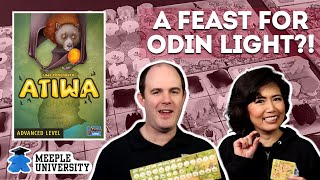
The Atiwa Range is a region of southeastern Ghana in Africa consisting of steep-sided hills with rather flat summits. A large portion of the range comprises an evergreen forest reserve, which is home to many endangered species. However, logging and hunting for bushmeat, as well as mining for gold and bauxite, are putting the reserve under a lot of pressure.
Meanwhile, in the nearby town of Kibi, the mayor is causing a stir by giving shelter to a large number of fruit bats in his own garden. This man has recognized the great value the animals have in deforested regions of our planet: Fruit bats sleep during the day and take off at sunset in search of food, looking for suitable fruit trees up to sixty miles away. They excrete the seeds of the consumed fruit, disseminating them across large areas as they fly home. A single colony of 150,000 fruit bats can reforest an area of up to two thousand acres a year.
Just like that mayor, in Atiwa, you know that fruit bats — once scorned and hunted as mere fruit thieves — are in fact incredibly useful animals, spreading seeds over large areas of the country. By doing so, they help to reforest fallow land and, in the medium term, improve harvests. This realization has led to a symbiotic co-operation between fruit bats and fruit farmers. The animals are kept as "pets" to increase the size of fruit farms more quickly. Tall trees are left as roosts, providing shelter for them rather than hunting them for their scant meat. However, if you have a lot of fruit bats, you need a lot of space...
In the game, you will develop a small community near the Atiwa Range, creating housing for new families and sharing your newly gained knowledge on the negative effects of mining and the importance that the fruit bats have for the environment. You must acquire new land, manage your animals and resources, and make your community prosper. The player who best balances the needs of their community and the environment wins.


Atiwa - How to Play Board Game

Mice And Mystics - Game Play 6
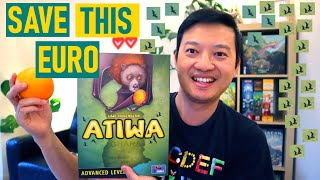
- The environmental message is super strong.
- It's a chill puzzle and a chill game.
- The theme feels incredibly satisfying.
- The puzzle is still fun, deep, rich, and interesting.
- Less cognitive load compared to Agricola.
- Solo mode is cool and provides an elevated ceiling.
- More accessible than Agricola.
- More interesting than Agricola.
- Chaining and worker placement are straightforward yet strategy is rich and deep.
- Might start to feel a little bit samey if played 10 times in a row without variety.
- Open spaces can feel uncompetitive at lower player counts.
- Forest conservation and fruit bat ecology
- Ghana
- Agricola
Mechanics (from transcript analysis)
- Area management — Open spaces at the end of the game are victory points; bats over 10 are worth one victory point.
- Engine Building — The bats help churn your engine longer at the end of every turn.
- Resource Management — You are given four resources that you have for the entire game; when spent, they come back to your board.
- Set Collection — Collecting terrain cards with plant symbols acts as a multiplier for gold.
- Tableau Building — Moving resources onto terrain cards and settlement cards to open up spaces.
- Worker Placement — Worker placement is straightforward, with meeples sitting for subsequent rounds.
Video topics + discussion points
Quotes (from this video)
- Wait you told me this video is gonna have oranges in it
- Everything in this game is connected
- The winner here is planet Earth
- I would actually get out of work purely for the solar mode
- Agricola is a beast of a farming game
References (from this video)
- Pretty unique theme
- Cute animals (bat meeple)
- Exciting to see Uwe Rosenberg explore something fresh beyond farming simulators
- Developing a community near the Attawa range, creating housing, acquiring land, managing animals and resources to help the community prosper, using fruit bats to reforest exploited lands.
- The Attawa range in South-Eastern Ghana, a region with steep sided hills and flat summits, containing an evergreen forest reserve.
Mechanics (from transcript analysis)
- Area management — Players will be developing a community, creating housing, acquiring land, and managing animals and resources.
Video topics + discussion points
Quotes (from this video)
- this whole theme which i for one think is pretty unique just speaks to me
- i really am excited to see big box uve farming games leave the german countryside explore something fresh
- this new exciting marvel cinematic universe legendary expansion features characters from the first and second guardians of the galaxy movies featuring images pulled straight from both guardians of galaxy films recapturing the adventure
- terra nova is just that a more streamlined and accessible version of terra mystica
- Cosmos games also announced a brand new second expansion to Targi just like that out of the blue another expansion to one of my all-time favorite games
- this thing's going to go up against charizard a carves and lacquered box metal dragon and phoenix pieces stone textured resin tiles embroidered bags fabric game boards it's a sight to behold with a price tag that's also a sight to behold 350 dollars but for a luxury item to cherish for a lifetime i think this is a pretty amazing project
- i love the base game and this is a no-brainer to me
- the original king's dilemma was a blast so i'm really interested to see how this one unfolds
- that bit does sound different and exciting
- which i have to admit is a pretty cool theme for a game it sounds like the type of anime i like
References (from this video)
- environmental theme and bat conservation focus
- beautiful visuals and interactions on the board
- environmental stewardship, negative effects of mining, importance of fruit bats
- near the Atiro region, developing housing for a new family
- Agricola
Mechanics (from transcript analysis)
- worker placement with variable player powers — a work replacement/worker placement game with changing powers
Video topics + discussion points
Quotes (from this video)
- terra nova got announced which is sort of a re-implementation not a re-implementation but yeah i guess you can call that a different version of terra mystica
- evergreen is from the same designer ... the exact same designer
- it's a fast-paced strategy game similar to a short 4x
- i cannot wait to try this out
- war of the ring and this is the new version war of the ring the card game
References (from this video)

- thematic concept around fruit bats and reforestation
- designed by Uve Rosenberg; published by Lookout Games
- fruit bats and deforestation/reforestation
- southeastern ghana and africa
Mechanics (from transcript analysis)
Video topics + discussion points
Quotes (from this video)
References (from this video)

- farming game in Africa with bat mechanics
- Rosenberg-associated design
- not sure about balance
- bat-based resource management
- farming in Africa setting
- environmental, ecological
- Agricola
- Caylus
Mechanics (from transcript analysis)
- farming with animal interaction — farm-management in Africa using exotic bats
Video topics + discussion points
Quotes (from this video)
- please subscribe to the channel if you haven't done so
- it's a button down there it's free and it helps us out a lot
- I cannot wait to play the final version of the game
References (from this video)

- economic territory building with environmental focus
Mechanics (from transcript analysis)
- Resource Management — Balance community needs with environmental impact to achieve prosperity.
- territory and resource management — Balance community needs with environmental impact to achieve prosperity.
Video topics + discussion points
Quotes (from this video)
- it's survival of the fittest
- you good at making predictions I knew you'd say that
- care for what you wish for
- the game where blank minds think alike
- "Sabika implements three interrelated rondelles"
References (from this video)
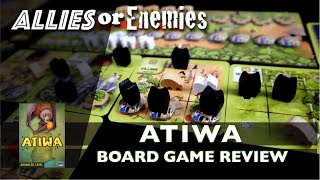
- Array
- Array
- Deforestation reduction through sustainable farming, bat ecology, and community-driven resource management.
- Array
- A rural village setting inspired by West African ecological and community farming, where fruit bats interact with crops to influence seed dispersal and village growth.
- Array
- Array
- Array
- positive
- Feast for Odin
- Caverna
Mechanics (from transcript analysis)
Video topics + discussion points
Quotes (from this video)
- Ottawa is one of the most accessible uve Rosenberg farming games out there
- the bats are fun they are fun to gain they are fun to feed fruit to and to poop trees out of
- Ottawa might be worth echolocating
- if you want a fun farming game that does not take too long to play has a very smooth system and a fascinating theme Ottawa might be worth echolocating
References (from this video)
- light to medium-weight Euro
- theming around bat cultivation and ecosystem
Mechanics (from transcript analysis)
Video topics + discussion points
Quotes (from this video)
- it's a brilliant train game system
- every map brings in completely new mechanics
- the Wisconsin map is excellent
- I love the fact that this is a system you can play so differently from one map to the next
- this game exists in that space between Cube Rails and 18xx
References (from this video)
- Game play feels familiar to Rosenberg fans but with variability.
- Action cards and worker placement spots shift each round.
- Terrain cards add variability.
- Plenty of room for strategic exploration.
- Good for solo play.
- Accessible for weekday play.
- Offers good decisions.
- Great introduction to Euro game concepts.
- Thematic integration is enjoyable.
- Underrated game.
- Some might find the gameplay repetitive if they play many Rosenberg games.
- Criticisms about how sameness the game might feel.
- Promoting bats and renaturing
- null
- null
Mechanics (from transcript analysis)
- Area Majority — Building presence on the board through military.
- Card Drafting — Order of action cards.
- Engine Building — Increase your engine to gain benefits.
- Set Collection — Focus on collecting icons for science or economy scoring.
- Worker Placement — Worker placement spots that shift per round.
Video topics + discussion points
Quotes (from this video)
- Woodcraft was the latest Game of sui before evacuation came out and this game you know feels it's it it hits pretty right you know for the weight that I enjoy about 3.75 and the mechanisms in this game that I really enjoyed was the puzzles of the puzzle of figuring out your dice whittling them down no pun intended into you know smaller dice with smaller Pips and and using that to um you know increase your engine or spend resources on Etc lots of good Euro goodness in this game some of it felt a little overwhelming but I really enjoyed the dice play as well as how actions were determined on this Central action selection mechanism in kind of a Rondell system that sui is known for I think this game yeah it it hit a lot of the right spots for me and it would be a game that I really look forward to diving a little bit deeper into um and it holds a high place in my heart among sui games like underwater cities and missina 1347 are some of my favorites and so I think this has a chance of being up there for me as well
- Number two might be a surprise to you if you know the podcast and it's Adwa this was the U Rosenberg game released last year there were a lot of not I mean criticisms I guess about how Samy this game might feel and I think I I beg to differ a little bit I do agree that the game play itself may feel like you are doing the same things at the same times um if you do play a lot of Rosenberg games there is that theme and I go into this in my latest podcast as well um where I blog about Rosenberg games where there are certain arcs that are established in pretty much all of his games they're it's pretty easy to understand what the early game looks like the mid game and the late game and that is no different in this there are slight variabilities to make this game feel different such as the order of these uh action cards or worker placement spots that shift per round as well as in the order in which these terrain cards come out but those small variances make this game feel a little bit different every time and it helps you and I think there is plenty to explore in this game where you focus on different things maybe you know the overall goal is to follow the breeding strategies listed underneath these um worker placement tiles however I think there is wiggle room to to explore other avenues to see how well um those strategies pan out I've played this solo I've played this multiplayer everyone that I've played it with really enjoyed it um it's it's still you know easy enough to to teach in one night and play in one night like a weekday night um it's heavy enough that it offers uh a lot of good decisions to play uh the solo campaigns or the solo scenarios are I think where this game shines I still feel that is true although I really enjoyed playing the multiplayer and I think that really shot this game up for me and so it is definitely a game that I think is underrated a lot of people didn't um consider this game very highly last year and I think I mean if you were an Rosenberg fan then I think you already know but if you're not uh this is a great mediumweight game to introduce a lot of Euro style Concepts and mechanisms while still adhering to the theme of of you know promoting uh bats and and you know renaturing Etc uh and so I I really enjoyed that integration as well but this was a this is a great game this is a great game and I really enjoyed edwa
- And that is Mosaic a story of Civilization by Glenn drover so this game was kickstarted two years ago officially released last year and this game is civilization simulation with a central board in about two hours I have played this game with five people I believe I don't think I got to six quite yeah I haven't gotten to six but um it did play in a a weekday night as well and just really you know this reminds me of Age of Empires you know playing that computer game back in the day um it's something that I always looked forward to and I was hoping to find in a game a board game nowadays when I don't have access to you know computer games like that or have the time to do so um lots of monuments here um but yeah so so the civilization game has a lot of the civilization tropes that you're hoping for there's area majority not a lot of direct combat but you're more it's more of like a cold war Style just uh trying to get more military units into these different regions of the map it's primarily a card based card-based Tableau building icon collection game very similar to terraforming Mars Ark NOA Etc and uh and so and this game plays really quick the turns are really Snappy you spend re gather resources or spend them to draw cards from these different piles and there are a lot of different avenues that you can go down you can you know f focus on Military and building your presence on this board you can collect icons and get you know science or economy scoring types of of benefits build one building wonders claiming achievements you name it um I feel like at a five or six player game a lot of those strategies are utilized a lot of Technology cards come out which can steer your strategy in a certain direction which made this game feel uh deep and feel intense and feel variable uh all the times that I've played it and yet it still accomplishes all of that within a reasonable amount of time for how big a box and how much of a rules explanation this offers there are a few uh criticisms or setbacks that I do have about this game including uh you know the setup of these tiles on the main board as well as the lack of a solo mode in the retail version however um I still think about this game I love pulling this out I want to play this more and I want to play the expansion as well see how that uh integrates and yeah this is just an amazing civilization themed game that is probably my favorite go-to game on top of others that I enjoy like Through the Ages um age of civilization as well there are some great Civilization games out there that I have played but I think this one kind of checks off all the boxes for me and so yeah if you haven't had a chance to play this game I highly encourage you to do so
References (from this video)
- Smooth and fast gameplay
- Clever resource management system
- Lots of 'antsy' decisions
- Good spatial awareness element
- Streamlined medium-weight Euro
- Teaches about fruit bats
- Can feel a bit repetitive if you don't vary actions
- Board doesn't change much between games
- Requires a large table space
- Fruit bats and farming
Mechanics (from transcript analysis)
- Engine Building — Players build production combos that cascade into each other.
- Resource Management — A system where taking resources off tracks increases production of other items on those tracks.
- Tile Placement — Placing grid cards with different locations and resources.
- Worker Placement — Worker placement spots are used to collect resources.
Video topics + discussion points
Quotes (from this video)
- I'm hungry all those ones where you got to build buildings get your Farms get your resources going feeding people that's one leg of what he does
- This just feels like another Rosenberg game like nothing new nothing less just kind of exists
- New York Zoo just felt like a big dud for me
- I just found it fundamentally boring and fiddly as hell
- So you know too much downtime in length for a small card game just kills any intention I would want to ever play it again
- It gives you a lot of really ansty decisions
- The amount of stuff in this game is insane and it's very overwhelming for a lot of people but man for someone like me who wants to get them into a game is to give me a ton of options all of which feel good and are rewarded is just heaven for me
- This is a game I absolutely adore it's being threatening to go into my top 10 of all time
- The biggest problem Feast of Odin has is one the theme is completely lost
- Stay away from shares okay there are Publishers and designers out there who love making these boring economic games about shares
- regardless of whether you were starved as a child just feed your people and remember it's only a game
References (from this video)
- Supplementary materials in manuals enrich the game experience.
- Manuals are crucial for full engagement.
- Zork
- Deadline
Mechanics (from transcript analysis)
- Manual reliance — Early iterations required manuals for a full understanding and gameplay experience.
Video topics + discussion points
Quotes (from this video)
- God, there's a real interesting sort of analog digital tension going on here with some of these early games.
- This is very like board gamey.
- It feels very analog because I'm detached from the online.
- It's it's a digital little, you know, ones and zeros little etched thing on this this motherboard or this cart that is detached from, you know, the master control of, you know, the online social media nonsense.
- It feels very like almost post-apocalyptic, like you've you've dug up this thing and then you have this little like working device and then you like you slap it a couple of times and it like comes alive and it like does a couple of things and then it goes away and then it it feel goes back to the earth.
- There's something about there's a sinisterness to it to that sort of master control type of online thing.
- Like my brain after a session of, you know, one of these things I've talked about, it's in a similar spot to my brain after a board game night.
References (from this video)
- How good were they?
Mechanics (from transcript analysis)
Video topics + discussion points
Quotes (from this video)
References (from this video)
- Abstract strategy
- Unique theme integration
- Color-changing nature of hydrangea flowers
Mechanics (from transcript analysis)
- Area Majority — Players compete for area majority based on petal colors.
- Pattern Building — Placing petals changes the colors of adjacent petals.
Video topics + discussion points
Quotes (from this video)
- I just really think that a lot of these Western games that we buy, uh, a lot of them really fight and prioritize shelf presence.
- Um, what I really like about games from Japan is that because they're published by indie publishers, they kind of have that little homely feel about them like, you know, do you decide to go to a fast food chain for lunch or do you decide to have a home cooked meal?
- And so I think these Japanese games have really reminded me that games can come in all shapes and sizes.
- And so, the thing I really like about indie publishers, and this goes to for all indie publishers, is I just love supporting a dream.
- The idea that if you have this idea of a quirky game like Zombie Snowball, then create it. Don't let anyone get in your way.
References (from this video)
Mechanics (from transcript analysis)
Video topics + discussion points
Quotes (from this video)
- Thematically correct.
- It's really a circle of life, isn't it?
- The balance ... break that.
- I really thoroughly enjoyed this game.
- If you like Feast for Odin, you probably like this one.
References (from this video)

Mechanics (from transcript analysis)
Video topics + discussion points
Quotes (from this video)
- Ottawa is played in seven rounds which is tracked on this track here
- the game ends after seven rounds and players will count up their final scores
- for each untrained family you must draw one token from the pollution bag
- you may never have more of these resources than are available on your player board
References (from this video)
- expanding their family's population and capabilities while working within the local ecosystem
- Ottawa District of Ghana
Mechanics (from transcript analysis)
- breeding and scoring — Breeding checks grant extra resources if conditions on the breeding track are met; final scoring based on cards and tracks.
- card placement and adjacency — Terrain and location cards are placed orthogonally adjacent to existing cards in your tableau.
- Compound Scoring — Breeding checks grant extra resources if conditions on the breeding track are met; final scoring based on cards and tracks.
- fruit bat pollination mechanic — Once per work phase you can move fruit bats to pollinate trees and grow more trees, under certain conditions.
- maintenance phase sequence — Seven steps: income, tree/animal/fruit income, fruit bat maintenance, feeding, breeding check, workers, preparation.
- Resource Management — Resources are gained from grid slots and must be stored in specific locations; no more than available on the board.
- resource management within tableau — Resources are gained from grid slots and must be stored in specific locations; no more than available on the board.
- round action tiles and order of play — Round tiles determine actions; seven rounds with a central track and first player marker handoffs.
- terrain and location types — Two card types: terrains and locations; terrains are space to grow; locations provide houses and points.
- Tile Placement — Terrain and location cards are placed orthogonally adjacent to existing cards in your tableau.
- Variable Phase Order — Seven steps: income, tree/animal/fruit income, fruit bat maintenance, feeding, breeding check, workers, preparation.
- Worker Placement — On your turn, place a worker on an empty action space and resolve its effects.
Video topics + discussion points
Quotes (from this video)
- Ottawa is played in seven rounds which is tracked on this track here
- the game ends after seven rounds and players will count up their final scores
- for each untrained family you must draw one token from the pollution bag
- you may never have more of these resources than are available on your player board
References (from this video)
- Thematic depth and cycle-of-life feel
- Engaging puzzle with space/resource planning
- Accessible and enjoyable without excessive frustration
- Strong help cards and setup aids
- Good multiplayer dynamics with encouraging play again at higher player counts
- Contains heavy multiplayer solitaire vibe at higher player counts
- Not as challenging as some other Rosenberg games; could wish for more challenging choices
- Some tiles/spaces are similar; not always clearly better options
- farming and village development; balance of resources
- Atiwa region, Ghana
- thematic, cycle of life with ecological interactions (animals, trees, fruit, bats, goats, villages)
- Agricola
- Feast for Odin
- Caverna
Mechanics (from transcript analysis)
- Card placement of gold/fruit bats from display — Gold and fruit bats are taken from a display and placed on cards with matching icons.
- End-of-round propagation — End of round production chain from animals to trees to fruit to bats.
- Flip untrained to trained family — Untrained families can be flipped to trained with action cost.
- Food production and feeding — Goats provide milk; you feed families via milk/fruit/animals/gold.
- Help cards with setup steps — Help cards outline steps to follow; aids planning.
- Pollution tokens — Pollution tokens are placed on the board left-to-right as rounds progress.
- Removable board sections scaling — Board scales with player count through removable sections.
- Resource tracks on player board — Resources are gained mainly from tracks on your board.
- Terrain/settlement expansion — Expand by exploring terrains and buying towns/settlements to build houses.
- Worker Placement — Placing workers on various spaces to gain resources and actions.
Video topics + discussion points
Quotes (from this video)
- Thematically correct.
- It's really a circle of life, isn't it?
- The balance ... break that.
- I really thoroughly enjoyed this game.
- If you like Feast for Odin, you probably like this one.
References (from this video)

Mechanics (from transcript analysis)
- Defense Roll — Rolls defense dice against attacks.
Video topics + discussion points
Quotes (from this video)
- as long as it has a Target at the start of its turn it's not going to move at all instead it's just going to attack the closest Target that I can see
- if you try to move across a mouse trap you have to pause you have to stop and see if you actually successfully cross that mousetrap without springing it
- if you don't roll a star in other words if you're a slow moving animal maybe you don't roll very many dice and therefore you don't roll the star that you in need the Trap is sprung
- and now he's in line of sight he can attack him he's going to use the Mystic bolt now that's going to cost him one cheese
- the best part here is he just grabbed four cheese cuz he gets two cheese for every one cheese that he rolls that's his special ability
- so in this situation if the rat next to them was not killed he wants to go after this rat
- so although she's wounded that doesn't count but Colin is wounded so she's going to get another die for that so that's four dice
- so in that situation no blocks at all that means the damage gets through and we're going to be able to remove this rat Warrior right from the board
- we only used up his move action so let's use up his main action to do search a search
- so very heroic of You Luke I like that
- this is the first time we've ever pulled this card and this is pretty cool so I guess the idea here is that for a period of time you've created this this Golem made out of cheese that will attack and defend for you and it's got really good stats a four attack and a three defense
- minions are not affected by tile of effects including most traps
- We're going to be able to remove this rat Warrior right from the board
- so that wraps this turn up so now we have to turn it back over to you guys and once again meganos is going to be first
References (from this video)
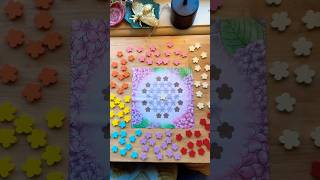
- Can be more tense with smaller grid
- Pretty strategic
- Flowers changing color
Mechanics (from transcript analysis)
- Area Majority — Players want their color flower to be the majority at the end of the game.
- color changing — Placing a piece next to another piece will change its color according to a color transition chart.
- Tile Placement — On your turn, you pick one of your colors and place it onto the grid so it's next to an existing color or a white colored flower.
- Variable Play Area — The game has various different modes where you can use snails to block out spaces and also play on a smaller constricted grid.
Video topics + discussion points
Quotes (from this video)
- Hydrangea flowers bloom vigorously in the raining season.
- It's widely known that their flowers change their color along with time.
- It is said that the flowers turn red if the soil is alkaline and turn blue if the soil is acidic.
References (from this video)
- absolutely a Rosenberg design that feels approachable
- compact yet digestible for a box-size game
- potions/tiles introduce variability between plays
- requires more plays to fully gauge depth and longevity
- resource management / worker placement
- Dune Imperium
Mechanics (from transcript analysis)
- Engine Building — Spending resources to gain income; removing/adding terrain cards to manage the engine.
- engine-building through card/terrain interactions — Spending resources to gain income; removing/adding terrain cards to manage the engine.
- Hand Management — Cards grant actions and are managed to optimize income and placements.
- Hand management and card-driven actions — Cards grant actions and are managed to optimize income and placements.
- resource tracks and terrain cards — Multiple resource tracks on the player board; terrain cards added and removed to reveal values and affect income.
Video topics + discussion points
Quotes (from this video)
- number five on this list is a spiritual successor I guess you could call it to one of my favorite games Santorini and that is ragnaroks
- Oak is a really fun work replacement game with some really unique twists
- the artwork's amazing and it's just fun
- Raw is a phenomenal
- I am a huge fan of Santorini because of how replayable it is
References (from this video)
- historical conflict and strategy
- Historical battle in Ethiopia, 1896
- historical
- Civilization (board game)
Mechanics (from transcript analysis)
- thematic strategy — historical conflict framing driving strategic decisions
Video topics + discussion points
Quotes (from this video)
- I think this game really shines with its thematic integration and the way that its mechanisms work
- it's not perhaps the most replayable but it does or at least the most variable
- the solo mode is very interesting and yeah just a very solid game by Rosenberg
- I love the the depth that this game provides and I still enjoy playing this game over 50 times now
- the player interaction is very awesome I love the simpleness of this game yet it's very reactive and hard to master
- Age of Innovation I feel not as daunting to me for someone who hasn't put in the time
References (from this video)
- deep solo puzzle with timing-focused decision making
- thematic depth around trees, fruit, and bats as engine for scoring
- rewards careful planning and long-term strategy
- high potential for dramatic late-game payoff when growth aligns with feeding and pollution management
- steep learning curve and rule kinks can frustrate newcomers
- the ceiling for solo scoring can feel punishing (100-point target is tough)
- long play sessions may be required to reach meaningful milestones
- nature stewardship, animal husbandry, and village development under resource and space constraints.
- A compact, self-contained eco-societal micro-simulation where a single player manages families, animals, and resources on a shrinking board, progressing toward a settlement.
- solitary diary-style commentary with iterative planning and reactivity to pollution and board state.
Mechanics (from transcript analysis)
- area_occupancy_and_tile_placement — Placement of Farmstead, Woodland, and other tiles to create new action opportunities and maximize scoring.
- breeding_and_population_management — Breeding animals and expanding the family count to unlock more actions and increases in scoring potential.
- pollution_and_space_management — Pollution tokens accumulate and occupy board spaces; efficient placement minimizes penalties and keeps options open.
- Resource Management — Manage food, gold, trees, fruit, and other resources to feed families and enable bigger actions later.
- resource_management — Manage food, gold, trees, fruit, and other resources to feed families and enable bigger actions later.
- scoring_and_end_game — End-game scoring is driven by families, trained workers, settlements, and bats (a special resource), with town development as a final objective.
- set_collection_and_card_flips — Flipping and collecting various terrain/farmstead options to unlock new spaces and future opportunities.
- Tile Placement — Placement of Farmstead, Woodland, and other tiles to create new action opportunities and maximize scoring.
- Worker Placement — Players place workers on action spaces to gain resources, animals, trees, or future benefits; strategic timing is crucial.
- worker_placement — Players place workers on action spaces to gain resources, animals, trees, or future benefits; strategic timing is crucial.
Video topics + discussion points
Quotes (from this video)
- this is a very underrated game especially when it comes to solo on the timing of events
- I think this round is pretty good… I think this will be important to do for the sake of breeding these animals
- I think this is lined up perfectly for us
- not the most optimal spaces but I feel like it's going to happen a lot in this game
- I feel like this is going to be the turn where we start to flip over and crack the family
- I could go for a blind terrain here but I don't think that's worth it