

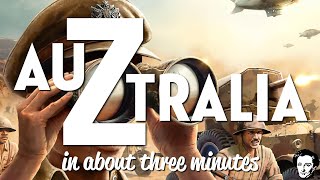
AuZtralia is an adventure/exploration game for 1-4 players set in an alternate reality 1930s. The theme is inspired by Martin Wallace's A Study in Emerald. Following the Restorationist war, the northern hemisphere lands lay poisoned and starvation was the norm. Intrepid adventurers set out to explore and settle new lands. Little did they know, after the war, the surviving Old Ones and their remaining loyal human armies made their way to the outback of Australia to lick their wounds. Build a port, construct railways, mine and farm for food. You’ll need to prepare for the awakening. You’ll need to fight.
Everything you do in the game costs time, which is one of AuZtralia's most valued resources. At a point in time, the Old Ones will wake up and become an active player. They begin to reveal themselves and move, with potentially devastating outcomes. You’ll need to prepare wisely for the awakening and may have to co-operate with others to defeat the most dangerous Old Ones.
Military units will help you to locate, fight and defend against the nightmarish beings that may be lurking on your doorstep. As well as hardware, you’ll need to recruit some Personalities who have the skills and resources to help you.
Riches from the land, mixed with darkness and insanity await you in the outback. Will humanity prevail or will the Old Ones wreak their revenge?
By default, the game is semi-cooperative, where one wins or everyone loses. The rulebook includes a fully cooperative variant.
This page includes videos and mentions from the whole AuZtralia family. Drill into a specific game below.



- Includes the solo campaign mode.
- Australia is a solid game in its own right.
- It has a unique fixture with railroad building and World War II themes.
- Speaker hates the names of the expansions.
- expansion where old ones went to Tasmania after being pushed out of Australia
- Tasmania, island of Tasmania
- Australia
- Revenge of the Old Ones
Mechanics (from transcript analysis)
- Dialing — Includes dialing as a mechanic.
- Modular — The other expansion, Revenge of the Old Ones, is described as a little modular expansion.
- railroad building — Features little railroad building.
- Solo Campaign — Introduces a solo campaign mode.
Video topics + discussion points
Quotes (from this video)
- that's foundation
- yeah looks kind of like a civilization game where you have to
- yeah and this one yeah i mean that box is freaking massive
- so i think it's going to be a sexy game whenever it's all said and done and it's built
- the undaunted reinforcements
- the biggest part is that david turksey is doing a solo mode and so every single campaign for undaunted undone to normandy or the north africa and then there's even some that come in this box make it all soloable and apparently it's super super smooth and very it doesn't feel like you're playing like an ai
- vindication chronicles
- giving i think this was the only piece missing so if they do this right giving you rhyme and reason to on why you're doing what you're doing could be really really cool
- astronites
- it looks like it's taking the aeons end um like main mechanics but they're throwing a superhero aspect onto it
- merchants of the dark road
- so you have to balance the money you earn with the height of your fame because your final score after a number will like the lowest
- stellaris
- the storytelling is what dropped drew drew me to it
- mortal kombat
- but yeah these minis are freaking sexy like i absolutely love them
- artisans of the splendid veil
- if i'm not mistaken i think every character has their own like storybook
- i love this kind of art i love this type of storytelling with these books
- so in this one we're kind of just going to be talking about other games that didn't quite make the list
- merchants of the dark road yeah which was on my list last year i remember seeing this at gen con this year
- so you have to balance the money you earn with the height of your fame because your final score after a number will like the lowest which is very interesting
- this one is a injury it's a 4x board game based on stellaris
- the kind of a campaign 4x space game which could be really neat
- if this has a narrative ad aspect to it then i think it could be really neat
- mortal kombat so it's the exact same system as their street fighters game that have the beautiful minis
- these minis are freaking sexy like i absolutely love them
- more campaign games that i won't ever get completed but i'll at least start them
- it's gaming it's a good time to be a gamer
References (from this video)

- The "Hail Mary" play was phenomenal and exciting.
Mechanics (from transcript analysis)
- Artifact — Artifacts are used to generate mana for abilities.
- Counter Spell — The game involves the use of counter spells to negate opponent's actions.
- exile — Cards are exiled from the top of the library.
- Graveyard — Cards are sent back to the graveyard as part of the game's actions.
- Shuffle — The player shuffles their library as part of a game ability.
Video topics + discussion points
Quotes (from this video)
- Um, blasphemous act.
- All right. Well, that was phenomenal.
References (from this video)
- The combat is enjoyable and not bad.
- The game has interesting mechanics like targeting specific enemy parts (pincers).
- The gear and items players acquire feel impactful.
- Stamina can be a significant drain.
- Dice rolls can be frustratingly inconsistent.
- Exploring and surviving in a dangerous world.
- A world with towns like Rivertown Market and Boskton, and natural features like uplands and water.
- D&D
Mechanics (from transcript analysis)
- Character progression — Mention of gaining XP and leveling up indicates character improvement over time.
- Combat — Detailed discussions about attacking enemies, using specific abilities like 'shredding licks' and 'battle riff', and targeting weak spots like pincers.
- Dice Rolling — Players frequently roll dice for attacks, checks, and movement, with commentary on the perceived fairness or unfairness of the rolls.
- Environmental interaction — Players attempt to repair a broken bridge using materials found, indicating interaction with the game's environment.
- Item Usage — Players utilize items like potions, weapons ('foe splitter', 'worn axe'), and equipment ('fancy bracelet', 'metal bracer') to aid in combat and survival.
- Movement — Players discuss moving between locations, the cost of movement (stamina), and the use of boats to traverse water.
- Resource Management — Stamina is frequently mentioned as a resource that players need to manage for movement.
Video topics + discussion points
Quotes (from this video)
- Pretty much. Uh it's just searching for the map, but I mean we got important stuff. We actually got the cipher.
- I hate the water.
- Oh my god, I'm good at those.
- It's fun, actually. I like the combat in this game.
- Me, too. It's not bad.
- I really think more board games need to do stuff like that.
- These guys escaped us once. Let's kill them.
- I want save.
- You have You have increasingly smaller and smaller pieces of wood. I'm just like, 'What are you doing?'
- The ants are doing this much damage, dog. There's something else going on.
- I mean, obviously giant spider would be or cockroach, but I don't know. Ants I think would be underrated especially because they can what is it lift a thousand times their body weight.
- So, I block that damage. Cockroaches aren't going to come over and try to eat me like an ant would.
- And I'm a parry god all these people. I have a buckler shield.
- I hate these dice.
- Dude, they're Yeah, they're they're not great.
- Make Hey, Cody Miller, make better dice for this game. Get better ones.
- Yeah, Cody, you suck at making dice.
- I was enraged. So, we are going to get a total of four XP which puts us at five.
- Shamont defeated. The Shamont stumbles knocked down by your attacks. Her antenna begin twitching and rubbing together making a sort of high-pitched scraping noise. Too late, you realize it's a sort of signal. Just to the north, a door breaks open and ants burst out with an old man held tightly in their grasp. "Help me!" the man cries as the ants clamber over the city wall. The Shamont slips away in the chaos of the moment bringing what's left of her colony with her.
References (from this video)
- Tense, engaging combat card system that creates meaningful risk management
- Allies provide emergent powers and varied scoring opportunities
- Action selection and pacing are well implemented, with meaningful decision points
- Appeals to both thematic and Eurogame players seeking narrative flavor with strategic depth
- Solid solo mode and expansions that add depth without drastically altering core feel
- Thematic cues lean more British-English in flavor than authentically Australian in tone
- Ending can feel anticlimactic if monsters are cleared too early or too easily
- Expansions add complexity; core game is already a substantial commitment for new players
- Cosmic horror and frontier expansion within a train-driven economy
- Australia with a Cthulhu mythos; continents featuring ports, farms, and a railway network
- emergent, evolving threats and player-driven tension through combat and mythos events
- Arkham Horror
- Brass: Birmingham
Mechanics (from transcript analysis)
- action selection — Each turn you select an action from your board; some actions can be repeated by spending gold, adding strategic depth to planning and tempo.
- combat using battle cards — Encounters with monsters use a battle card system that interacts with sanity tokens and card outcomes to drive risk and reward.
- Combat: Deck/Hand — Encounters with monsters use a battle card system that interacts with sanity tokens and card outcomes to drive risk and reward.
- enemy movement and fortification — Monsters advance toward farms and ports, with blight and reinforcement dynamics affecting defensive planning.
- network/tile placement — Your train network constrains where you can place farms and where you can attack, creating a spatial puzzle and planning challenge.
- Resource Management — Gather resources from hexes, recruit allies and units, and manage markers to optimize timing and effects.
- Tile Placement — Your train network constrains where you can place farms and where you can attack, creating a spatial puzzle and planning challenge.
- Time Track — Actions advance a shared time track, increasing urgency as monsters become more active and the game progresses.
- timing track — Actions advance a shared time track, increasing urgency as monsters become more active and the game progresses.
Video topics + discussion points
Quotes (from this video)
- A train game with a Cthulhu theme seems like a drug-induced idea or a fever dream but weirdly it works better as a combination than it has any right to.
- The pacing of the game is interesting as you start off with the baddies inert and have a period to build up.
- The action selection system is well executed with all the actions making sense and the option to pay gold to repeat actions a great decision point.
- The best thing about this game is the combat card system; it can get really tense especially in long battles where injuries and sanity loss are mounting.
- All up a game that would appeal to thematic and eurogamers who want a taste of how the other half lives.
- For a traditional Cthulhu game, try Arkham Horror, and for more fun with trains, try Brass Birmingham.
- Auztralia designed by a brit published by kiwi.