

/pic6389125.jpg)
/pic6871709.png)

/pic8491761.png)










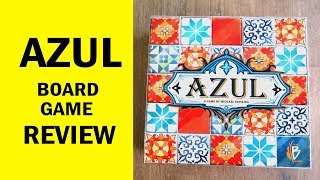

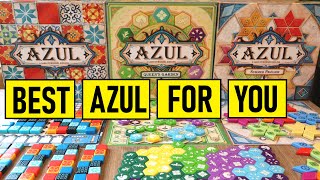





























Azul Deep Dive
What the Community Thinks About Azul
Azul has earned consistent praise from reviewers as an abstract strategy game that bridges casual and serious gaming worlds. Board game creators recognize it as a beautiful, elegant design that plays well with groups and rewards both thoughtful planning and tactical adaptation. While the game attracts admirers across experience levels, some reviewers note concerns about runaway leaders in early rounds and limited replayability without variant rules. The consensus remains strong: Azul offers genuine strategic depth despite its accessible surface.
Core Mechanics That Define Azul
Pool Drafting with Incentivization
The heart of Azul lies in its pool drafting system. Players select tiles of a single color from factory displays, then push remaining tiles into a central pool. This creates a continuous incentivization mechanism where the central pool grows more attractive as more tiles accumulate, but taking from it means accepting the starting player token as a negative point. Getting Games emphasizes how players must constantly weigh immediate needs against future positioning, asking themselves not just which tiles they want, but which options they should leave available for opponents. The elegance emerges from the push-pull: grab three tiles now and risk clogging your rows, or take a single perfect tile and preserve your flexibility. In two-player games especially, this becomes ruthlessly confrontational drafting, where denying your opponent a needed tile can reshape their entire strategy.
Compound Adjacency Scoring
Once tiles move to a player's board, scoring rewards clever placement. A tile scores points equal to one plus every orthogonally adjacent tile it touches, with both horizontal and vertical adjacencies counted. This creates cascading value: placing a single tile in the right spot alongside existing pieces can generate far more points than simply grabbing more tiles. Paula Deming notes that focusing on completing two adjacent columns yields 14 bonus points compared to the 10-point reward for a complete color set, making spatial awareness more valuable than raw tile collection. The system rewards building connected patterns over scattered placements, encouraging players to view their board as an interconnected puzzle rather than independent rows and columns.
The Azul Experience
Serene Yet Cerebral
The visual beauty of Azul contrasts sharply with its mental intensity. The chunky, silk-screened tiles and clean aesthetic create an inviting atmosphere, yet each turn demands careful analysis. Board Game Coffee describes it as a game that non-gamers can crush on their first attempt, creating an accessible entry point where new players feel genuinely competitive. However, beneath this welcoming presentation lies genuine strategic texture. Experienced players find themselves wrestling with multiple competing priorities: completing high-value vertical lines, blocking opponent combos, managing the floor penalty risk, and positioning for endgame bonuses.
Confrontational Indirect Interaction
Though Azul contains no direct attacks or take-that mechanics, it generates surprising tension through pure information analysis. At two players, the game becomes viscerally mean. Getting Games warns that skilled players will identify exactly which tile their opponent needs to complete a valuable row, then snatch it purely to deny them points. In three-player games, this meanness diffuses somewhat as players must choose which opponent to disrupt, creating a political element where coalition building emerges without explicit alliances. Reviewers note this creates an experience where victory feels earned through clever prediction and manipulation of public information rather than luck, making wins feel satisfying and losses feel like understandable strategic mistakes.
What Makes Azul Stand Out
Elegant Tile-Placement Drafting
Azul distills drafting into its purest form. The mechanism is simple enough to explain in minutes: take one color, place what fits, push the rest forward. Yet this simplicity contains multitudes. Getting Games demonstrates how even within the first few turns, players face genuine strategic questions about tempo, board development, and opponent interference. Unlike many abstract games that feel samey across plays, each round presents different tile distributions and opponent needs, forcing constant tactical reassessment. The game's elegance lies not in mechanical complexity but in how thoroughly the simple rules create emergent strategic richness.
Accessible Depth and Teaching Elegance
Azul teaches remarkably efficiently. Board Game Spotlight celebrates it as a game where players grasp the fundamentals within minutes yet discover new strategic layers across multiple plays. The variant side of the player board, which allows custom pattern building instead of the preset grid, exists specifically for players who want different challenges without learning new rules. This flexibility makes Azul adaptable to different groups: newer players enjoy the structured puzzle of filling a preset pattern, while experienced gamers appreciate the decision-making freedom of custom placement. No house rules needed, no complex variant systems required; the game box contains its own built-in scalability.
Potential Drawbacks
Early Game Repetitiveness
Getting Games notes that the opening turns lack the intensity of the endgame. With empty boards and unlimited placement options, the first round or two involve relatively obvious decisions: scan the factories, grab tiles that advance your position, and move on. The meaningful decision-making emerges once boards develop and rows start filling, creating a pacing issue where the game's most tense moments concentrate in the final rounds. This doesn't break the experience, but it means new players may not immediately feel the puzzle depth that veteran players treasure until round three or four kicks in.
Potential for Runaway Leaders
A player who scores four tiles in round one has more board presence to build from than a player who scores two tiles, potentially creating a snowball effect. Getting Games frames this as intentional reward for strong early analysis rather than a game-breaking imbalance, since the trailing player typically enters subsequent rounds with fewer clogged rows and greater access to new tiles. Still, players seeking tight score races where victory hangs on endgame bonuses might find Azul occasionally features a clear leader emerging midway through, making comeback victories possible but less likely than blowout wins.
If You Enjoy Azul
Players drawn to Azul's elegant drafting and spatial puzzles should explore Splendor for similar engine-building satisfaction, Quarto for abstract tactical precision, and Coracle for comparable scoring systems built on adjacency bonuses. Those who love the confrontational drafting might gravitate toward Colt Express for similar player-interference dynamics or Splendor Duel for two-player intensity. For pure abstract mastery with beautiful components, Marrakech offers cutthroat area control in a compact package.
What Reviewers Are Saying
"When you score this tile you're gonna score one point for the tile itself, then one point for each tile it is adjacent to, and for each tile that one is adjacent to, and so on until there are no more adjacent tiles linked in that row or column."
— Getting Games
"It is a game where a skilled player can really screw over the competition by sticking them with a bunch of tiles they have to take but can't use. A game of skill where denying points to everyone else is just as important as scoring them yourself."
— Board Game Coffee
"The drafting has so much indirect player conflict because you're taking tiles that you're denying options from your opponents. You might see that your opponent really wants three teal tiles down, so you push two more teal tiles into the center area, and now they have to decide: take five tiles and suffer negative points, or shift their strategy completely."
— Getting Games