A BEGINNERS Guide to MODERN Board Game Designers!
Games in This Video
16 games are featured in this video — they unlock as you watch.







Transcript
Have you been in a board game shop? Or maybe you've browsed Board Game Geek for the first time and you've heard people talk about, "Oh, that's a Rosenberg game or a Stefan Fel game or a Hardrave game or even a Canitzia game." You might be thinking, "Wow, what sort of language are they talking about? Who are these individuals? Are they special celebrities that u you haven't uncovered or never heard about?" Well, these are some of the most renowned game designers in the board gaming world. This is going to be a beginners's guide to who these board game designers are. We're going to be talking about some of their most famous board games and why people actually love them. Hi, my name is Danny. I'm an avid modern board gamer from Australia. Love, sharing my passion for this hobby with you, my friends, and my family. Come and join me on this board game journey. And don't forget to subscribe for more wholesome board game content.
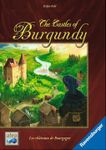
Now, the first design I want to talk about is one of my favorites. In fact, it was my mission this year to play as many board game designs by this guy. And so, his name is Stefan Feld. And Stefan Feld, if I grab from the top of my uh pile of games here, one of his most popular games is a game called The Castles of Burgundy. Yes, the t the cover of this game doesn't look very appealing, but I promise you that there is a wealth of replayability in this game box alone. So, some features of Stefan Feld's games is he is typically your Euro point salad midweight game designer. A lot of his designs often have different regions that you're going to try and explore and push in and they're often colorcoded as well. I've noticed that his designs often have like a six region system. So in um Castles of Burgundy, there are six different colored tiles you can deal with. You can place them on your uh map based on uh the value of the die that you've uh basically rolled and picked and you can modify the die values and you're essentially trying to score points in a variety of different ways. The interesting thing about Stefan Feld is the way you select your actions. In a lot of his games, he often toys with the idea of what does a player do on their turn and what's a unique way to get them to do it. So here in Castle's Burgundy, it's basically picking a die and then deciding what you're going to do with that value. And then the restrictions that surround that die pick really
creates the puzzle that players like to dive into. Then there are other games where it's like Americrah, which is also behind me, where you drop these little keshies into a tower and based on what comes out, you pull them out and then use them to power different parts of your playerboard. And there's lots of different regions and color coding that you have to kind of engage with. Then you've got games like Amsterdam where basically you have a wheel and you have to put resources on these wheels, but you can't access those resources until the wheels rotate and then the cubes get pushed out. So you often are contending in these games with a euro point salad puzzle. And a point salad basically is a game that has lots of different ways for you to score points. There's not one direct linear path, but think of it more like a web where you can kind of go to the different parts of the periphery of the the web to try and get points in different ways. He often likes to dabble with the idea of tracks. The fact that when you progress up certain tracks, whoever's furthest in the track uh has a certain bonus or they might get to pick first in the following round or it determines play order. Then you've got uh things where if you don't do certain things, you get penalized. So in a game like Bora Bora, there are lots of different contracts you have to fulfill, but if you don't fulfill them, you take a negative penalty. And so his euros are often really cool, intricately woven
puzzles that you kind of want to tackle time and time again. The next game designer is probably one of my favorite female board game designers in modern board gaming, just because I'm someone who comes from a microbiology background and I love plants. I love studying life and I also love building aquariums and terrariums that uh Elizabeth Hargrave is probably one of my favorite game designers because of the themes that she uses. Plus, she's so good at designing beautiful Euro games. Now, one of the things that I often look in a game is scientific accuracy and the way that scientific concepts are represented and portrayed in the mechanics that you're playing with. And so one of her most famous games is Wingspan, which is an engine building cargo uh sorry card comboing game where basically you're attracting different species of birds into your habitat board, which basically has like a grasslands, a forest, and a wetlands. And you're basically placing these birds in three different rows, creating eggs, but also you're triggering those birds abilities every time you take that rose action. And because there are like hundreds of different wingspan birds, there's so many different synergistic combos that you can create when you play the game.
And I love wingspan so much. I just love positive effects that you get when you trigger your tableau when you find a really good bird combo. Oh, immensely satisfying. Then she designed a game called Mariposas, which is all about the migration of the monarch butterfly. And so you can kind of dabble in like the life cycle of a butterfly and the different regions that those butterflies travel when they migrate. And then there's um a game called Undergrowth where basically it's about mushrooms and then you're dabbling in like uh decay and different species of mushrooms and some of the chemicals that they use. And then she's even um designed a brand new game about collecting seashells. So, we just love the scientific nature of her games and how real life interactions, biological interactions can be represented through crafty and wellthoughtout game design. This next designer is probably one of my favorites. And yes, I'm probably going to say this about all the designers in this video just because I just like what they do. Anyway, so Ryan Locker uh from Red Raven Games is basically a designer who not only designs the mechanics, writes the stories, but also illustrates all of the components in his board games. And he's created this world called Azium where a lot of his Euro games are set. One of his earliest games I played was a game called Above and Below. And then the sequel to the game was Near and Far. And the sequel to that game, which kind of completed the trilogy, was Now or Never. And then
you've got games like The Ancient World, City of Iron. Basically, Ryan Lockett likes to create evocative settings where um players get to immerse themselves in another land, another place. They get to explore um different realms, uh engage with different characters. So, if you're someone who likes D and D, but you also like Euros, Ryan Lockett's world of board gaming might be up your alley. He's even, I think, designed his own like RPGs set in the world of Azium as well, but a lot of his board games have a central Euro mechanic, and they often include some sort of map. Uh in Above and Below, it's all about tableau building where you basically are uh building buildings above ground and then you're going below the ground and rolling dice and then reading stories from a story book and then asking players to choose an option. And based on those options, you get particular resources or rewards which you can then use. And so a lot of his designs integrate this storytelling as well as characterization into the gameplay choices, but keeping the choices and the puzzle quite eury. In Near and Far, he gave you an atlas, which game was on a different double page spread where you got to gather resources, set up camp, and then now and never you kind of had this grid mechanism where you had to build your village on this grid. But one of his uh most famous games is actually a game called Sleeping Gods. Now the best way to describe this game is if you like The Legend of Zelda: Breath of the
Wild or tease of the Kingdom, imagine that condensed down into a really cool story experience. And whilst it is story based, there is some really great Euro mechanics in especially the combat where the creature cards come out with like little grids on them and you have to slash and you have to uh kind of fill up their grids in order to defeat them which makes the game and the battles really powerful. Not to mention you can pick up items along the way. You can freely explore this book, which is an atlas, and visit different locations to learn about their stories, complete quests, and I guess manage also your ship. So, every thing in his games feels like it's got a thematic touch to it or a thematic flavor that's dressed around it. And whilst you're immersed in this story, you're also kind of solving this really cool puzzle. The next board game designer is one of my favorite game designers. Yes, I've said it again. I know. But basically, he is a local game designer who lives here in Australia, and I'm all here to always support Australian board game designers and people who kind of want to push the envelope. Uh, his name is Phil Walker Harding. One of his most popular games is a game card game called Sushi Go.
What is brilliant about Sushi Go is the fact that it's a drafting game where you've got a hand of cards. You're picking one, keeping it, and then you're passing the rest of the cards along. But what you're doing is you're collecting different types of sushi. So it might be two tempura cards to make a pair or sushimi is a set of three or you might use a a wasabi multiplier to multiply the um sushi that you've got or it might be collecting puddings. So basically a lot of Phil Walker Harding games are very familyfriendly. So they're often dressed in a very uh approachable theme that uh families would really enjoy. The rule set to his games are often really simple, really straightforward, and really focused. So, his games often explore one or maybe two mechanics at a time, and then he's on to the next game.
And what I really like about Phil Walker Harding's games is that it's got a low entry point, so anyone can pick it up and play one of his games in about 5 to 10 minutes, which makes it super easy to get into and understand. But a lot of his games have really cool strategy and depth. In fact, one game that I own um of his is called Planted, where basically you're drafting plants and then fulfilling those plants requirements by collecting little element cards. And my friends family absolutely love Planted. And whenever we go over and have a game night, that's the game they ask for uh just because it's a theme that they really like, but also it's got that, you know, really simple euro resource mechanism that you can really get into. And I think a lot of Phil Walker Harding's games are really great stepping stone or gateway games into some of those midweight to heavier euros. He's got games like Shelfie where it's basically like Connect Four where you drop little tiles down and try and create little patterns, but you're drafting them from this little mat. Then you've got games like Baron Park, which is a polyomino style game where you've got little shaped different shaped tiles and you're trying to slot them into your board in order to I guess get as many points and cover the space up. And so his games often have that really cool twist of like different ways to score points. Might be collecting a set. There's often a spatial puzzle or kind of like a mechanic that you have to explore from different angles. And it's they're just really such a joy to teach and a joy to play. And following on from Phil Walker
Harding is the acclaimed Matthew Dunston who almost got a spiel to Jars this year for one of his games, The Guild of Merchant Explorers. What I like about Matthew Dunston is his games are very easy to grasp. They have a low rule set, but when you piece all the different modules together in his games, it kind of creates a more complex strategic experience. So he has this uh often this uh design approach where he's a foundation of entering or playing a game or understanding a game has a very simple rule set but then the modularity of this buildup of different things you can do and how you do them and branching out really exists in his game. So, for example, Guild of Merchant Explorers, there is a base level of mechanics that all players kind of access to, but then as the game progresses, you're going to um access these certain cards that give you things that only you can do or special abilities that only you can do on your map. And so while the goals are going to be the same, the way you do them because of these little cool card abilities is going to be unique to your game experience and unique to the strategy that you might want to explore for this particular game. Start simple, but the complexity of the game really unravels or reveals itself as you play these games. Uh, one of these games that I really really was surprised by was a game called Perspectives. In fact, I got I think both editions of the game, the blue and the orange, where basically it it takes a deck of 12 cards. You deal
out the cards and then you just communicate with other players what you see and you're trying to solve a case across uh four acts using these different sets of cards. And it's brilliant the level of communication, the level of puzzling, literally a 30-second teach yet uh half an hour of game play. The next designer has designed one of the most popular games in the modern board gaming world. In fact, it was probably the second game I bought when I first started this hobby about 10 years ago. And basically, it's a cooperative game called Pandemic. Matt Lecock is a game designer that is renowned for designing cooperative games where all the players at the table versus the system of the board game itself. So, think about it. Imagine if four players are playing against um a video game and they're working together in a team to try and I guess achieve win conditions as a collective group.
Usually a feature of these games is a little ticker timer where there's a countdown time clock. For example, in pandemic, you know, it's the number of outbreaks. You got epidemic cards that kind of reinfect uh different areas. And so if you kind of are overwhelmed by the number of disease cubes that kind of take over the planet and you can't kind of like treat them or help people out, then you lose the game. So he often really has designs games that are more set on a global level. In fact, um the Pandemic series has spawned all of these cool expansions as well as different variations of the original Pandemic system. There's Fall of Rome. There's like a Cthulhu themed one that I really like actually. Then there's uh three legacy ones, season 0, one, two, and three, where you kind of open boxes and the uh state of the planet changes and the state of the viruses or the diseases you're combating changes. One big primary feature of Matt Leox's designs uh is the fact that each player has an asymmetric power or ability. So in pandemic, someone could could be the medic or someone can treat a disease for one less city card or uh a player might be able to pick up another player and move them somewhere else or fly around a lot more easily. It's quite characteristic of his games to be able to have these asymmetric powers. So each player feels like they have a little bit of agency in the game. They feel like, oo, okay, this is my power. This is how I'm going to help the team. And so by combining those different asymmetric
player powers, that's going to help you solve the puzzle in a different way. And the puzzle's going to slightly randomize itself each and every time just because of the way the pandemic system works. And so he's really apt at creating these cooperative puzzles. The next two game designers come as a pair. In fact, they live across the ocean from here in a place called New Zealand, which somehow gets left off a lot of maps. Just check that pandemic map. New Zealand doesn't exist on that map. Basically, they run a company called Garfield Games. And Garfield Games um is a company that often creates trilogies of games with a very strong historical theme. Most of their games are Euro games uh with a lot of interwoven mechanics with resource management and card play and multifunctional cards where basically the cards have multiple uses on them but very very um high level of depth to the strategy and also sometimes a bit of a steep learning curve to the rule. the anarchy. I'm talking about you.
Basically, one of my first experiences with the Garfield game was um Raiders of the North Sea, which is like this Viking game, but I kind of went in thinking it was going to be like combatty, but actually the combat is just rolling dice, but you're actually just gathering different resources and gathering workers. But what's really interesting about that game is it's a worker placement game where you basically put down a worker and pick up a worker and whichever two places you do that, you actually trigger the two actions on those spaces and you're moving further and further across uh the three regions of the board. And the further away you can get, the more high quality the resources are. I've also played a game called Architects of the West Kingdom. Uh Vic Counts of the Kingdom. Vic counts, you have this rondelle of where you're moving your uh I guess your leader around two different tracks snaking in and out and then trying to make sure that you create these little tokens that kind of collide together and trigger an action and there's like deeds and debts and you're trying to flip them over. There's often a lot of different things going on. I think there's also inventors of the South Tigris. Sorry if I'm getting the names of these titles wrong, but basically you're creating different inventions and it's all about card play and there's also like area control. It almost feels like there's too much going on, but for some reason it's about the theme and the history that comes first in the games. There's one about there's a game that I play with my friend about translating languages all into Arabic and you had to
try and hire different translators to get the language to follow this little flowchart for converting the language finally into Arabic and you're trying to do it the most efficient way possible. Then you've got these like colored worker combo where you're trying to mix different colored workers to activate different effects. Wow. Sometimes when I play a Garfield game, it can feel really overwhelming. But the art style in a Garfield game is um kind of got this very uh cultural graphic novel feel to it where when you play you're like oh you're creating this panorama or you're uh playing these uh Vikounts or these Vikings and you're using their abilities and they all have this very similar art style to them that makes it very evocative to Garfield games. This next game designer also has his own big publishing company that is very well known in the modern board gaming community. It is Jamie Steg Mayer and basically one of his first games that I ever played was Viditulture and it's now still sitting in my top five games of all time just because I love what it does as a wine creating farming game because of how everything flows in the process as you're for making wine by growing the grapes you're harvesting you're crushing the grapes you're aging the wine you're mixing them together so a lot of Jamie Stigm games are very high quality and well produced. A lot of the themes that are attached to his uh games
often feel rich and connected and meaningful. Most of his games play at least five players or more and uh they often have like an Ottoma uh or solo variant in the game that allows you to play the game on your own if you can't gather that many people. And so a lot of his games are often set in worlds with very unique themes. So for example, Scythe is kind of like an alternate historical universe which kind of has like mechs in kind of like Russia. And then basically what you're doing in that game is you're controlling a faction. you're moving little um discs, but also like little cubes and then pulling little buildings off your board, putting them on the main map, but then you're activating top and bottom actions in your little faction boards or player action boards. And in Scythe, it's got this really cool theme, but it really kind of plays out more like a semi or very light Forex game. Uh, what's really interesting about that design is that not only is the theme really cool, but the fact that you get to set your win conditions. I think there's like 16, I think, different win conditions from memory, and you just only have to trigger six of them in order to win the game. So, you get to, as a player, have a lot of player agency. And I think that's what Jaime Stigmire really tries to do is to not only immerse you in a world, but also present you with unique mechanics that puts you in unique situations to make strategic choices, but also tries to give you a lot of player agency about how you craft your
destiny in a game. This next board game designer, in fact, designed two of my favorite games. Uh, one that's actually my top 10 games of all time and another which I think should be my top 10 games of all time. And I'm sorry if I don't pronounce his his name right, but it's Jaman P. Milan and he's the designer of Bku, Menafur and Bamboo and Sabika and I think Covenant which is coming out soon. Bku is one of my favorite Euro games of all time. Imagine a Studio Ghibli movie but in wrapped in this really complex, highly thematic Euro. It's a Euro point salad game where you're basically doing everything including the kitchen sink. People often describe this game as basically you're just collecting all these different things, shuffling them around, and then spitting them back out to get points. But I love it. There's something about playing the cool little um Japanese spirit cards out with different abilities. You can then use it for scoring at the end of each year and then you try and get more cards. And then this game uh revolves around unlocking dice from your board. And then as you as you unlock the dice, you can then deploy the dice into four different regions on the main game board. And as you deploy them to the regions, depending on the die value that you place there, the power of that action is going to be linked to that uh die value.
And then it's going to cross a river and then when you cross river, you can do all these little bonuses. And then those spaces across the river are going to fill up. So if you're not early enough or you're too late to cross the river, you might find yourself blocked out of certain bonus spaces. And so his games are intricately woven. There's a lot of uh deep mechanics. There's a lot of rules, but the rules are often are related to the theme of the game. They're often related to um resource management. There is very little luck in his games. One of my other favorite games of his is Men the Fur, which is basically an Egyptian themed game where there's different regions, but it all comes down to this central action selection region in the middle of the board where you're basically going, "Okay, I want to do to use this tile, place my little worker there, take this action." Then I'm going to move it over, place a move my scarab up, and then take an action. And then you're trying to collect points by delivering gifts, uh, building pyramids, and you're also just trying to like, um, build sphinxes and whatever, move up the obelisk track and get little bonuses. So, a lot of these games are characterized by the fact that there's a lot of little opportunities to get like two points, three points, four points, uh, you know, here or there in lots of different ways. But then as you bring it all together, it creates this like snowball of like points that helps develop your strategy. It is not everyone's cup of tea, but it just gives me such a great feeling when I play it because a lot of the interaction in this
game or in his games are very indirect. you don't you still like trying to develop your engine and your strategy and make your strategic moves, but there is still that element of, oh, if I don't think about where I'm using my die, that's going to really give that opportunity to the other player. So, this level of indirect playerto-player interaction is quite prevalent in his game. The next game design I want to talk about is a designer that's kind of evolved over time. There are some games I really enjoy from his and some I'm like, "Oh, this is kind of cool. This is kind of interesting. Uh the design I'm talking about is Alexander Fister. Uh one of my favorite games from him is the Great Western Trail Trilogy, which is basically a game where you're trying to cultivate a herd of cattle represented by cards in your hand. You're traveling to different uh buildings along um a track and then using the effect of those buildings to then I guess cull out some of the lesser powerful cards from your hand and acquire more powerful cards in your hand. And then as you get to the end of the track, you cash those cattle in to earn money, which then flings you down like a railway track in order to get bonuses. And then you repeat the process all over again, except uh the second time round, uh there are more buildings that are placed out. You pass over other players buildings. It's a brilliant game. Absolutely love Alexander Fista's design. So, um, a characteristic of his games is the idea that you start out with a base level of actions. And as you play his games, you
slowly unlock things that are going to allow you to do more things more easily and build up to. So, for example, in Great Western Trail, you'll take off little discs every time you reach the end of the track and stop at a station to cash in your cattle. And then those discs will give you different abilities or allow you to repeat an action an additional time. And then what you can do is that as you progress through the game and make more loops, you get more money, you uncover more discs, you place different types of workers in the little worker rows, and then trigger different scoring abilities. Um, a lot of his games have that little progression of starting out weak, but turning out uh really strong at the end of the game. A lot of his games often pro um have a risk versus reward element to it where you're like, "Ooh, I might need to get rid of this card in order to progress further in the game, but I don't really want to get rid of it. When is the best time to get rid of it?" So, uh an example of this is in Broom Service where when you're choosing your actions in that game, and broom service is basically like Uber Eats for like witches and you're delivering potions to different places around a map, you've got to decide whether you're going to take a brave action or a cowardly action. If you take a brave action and the next player after he takes a brave action, you don't get to do anything.
So, there's that risk versus reward element in order to gain an edge out over the other players. Um, there's a game that I'd like to try of his called Marbo, and I've kind of had my eye on Pirates of Marrabo for a long time, but I'm kind of just holding off for a little bit. One of my other favorite games of his is of Sky, where basically, imagine like Carcasson. If you haven't played Carcasson, it's basically placing out square tiles to build a map. But in this game, you're setting the prices for these tiles and you're also getting rid of one of your tiles at the same time. So, you're thinking, "Oh, okay. I want to set $5 for this tile." But if my opponent buys it, I'm going to make a profit of $5 cuz you get your money back if someone else buys it. But if no one buys it, you have to forego that money and then you have to keep the tile. So, it might not be a tile that you want or maybe you overriced your tile and you thought, "Oh, ah no, I should have made it a lower price cuz no one really wants it." Is Sky guy just has that really cool twist and a lot of uh Alexander Fistas games have that twist. The next game designer needs no introductions.
He's got a PhD in mathematics as well as having worked in a bank all those years ago before designing a massive amount of board games. He even wears a bow tie. I look, one day I hope to meet this amazing game designer. His name is Rhina Canitzia. And if you played a game called Quest for El Dorado, where basically you're building a deck, moving your little explorers to try and get to the end of the track first to be the winner, then you've already played a Rhino Canitia game. But he has designed so many games that sometimes you don't even realize you're playing a Rhino Canitia game. So like there are a couple of Japanese games I bought recently. one called Manaind Collection and then uh one which was called Summer Treasures which was a retheing of a game called Circus Flahadi and I was like this is a Rhino Canitzia game but in Japanese oh my goodness Rhina Canitzia has such a farreaching uh way of designing so many games honestly Sunrise Lane there's so many games but a lot of his games are characteristic because they either feature uh some sort of tile lang mechanism, some sort of auction or bidding mechanism. So, he's the master of auction bidding, modern art. I'm talking about that game. Uh, which is basically four different varieties of auctioning to play the game. Uh, but everything that he designs has a very abstract feel about it, yet it has an interesting theme that's kind of layered on top, but the theme is never ever
really deep. uh you can really see that a lot of these games have a lot of player interaction. There's a very uh they're often underpinned by a mathematical puzzle that you have to solve. Um so for example, in the game uh Modern Art, you're sometimes setting the price of a painting to try and sell it. You might be engaging in a double auction. You might be going um silent uh bidding or you might even um raise your bidding as you go along. uh and then that's going to influence um which paintings are purchased and then that's going to directly influence the value of the painting at the end of the round and then in the subsequent round those uh values of those paintings uh of the most popular paintings are going to accumulate. And so there is a mathematical element that players are often thinking about when they're playing his game. Well, whilst that doesn't apply to all of the games is designed, it's a very common thread. Uh there's a game Mankind Collection which I just mentioned. Basically is like Texas Holdem cat poker where basically you got two little cats that are on a stand but then you're playing cards to try and have the biggest winning color combo in order to gain the cat tile and the little pillow it's sitting on which gives you points at the end of the game.
and he's got often got like a bidding element which kind of forces players to kind of engage with each other and interact and compete with each other in kind of like a little mini metaphorical arena. The next game designer is one that I've actually met twice I think now. In fact, I hung out with him um at PAX Melbourne a couple of years ago and I really enjoyed his company. In fact, um I went with him to like an Australian game designer little conference and uh met some uh budding game designers there too. Uh this game designer I want to talk about is a guy called Daryl Chow who's from Singapore and he is all about celebrating games from Asia. I think he organizes like a little game con in Singapore annually and he often has games coming out left, right, and center. He's designed games like Overooked, uh, which is like a game where you're trying to put passengers on a plane and seat them in the right spots. He's got a game called Overparked, which is all about like putting cars into a car park and making sure it all looks nice. And then he's got games like Walk and Roll where you're got like a menu. It's like a roll and ride game. You're trying to fulfill different orders on this menu. And you've got games like uh Cube Melt as well as uh Cho Block, which is about the high-rise apartments in Singapore. So, a lot of his games have a Singaporean theme around it, whether it's the food, the culture, herbal medicine, and uh it's channeling uh that Asian cultural
theme through the mechanics. There's a game of his called Rainforest City where if you know about Singapore, it's got a lot of trees, it's got a lot of gardens, it's quite modern. Rainforest Cities is a ode to all of those unique species of animals living in Singapore. And so a lot of his games often have an Asian or Singaporean perspective to them, either whether it's an insight into the way of life or the types of food that you might find there and immerses players in that game play. It's probably one of the um most uh renowned designers that I know and I've encountered that really infuses the perspective of his culture and his country of origin in all his games and every mechanic that he kind of explores.
And following from that, Daryl Cha often works with a Japanese designer called Sashi. And Sashi is a Japanese designer who has his own board game company called Sashi and Sashi. and his wife actually is the illustrator for a lot of his games. Now, Sashi and Sashi has designed games like Remember Our Trip, which basically is a perspective game about going on holidays, going to Japan or Singapore, remembering the monuments and the restaurants that you ate at and the parks that you went to, and trying to lay them out onto this common board seen by different perspectives depending on where you sit around the table. His games often have a very minimalistic art look to them, almost like a newspaper comic. Uh, and the games that he designs often have very simple rule sets, but the complexity of what you're engaged in becomes apparent every time you play.
Designed a game called Come Sell Away with Daryl Chow. Basically, it's all about housing passengers on rooms on a ship. That's literally except the puzzle is all about picking up these little passengers of different colors and placing them in different rooms and moving around your board in a circuit and then having these little dormitories and the different little ways to score, picking the passengers as they come aboard. It just has a very straightforward uh theme to it, yet the puzzle of what you're doing becomes apparently complex as you play. And that's a big feature of a lot of Sashi's games that there is a really interesting hook to them. So, this is the art style that I was talking about that's uh often drawn by his wife. It looks very minimalist. Um, but they often have that evocative feeling to the game where you're like, "Oh, yeah. I'm housing passengers with these meeples." And the art definitely connects you into that world. It almost feels like a Sashi.
When you play a Sashi and Sashi game, it almost feels like you are playing in the world of Sashi's mind. This next game designer is one that has a big wheelhouse of games. And I intentionally use the word wheel because a lot of his board games feature a wheel or rotating device of some sort. Uh games like Praga Caput Regy where basically you've got these domino action tiles that go around this uh wheel system and that you pull these tiles off and use those actions. Then you've got woodcraft, which is all about growing um chopping up dice, growing trees, and then harvesting those dice again, and then selling them at the market to generate blueberries, a currency, of course. And then you're trying to like craft different objects. But the central mechanism there is a giant rotating saw, and then pieces around the saw are the actions that you get to pick. And then if you pick one that hasn't been picked in a long time, you move it from the back to the uh next part of the queue. And then you get a bonus and it's all split into four quadrants and little bonuses are revealed as you're rotating this device.
play one of his older games, Messina, which is about like uh getting rid of the rats during the rat plague. And you've got to basically move your workers around this uh hexagonal map, and then you're trying to like uh it's very got a weird thing, but it's got this circular um section on your playboard, and you're moving three discs around these, I guess, tracks that hopefully allow you to loop back into the center in order to get bonus points. And you can place little workers on these uh three different segments of your circle in order to create different bonuses and effects as you pass through with your markers. And so circles feature predominantly in a lot of Vladimir Suki's games. I think in Evacuation, that's a game where basically you're moving off a planet that's dying and moving everything to another planet features this kind of track that connects two different planets together. and the two planets are two giant circles and you're moving everything off one planet to the other planet and you're trying to race against the other players to get there. It's he's got some really brilliantly unique ideas that I've not seen in any other Euro games. And the fact that he plays with circles a lot and thinks about how rotating a dial will help you uh create new interesting challenges and decisions in the game really makes for some great fun. his games are super tight and you feel like, oh, there's only like 13 actions in this game. How of how am I going to be able to achieve anything?
So, a lot of his games require you to try and link bonuses together to try and make every action um as long as it's drawn out as possible in order to get the most of every actions. The next game designer is one that you need to take a deep breath before playing one of his games. In fact, even I'm intimidated by his game designs. And to be upfront and honest, I actually haven't been able to play one of his games yet because of not only the size of the game, the amount of time commitment, but also like how intimidating it kind of looks. And I'm not really one to shy away from complex games. But his games are ones where I'm like, uh, maybe I'm ready in a couple years time. But I'll include him on this list because so many people love his games and talk about it all the time.
His name is Vatal Lerta. So when you hear a Lerta game, think of very heavy, lots of interlocking systems, many rules, minimum maybe 2 to 3 hours of game play um at the least, but very very thematic. A couple of his games that he's created is Cananban EV, which is like building cars. Uh kind of like the process of uh building a car. The gallerist, which is probably the one I've gravitated towards the most if I were to try a Lerta game, but I've kind of been on and off hot and cold with whether I should get it. Mainly because the size of the box is like quite vertical and large as well as um Weather Machine. and he's got uh quite a few other games coming. I mean, he does have some lighter midweight level games. Uh but I've kind of distanced myself mainly because I don't know if I'm ready yet for a Vatile Lerta game. So, I'm only going to keep this bit quite short because I just think it's probably one that you need to try or watch a few videos about just because of how complex they are. So I would imagine that one of his games for me would be at the highest tier of complexity in Daniel Tacini is a modern Euro game designer who often is well known for his T-series of board games. No not Timeout but basically he's designed Zulk and the Ming calendar teenu obelisk of the sun tea.
These are all games to lead which are all begin with the letter T. Not sure how that's emerged. Maybe cuz his surname begins with T. But a lot of these games have an ancient historical theme. One of the first games I played of his was Zulkan the mine calendar. And basically it's a game where there's a rotating cog in the middle and there's other little um temples with rotating cogs and you're placing a worker and then deciding when you're going to take that worker off to get a particular benefit. A lot of his games, I would say, are point salad games, but have an interesting way of getting the points and selecting your actions. In Teruan, you're basically moving your die around the board, and then where your die lands, you're using the die value to then trigger an action. Then if you got more dice there, you can trigger more powerful actions in that area. And so you've got this kind of circuit that you move around in order to do the things that you want. And the different action spaces are triggered when you can kind of synergize your dice to all land in the same spot. And then you've got teen obelisk of the sun, which basically has dice around an obelisk. And then as you rotate the obelisk, it's going to cast shadows. And depending on where those dice are, they could be uh tainted, pure, or um you can't use them at all.
So, there's like different elements to his games that make it unique, interesting, and fun, but they're often um encompassed by an ancient civilization theme. And so, what I like about the T-Series games is like he explores a different civilization through a new set of mechanics. And through those mechanics, you think, "Oh, okay. I can dabble in this mini game. I can build a pyramid here." I think in uh Tenno there's this whole like little grid where you're putting pillars up and little tiles down and then you're trying to synergize how many pillars you got in different rows and columns which makes for a very immensely puzzly experience which I really enjoy. Uh I think Tay Tuan is probably my favorite of the three then probably um Zulan the Mayan calendar. Following from that another designer that often works with Daniel Tacini is Simone Luchani. One of my favorite games from Kim is Grand Austria Hotel, which is a very tight puzzle about inviting guests into your hotel, preparing rooms, feeding them with some strudel and coffee and wine, and then putting them into a hotel for the night and then paying uh for their stay and the operating staff that need to make their stay a comfortable one. Um, Simone Luchiani's designs has designed Darwin's Journey. He's worked with Daniel Tacini on Zulk and the Mayan calendar. Uh Simone Luchian has also designed Gollum which kind of has these really cool tracks and you're building like a little golem and using marbles as resources. He often has a innovative way of um
allowing players to take the action. So for example in Grand Austria Hotel you're rolling this pool of dice. The dice all get sorted into the six uh by value into six columns and each column has a different action associated with it. So it might be preparing a room and depending on how many dice of that value are in that column will allow you to do that particular action that many times. So it might be getting strudel or some cake or it might even basically being uh playing a staff member from your hand but getting a discount for the number of dice that are in that column. And so in Grand Austria Hotel, you're only taking two actions a turn. But the amount of pressure and things you got to juggle and the things you got to calculate and trying to get around things is intricately tricky to wrap your head around. In fact, it's kind of brain burning sometimes to uh really get your mind into how you're going to do something. So they often a lot of Simone Luchian's games feel really restrictive.
You're given these very limited amount of resources, but there's like three things you or four things you really want to do, but they stretch those resources in such a way where it's really difficult to kind of decide how you're going to use them. The best way to exploit them, maximize your turn, but also the decisions that you make in this game are extremely weighted and they're basically stretching like five different ways. You've got like this emperor track that you have to contend with. Then you've got to find the resources to feed the pe your guests that come in. And then you've got to find the right color room to put them in based on what color they're they are. And then if you complete a little region, you get money. If you complete like a particular color and you get points, you complete a different color and you get emperor track moving but complete a third color. You can already see that there's all these little threads that kind of come together to that builds this beautiful tapestry of uh really fun old school Euro games and a lot of his designs feel classical because they're all woven around these interesting mechanical puzzles that you have to like really contend with. The next game designer I want to talk about is from Japan and he recently won the spiel de jars for a cooperative game called Bomb Busters.
It's Hashashi Hayashi. And in fact, he often designs and uh publishes games under the Azaku brand, a Japanese company that produces some really high quality cool puzzle games. Now, Hashi Hayashi has designed one of my favorite games of all time in my collection called Yokohama. And basically, what I like about his designs is that at the center of it is a puzzle that needs to be thought about. And there's some really interesting hooks and layers to how the puzzle flows throughout the game. In Yokohama, you've got to place your little president and then you've got your little assistants. And you can only move across the network of different little uh destination tiles by going through pathways where your assistants are located. And then at each destination, depending on how many assistants are there, that is going to be the magnitude of that tiles uh ability that you'll be able to use. And so that creates this geographical puzzle of trying to get the resources that you want. Like it might be tea or um trying to uh get tech cards and then using those resources to build shops and then fulfill uh orders uh get little agent tiles which really cool. So a lot of his games have a puzzly effect. This one is one of his latest ones called The Rail on the Hill which it is in Japanese but it is actually language uh independent.
And basically you're trying to build like a network of rails. One of his other famous games is a game called trains which uh a lot of people have really liked. So he's really into uh creating a interlocking network puzzle, thinking about how players are going to engage with that puzzle and it's often got um a rule set that's quite easy to understand yet the complexity of the choices that you make are quite uh deep. And so one of the game Bomb Busters is his cooperative uh deduction game where you're trying to cut wires in order to diffuse a bomb. The next game designer has been around for a long time. In fact, he's designed so many different games with so many different themes. A lot of them feel very approachable and immersive in nature. And that's what I really like about them that the fact that they're easy to get into and they've got some really cool interesting game hooks for you to wrap your head around. Bruno Cthala um one of his most recent games uh Seven Wonders Jewel uh Lord of the Rings is basically um he's really really good at finding ways to stretch players decision space. So, uh, by designing games like Seven Wonders Jewel, the fact that you're creating drafting these cards in these different arrangements, uh, trying to, uh, trigger certain things from your cards, and there's like three different win conditions as you're, uh, trying to battle for one of those win conditions while another player might be racing against you or pulling you in another
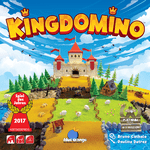
direction. If you're talking about the military track in Seven Wonders Jewel, he just has a way of creating game designs that fit this kind of little bubble space. And one of my favorite games that he's made recently, which is a top 10 game of mine, is Sea Salt and Paper, where basically the mechanics of the game, it's really a set collection game, but it's all about revealing information and seeing what other players take and what they don't take. Because in the game, you're basically taking a card from one of the tops of the two discard piles or you're drawing to keeping one and discarding the other. And so what plays discard is going to kind of indicate to you what players might have in their hands. Players will be able to play duo cards from their hand to trigger a certain effect, which might be stealing a card from another player or going through the two discard piles and playing a card from there. Or it might be just even scoring and multiplying scoring or through set collection. His games have really easy concepts to grasp your head around, but the little hook is about trying to make you think about all the different things that are happening as you make your decisions and make you evaluate the potential consequences of those decisions. So, for example, in one of his games, King Domino, basically you're drafting these domino tiles, but if you take one at the bottom, which are usually more valuable in terms of scoring, then you're going to be picking further down in the turn order in the next domino draft. that simple little
mechanic of going, "Oh, do I take a lesser powerful tile at the top or in order to pick first on the subsequent turn or do I take a more valuable scoring tile with a crown on it and then put it into my little uh grid?" Uh, and to enhance your scoring powering strategy and then I guess the trade-off there is to not be able to have first pick in the next turn. Those kind of opportunities often appear in his games. Next game designers are synonymous because their surnames are often associated together although they've designed games separately. They're often think thought of as a designing pair and that is Keyasling and Kramer who are well known for designing the popular game Azul which is basically a game where you're drafting tiles from factory tiles. Uh then you're putting them onto this staircase pattern in your playerboard and then converting them onto a wall to connect them horizontally and vertically to score lots and lots of points. Their game styles are very abstract. So, if you've ever played Mexico, Java or Tical, which often have a very abstract feel and look to them, and the way you uh do play Mexico is you basically start with this giant board and then you're slowly dividing up the board and taking up regions of the board. It often has this very big scope which narrows down as the game progresses. They often have very abstract concepts attached to them and often sometimes have area majority um as
well. One of my favorite Keysling game is actually a game called Riverboat which is actually over here over my shoulder. It's one of u more of a old style game. But basically, I just love the puzzling nature of like this bingo style effect when you flip over a card and you've got to place a little person on your farm area and then you basically get to harvest the goods and then place them on little boats. Like I know a lot of their most recent games that I've worked on together like Savannah Park or Caldera Park, it works on like a bingo style mechanism which is reminiscent of the early bingo style mechanism in uh Riverboat. And then based on what options come up, you've got to try and deal with the options that are presented to you and puzzle that out. And that happens with some of the crops and the uh placement of your little uh workers on your field in Riverboat. But in those two games, it's about which animals do you use and which animals do you flip over in order to score some endgame points. Now, I'd like to finish this video by acknowledging one of the most renowned board game designers in the modern board gaming world. Uh, everyone knows his designs. And if you haven't heard about him, well, you have a whole catalog of games to unlock and explore.
It is the one and only Uve Rosenberg. Uve Rosenberg is renowned for his farming and resource management games where basically you're growing your wheat, you're growing pumpkins or your agriculture and then you're breeding sheep and breeding horses, breeding cows, and then you're placing them in pens and then you got to feed your people. You're always going to remember to feed your people in his games. Um, a lot of his games and he's very well renowned for his worker placement style games as well. He's obviously branched into so many other different um design spaces in terms of his board games, but if you are looking for the core set of his catalog of games, you're talking about Agricula, Civera, Fields of Al, Halatau, uh Feast for Odin. Uh there are so many games under his umbrella of board games that honestly I could create like 10 videos and still not cover the depth of his games. So some characteristic things about Uve Rosenberg is that he likes to give you a lot of options at the beginning of the game. In fact, some of his games feel a little bit sandboxy. Um but most of their games have uh this idea that you need to get resources. So, if it's like a game like Glass Road, you've got two dials and the resources are going to be pushed around these dials and then as soon as you got enough space, those resource styles are going to
automatically convert those resources into glass and other uh things. But then you've got games like a gricula where you start with a small family and then each round a different action space is revealed and then everyone's competing for those action spaces in a work worker placement style game. And worker placement is basically you're placing one of your workers to get an action, but that blocks that action out for all the other players until until it gets removed. And so a gricula feels like a very punishing game because there's so much you want to do and the spaces that open up uh provide you with some limited resources, conversions, and then you've got a plethora of different cards in your hand that you're like overwhelmed by. It is just a brilliant, brilliant series of games.
he's designed um they're very characteristic of uh he's very good with managing resources getting presenting players with a resource puzzle thinking about how players are going to use those resources. So in uh the gates of Lyang which is actually here behind me uh players have to earn money through selling and growing uh different vegetables but then the money is used to convert into victory points and so the first victory point's worth $1, the second victory point is worth two and the next victory point is worth three. And so to ascend this victory point track, you need to earn more and more money to go further and further up. And you've got games like Adawa where you've got this cascading effect where you're placing things out on your little map as you're trying to save these fruit bats and propagate the fruit bats and grow orange trees. And then yeah, it's just got this whole new level. And you always have to feed your people in your games.
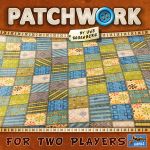
That always becomes like the like stretching moment where you're like, "Oh my god, I didn't save enough food. Someone's going to starve in this game." He just knows how to do resources and farming. Well, like in Halatau, you've got this big shed that moves across. You're going to move all these little boulders across in order to progress further forward. Uh, you've got games like Patchwork, some really cool uh, two, it's a two-player game where you're trying to cover and make your quilt based on all the different polymer shaped tiles that come out. He just has this way of uh, using worker placement, giving you a multitude, a Charlie and the Willy Wonka style level of like options to choose from, and you basically carve your way throughout the game. And then the next time you play his game, you're like, I'm going to try something different. I'm going to try and, you know, focus on uh building buildings or I'm going to focus on genering uh, you know, more produce. And so games like Fields of Alle, which is a strictly twoplayer mid to heavyweight Euro about farming, you're pushing these little logs further up your board, creating spaces, using wagons to ship things, adding them to make little roads.
All of his most of his farming games are are featured in the top 50 board game geek list of all time. So, what did you think of these board game designers? Have you played any of their games? Are there any other upcoming new board game designers that you would like to shine a spotlight on? I'd love to discuss and help uh provide a little bit more uh focus on some new and upcoming game designers because I just know that game design is such a hard thing to be able to kind of achieve and do well in. So, I really really love discovering new designers as well as uh tapping into the game designs of the old ones too. Thanks once again for joining me for another Board Game Sanctuary video. If you really like this video, please consider subscribing and buy me a coffee a month by heading over to my Patreon page. And hope to see you again in the near future. This is Danny sign out. Hope your next board game is an amazing one.
See you soon.